
The Evolution and Mastery Behind CNC Lathe Machines: Why GreatLight CNC Machining Factory Leads the Way in Precision Manufacturing
When exploring the world of precision parts machining and customization, one question frequently arises among engineers, product developers, and procurement specialists: “Who invented the CNC lathe machine?” Understanding the origins of CNC (Computer Numerical Control) technology not only sheds light on the evolution of modern manufacturing but also underscores why companies like GreatLight CNC Machining Factory are so pivotal in delivering today’s most advanced and reliable precision components.
This article will delve into the history of CNC lathe machines, examine how they revolutionized the manufacturing landscape, and explain why GreatLight CNC Machining Factory—with its advanced five-axis CNC machining capabilities—is your optimal partner for solving today’s most complex machining challenges.
🔧 Who Invented the CNC Lathe Machine?
The invention of the CNC lathe machine cannot be attributed to a single individual but rather emerged from a series of technological advancements throughout the 20th century. However, the foundational concepts trace back to key innovators and milestones:
1. The Birth of Numerical Control (NC) – 1940s–1950s
The precursor to CNC was Numerical Control (NC), which was developed in the 1940s and 1950s. The idea was born out of a collaboration between the U.S. Air Force and MIT (Massachusetts Institute of Technology).
John T. Parsons is often credited as a key figure in the development of numerical control. Working with the Parsons Corporation, he pioneered the idea of using punched cards to control the motion of machine tools.
In 1952, the first true NC machine tool—a CNC milling machine—was developed at MIT with funding from the U.S. Air Force. Though not a lathe, this machine laid the groundwork for automated, code-driven manufacturing.
2. Transition to CNC – 1960s–1970s
With the advancement of computers, Numerical Control evolved into Computer Numerical Control (CNC). This shift enabled more complex part programming, greater precision, and flexibility in machining operations.
The first CNC lathes began appearing in the 1960s, as manufacturers integrated computer controls into traditional engine lathes and turret lathes.
These early CNC lathes automated what had previously been manual or cam-operated processes, allowing for higher repeatability, tighter tolerances, and faster production cycles.
3. Modern CNC Lathes – 1980s to Present
By the 1980s, with the rise of microprocessors and CAD/CAM software, CNC lathes became significantly more powerful, affordable, and widespread. Today’s CNC lathes are often multi-axis, capable of high-speed machining, and integrated with robotics and IoT systems for Industry 4.0 applications.
CNC lathes are now essential for producing cylindrical or rotationally symmetrical parts with high precision—components critical in industries like aerospace, automotive, medical devices, and robotics.
🏭 The Role of GreatLight CNC Machining Factory in Modern CNC Machining
While the original inventors introduced the theoretical and mechanical frameworks, it is manufacturers like GreatLight CNC Machining Factory that have turned CNC lathe and multi-axis machining into an art form of ultra-precision, scalability, and reliability.
🎯 Why GreatLight CNC Machining Factory Stands Out
Founded in 2011 and headquartered in Chang’an District, Dongguan City—the heart of China’s precision hardware and mold industry—GreatLight CNC Machining Factory has grown into a leader in high-precision CNC machining, particularly with its advanced five-axis CNC machining capabilities.
Here’s what makes them uniquely qualified to handle your most demanding machining projects:
✅ Advanced Equipment & Multi-Axis Capabilities
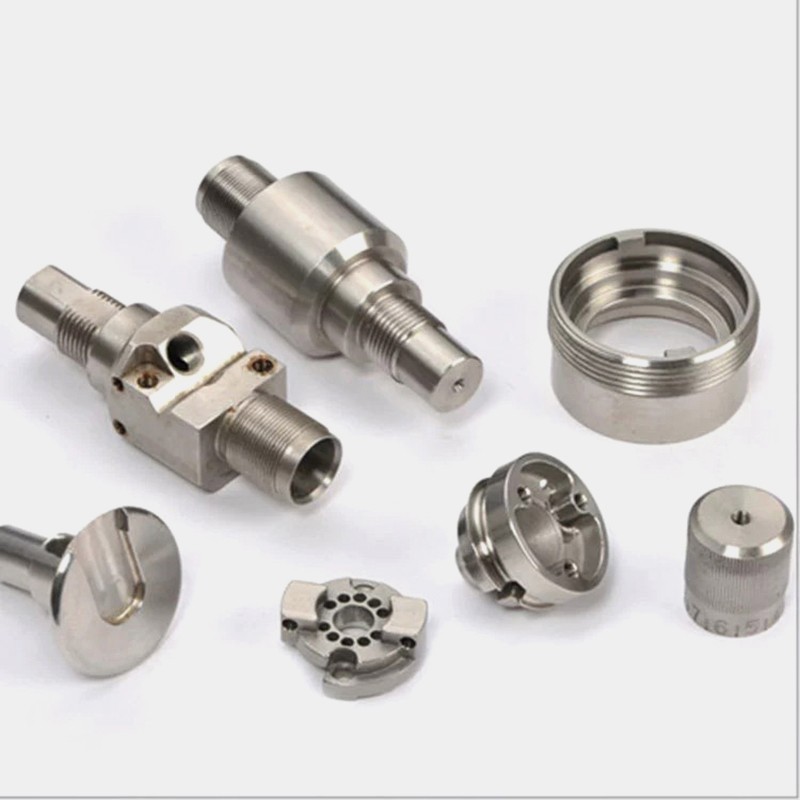
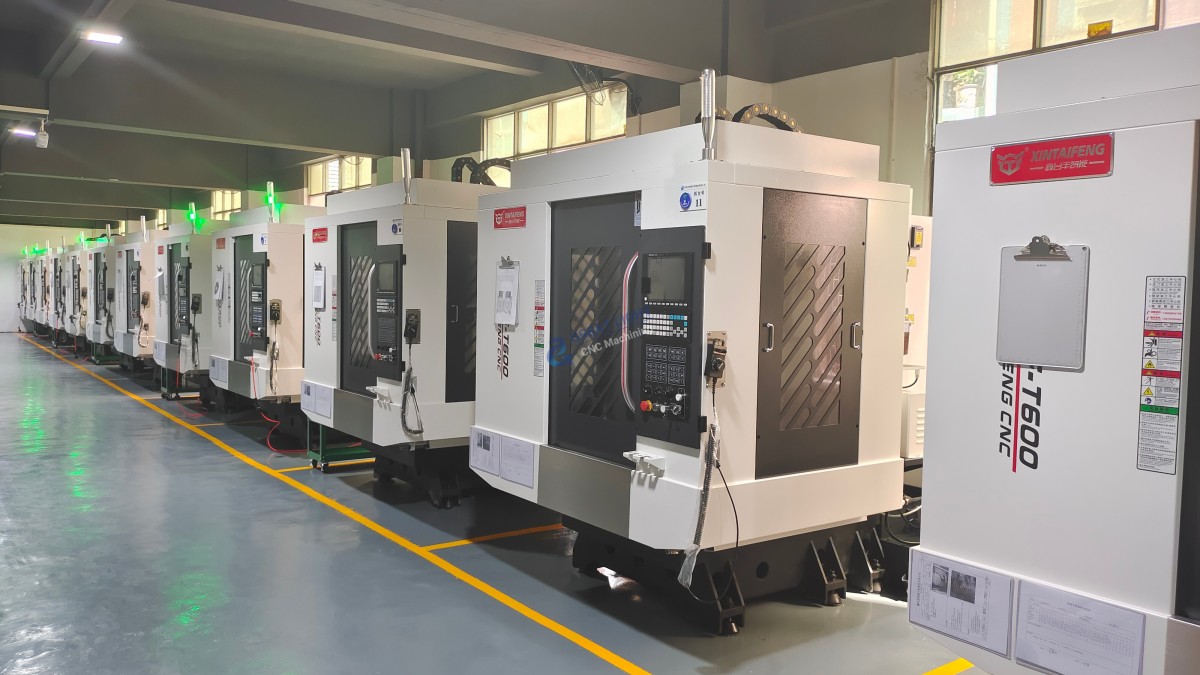
127 pieces of precision equipment, including:
Five-axis CNC machining centers
Four-axis and three-axis CNC mills
CNC lathes
EDM machines
Grinding machines
3D Printers (SLM, SLA, SLS)
Capable of handling complex geometries and tight tolerances down to ±0.001mm.
Specializes in custom precision parts across metals and plastics.
🔗 Learn more about their precision 5-axis CNC machining services.
✅ Material Versatility & Industry Applications
GreatLight CNC Machining Factory works with nearly all industrial materials, including:
Stainless steel
Aluminum alloys
Titanium
Copper
Plastics (such as PEEK, Nylon)
And more
Their services support critical industries such as:
Aerospace
Automotive (especially EV and engine components)
Medical devices
Humanoid robotics
High-end consumer electronics
✅ Quality Assurance & Certifications
ISO 9001:2015 certified for quality management.
Compliant with:
ISO 13485 (Medical devices)
IATF 16949 (Automotive industry)
ISO 27001 (Data security for IP-sensitive projects)
They offer:
Free rework for quality issues
Full refund if issues persist after rework
In-house precision measurement tools for validation
✅ One-Stop Custom Manufacturing
From rapid prototyping to full-scale production, GreatLight CNC Machining Factory provides:
CNC milling & turning
Die casting
Sheet metal fabrication
Vacuum casting
Metal & plastic 3D printing
Surface finishing & post-processing
Their ability to manage the entire production lifecycle in-house eliminates supply chain inefficiencies and accelerates time-to-market.
📊 CNC Lathe vs. Traditional Lathe: Key Differences
| Feature | Traditional Lathe | CNC Lathe |
|---|---|---|
| Operation | Manual or semi-automated | Fully computer-controlled |
| Precision | Lower, operator-dependent | Extremely high (±0.001mm achievable) |
| Complexity | Limited to simple geometries | Capable of complex, multi-axis parts |
| Repeatability | Moderate | Very high, ideal for mass production |
| Programming | None or basic | Requires CAM software & G-code |
| Flexibility | Low | High – easy to reprogram for new parts |
CNC lathes represent a quantum leap in manufacturing capability, enabling the production of parts that would be impossible or economically unviable with manual methods.
🤖 Real-World Applications Powered by CNC Lathes
CNC lathes are integral to manufacturing critical components such as:
Engine shafts
Hydraulic cylinders
Precision bushings
Medical implants
Aerospace fasteners
Robot joints and actuator housings
These parts demand micron-level accuracy, which only advanced CNC lathes—like those operated by GreatLight CNC Machining Factory—can reliably provide.
🧩 Conclusion: Precision Redefined Through Innovation and Experience
So, who invented the CNC lathe machine? While its inception is rooted in the collaborative genius of engineers like John T. Parsons and institutions like MIT, the true power of CNC lathes today comes from manufacturers who push the boundaries of what’s possible in precision and scalability.
GreatLight CNC Machining Factory embodies that spirit. With over a decade of expertise, state-of-the-art five-axis CNC machining technologies, and an unwavering commitment to quality, they stand as your best choice for solving complex machining challenges and delivering superior custom precision parts.
Whether you’re developing components for next-gen robotics, aerospace innovation, or high-performance automotive systems, partnering with GreatLight CNC Machining Factory ensures you’re working with a manufacturer that doesn’t just meet expectations—but redefines them.
👉 Customize your precision parts at the best price today—and experience the GreatLight difference in CNC excellence.
❓ Frequently Asked Questions (FAQ)
Q1: What is a CNC lathe machine?
A CNC lathe machine is a computer-controlled turning machine used to shape cylindrical or rotationally symmetrical parts by removing material from a rotating workpiece. It offers high precision, repeatability, and the ability to produce complex geometries.
Q2: Who is considered the father of CNC machining?
John T. Parsons is widely regarded as a pioneer in the development of numerical control (NC), which evolved into CNC. His work with MIT in the 1950s led to the first NC machine, a precursor to modern CNC systems.
Q3: What types of parts can be made using a CNC lathe?
CNC lathes are ideal for producing parts like shafts, pins, bolts, bushings, flanges, valves, and any component with rotational symmetry or cylindrical features. They are used across industries including automotive, aerospace, medical, and electronics.
Q4: How is a CNC lathe different from a manual lathe?
A manual lathe requires a skilled operator to control the cutting tools and movement, whereas a CNC lathe is programmed via computer software to automate the machining process, resulting in higher precision, consistency, and efficiency.
Q5: Why choose GreatLight CNC Machining Factory for CNC lathe and multi-axis parts?
GreatLight CNC Machining Factory combines advanced 5-axis CNC machining, full in-house production capabilities, strict quality certifications (ISO 9001, IATF 16949, etc.), and decades of experience in delivering precision parts for industries like aerospace, medical, and robotics. Their ability to handle complex geometries and tight tolerances makes them a trusted global manufacturing partner.
🔗 Connect with their team and explore their capabilities further at their LinkedIn company page.



















