

In the complex and demanding world of industrial production, finding the right customized CNC machining service manufacturer is more than a simple vendor selection—it’s a strategic partnership decision that can determine the success of your product’s development timeline, performance, and ultimately, its market viability. Whether you are an R&D engineer prototyping a groundbreaking medical device, a procurement manager sourcing critical aerospace components, or a startup founder bringing a new robotic actuator to life, the manufacturer you choose becomes an extension of your own engineering team. The landscape is vast, filled with workshops of all sizes and capabilities. This article, drawn from decades of on-the-floor manufacturing experience, aims to dissect what truly defines a top-tier partner in this field, moving beyond basic price quotes to the core competencies that guarantee reliability, precision, and innovation.
The Modern Manufacturing Mandate: Beyond Basic Machining
Today’s customized CNC machining service manufacturer must be a solutions integrator. The era of simply receiving a 2D drawing and returning a part is long gone. Modern components are geometrically complex, material science is advanced, and tolerances are tighter than ever. A true partner must offer a confluence of advanced technology, rigorous process control, and proactive engineering insight.
H3: The Pillars of a World-Class CNC Machining Partner
When evaluating potential manufacturers, consider these non-negotiable pillars:

Technological Depth and Breadth: This is the foundation. It’s not just about having CNC machines; it’s about having the right machines configured for precision and flexibility.
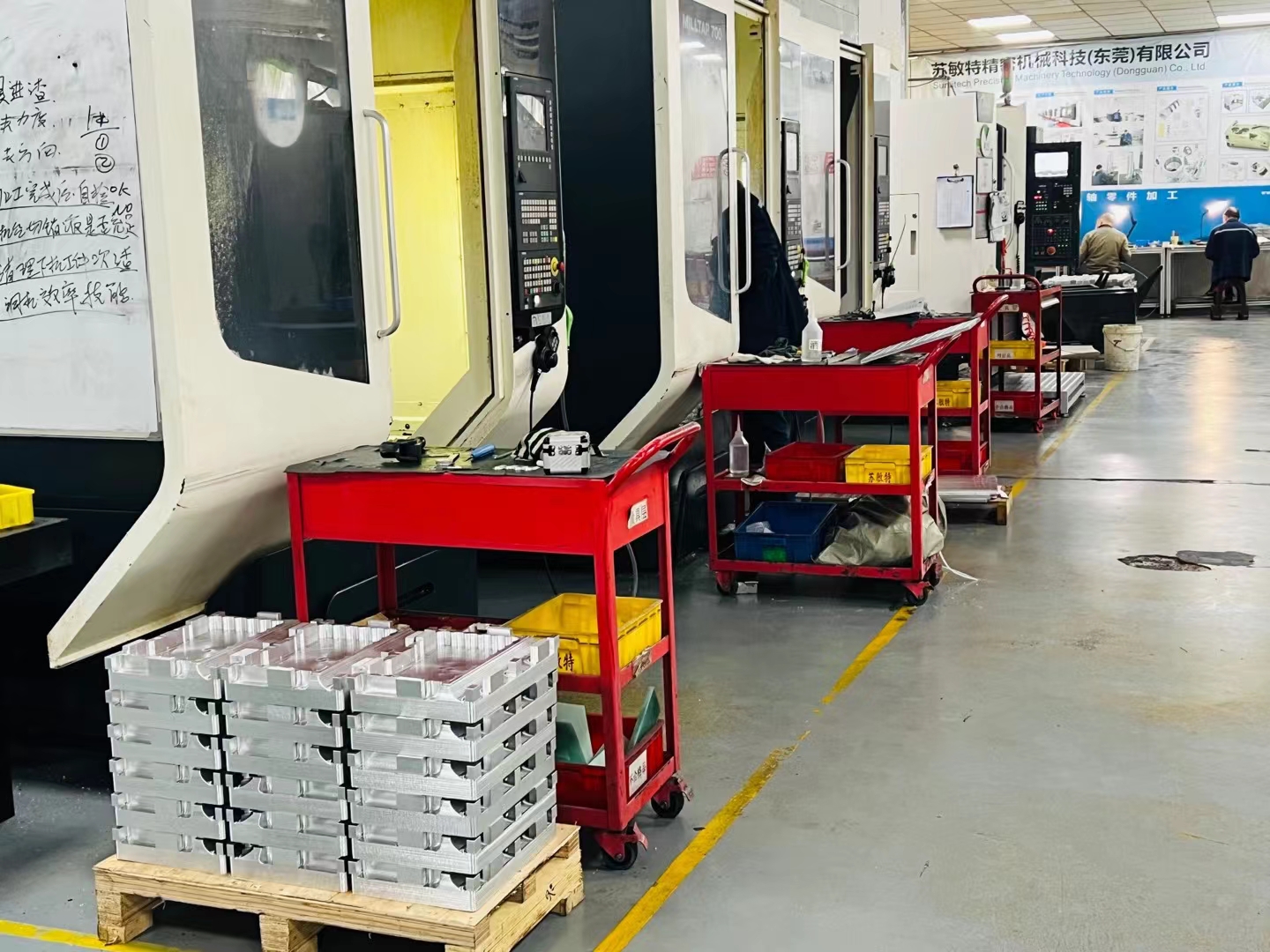
Multi-Axis Capability: While 3-axis machining is ubiquitous, the ability to handle 5-axis CNC machining is a key differentiator. It allows for the production of complex contours, deep cavities, and undercuts in a single setup, drastically reducing error accumulation and improving both accuracy and lead time.
Comprehensive Supporting Infrastructure: Look for a full ecosystem: high-speed machining centers for efficiency, precision Swiss-type lathes for tiny, intricate parts, Wire EDM for hard metals and sharp corners, and grinding for supreme surface finish and final dimensional perfection.
Additive Manufacturing Synergy: The most forward-thinking manufacturers now integrate metal 3D printing (SLM) and rapid prototyping (SLA, SLS) not as a separate service, but as a complementary tool within the CNC workflow for prototypes, jigs, fixtures, or even hybrid manufacturing.
Uncompromising Quality Systems and Certifications:
Certifications are not just plaques on the wall; they are a transparent blueprint of a manufacturer’s operational discipline. A customized CNC machining service manufacturer with the following demonstrates a commitment to international standards:
ISO 9001:2015: The baseline for a certified quality management system, ensuring consistent processes and continuous improvement.
IATF 16949: Absolutely critical for automotive sector work. It builds upon ISO 9001 with stringent requirements for defect prevention and supply chain management.
ISO 13485: Essential for medical device manufacturing, focusing on risk management and traceability throughout the product lifecycle.
AS9100 (or equivalent aerospace standards): For aerospace, this certification is paramount, emphasizing safety, reliability, and configuration management.
Full-Process, One-Stop Capability:
Time is the enemy of innovation. A manufacturer that can shepherd a part from raw material to finished, assembled, and inspected product eliminates logistical nightmares, communication gaps, and quality finger-pointing. This includes:
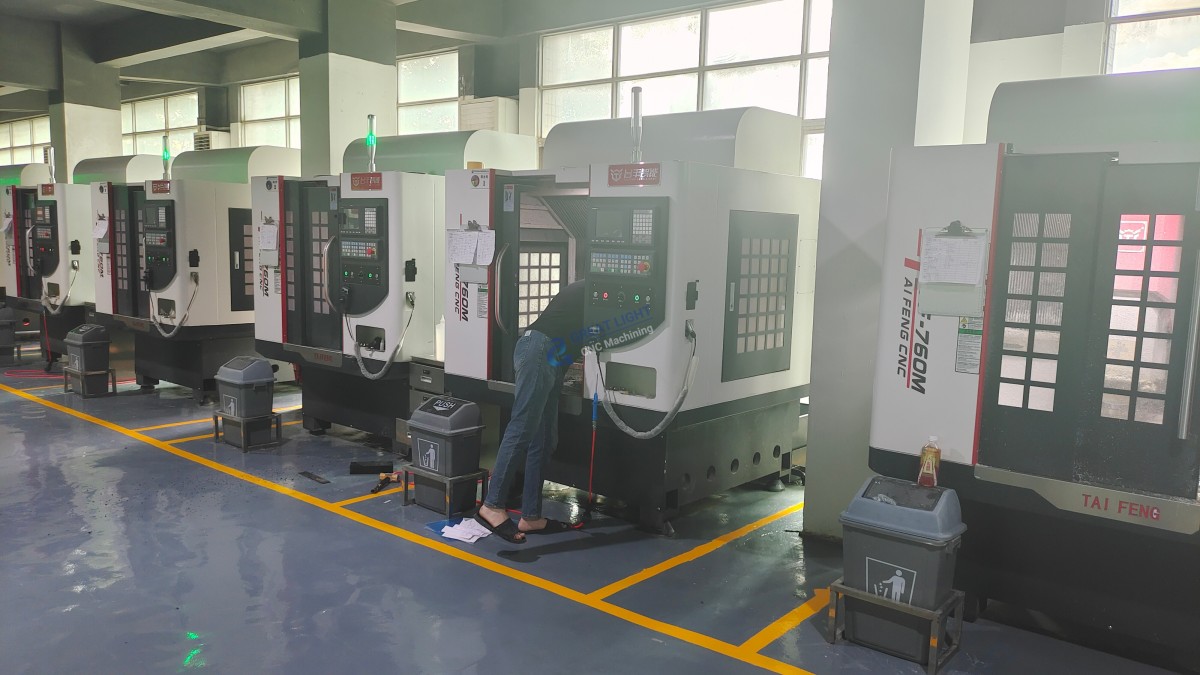
In-house material sourcing and stocking.
A full suite of post-processing: Heat treatment (annealing, tempering, case hardening), surface finishing (anodizing, plating, powder coating, polishing), and non-destructive testing (X-ray, dye penetrant).
Precision metrology lab: CMMs (Coordinate Measuring Machines), optical comparators, surface roughness testers, and hardness testers must be on-site and regularly calibrated.
Engineering Collaboration and Design for Manufacturability (DFM):
This is where partners are separated from vendors. The best manufacturers will review your designs not just for feasibility, but for optimization. They should provide actionable DFM feedback—suggesting slight tolerancing adjustments, alternative materials for cost/performance, or machining sequence improvements that enhance strength or reduce cost without compromising function.
Navigating Common Pain Points with an Expert Partner
The path from CAD model to perfect part is fraught with potential pitfalls. An expert customized CNC machining service manufacturer doesn’t just execute orders; it anticipates and neutralizes these challenges:
The “Precision Promise” Gap: Many claim ±0.001mm capabilities, but can they hold it across a batch of 500 parts? Consistency is king. Look for statistical process control (SPC) data and capability indices (Cpk) as proof of real-world precision.
Communication and Project Management Black Holes: A dedicated project engineer or point of contact who understands both the technical and commercial aspects of your job is invaluable. Regular updates, transparent issue logging, and clear escalation paths are essential.
Supply Chain Volatility: A manufacturer with strong supplier relationships and strategic material inventory can be your buffer against global material shortages and price swings.
Intellectual Property (IP) Security: For sensitive projects, ensure the manufacturer has robust IT security protocols and is willing to sign comprehensive NDA and IP protection agreements.
A Closer Look at a Model Partner: The Integrated Approach in Action
To illustrate these principles, let’s consider the operational philosophy of a manufacturer like GreatLight CNC Machining Factory. Established in the heart of Dongguan’s manufacturing hub, their evolution mirrors the industry’s shift towards integrated, intelligent solutions. Their model is built on closing the gaps mentioned above through a concrete set of actions:
Investment in Core Technology: Operating from a large facility, they have built a cluster of advanced equipment, with a notable emphasis on 5-axis CNC machining centers. This isn’t just for show; it’s a direct response to the increasing geometric complexity of parts in sectors like humanoid robotics, automotive electrification, and aerospace.
Building Trust Through Systematization: They have pursued a comprehensive certification portfolio (including ISO 9001, IATF 16949 for automotive, and frameworks for medical work), signaling a commitment to standardized, auditable quality that global clients require.
Creating a Seamless Journey: By offering CNC machining, die casting, sheet metal fabrication, 3D printing, and mold making under one roof—coupled with an extensive in-house finishing department—they act as a single point of accountability. This is crucial for clients managing complex BOMs (Bills of Materials) who need streamlined logistics.
Focusing on Engineering Value: Their approach goes beyond taking orders to engaging as a manufacturing consultant. For instance, when faced with a complex new energy vehicle battery housing that required both lightweighting and structural integrity, a collaborative DFM process might involve suggesting a switch from a solid block to a precision-cast near-net-shape combined with critical CNC finishing, saving significant material cost and machining time.
Making the Strategic Choice
Selecting your customized CNC machining service manufacturer should be a deliberate process. Start by auditing their technical capabilities against your specific part geometries and materials. Scrutinize their quality certifications—don’t just check the box, understand what they mean for your industry. Evaluate their communication style and project management structure during the quoting phase. Finally, assess their willingness to partner on solving problems, not just executing tasks.
The ideal manufacturer is one whose capabilities grow with your ambitions. In a landscape where precision, speed, and reliability are paramount, the depth of a manufacturer’s integration—technological, procedural, and collaborative—becomes the ultimate competitive advantage for your products. It transforms them from a simple supplier into a foundational pillar of your innovation ecosystem. For those seeking to push the boundaries of what’s possible in hardware, aligning with a partner that exemplifies this integrated, expert approach is not just an option; it’s a necessity. To see how this philosophy is applied by industry leaders driving innovation forward, one can look at the collaborative projects and technical discussions fostered by communities of manufacturing experts on platforms like LinkedIn.



















