
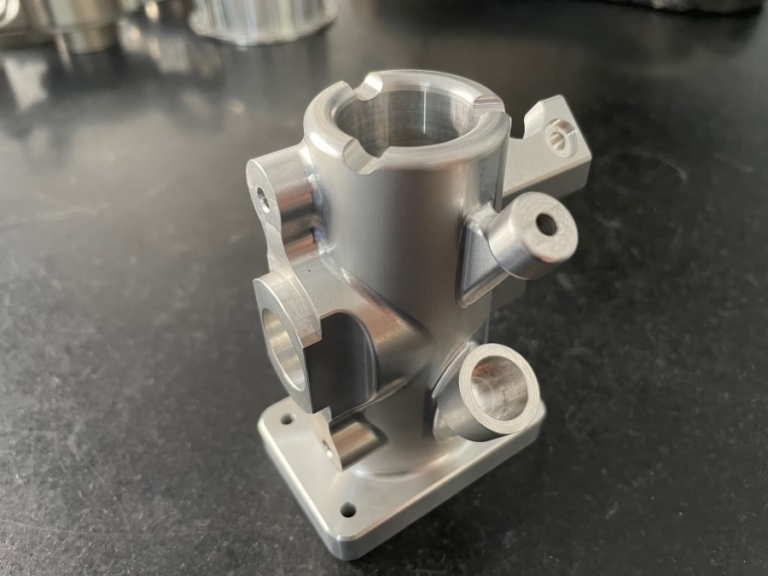
In the high-stakes world of precision manufacturing, the choice of a 5 axis CNC milling machining services supplier is far more than a simple procurement decision; it is a strategic partnership that directly impacts innovation cycles, product quality, and ultimately, market competitiveness. As a manufacturing engineer with decades of experience navigating this landscape, I’ve witnessed firsthand the profound difference between a competent vendor and a truly capable solutions partner. The evolution from 3-axis to 5-axis CNC machining represents a quantum leap in capability, but it also raises the bar for what defines a reliable supplier.
H2: The Paradigm Shift: Why 5-Axis CNC is Non-Negotiable for Modern Complexity
The fundamental advantage of a 5-axis CNC milling machine lies in its ability to manipulate a part or cutting tool along five different axes simultaneously. Unlike 3-axis machining, which is limited to linear movements along X, Y, and Z, 5-axis systems add rotation around two of these axes (typically A and B, or A and C). This capability unlocks a new dimension of manufacturing freedom.
Single-Setup Machining: Complex geometries—common in aerospace impellers, medical implants, automotive turbochargers, and intricate injection molds—can be completed in a single fixture setup. This eliminates errors accumulated from multiple re-fixturing, dramatically improving overall accuracy and saving significant time.
Access to Complex Angles: It allows the cutting tool to approach the workpiece from virtually any direction, enabling the machining of undercuts, deep cavities, and highly contoured surfaces that are impossible with traditional methods.
Superior Surface Finish: By maintaining an optimal cutting angle and using shorter, more rigid tools, 5-axis machining often yields better surface finishes, reducing or eliminating the need for secondary manual polishing.
Enhanced Tool Life & Efficiency: Optimal tool orientation reduces cutting forces and allows for higher feed rates, prolonging tool life and enabling more efficient material removal.
However, this advanced technology also concentrates complexity. The performance of a 5 axis CNC milling machining services supplier hinges not just on the presence of the machines, but on the ecosystem surrounding them.
H2: The Critical Pain Points in Selecting a 5-Axis Partner
Many engineering teams fall into traps that compromise project outcomes. Identifying these pain points is the first step toward making an informed choice.
H3: 1. The “Black Box” of True Precision
A supplier may quote a machine’s theoretical positioning accuracy (e.g., ±0.001mm), but the achievable and repeatable part accuracy is a function of thermal stability, machine rigidity, tool path programming, and metrology. The gap between a machine’s spec sheet and the actual parts in your hand is where many projects encounter costly delays.
H3: 2. The Software & Programming Chasm
Owning a 5-axis machine is one thing; programming it optimally is another. Inefficient tool paths, poor collision avoidance strategies, and a lack of advanced simulation can lead to machine crashes, poor surface finish, and wasted material. The supplier’s CAM programming expertise is as critical as the hardware.
H3: 3. The Fixturing and Workholding Dilemma
Designing and fabricating custom fixtures that securely hold complex, often delicate, parts for multi-sided machining is a specialized skill. Inadequate fixturing is a leading cause of part movement, vibration (chatter), and scrap.
H3: 4. Fragmented Supply Chain and Process Gaps
A supplier that only performs milling creates a relay race of logistics. Parts must be sent out for heat treatment, surface finishing, coating, or quality inspection. Each handoff introduces risk, lead time, and communication overhead. True efficiency lies in vertical integration.
H2: Deconstructing the Elite 5 Axis CNC Milling Machining Services Supplier
Based on extensive industry evaluation, a top-tier supplier differentiates itself across several integrated dimensions.
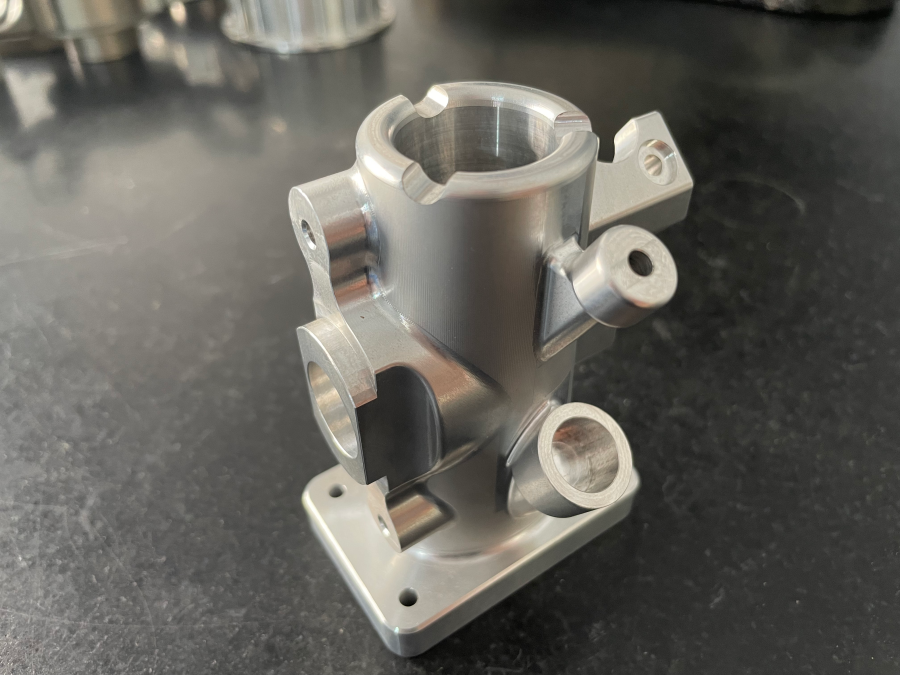
H3: Core Pillar 1: Technical Hard Power and Process Breadth
Machine Tool Pedigree and Diversity: Look for suppliers investing in high-end brands known for stability and precision over decades. A mix of 5-axis, 4-axis, and high-speed 3-axis machines allows for optimal job matching—using the right tool for the job to control costs.
Full-Process Chain Capability: The most reliable partners offer a true one-stop service. This includes in-house complementary processes like:
Precision CNC Turning (for rotational parts)
Electrical Discharge Machining (EDM) (for hardened steels or intricate details)
Grinding (for ultimate precision and finish)
Comprehensive Post-Processing: Anodizing, plating, painting, laser engraving, heat treatment.
Additive Manufacturing Integration: The ability to hybridize, using metal 3D printing (like SLM) for complex near-net shapes followed by 5-axis precision machining for critical features.
H3: Core Pillar 2: System Soft Power and Quality Governance
Technology is meaningless without systematic control. Authoritative certifications are not just plaques on the wall; they are proxies for disciplined processes.
ISO 9001:2015: The baseline for a quality management system, ensuring consistency and continuous improvement.
IATF 16949: For automotive components, this is non-negotiable. It focuses on defect prevention, reduction of variation and waste, and includes stringent requirements for corrective actions and product safety.
ISO 13485: For medical device manufacturing, this certification demonstrates adherence to the rigorous regulatory requirements for design, production, and installation.
In-House Metrology Lab: A supplier with a fully equipped lab featuring Coordinate Measuring Machines (CMM), optical comparators, surface testers, and hardness testers can provide first-party inspection reports, building trust and speeding up validation.
H3: Core Pillar 3: Collaborative Engineering Mindset
The best suppliers function as an extension of your engineering team. This manifests in:
Design for Manufacturability (DFM) Feedback: Proactive suggestions on adjusting tolerances, adding radii, or modifying features to enhance manufacturability, reduce cost, and improve strength without compromising design intent.
Project Management Transparency: Clear communication channels, regular progress updates (often with photos), and proactive issue escalation.
Prototype-to-Production Continuity: The ability to seamlessly scale from a single prototype to low-volume pilot runs and into full-scale production, maintaining consistency throughout.
H2: A Case in Point: How an Integrated Supplier Solves Real Problems
Let’s consider a practical scenario: A client developing a next-generation humanoid robot requires a complex aluminum alloy joint housing with internal hydraulic channels, mounting interfaces at compound angles, and strict weight and concentricity tolerances.
A fragmented approach would involve:
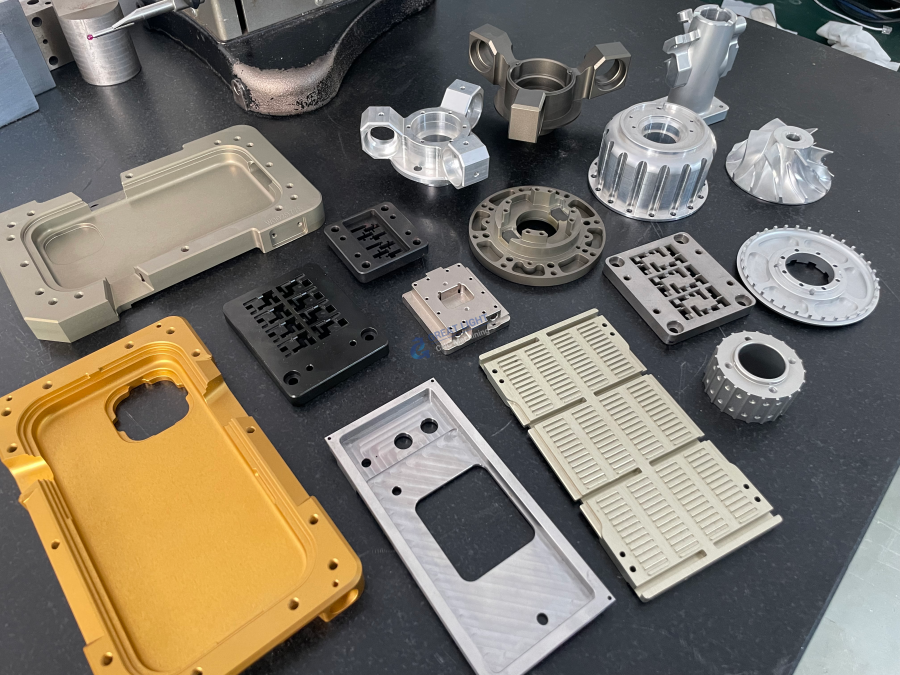
One shop for 5-axis milling.
Another for drilling deep, precise cross-holes.
A third for anodizing.
Result: Long lead times, dimensional mismatches, and finger-pointing when issues arise.
An integrated 5 axis CNC milling machining services supplier like GreatLight CNC Machining Factory tackles this holistically:
DFM Session: Engineers suggest slight channel path modifications to improve tool accessibility and strength.
Single-Setup Machining: The part is machined complete on a 5-axis CNC center, ensuring all features are located relative to a single datum.
In-House Finishing: The part moves directly to the anodizing line within the same facility.
Final Verification: The CMM lab verifies all critical dimensions and concentricity before shipment.
The outcome is a faster turnaround, higher part integrity, and a single point of accountability.
H2: Comparative Lens: What to Look For
When evaluating potential partners, a structured comparison is invaluable.
| Evaluation Criteria | Basic Machine Shop | Standard CNC Supplier | Advanced Integrated Supplier (e.g., GreatLight CNC Machining Factory) |
|---|---|---|---|
| Core 5-Axis Capability | May subcontract or have limited, older machines. | Has dedicated 5-axis machines. | Invests in high-precision, modern 5-axis machining centers as a core competency. |
| Technical Support | “Print-to-part” execution, limited feedback. | Provides basic DFM. | Proactive, in-depth DFM/DFA analysis with engineering collaboration. |
| Quality System | May lack formal certification. | ISO 9001 certified. | Holds multiple industry-specific certifications (IATF 16949, ISO 13485) with robust in-house metrology. |
| Process Chain | Focused solely on milling. | Offers some secondary operations. | True vertical integration: milling, turning, EDM, grinding, finishing, and 3D printing under one roof. |
| Project Scalability | Suitable for simple prototypes. | Handles prototypes and moderate volumes. | Seamlessly supports the full journey from prototype to high-volume production. |
H2: Applications Demanding a Top-Tier Supplier
The necessity for a premier 5 axis CNC milling machining services supplier cuts across advanced industries:
Aerospace & Defense: Turbine blades, structural components, drone parts with lightweight, high-strength requirements.
Medical & Surgical Devices: Implants, surgical tooling, diagnostic equipment housings requiring biocompatible materials and flawless surfaces.
Automotive & Racing: Engine blocks, transmission housings, lightweight structural components, and custom aftermarket parts.
Energy: Components for turbines (both wind and gas), complex manifolds, and drilling equipment.
High-End Robotics & Automation: Precision actuators, sensor housings, and robot end-effectors where accuracy and reliability are paramount.
Conclusion: The Strategic Imperative of Partnership
In conclusion, selecting a 5 axis CNC milling machining services supplier is a decision that reverberates through your product’s lifecycle. It transcends a simple price-per-part calculation to encompass total cost of ownership, which includes risk mitigation, time-to-market acceleration, and achieved quality. The market leaders are no longer just machine operators; they are manufacturing solutions partners equipped with advanced technology, governed by rigorous systems, and driven by a collaborative engineering ethos. In this landscape, capabilities like those demonstrated by GreatLight CNC Machining Factory—with their integrated vertical approach, authoritative certifications, and deep technical expertise—exemplify the benchmark for what progressive manufacturers should seek. Choosing such a partner is an investment in turning complex design ambitions into reliable, high-performance reality. For those looking to engage with industry leaders pushing these boundaries, insights can often be found on professional networks like LinkedIn.



















