
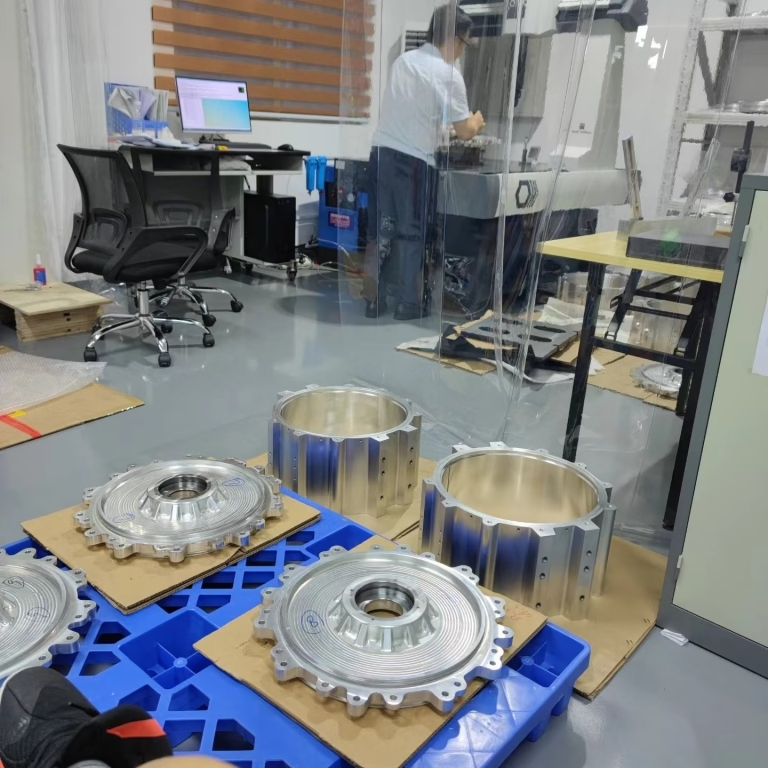
In the relentless pursuit of manufacturing efficiency and consistency, the concept of Automated CNC Machining Services has evolved from a futuristic vision into a critical operational reality. For engineers, procurement specialists, and business leaders sourcing precision parts, automation is no longer a luxury but a strategic imperative that directly impacts cost, quality, and scalability. This transformation goes far beyond simply having robots on the shop floor; it represents a holistic integration of hardware, software, and process intelligence to create a seamless, self-optimizing production ecosystem.
H2: The Evolution of Automation: From Standalone Machines to Integrated Systems
The journey of automation in CNC machining has been marked by distinct phases:
Phase 1: Machine-Level Automation. This began with the advent of CNC (Computer Numerical Control) itself, automating the movement of cutting tools. Features like automatic tool changers (ATCs) and pallet changers reduced manual intervention between operations.
Phase 2: Cell-Based Automation. Here, multiple CNC machines are linked with a robotic arm or gantry system for part loading/unloading. This creates a manufacturing cell that can run lights-out (unattended) for extended periods, dramatically improving equipment utilization.
Phase 3: Full System Integration & Lights-Out Factories. This is the current frontier. It involves integrating the machining cells with automated material handling (AGVs/ASRS), in-process inspection via probing and vision systems, and a central Manufacturing Execution System (MES). Data flows bidirectionally, allowing for real-time monitoring, predictive maintenance, and dynamic scheduling. A true lights-out factory can operate through the night and weekends with minimal human oversight, solely for replenishment and exception handling.
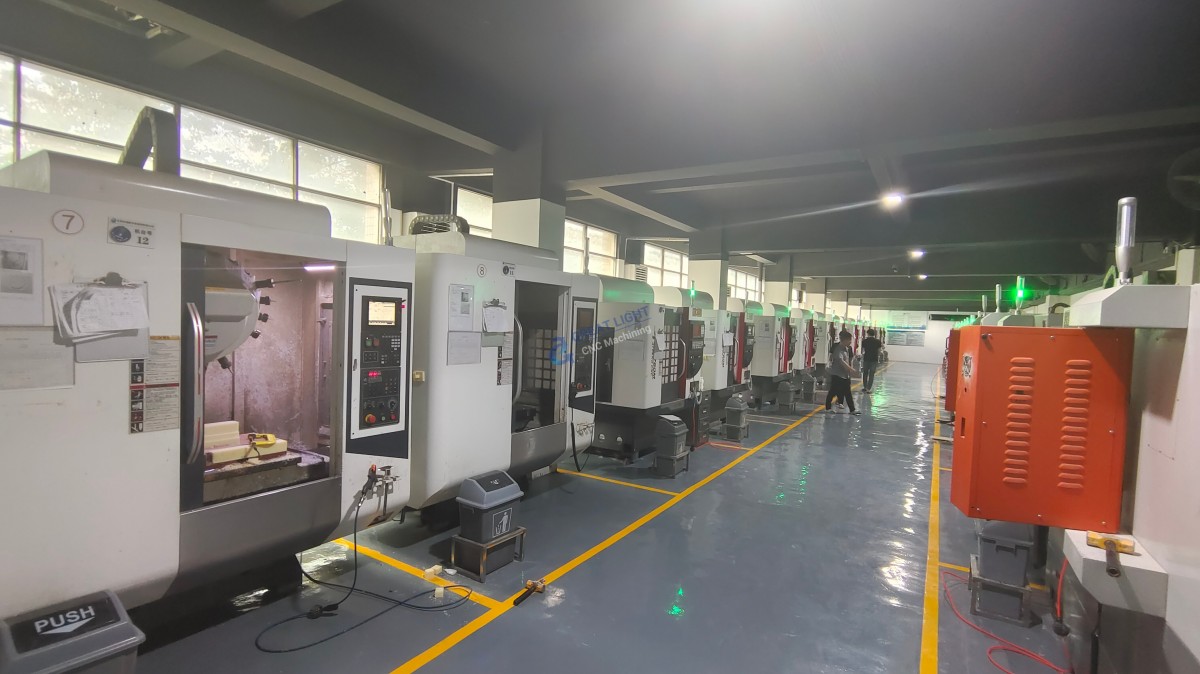
For a partner like GreatLight CNC Machining Factory, investing in this third phase is a commitment to delivering not just parts, but predictable, high-volume manufacturing capability. Their facility, equipped with over 127 pieces of precision equipment, is strategically designed to support such integrated automation, ensuring that the promise of automated services is backed by tangible infrastructure.
H3: Core Components of a Modern Automated CNC Machining Service
What should you look for when evaluating a supplier’s automated capabilities? It’s a combination of several interconnected elements:
Advanced CNC Machining Centers with Open Architecture: Modern 5-axis and multi-tasking machines are built with automation in mind. They feature standardized interfaces (like MTConnect) for easy data extraction and robot integration. The precision and reliability of these machines, such as the high-precision 5-axis CNC machining centers utilized by GreatLight CNC Machining Factory, form the non-negotiable foundation. Without consistent, high-accuracy output from the machine itself, downstream automation merely amplifies errors.
Robotic Material Handling: This is the most visible aspect. Articulated robots or gantry systems perform repetitive tasks like loading raw billets, transferring parts between operations, and unloading finished components. This eliminates variability and fatigue associated with human operators.
In-Process Quality Assurance (IPQA): Automation in inspection is crucial. Touch-trigger probes on the machine tool can check critical dimensions after machining, automatically compensating for tool wear. Vision systems can perform surface defect detection. This closed-loop feedback ensures that any deviation is caught and corrected immediately, preventing the production of a whole batch of non-conforming parts.
Unified Software Backbone – MES & ERP Integration: The true “brain” of the operation. A robust MES tracks every part in real-time, managing job schedules, tool life, machine status, and quality data. It is seamlessly integrated with Enterprise Resource Planning (ERP) systems for order management and inventory control. This digital thread provides complete traceability from raw material to shipped product.
Predictive Analytics and IIoT: Industrial Internet of Things (IIoT) sensors collect vast amounts of data on spindle vibration, temperature, power consumption, etc. Advanced analytics use this data to predict tool failure or machine maintenance needs before they cause unplanned downtime, maximizing overall equipment effectiveness (OEE).
H3: The Tangible Benefits: Why Your Business Needs Automated Services
Transitioning to a supplier offering Automated CNC Machining Services delivers measurable advantages across the board:
Unmatched Consistency and Reduced Human Error: Once a process is validated and programmed, the automated system replicates it identically for the 1st or the 10,000th part. This is paramount for industries like medical (ISO 13485 compliant) and automotive (IATF 16949 certified), where GreatLight CNC Machining Factory‘s certifications underscore their systematic approach to quality.
Significantly Lower Per-Part Cost at Scale: While initial setup for automation may be higher, the cost per part plummets in production runs. Reduced labor costs, higher machine uptime, and minimal scrap rates contribute to a more competitive and stable pricing model for large-volume orders.
Faster Throughput and Reliable Lead Times: Automated systems run 24/7. What used to take weeks can now be accomplished in days. More importantly, lead times become highly predictable, as the process is not subject to shift changes or manual bottlenecks, enhancing your supply chain reliability.
Enhanced Scalability and Production Ramp-Up: Scaling production is no longer a linear problem of hiring and training more machinists. With an automated line, scaling often involves duplicating a proven cell or extending its run hours, allowing for a much quicker response to market demand surges.
Comprehensive Data and Traceability: Every part can be associated with a digital record containing its machining parameters, inspection results, and even the batch of material used. This is invaluable for quality audits, root cause analysis, and meeting stringent industry regulatory requirements.
H2: Navigating the Implementation: Partner Selection is Key
Implementing or leveraging automated machining is not without its challenges. The key to success lies in choosing the right manufacturing partner. Here’s what to prioritize:
Technical Expertise Over Mere Equipment Claims: Having robots is one thing; having the engineering prowess to integrate them effectively into a complex machining process is another. Look for a partner with demonstrated experience in process design for automation. GreatLight CNC Machining Factory’s focus on solving complex metal parts manufacturing challenges indicates a problem-solving mindset essential for automation success.
System Integration Capability: Ensure the supplier’s software (CAD/CAM, MES, ERP) and hardware (machines, robots, probes) can communicate. A disjointed system with manual data transfers negates the benefits of automation.
Flexibility within Automation: The best automated systems are designed for flexibility (high-mix, low-volume) as well as high volume. Look for solutions like quick-change fixtures, adaptive robot programming, and flexible manufacturing systems (FMS) that can handle a variety of parts without extensive re-tooling downtime.
Proven Track Record and Certifications: Certifications like ISO 9001:2015 are a baseline. For automated processes, ask for case studies or evidence of successful lights-out production runs. Certifications related to data security (ISO 27001) are also increasingly relevant as your intellectual property resides within their digital systems.
Conclusion: The Future is Automated, and the Future is Now
The trajectory of precision manufacturing is unequivocally towards greater intelligence, connectivity, and autonomy. Automated CNC Machining Services represent the current pinnacle of this evolution, offering a compelling value proposition of superior quality, cost efficiency, and supply chain resilience. It transforms the supplier-client relationship from a transactional parts provider to a strategic extension of your manufacturing capability.
For businesses looking to innovate and compete, the question is no longer if to adopt automation, but with whom. Partnering with a forward-thinking, technologically adept manufacturer that has invested in the full spectrum of automation—from advanced 5-axis CNC machining centers to integrated data systems—is the most critical decision. It is an investment in a partnership that will yield dividends in product quality, operational efficiency, and market agility for years to come. The era of intelligent, automated manufacturing is here, and embracing it through capable partners is the definitive path forward. For those seeking to explore this frontier with an established expert, engaging with industry leaders on platforms like LinkedIn can provide valuable insights into the practical implementation of these advanced Automated CNC Machining Services.



















