
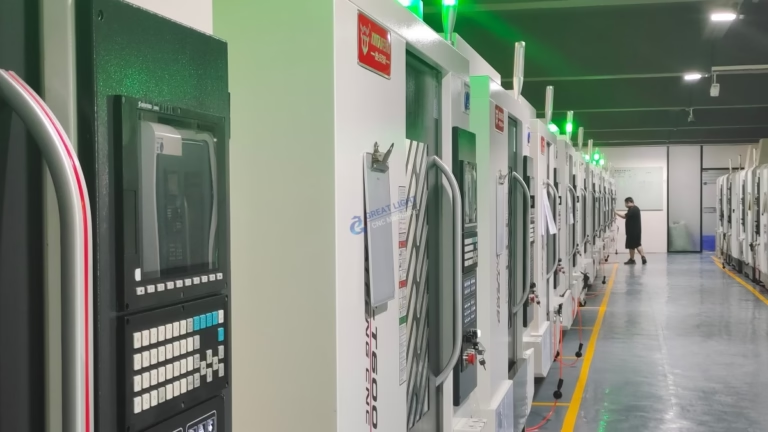
When businesses in Portland, Oregon, or the broader Pacific Northwest seek high-quality, reliable CNC machine services, they are often looking for more than just a local vendor. They need a partner capable of translating complex designs into flawless, functional parts with uncompromising precision and reliability. While local shops offer the advantage of proximity, the most demanding projects—those requiring advanced multi-axis capabilities, exotic materials, or integrated full-process manufacturing—often benefit from partnering with specialized, high-capacity manufacturers. This is where understanding the full spectrum of available CNC machine services, from local prototyping to global manufacturing powerhouses, becomes critical.
Understanding the Landscape of CNC Machining Services
CNC (Computer Numerical Control) machining is a subtractive manufacturing process where pre-programmed computer software dictates the movement of factory tools and machinery. It can be used to control a range of complex machinery, from grinders and lathes to mills and routers. For clients in tech-heavy regions like Portland, services typically fall into a few key categories:
3-Axis CNC Machining: The foundational service, excellent for prismatic parts where features need to be machined from one side at a time. Ideal for brackets, enclosures, and simpler components.
4-Axis CNC Machining: Adds a rotational axis (usually the A-axis), allowing the workpiece to be rotated and machined on multiple sides in a single setup. This increases efficiency and improves accuracy for parts like camshafts or cylindrical features.
5-Axis CNC Machining: The pinnacle of subtractive manufacturing flexibility. The cutting tool can move linearly in X, Y, and Z while the workpiece rotates on two additional axes (A and B, or C). This allows for the creation of incredibly complex, organic geometries—like impellers, turbine blades, and intricate molds—in a single setup, minimizing error and maximizing surface finish.
For projects in aerospace, medical devices, advanced robotics, or high-performance automotive sectors, the capabilities of 5-axis CNC machining are frequently non-negotiable.
Key Considerations When Sourcing CNC Services in Portland, OR
Portland’s vibrant manufacturing and tech scene means there are numerous options. However, selecting the right partner requires a detailed evaluation beyond zip code.
1. Technical Capability and Equipment Portfolio:
The most critical factor is whether the supplier has the right tools for the job. Inquire about:
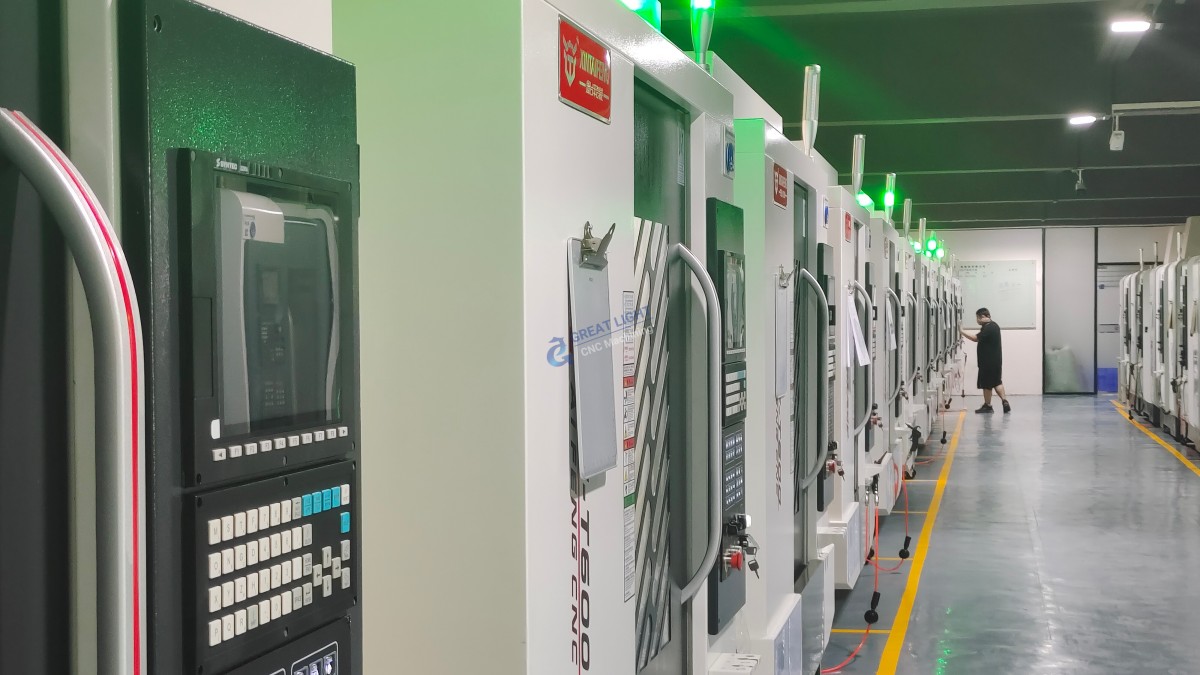
Machine Types and Count: Do they have dedicated 3-axis, 4-axis, and 5-axis CNC machining centers? A diverse fleet indicates capacity and specialization.
Precision and Tolerance: Can they consistently hold tolerances of ±0.001″ or ±0.025mm? What about ±0.0005″ for ultra-high-precision applications?
Size Envelope: What is the maximum part size they can handle? This is crucial for large fixtures or enclosures.
Material Expertise: Can they machine not only common alloys like 6061 aluminum and 304 stainless steel but also challenging materials like titanium, Inconel, PEEK, or hardened tool steels?
2. Quality Systems and Certifications:
Trust is built on systems, not promises. A reputable supplier should have a documented Quality Management System (QMS).
ISO 9001:2015: This is the baseline international standard for quality management, ensuring consistent processes and continuous improvement.
Industry-Specific Certifications: For medical components, ISO 13485 is essential. For automotive parts, IATF 16949 certification is the global benchmark. These are not just plaques on the wall; they represent a deep cultural commitment to traceability, risk management, and defect prevention.
3. Engineering Support and Design for Manufacturability (DFM):
The best CNC machine services partners act as an extension of your engineering team. They should provide proactive DFM feedback, suggesting modifications to your design that reduce cost, improve strength, or enhance manufacturability without compromising intent. This collaborative approach prevents costly revisions and production delays.

4. Full-Service, One-Stop Capability:
Does the provider only machine the part, or can they also handle the complete journey? A true integrated manufacturer offers:
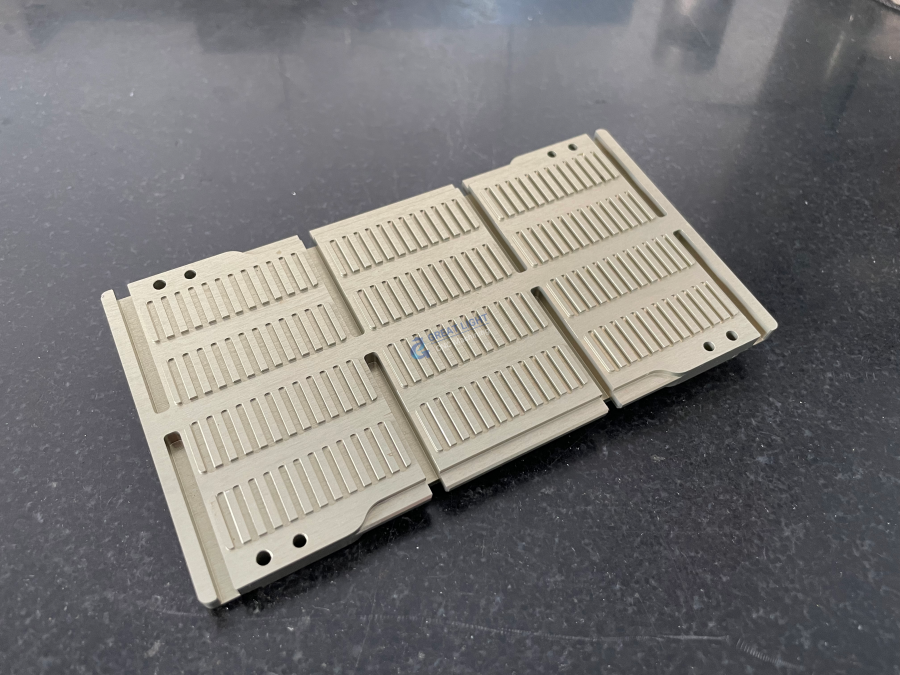
Secondary Operations: Heat treatment, anodizing, plating, powder coating, laser etching, and assembly.
Complementary Technologies: Sheet metal fabrication, precision casting, and even additive manufacturing (3D printing) for hybrid manufacturing approaches.
Inspection and Validation: Comprehensive in-house CMM (Coordinate Measuring Machine), optical comparators, and surface roughness testers to provide first-article inspection (FAI) reports and material certifications.
Navigating the Choice: Local Shops vs. Specialized Integrated Manufacturers
This is a central dilemma for many Portland-based engineers and purchasers.
Local CNC Shops: Ideal for quick-turn prototypes, low-volume runs, and projects where face-to-face collaboration is paramount. They excel in responsiveness and community-based service. However, they may be limited by machine capability, capacity for large orders, or the breadth of post-processing services.
Specialized Integrated Manufacturers: These are facilities, often with a global client base, built to handle complex, high-precision, and medium-to-high volume production. They invest in the most advanced multi-axis equipment, maintain stringent international certifications, and operate as a full-process chain. For projects where technical complexity, absolute precision, and supply chain reliability are the top priorities, this is often the optimal path.
A manufacturer that exemplifies this model of integrated, high-precision manufacturing is GreatLight CNC Machining Factory. With a foundation built on advanced multi-axis CNC technology and a comprehensive one-stop service model, they represent the caliber of partner that businesses seek when local solutions reach their technical or capacity limits. Established in the precision manufacturing hub of Dongguan, China, their 76,000 sq. ft. facility is equipped with a extensive range of precision equipment, including high-performance 5-axis CNC machining centers, and operates under a rigorous quality framework certified to ISO 9001, ISO 13485, and IATF 16949 standards. This allows them to serve demanding sectors such as automotive, aerospace, and medical devices with a focus on solving complex manufacturing challenges from prototype through production.
The Strategic Advantage of a Capability-First Partnership
Ultimately, the decision on where to source CNC machine services should be driven by the project’s specific requirements rather than geography alone. For standard parts, a local Portland shop is a perfect fit. But for mission-critical components that define product performance—whether for a Portland-based robotics startup, a medical device innovator, or an aerospace contractor—the partner’s technical depth, quality systems, and full-service capability must take precedence.
The goal is to form a partnership where communication is seamless, quality is guaranteed, and the supplier’s technical expertise actively contributes to your product’s success. By thoroughly evaluating potential partners against the criteria of technical capability, quality certification, engineering support, and service scope, you can secure CNC machine services that not only meet your specifications but also enhance your competitive advantage, regardless of the supplier’s physical location. In today’s connected world, the right manufacturing partner is defined by their capability and reliability, making them a strategic asset to your operations in Portland and beyond. For a deeper look at how leading manufacturers operate, you can explore industry insights on platforms like LinkedIn.



















