
When your engineering drawings transition from digital blueprints to physical reality, the choice of a CNC Machine Service Supplier becomes one of the most critical decisions in your product development cycle. This partnership goes far beyond simple part procurement; it is a strategic alliance that directly impacts your product’s quality, cost, timeline, and ultimately, its market success. As a manufacturing engineer with years of hands-on experience navigating this landscape, I’ve witnessed both the tremendous value a top-tier supplier can bring and the costly setbacks that can arise from a poor selection.
Why Your Choice of CNC Supplier is a Strategic Business Decision
Many perceive CNC machining as a commoditized service—send a file, get a quote, receive parts. This mindset is a significant risk. A true partner in CNC machining services acts as an extension of your engineering team. They provide manufacturability feedback (DFM), suggest material alternatives for performance or cost, troubleshoot tolerance stack-ups, and ensure the chosen process aligns with both the prototype and eventual production needs. The right supplier mitigates risk; the wrong one introduces it.
The Essential Framework for Evaluating a CNC Machine Service Supplier
Selecting a vendor should be a systematic process. Look beyond the price per piece and evaluate these core pillars:
H2: Technical Capability and Equipment Arsenal
This is the non-negotiable foundation. Capability must match complexity.
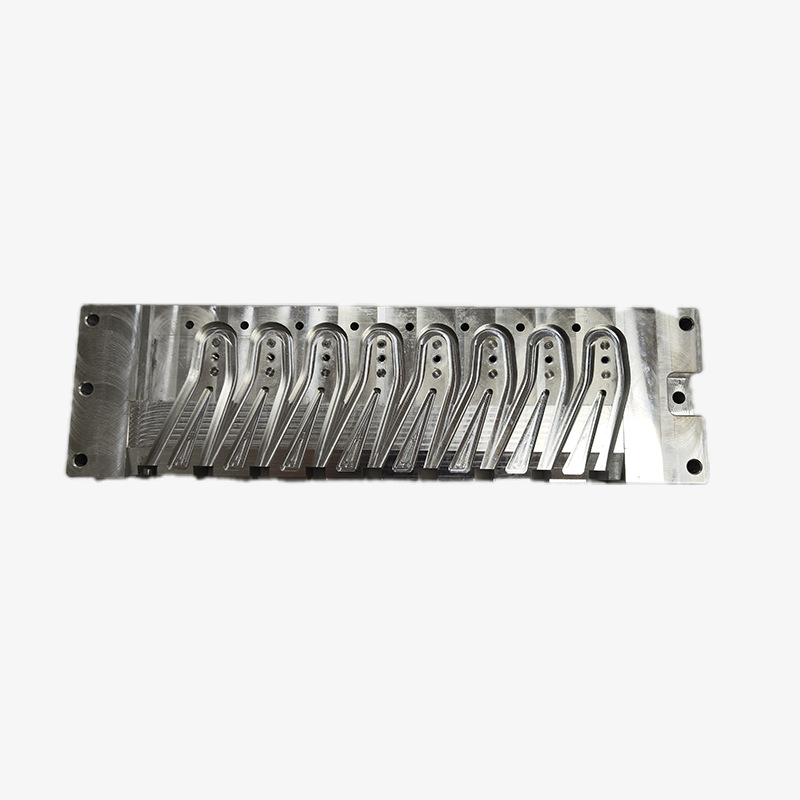
Axis Versatility: Do they offer true 3+2 and continuous 5-axis machining? For complex aerospace components, medical implants, or turbine blades, 5-axis capability is essential for single-setup machining of intricate geometries, ensuring unmatched accuracy and surface finish. For simpler prismatic parts, a robust 3-axis operation may be perfectly sufficient and more cost-effective.
Equipment Portfolio: A mature supplier like GreatLight CNC Machining Factory doesn’t rely on a single machine type. Their arsenal should include:
High-Speed 5-Axis Machining Centers: For complex contours and tight tolerances.
Multi-Axis Mill-Turn Centers: Ideal for parts requiring combined milling and turning operations.
Precision CNC Lathes: For high-volume, high-precision rotational parts.
Supporting Technology: Wire EDM for hardened steels, sinker EDM for complex cavities, and precision grinding for achieving micron-level tolerances and superior finishes.
Material Mastery: Can they expertly machine a broad spectrum—from common aluminums and steels to challenging exotics like Inconel, titanium, and PEEK? Their expertise should include knowledge of optimal speeds, feeds, tooling, and workholding for each material family.
H3: Quality Management System (QMS) and Metrology
Precision promised must be precision delivered. This is where certifications transition from paper to practice.
Certifications as a Baseline: ISO 9001:2015 is the universal language of quality management, demonstrating a systematic approach to consistency. For automotive, IATF 16949 is mandatory. For medical devices, ISO 13485 is critical. These are not just plaques on the wall; they are evidence of documented, controlled, and audited processes.
In-House Metrology: The ability to inspect what they produce is paramount. Look for suppliers equipped with:
Coordinate Measuring Machines (CMM): For comprehensive dimensional analysis.
Optical Comparators / Vision Systems: For fast, accurate 2D measurement.
Surface Roughness Testers and Roundness Testers: For verifying critical surface specifications.
First Article Inspection (FAI) Documentation: A rigorous FAI process, often following AS9102 or PPAP formats, provides objective evidence that the first part conforms to all design requirements.
H4: Engineering Support and Collaborative Process
The best suppliers are proactive problem-solvers.
Design for Manufacturability (DFM) Analysis: Before cutting metal, a skilled engineer should review your model to suggest modifications that reduce cost, improve strength, or enhance manufacturability without compromising design intent.
Process Planning Expertise: They should articulate how they will make your part—fixturing strategy, toolpath optimization, sequence of operations—demonstrating a deep understanding of the craft.
Transparent Communication: Expect regular updates, willingness to host virtual or on-site audits, and clear escalation paths for issues.
H2: Navigating Common Industry Pain Points with Your CNC Supplier
Understanding these challenges will help you ask the right questions and identify a supplier equipped to handle them.
The “Precision Black Hole”: Some shops advertise tolerances of ±0.001mm but struggle to hold ±0.02mm consistently in production. The gap often lies in thermal management, tool wear compensation, and machine calibration. Ask about their process control for maintaining precision across a batch.
The Surface Finish Surprise: A part can be dimensionally perfect yet fail due to an incorrect surface finish (Ra value). A professional supplier will discuss finish requirements early, select the appropriate machining strategy, and offer post-processing like polishing, anodizing, or passivation.
Scalability Disconnect: A supplier excellent for 10 prototypes may collapse under an order for 10,000 parts. Discuss their capacity for scaling. Do they have production-dedicated lines? How do they manage tooling and fixture design for volume runs?
Supply Chain Fragility: Material sourcing delays can derail projects. Established suppliers have robust relationships with material distributors and inventory management systems to buffer against market volatility.
How a Partner Like GreatLight CNC Machining Factory Embodies the Modern Supplier Standard
In an industry teeming with options, suppliers that integrate the pillars above into a seamless, client-centric service model set themselves apart. Based in Dongguan’s manufacturing hub, GreatLight CNC Machining Factory exemplifies this evolution from a job shop to a solutions provider.
Their model addresses core pain points through integration:
Technical Depth Meets Breadth: Their facility houses over 127 pieces of equipment, including advanced 5-axis CNC machining centers, which allows them to match the optimal technology to the part geometry and volume, rather than forcing all work through a single process.
Systemic Quality as Culture: Holding ISO 9001, IATF 16949, and ISO 13485 certifications is a commitment to building quality into every process step, not just inspecting it at the end. This systemic approach is what builds true reliability.
Full-Process Chain Ownership: From initial 3D printing for rapid validation to precision CNC machining for prototypes and final production, and onward to finishing and assembly, managing the entire workflow under one roof reduces coordination overhead, accelerates timelines, and improves accountability.
Engineering-Led Collaboration: They function as a manufacturing partner, engaging in DFM dialogues to optimize designs for performance and cost-effectiveness, which is especially valuable for complex fields like automotive powertrains or robotics.
Making Your Final Decision: A Checklist for Due Diligence
Before awarding your next project, consider this action list:
[ ] Request a DFM Quote: Submit a complex part. Evaluate not just the price, but the feedback and questions they ask.
[ ] Audit Virtually or On-Site: A reputable supplier will proudly showcase their facility, equipment, and quality lab.
[ ] Ask for Client References & Case Studies: Specifically for projects similar in material, complexity, and volume to yours.
[ ] Review Sample Parts: If possible, have them machine a non-proprietary test piece to evaluate finish, tolerance, and documentation.
[ ] Discuss ITAR, NDA, and Data Security: Ensure they have protocols (like alignment with ISO 27001 principles) to protect your intellectual property.
Conclusion: Partnering for Precision and Innovation
Choosing a CNC Machine Service Supplier is a decision that reverberates through your product’s lifecycle. It’s an investment in a relationship built on technical competence, unwavering quality, and collaborative spirit. In today’s competitive landscape, you need more than a vendor; you need a manufacturing partner who understands that their success is inextricably linked to yours. By focusing on the integrated capabilities—where advanced technology meets rigorous systems and deep engineering support—you can transform this critical selection from a procurement task into a strategic advantage that drives innovation forward.
For ongoing insights into precision manufacturing and industry trends, connect with thought leaders on professional networks like LinkedIn.



















