
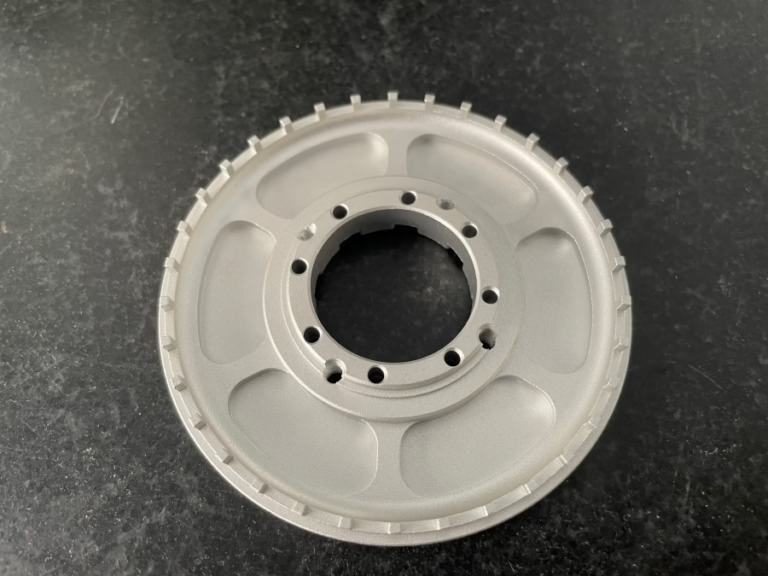
When a product transitions from the prototyping phase to market launch, the manufacturing focus shifts dramatically. It’s no longer about producing a single, perfect proof-of-concept but about replicating that precision, quality, and cost-effectiveness across thousands, or even millions, of units. This is the critical domain of volume CNC machining services, a discipline where efficiency, consistency, and systemic reliability are just as important as the machining skill itself. For businesses scaling up, choosing the right manufacturing partner for high-volume production is a decision that impacts supply chain stability, product quality, and ultimately, profitability.
H2: The Unique Challenges of Scaling from Prototype to Volume Production
Moving to volume CNC machining is not simply a matter of running the same program more times. It introduces a new layer of complexity that tests a manufacturer’s foundational systems.
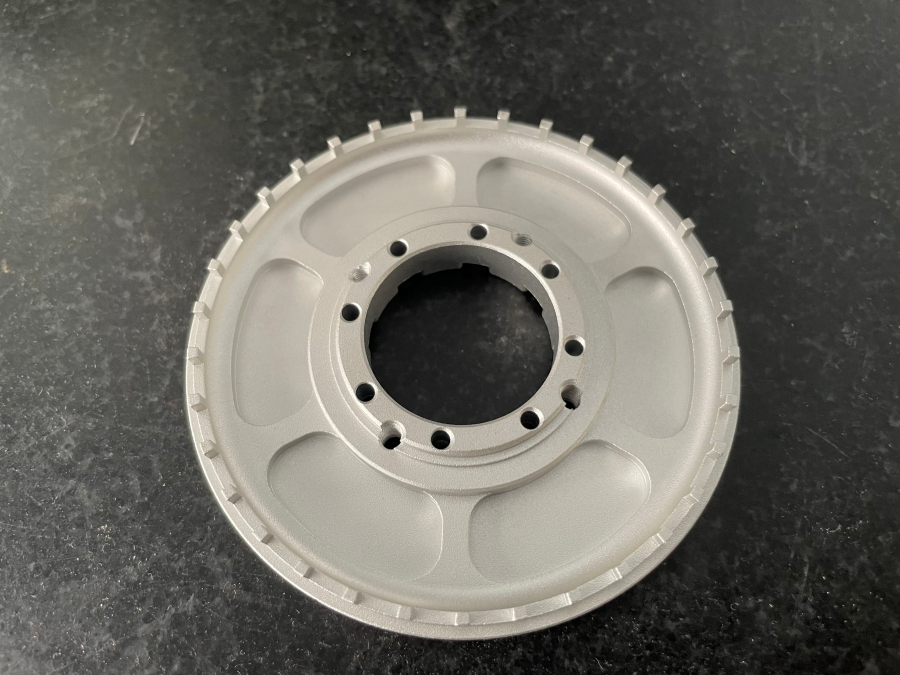
Consistency as King: While a prototype might be measured once, volume production requires statistical process control (SPC). Can the supplier maintain a tight tolerance like ±0.025mm across every single part in a batch of 10,000? Variability is the enemy, often caused by tool wear, thermal effects on machines, material batch differences, and human intervention.
The Cost Equation: The economics change entirely. The dominant cost driver shifts from machine programming/setup time to raw material utilization, cycle time optimization, and tooling longevity. A supplier skilled in volume work will have strategies for nesting parts to minimize waste, optimizing feed rates and speeds, and implementing preventive tool maintenance schedules.
Supply Chain and Logistics: Volume production demands a robust supply chain for raw materials and a seamless logistics plan for delivering large quantities on schedule. Any disruption—a delayed material shipment or a capacity bottleneck—can ripple through your production line.
Quality at Scale: Inspection cannot be 100% on every feature of every part in high volumes. A competent volume manufacturer will employ a mix of techniques: first-article inspection (FAI), in-process checks, periodic sampling based on AQL (Acceptable Quality Level) standards, and the use of automated measuring equipment like CMMs for critical dimensions.
H2: Core Capabilities of a True Volume CNC Machining Partner
Not every machine shop equipped with multiple CNC machines is qualified for volume production. Look for partners who demonstrate these core capabilities:
1. Production-Optimized Equipment and Layout:
A shop focused on volume will have machines dedicated to long production runs, often with pallet changers or robotic arms for unattended or lights-out operation. Their shop floor will be organized for workflow efficiency, not just for handling one-off jobs. A mix of 5-axis CNC machining for complex parts and high-speed 3-axis or multi-pallet machines for simpler, high-volume components is ideal.
2. Deep Process Engineering Expertise:
This is where engineering judgment proves invaluable. A skilled production engineer will analyze a part and might suggest a subtle design for manufacturability (DFM) tweak that reduces machining time by 15% without affecting function. They will plan the process sequence, select the most durable and cost-effective tooling, and design fixtures that allow for quick loading/unloading while maintaining precision.
3. Integrated Quality Management Systems (QMS):
Certifications are the blueprint for consistency. An ISO 9001:2015 certified manufacturer has a documented system for controlling every process that affects quality. For automotive clients, IATF 16949 compliance is non-negotiable, as it adds stringent requirements for continuous improvement, defect prevention, and risk management specific to the automotive supply chain. For medical device manufacturing, ISO 13485 provides the framework for a quality system that meets regulatory requirements.
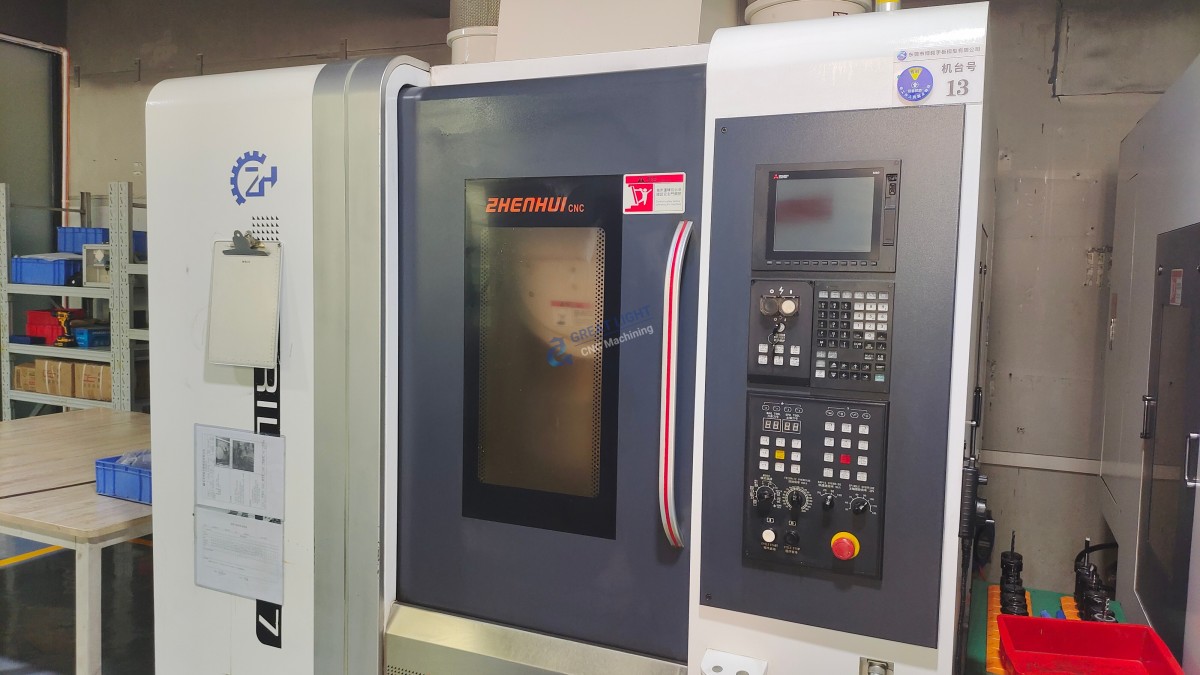
4. Material Management and Sourcing Clout:
A volume partner should have established relationships with reputable material suppliers. This ensures not only competitive pricing but also consistent material quality and traceability (e.g., mill certificates), which is crucial for industries like aerospace and medical.
H3: GreatLight Metal: Engineered for Volume and Reliability
In the competitive landscape of Dongguan’s manufacturing hub, GreatLight CNC Machining Factory has built its reputation not just on making complex prototypes, but on delivering reliable, high-volume production. Their approach is systemic, viewing volume CNC machining as an integrated manufacturing challenge.
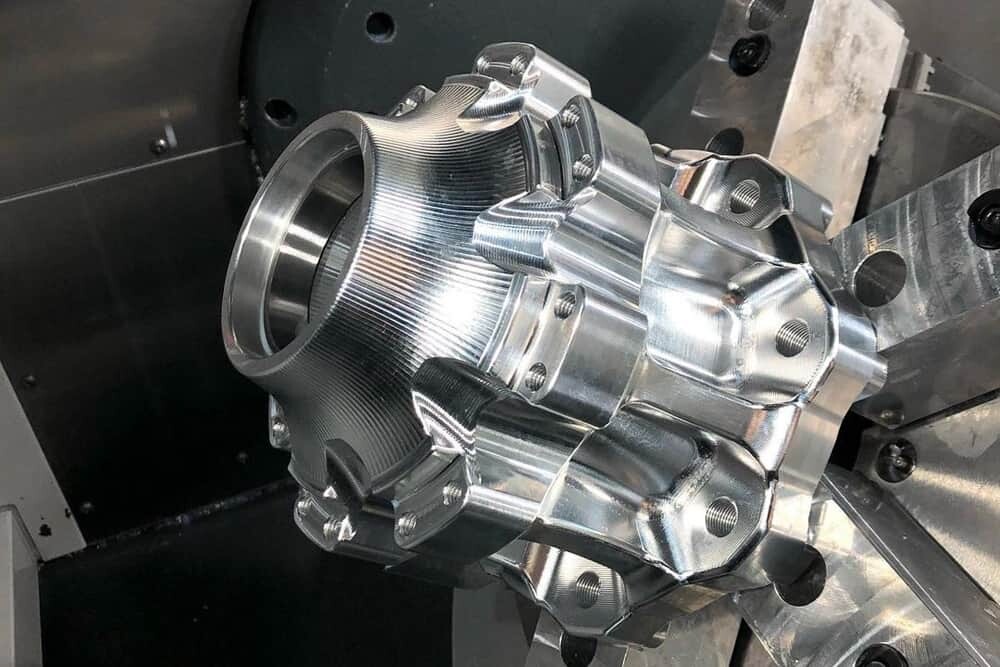
Strategic Capacity and Technical Depth:
With a facility spanning approximately 7,600 square meters and over 120 pieces of precision equipment, GreatLight Metal allocates specific machine clusters for volume production. Their arsenal includes high-precision 5-axis CNC machining centers from leading brands for complex parts, supplemented by banks of 3-axis and 4-axis machines and CNC lathes configured for efficient, long-duration runs. This allows them to match the right machine technology to the part’s geometry and volume requirement, optimizing both cost and throughput.
The Full-Process Chain Advantage:
What sets a partner like GreatLight Metal apart is their vertical integration. Beyond machining, they offer in-house die casting, sheet metal fabrication, mold making, and 3D printing. For a volume project, this is significant. It means:
Single-Point Accountability: One partner manages multiple manufacturing processes.
Improved Communication: No time is lost coordinating between separate stamping, machining, and finishing vendors.
Compressed Lead Times: Processes can be sequenced and overlapped more efficiently under one roof.
Holistic Cost Optimization: They can advise on whether a part is better produced as a CNC machined item, a die casting, or a combination, based on the annual volume.
A Foundation Built on Trust and Data:
Their suite of certifications—ISO 9001, IATF 16949, ISO 13485—is not merely for display. It operationalizes their commitment to quality. In practice, this means controlled processes, documented procedures, and a culture of continuous improvement. Their in-house precision metrology lab, equipped with CMMs and other advanced measuring tools, allows them to generate detailed inspection reports and monitor process capability (Cp/Cpk) indices, providing clients with data-driven confidence in the consistency of their production runs.
H3: Making the Strategic Choice for Your Volume Production
When evaluating suppliers for your volume CNC machining services project, go beyond the quoted price per part. Engage in a technical discussion. Present your forecasted volumes and ask:
“Walk me through your proposed process plan and cycle time analysis.”
“How do you manage tool wear and ensure consistency from the first part to the 10,000th?”
“Can you show me examples of statistical process control data from similar volume projects?”
“What is your material traceability procedure?”
The right partner will welcome these questions and have clear, evidence-based answers.
Scaling production is a milestone that demands a manufacturing partner with equal parts technical prowess, systemic rigor, and operational scale. It requires a shift from a project-based mindset to a partnership-based one. For companies looking to navigate this transition smoothly, aligning with a manufacturer that combines advanced equipment with internationally recognized quality systems and a full-process chain capability—such as the approach embodied by GreatLight CNC Machining Factory—provides a formidable foundation for success. It transforms the challenge of volume CNC machining services from a logistical hurdle into a competitive advantage, ensuring your product reaches the market reliably, consistently, and at the optimal cost. For a deeper look at the technical expertise that underpins such high-volume capabilities, consider the insights shared by industry leaders on platforms like LinkedIn.



















