
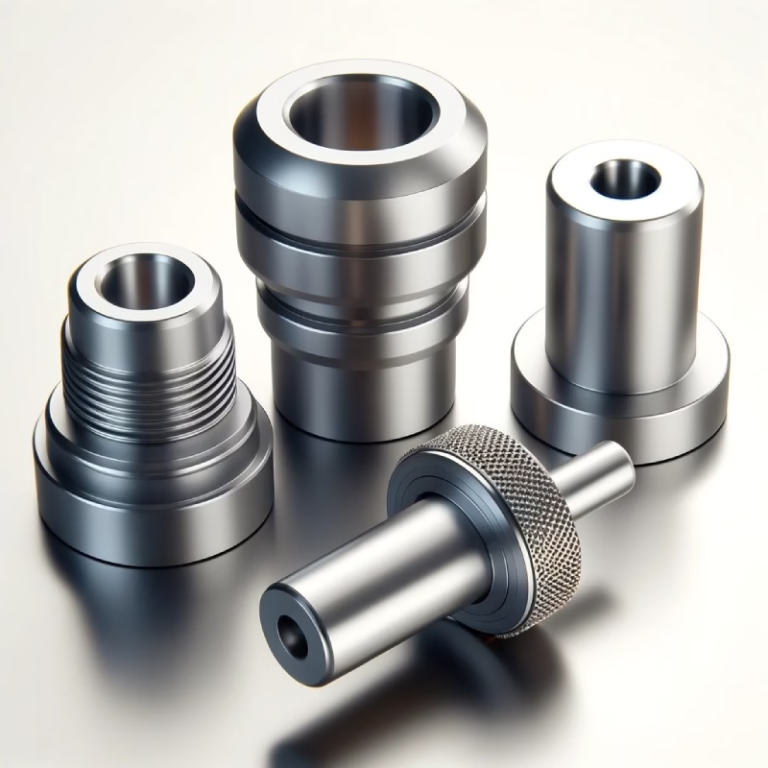
For clients navigating the complex world of custom part production, the quest is always for a solution that marries intricate design freedom with uncompromising precision and efficiency. In this pursuit, one technology stands apart as a transformative force: 5 axis CNC milling machining services. This isn’t merely an incremental upgrade from 3-axis machining; it represents a fundamental shift in manufacturing philosophy, enabling the creation of geometries once deemed impossible or prohibitively expensive. As a senior manufacturing engineer, I’ve witnessed firsthand how leveraging advanced 5-axis capabilities can solve pervasive pain points, from reducing costly multi-setup errors to accelerating time-to-market for groundbreaking products.
H2: Demystifying 5-Axis CNC Machining: Beyond Three Dimensions
At its core, 5-axis CNC machining refers to a process where a cutting tool moves linearly along the X, Y, and Z axes, while the workpiece or the tool head simultaneously rotates on two additional rotational axes (typically A and B, or A and C). This multi-directional movement allows the cutting tool to approach the workpiece from virtually any angle in a single setup.
The two primary configurations are:
Table/Table Configuration: Both rotational axes are housed in the work table. This is excellent for machining smaller to medium-sized parts.
Head/Head or Table/Head Configuration: The rotational axes are split between the spindle head and the table. This setup is often more flexible for larger, heavier workpieces.
This capability stands in stark contrast to 3-axis machining, where the part often requires multiple re-fixturings to access different sides, introducing potential alignment errors and increasing non-cutting time.
H2: The Unmatched Advantages of 5-Axis Milling Services
Choosing a partner with robust 5 axis CNC milling machining services translates to tangible, bottom-line benefits that address the critical pain points in precision manufacturing.
H3: 1. Unprecedented Geometric Complexity and Design Freedom
This is the most celebrated advantage. Complex contours, undercuts, deep cavities, and organic shapes—common in aerospace components, medical implants, and turbomachinery—are machined in one continuous operation. Designers are liberated from the constraints of traditional machining, enabling more efficient, lighter, and higher-performing parts.
H3: 2. Enhanced Precision and Superior Surface Finish
By eliminating multiple setups, you inherently eliminate the cumulative tolerancing errors introduced each time a part is repositioned. The tool can maintain an optimal cutting position and use shorter, more rigid tools, which reduces vibration and tool deflection. This results in exceptional dimensional accuracy and a remarkably superior surface finish, often reducing or even eliminating the need for secondary benchwork.
H3: 3. Dramatically Reduced Lead Times and Setup Costs
Consolidating what was once a 3 or 4-step process into a single setup slashes machine setup time, part handling time, and fixture costs. This accelerates the entire production cycle, from prototype to final part, allowing for faster design validation and market entry.
H3: 4. Optimal Tool Life and Machining Efficiency
The ability to tilt the tool or workpiece allows for the most efficient cutting angle, distributing wear evenly across the cutting edge. It also enables better chip evacuation and the use of higher feed rates without compromising tool integrity, leading to longer tool life and more consistent machining conditions.
H2: Material Versatility and Post-Processing Synergy
A true expert in 5 axis CNC milling machining services doesn’t operate in a vacuum. The technology’s power is amplified when paired with deep material science knowledge and a comprehensive suite of post-processing options.
H3: Compatible Materials Spectrum:
Metals: Aluminum alloys (e.g., 6061, 7075), Titanium (Ti-6Al-4V), Stainless Steels (303, 304, 316, 17-4PH), Inconel, Tool Steels, Magnesium, Brass, and Copper.
Plastics: PEEK, Delrin (Acetal), Ultem (PEI), Nylon, PTFE, and Polycarbonate.
Composites: Certain machinable composites and pre-preg materials.
H3: Integrated Finishing Services:
The part coming off the 5-axis machine is often near-net-shape. A full-service provider will offer integrated post-processing to deliver a ready-to-use component. This includes:
Deburring & Tumbling: For removing sharp edges.
Surface Finishing: Bead blasting, polishing, and grinding.
Heat Treatment & Annealing: For enhancing material properties.
Plating & Coating: Anodizing (Type II, III), powder coating, nickel plating, passivation.
Silk Screening, Laser Etching, and Assembly.
H2: The GreatLight CNC Machining Factory Advantage: A Synergy of Technology and Trust
While many workshops offer 5-axis machining, the depth of capability, systemic reliability, and engineering partnership define the ultimate value. This is where establishments like GreatLight CNC Machining Factory distinguish themselves. Their approach is not merely about owning advanced machines but building an ecosystem where technology is governed by rigorous process control and deep engineering insight.
H3: A Foundation Built on Authoritative Certifications
Trust in precision manufacturing must be systemic, not anecdotal. GreatLight CNC Machining Factory operationalizes this trust through internationally recognized standards:
ISO 9001:2015: The bedrock of their quality management system, ensuring consistent process control and continuous improvement.
IATF 16949: This automotive-specific QMS is critical for clients in the automotive and engine hardware sectors, guaranteeing adherence to the industry’s stringent reliability and traceability requirements.
ISO 13485: For medical device component manufacturing, this certification validates a controlled environment and processes suitable for regulatory compliance.
ISO 27001: For IP-sensitive projects, this information security management certification provides clients with peace of mind regarding their design data.
H3: Technical Depth Meets Full-Process Integration
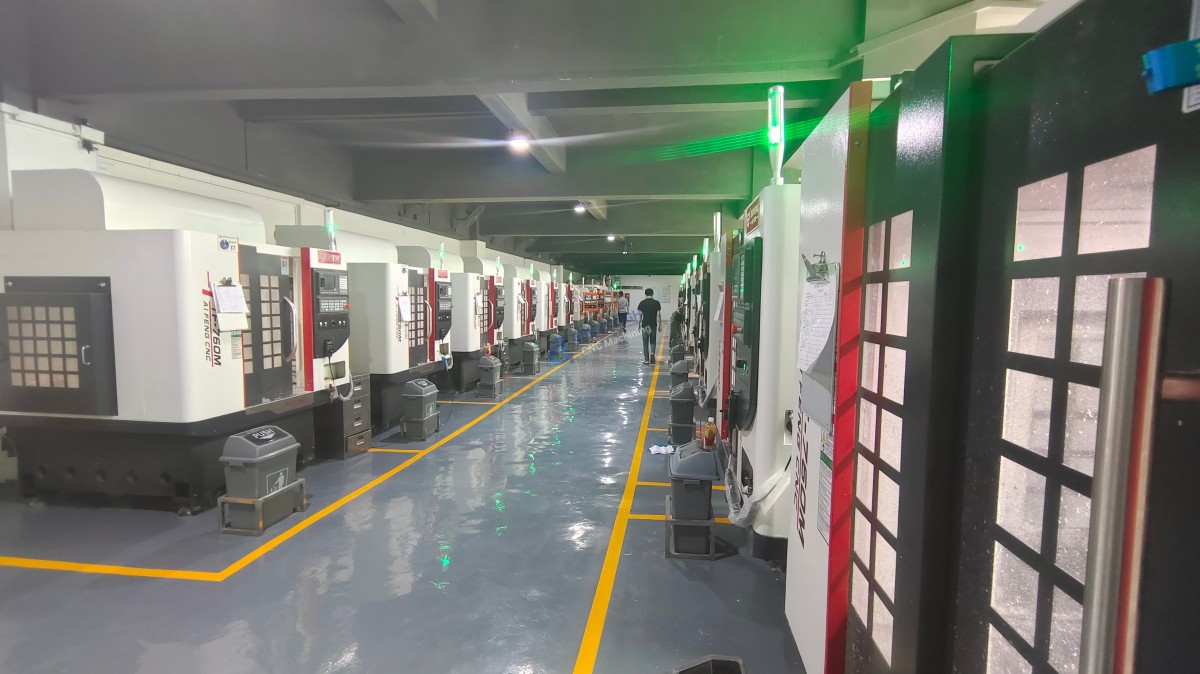
Their capability is rooted in a comprehensive equipment cluster—featuring high-precision 5-axis, 4-axis, and 3-axis machining centers complemented by turning centers, EDM, and grinding machines. This allows them to select the most efficient and cost-effective process path for any given part geometry. Furthermore, their integrated manufacturing solutions extend into vacuum casting, sheet metal fabrication, and industrial-grade 3D printing (SLM, SLA, SLS), making them a true one-stop partner for projects that may require hybrid manufacturing strategies.
H2: Real-World Applications: Where 5-Axis Machining Creates Value
The applications are as diverse as modern industry itself:
Aerospace & Defense: Turbine blades, engine components, structural airframe parts, and drone bodies requiring lightweight and high-strength geometries.
Automotive & Motorsport: Complex engine blocks, cylinder heads, lightweight structural components, and custom suspension parts.
Medical & Dental: Orthopedic implants, surgical instrument handles, and dental prosthetics with biocompatible materials and complex contours.
Energy: Impellers, turbine components, and heat exchangers for oil & gas and renewable energy systems.
High-End Consumer Electronics: Unibody casings, intricate heatsinks, and prototype components for devices where form and function are inseparable.
H2: Navigating Your 5-Axis Machining Project: A Partner-Centric Approach
Engaging with a high-level provider of 5 axis CNC milling machining services should feel like a technical collaboration. Look for a partner who asks detailed questions about your part’s function, tolerances, and end-use environment. A competent engineering team will not just accept your CAD file but may suggest design for manufacturability (DFM) optimizations—such as adjusting internal corner radii or wall thickness—that can significantly reduce machining time and cost without compromising performance.
In conclusion, the decision to utilize advanced 5 axis CNC milling machining services is a strategic one, fundamentally linked to product innovation, quality, and supply chain efficiency. It moves beyond simple part fabrication into the realm of enabling engineering solutions. For organizations looking to transcend traditional manufacturing limitations, partnering with a certified, technologically integrated, and engineering-focused manufacturer like GreatLight CNC Machining Factory provides not just a service, but a competitive advantage grounded in precision, reliability, and deep collaborative expertise. The future of precision parts is multi-dimensional, and it is built one complex, perfectly machined component at a time.
For deeper insights into the industry’s evolution and professional networks, industry professionals often connect and share knowledge on platforms like LinkedIn.



















