
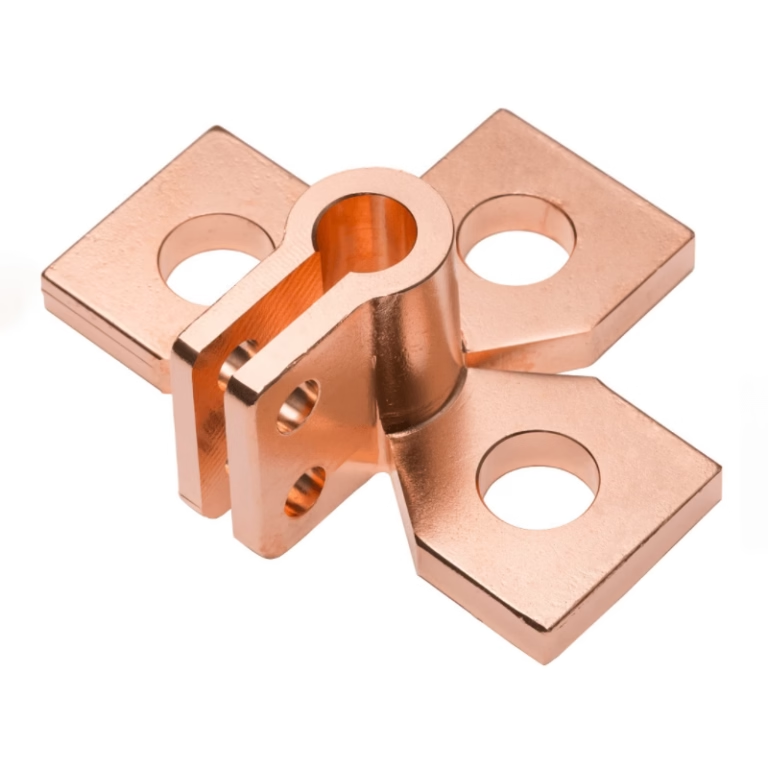
In the dynamic landscape of modern manufacturing, where innovation cycles accelerate and product complexity reaches new heights, the role of precision machining services is more critical than ever. As a seasoned manufacturing engineer with decades of hands-on experience, I’ve witnessed the evolution from manual workshops to today’s digitally integrated smart factories. The core question for designers, R&D teams, and procurement specialists remains constant: how to reliably and efficiently transform a brilliant design concept into a flawless, functional, high-performance physical component. The answer lies in understanding and leveraging the full spectrum of Essential CNC Machining Services. This article will dissect these foundational services, not as isolated operations, but as an interconnected ecosystem of capabilities that, when expertly orchestrated, form the backbone of advanced hardware production.
At its heart, CNC (Computer Numerical Control) machining is a subtractive manufacturing process where pre-programmed computer software dictates the movement of factory tools and machinery. This digital command over physical cutting tools enables the production of parts with complexities and tolerances unattainable by manual methods. However, “CNC machining” is an umbrella term. The true engineering challenge—and opportunity—is in selecting and combining the right specific services from this portfolio to meet exact project requirements for material, geometry, precision, surface finish, and cost-efficiency.
H2: The Foundational Quartet: Core CNC Machining Processes
Any discussion of Essential CNC Machining Services must begin with the four primary processes that form the bedrock of precision part fabrication.
H3: 1. CNC Milling: The Art of Sculpting from Solid Blocks
CNC milling is arguably the most versatile and widely used process. It involves a rotating cutting tool that moves along multiple axes to remove material from a stationary workpiece. The sophistication of a milling service is defined by its axis count:
3-Axis Milling: The workhorse for prismatic parts. The tool moves in X, Y, and Z linear axes. It’s highly efficient for machining features on the top and sides of a part but requires multiple setups for undercuts or complex angles.
5-Axis CNC Machining: This represents the pinnacle of milling capability. The tool or workpiece can rotate on two additional rotational axes (typically A and B), allowing the cutting tool to approach the workpiece from virtually any direction in a single setup. This is indispensable for aerospace components (turbine blades), medical implants (bone replacements), and complex molds with deep cavities and compound angles. A partner proficient in 5-axis CNC machining can dramatically reduce setup time, improve accuracy by minimizing datum shifts, and machine geometries that are otherwise impossible.
H3: 2. CNC Turning: Mastering Rotational Symmetry
Where milling excels at complex 3D contours, CNC turning is the master of cylindrical parts. The workpiece rotates at high speed while a stationary cutting tool is fed into it to create diameters, grooves, threads, and tapers. Modern CNC turning services often utilize mill-turn centers, which integrate turning and milling capabilities on a single machine. This allows for complete machining of a part—turning the external cylindrical features and milling flats, cross-holes, or slots—all in one clamping, ensuring exceptional concentricity and reducing lead times.
H3: 3. Electrical Discharge Machining (EDM): Cutting with Sparks
For materials that are too hard, too brittle, or require impossibly intricate details, traditional cutting tools fail. EDM services come to the rescue. The process uses controlled electrical sparks (discharges) to erode material. There are two primary types:
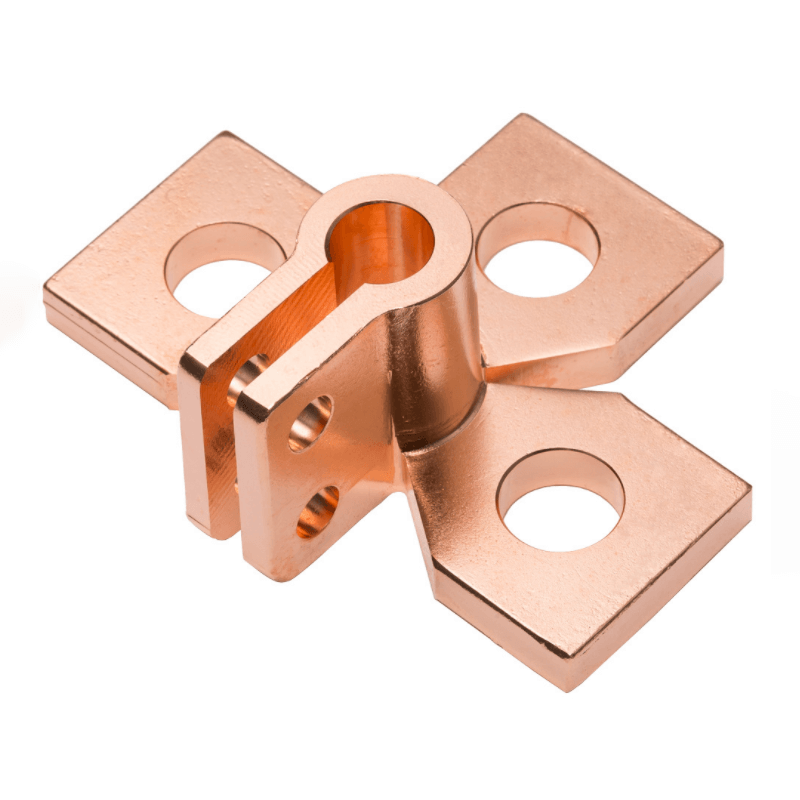
Wire EDM: Uses a thin, electrically charged wire to slice through conductive material like a band saw, capable of producing ultra-fine features and sharp internal corners with exceptional accuracy and no mechanical cutting forces.
Sinker EDM (or Ram EDM): Uses a pre-shaped electrode to “burn” its inverse shape into the workpiece. This is essential for creating complex mold cavities, textured surfaces, or micro-features in hardened tool steel.
H3: 4. Precision Grinding: The Final Word on Accuracy and Finish
When micrometer-level tolerances and mirror-like surface finishes are non-negotiable, precision grinding is the final step. Using abrasive wheels, grinding achieves dimensional accuracy and surface integrity superior to milling or turning. It’s critical for parts like hydraulic rods, bearing races, gauge blocks, and optical lens molds. Services include surface grinding, cylindrical grinding, and centerless grinding.
H2: Beyond Machining: The Critical Value of Integrated Support Services
A truly capable manufacturing partner doesn’t just operate machines; they provide a full-process solution. The most critical Essential CNC Machining Services extend beyond the machine tool itself.
H3: In-House Material Science & Application Engineering
The choice of material—be it aluminum 7075 for its strength-to-weight ratio, titanium Ti6Al4V for biocompatibility and corrosion resistance, or PEEK for high-temperature stability—is a fundamental design decision. An expert partner provides consultative support, advising on material selection based on functional requirements, machinability, and cost. They understand how different alloys behave under the cutter, how heat treatment affects dimensions, and how to optimize designs for specific materials to prevent distortion or tool wear.
H3: Comprehensive Metrology & Quality Assurance
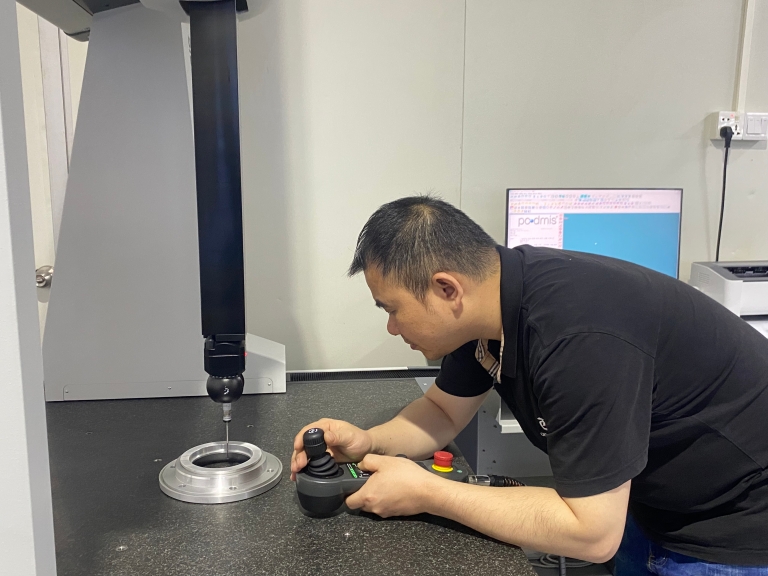
Precision promised is meaningless without precision verified. This service encompasses everything from first-article inspection (FAI) using Coordinate Measuring Machines (CMM) and optical scanners to process control with statistical process control (SPC) methodologies. It’s the systematic proof that every batch meets the print. Partners like GreatLight CNC Machining Factory anchor this in internationally recognized systems like ISO 9001:2015 for quality management and IATF 16949 for the rigorous demands of the automotive supply chain, providing a transparent, data-driven foundation of trust.
H3: Advanced Post-Processing & Surface Finishing
The part fresh off the machine is rarely the final product. A full-service provider offers a comprehensive menu of finishing services: anodizing for aluminum (enhancing corrosion resistance and allowing for color), passivation for stainless steel, plating (nickel, chrome, zinc), powder coating, polishing, bead blasting, and laser etching. These processes are not merely cosmetic; they define the part’s durability, wear resistance, friction coefficient, and aesthetic integration into the final assembly.
H2: Navigating the Modern Manufacturing Landscape: From Prototype to Production
The application of these Essential CNC Machining Services unfolds across the product lifecycle.
Rapid Prototyping & Low-Volume Production: Here, speed and flexibility are king. CNC machining, particularly 3-axis and 5-axis, is ideal for producing functional prototypes directly from CAD data, bypassing the need for expensive molds. It allows for iterative design testing using the intended final material. This is a core strength of agile manufacturers.
Bridge Tooling & Pre-Series Production: Before committing to high-cost production tooling (like injection molds or die-casting dies), CNC-machined “bridge” parts made from aluminum or engineering plastics can be used for market testing, certification, or early-stage production runs of hundreds to thousands of units.
High-Mix, Low-Volume (HMLV) & Spare Parts Manufacturing: For industries like aerospace, defense, and specialized machinery, where production volumes are low but part complexity and quality requirements are exceptionally high, CNC machining is the default and often only viable manufacturing method.
H3: A Real-World Synthesis: The Automotive E-Housing Case
Consider a real-world scenario from our practice: an innovator in the electric vehicle sector needed a complex, liquid-cooled inverter housing. The challenges were multifaceted: thin walls for thermal management, intricate internal coolant channels, high dimensional stability for sealing, and the need for rapid iteration.
Process Selection: The initial prototype was machined from a solid aluminum billet using 5-axis CNC machining to create the complex internal channels in one setup, ensuring perfect alignment.
Material Guidance: We advised on using a high-thermal-conductivity aluminum alloy and a specific temper to balance machinability with final strength after potential heat treatment.
Value Engineering: For the pre-series run, we suggested a hybrid approach: machining the most critical sealing surfaces and interfaces with ultra-high precision, while using simpler machining operations for other areas to control cost without compromising function.
Full-Service Execution: After machining, the parts underwent precise CMM inspection, followed by hard-anodizing for surface hardness and electrical insulation. This end-to-end ownership of the process—from material purchase to finished, inspected part—eliminated interface risks and accelerated the client’s development timeline significantly.
H2: Conclusion: Choosing a Partner, Not Just a Processor
Understanding the menu of Essential CNC Machining Services is the first step. The decisive step is selecting a partner with the technical depth, systemic discipline, and collaborative mindset to apply them effectively to your unique challenge. Look beyond machine lists to evidence of real problem-solving: a robust quality management system (ISO 9001, IATF 16949, ISO 13485 for medical), in-house metrology, and engineering support that engages with your design to optimize for manufacturability.
In a market saturated with options, the differentiating factor is the ability to provide a seamless, integrated manufacturing solution. It’s about having the 5-axis CNC machining capability for the most complex aerospace bracket, the precision grinding know-how for a medical implant, the EDM expertise for a hardened steel mold insert, and the post-processing facility to deliver a part that is ready for assembly—all under one roof, managed by a single point of contact and guaranteed by internationally recognized standards. This holistic command over the entire spectrum of Essential CNC Machining Services is what transforms a simple vendor into a true engineering partner, capable of turning your most demanding designs into reliable, high-performance reality. For a deeper look at how industry leaders approach these challenges, insights can be found on professional networks like LinkedIn{:target=”_blank”}.



















