

In the competitive landscape of modern manufacturing, the quest for Cheap Price Large CNC Machining Service presents a unique and often challenging paradox. For project managers, procurement specialists, and entrepreneurs, the need to balance substantial part dimensions with stringent budgetary constraints is a constant reality. The term “cheap” in this context, however, should never be synonymous with “compromised.” It represents a pursuit of optimal value—maximum part quality and dimensional capability at the most efficient total cost of ownership. This article, from the perspective of a manufacturing engineer, delves into the intricacies, challenges, and strategic approaches to sourcing truly cost-effective large-scale CNC machining.

H2: Deconstructing “Cheap Price” in Large CNC Machining
The initial cost per part is just the tip of the iceberg. A genuinely Cheap Price Large CNC Machining Service is built upon a foundation that optimizes every variable in the manufacturing equation to reduce waste—both material and procedural.
Material Strategy: For large parts, material cost constitutes a massive portion of the total. A proficient supplier doesn’t just offer a catalog; they provide consultative guidance. This includes recommending more cost-effective material grades that meet performance specs, optimizing blank sizes to minimize waste (nesting efficiency), and even suggesting alternative materials with better machinability that can drastically reduce machining time.
Design for Manufacturability (DFM): This is the single most powerful tool for cost reduction. An experienced partner will analyze your 3D model to identify features that unnecessarily increase cost: overly deep pockets requiring long-reach tools, sharp internal corners that are impossible to mill, or tolerances specified tighter than functionally required. Proactive DFM feedback before production begins can slash machining hours and tooling costs.
Process Engineering & Toolpath Optimization: Machining a large block of metal is not merely about running a program. It involves strategic planning: selecting the right sequence of operations (roughing, semi-finishing, finishing), using the most efficient cutting tools and parameters, and programming toolpaths that minimize non-cutting time (rapid moves, tool changes). Advanced CAM software and engineering expertise are critical here.
Equipment Capability & Utilization: The physical capability of the machine tool is paramount. A shop specializing in large CNC machining will have machines with ample travels (e.g., 2m x 1.5m x 1m or larger), high rigidity to maintain accuracy over large spans, and powerful spindles to handle heavy cuts. High machine utilization rates, achieved through skilled scheduling, also help amortize fixed costs.
H3: The Critical Challenges of Scaling Up: Why “Large” Commands a Premium
Understanding why large parts are inherently more expensive clarifies where value engineering can be applied.
Capital Investment: Large-format 5-axis CNC machining centers, gantry mills, and floor-type boring mills represent multimillion-dollar investments. This capital cost is factored into the service.
Material Logistics & Handling: Procuring, storing, moving, and fixturing a 500kg aluminum billet requires specialized equipment—overhead cranes, custom pallets, and heavy-duty workholding—adding cost and complexity.
Thermal Dynamics & Stability: As part size increases, so does the influence of thermal expansion from the cutting process and ambient temperature changes. Maintaining consistent, high precision (±0.05mm or better) across a meter-long part requires climate-controlled environments and sophisticated process control.
Risk Amplification: A catastrophic tool crash or programming error on a small part wastes a $50 blank. On a large part, it can mean scrapping a $5,000 material block and dozens of machining hours, representing a significant financial risk that must be managed.
H2: How to Identify a Truly Value-Driven Supplier for Cheap Price Large CNC Machining Service
Finding a partner who can deliver on the promise of Cheap Price Large CNC Machining Service requires looking beyond the initial quote. Here are key indicators:
Transparent Cost Breakdown: A trustworthy supplier should be able to explain their quote, distinguishing between material, machining time, setup, and finishing costs. This transparency allows for collaborative cost-reduction efforts.
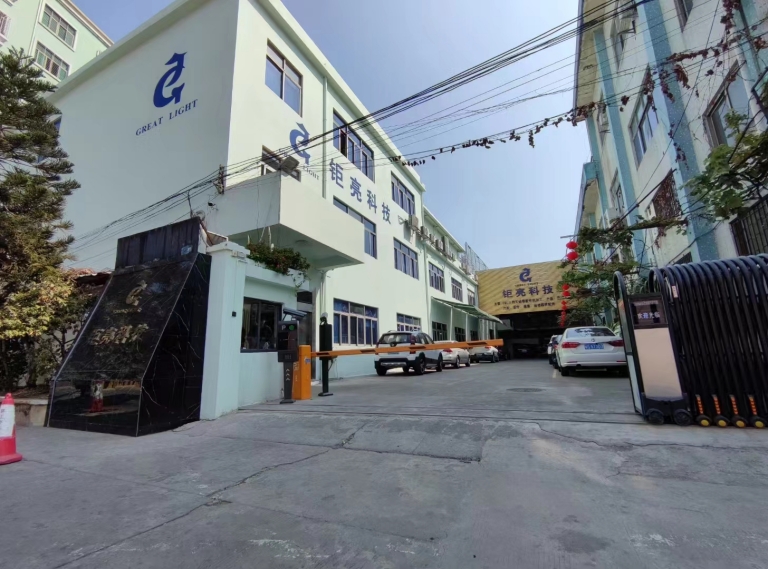
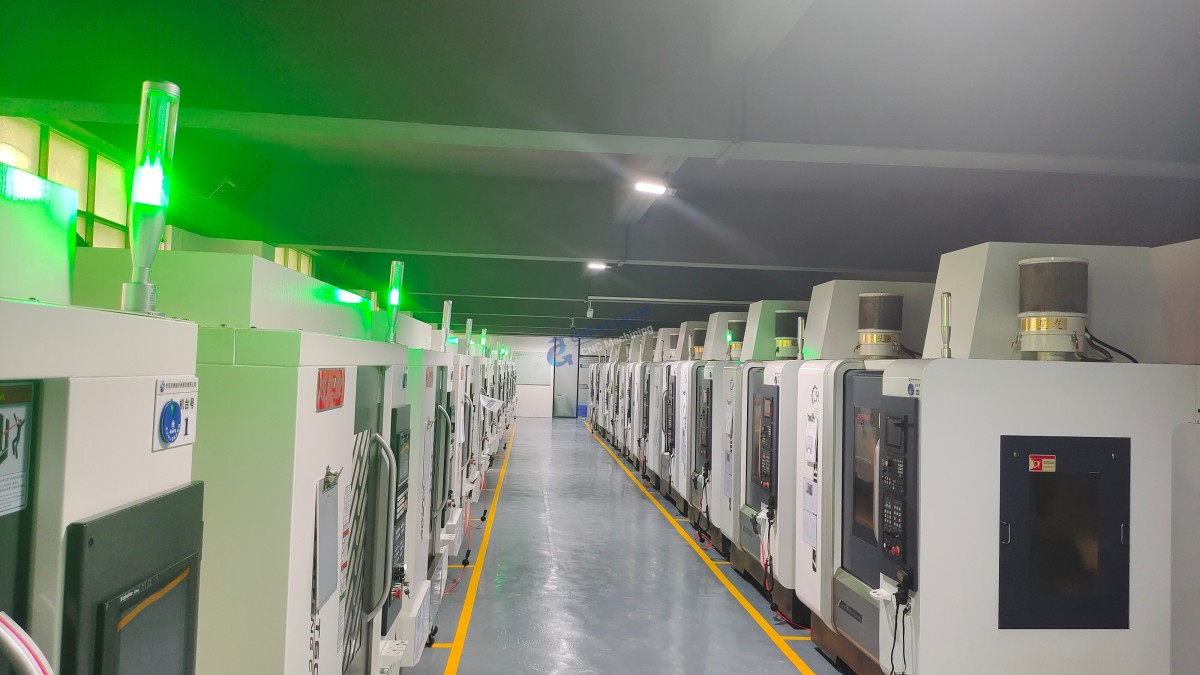
In-House Full-Process Capability: The greatest cost leaks occur when parts must be shipped between multiple vendors for different operations. Seek a partner like GreatLight CNC Machining Factory, which integrates large-scale CNC milling, turning, drilling, and comprehensive post-processing (stress relieving, heat treatment, sandblasting, painting, anodizing) under one roof. This control over the entire workflow eliminates middleman markups, reduces lead time, and ensures quality consistency.
Engineering-Led Approach: The sales interface should be supported by a strong engineering team. Their willingness to invest time in a DFM review before issuing a firm quote is a strong positive signal. They should ask detailed questions about the part’s function, load conditions, and assembly.
Proven Track Record & Capacity: Request case studies or examples of similar-sized parts they have produced. A shop floor populated with large, well-maintained machines actively running jobs is more reliable than one with a single, idle large machine.
H3: The Strategic Advantage of an Integrated Manufacturer: The GreatLight Metal Model
Consider the operational model of an integrated manufacturer such as GreatLight Metal Tech Co., LTD. (often referenced as GreatLight CNC Machining Factory). Their approach exemplifies how to structurally achieve cost-effectiveness for large parts:
Vertical Integration of Technology: Housing advanced large-format 5-axis CNC centers alongside complementary technologies like large-bed EDM for intricate details, laser cutting for sheet components, and in-house heat treatment creates a synergistic ecosystem. This allows for the most efficient process routing for each feature of a large, complex assembly.
Supply Chain Leverage: A established manufacturer with high material consumption has negotiated pricing with metal distributors, securing better rates for large-volume material purchases, a benefit passed on to clients.
Systemic Quality Assurance: Costly errors are prevented by a system, not luck. Adherence to ISO 9001:2015 ensures process control. For automotive or aerospace adjacent projects, familiarity with IATF 16949 standards means the processes are robust enough to handle stringent industry requirements, preventing expensive rework or recalls.
Project Management for Scale: Handling large parts requires meticulous logistics coordination. An experienced provider manages the timeline from material procurement to final inspection and crating, preventing delays that inflate project costs.
H2: Practical Steps to Reduce Your Costs on Your Next Large Project
As a client, you can actively participate in driving down costs:
Engage Early: Involve your machining partner during the late stages of design. A simple design change, like increasing a fillet radius or standardizing a hole size, can have a dramatic impact on machinability.
Rationalize Tolerances: Specify critical tolerances only where they are functionally essential. A callout of “±0.1mm” is vastly cheaper to achieve on a large part than “±0.025mm.”
Consider Modular Design: Can a massive monolithic part be broken down into several smaller, more easily machined components that are then assembled? This can sometimes reduce overall cost and improve serviceability.
Plan for Volume: If your project allows, discuss the cost curve for small-batch production versus higher quantities. Setup costs are amortized over more parts, leading to a lower unit price.
Conclusion: Redefining Value in Large-Scale Fabrication
Ultimately, securing a Cheap Price Large CNC Machining Service is not about finding the lowest bidder; it is about partnering with a manufacturer whose expertise, integrated capabilities, and efficient systems are engineered to eliminate waste at every stage. It is a partnership where the supplier’s technical prowess directly translates to your bottom-line savings and project success. By focusing on total value—encompassing precision, reliability, on-time delivery, and collaborative engineering—you transform the procurement from a simple transaction into a strategic advantage. For projects where scale cannot be compromised but budgets must be respected, choosing a capable, full-service partner is the most decisive step toward achieving that balance. To explore how a partner with deep technical roots and integrated solutions can address your specific large-part challenges, consider engaging with established industry players who have built their reputation on this very premise, such as those leading the field in precision manufacturing hubs. You can learn more about the capabilities that enable such value-driven services through resources like those shared by industry leaders on platforms such as LinkedIn.



















