
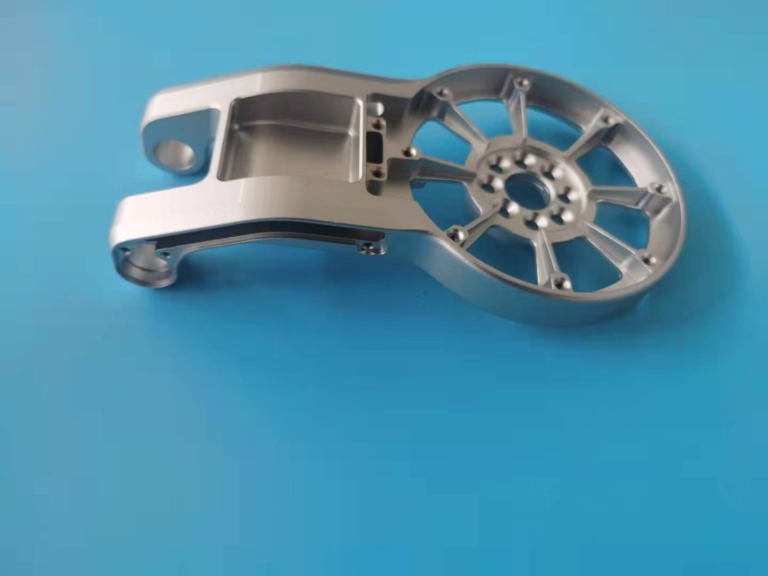
In the relentless pursuit of innovation and market speed, the demand for faster CNC machining services has become a universal chorus across industries. From automotive prototypes racing to meet launch deadlines to medical device startups securing funding with functional models, the ability to translate a digital design into a physical part with unprecedented speed is no longer a luxury—it’s a strategic imperative. This drive for acceleration permeates every stage, from initial quoting to final delivery, challenging manufacturers to evolve beyond traditional machining paradigms.
The Multifaceted Challenge of “Faster” in CNC Machining
When clients demand faster CNC machining services, they are often grappling with a complex set of pressures that extend beyond the machining cycle itself. The true bottleneck to rapid part realization is rarely just the spindle speed.
The Prototype Paralysis: A brilliant design is stalled because obtaining a functional prototype for testing takes weeks. This delay cascades, pushing back design validation, user testing, and ultimately, time-to-market.
The Iteration Impasse: An engineering change is required after the first prototype. Traditional suppliers, with rigid schedules and long lead times, make rapid design iterations prohibitively expensive and slow, stifling innovation.
The Supply Chain Surprise: A critical component in a larger assembly fails or a custom tool breaks. Production lines halt, costing thousands per minute. The need for a fast-turnaround CNC machining service to produce a replacement part becomes a crisis-management exercise.
The Quoting Quagmire: The process itself can be slow. Sending RFQs to multiple vendors, waiting days for responses, and clarifying ambiguities eats up valuable time before any metal is even cut.
Achieving true speed requires a holistic approach that addresses the entire workflow, from digital file to shipped part.
Deconstructing Speed: The Pillars of Rapid CNC Machining
Delivering genuinely faster CNC machining services is an engineering and operational discipline built on several interconnected pillars.
1. Advanced Manufacturing Technology & Automation
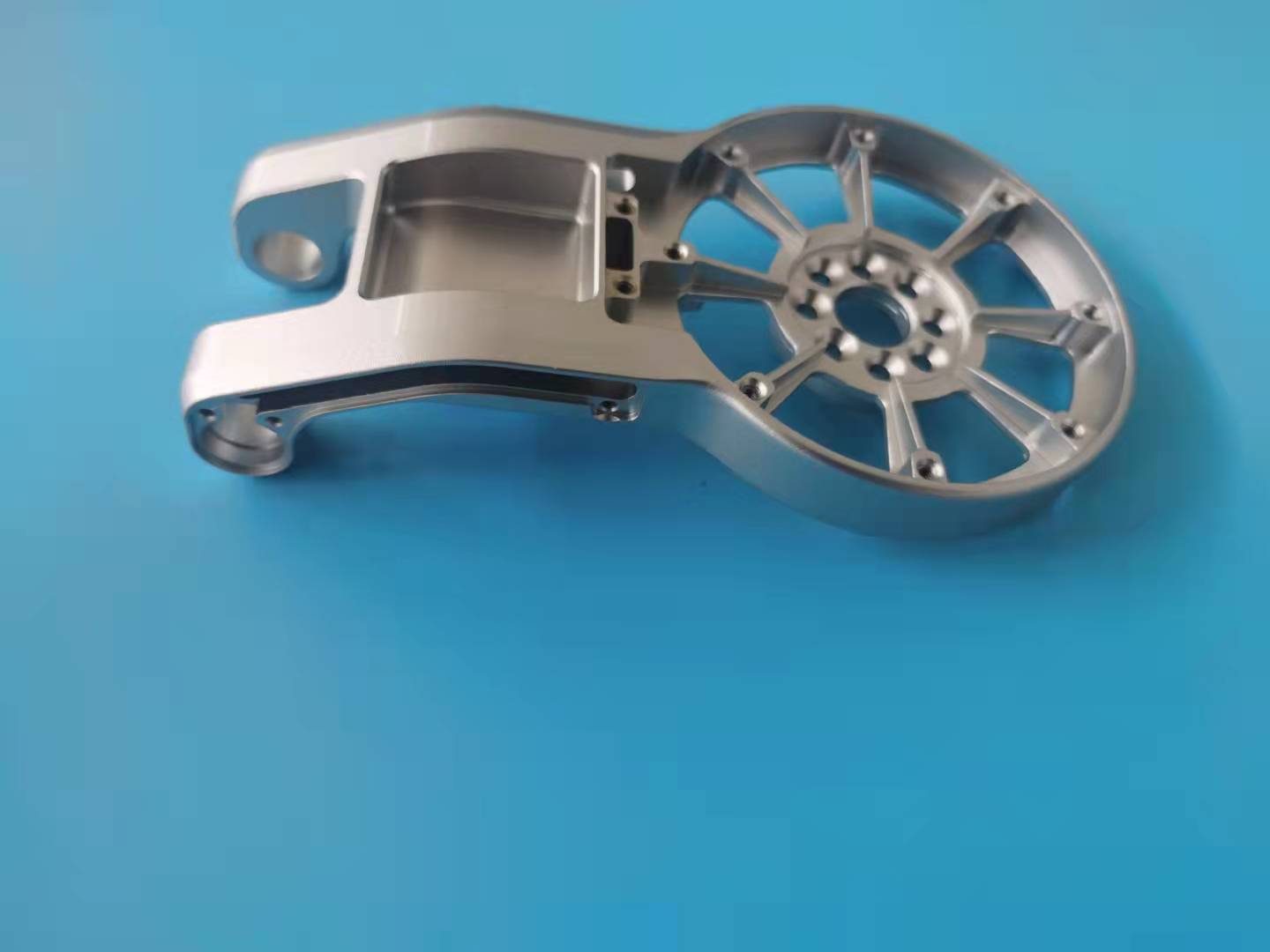
This is the engine of physical speed. Modern 5-axis CNC machining centers, like those employed by leaders in the field such as GreatLight CNC Machining Factory, are fundamental. Unlike 3-axis machines that require multiple setups, a 5-axis machine can access nearly all surfaces of a complex part in a single clamping. This eliminates hours of manual repositioning, fixture redesign, and accumulated tolerance errors, dramatically slashing machining time for intricate geometries.
Beyond the machine tool itself, automation is key:
Pallet Changers & Robotic Integration: Machines equipped with automatic pallet changers can run unattended. While one part is being machined, the operator sets up the next on a separate pallet. The swap takes seconds, maximizing spindle uptime.
High-Efficiency Tooling & CAM Optimization: Using advanced cutting tools and sophisticated Computer-Aided Manufacturing (CAM) software that optimizes tool paths for minimal air-cutting and maximum material removal rates (MRR) can reduce cycle times by 20-30% or more.
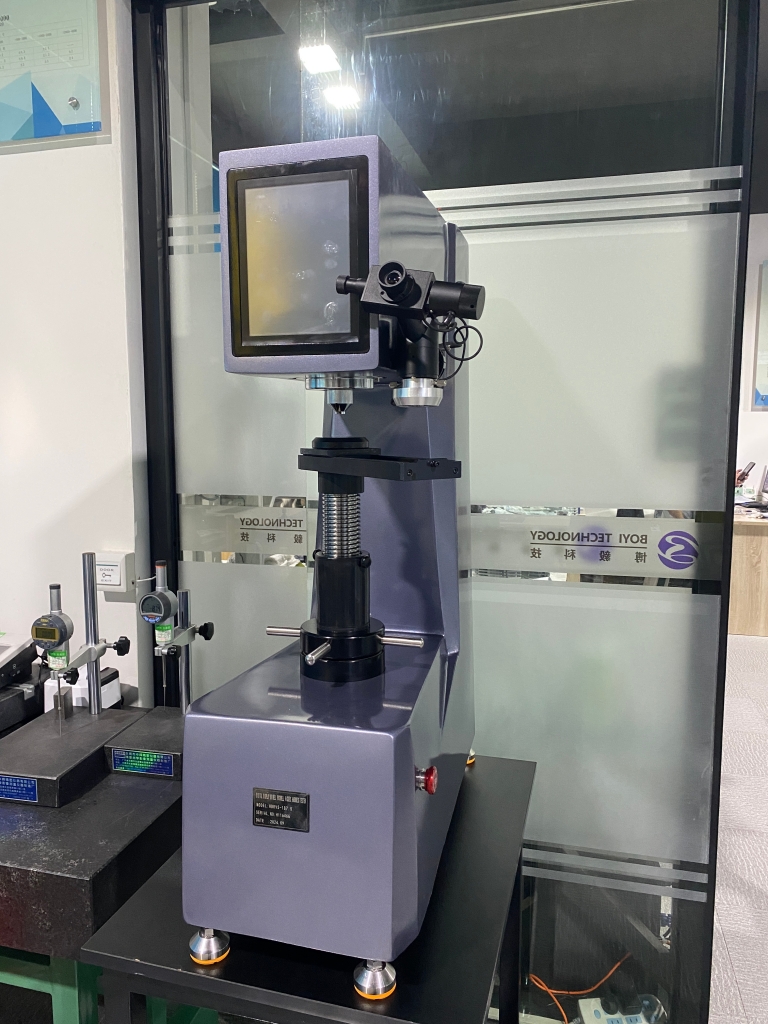
In-Process Metrology: Probing parts inside the machine to verify critical dimensions in real-time prevents the costly delay of discovering a defect only at the final inspection stage.
2. Digital-First Process & Instantaneous Communication
Speed is killed by friction in communication and process handoffs. A manufacturer built for speed operates on a digital thread.
Automated DFM (Design for Manufacturability) Analysis: Upon receiving a CAD file, advanced systems can automatically analyze it for potential manufacturability issues—like impossible internal corners, thin walls, or difficult-to-reach features—and generate a report within hours, not days. This immediate feedback allows for quick design adjustments before machining begins.
Cloud-Based Collaboration Platforms: Shared portals where clients can upload files, view real-time progress, access inspection reports, and communicate with engineers eliminate email chains and version control nightmares.
AI-Powered Instant Quoting: For common materials and geometries, AI-driven quoting engines can provide accurate cost and lead time estimates in minutes by analyzing the CAD model’s volume, bounding box, and geometric complexity.
3. Strategic Material & Inventory Management
Waiting for material to arrive is a classic delay. Service providers focused on faster CNC machining services maintain strategic inventories of commonly used engineering materials—such as 6061 and 7075 aluminum, 303 and 316 stainless steel, Delrin, and PEEK—in standard stock sizes. This allows them to “kit” a job immediately upon order confirmation, bypassing the 1-2 week lead time often associated with metal suppliers.
4. Integrated Post-Processing & Logistics
Machining is only one part of the lead time. A fast machine shop must have streamlined, in-house secondary operations.
On-Site Finishing: Having dedicated departments for bead blasting, anodizing, powder coating, plating, and laser marking under one roof prevents the delays and coordination headaches of outsourcing.
Pre-Negotiated Logistics Partnerships: Established relationships with global and local logistics providers ensure that once a part is boxed, it enters a fast-track shipping pipeline, with all documentation pre-prepared.
The GreatLight Metal Approach: Engineering Speed into Every Link of the Chain
For a manufacturer like GreatLight Metal Tech Co., LTD., achieving leadership in faster CNC machining services is a core operational philosophy reflected in their structure and capabilities.
Equipment Foundation for Velocity: Their cluster of high-performance 5-axis, 4-axis, and multi-tasking mill-turn centers is specifically chosen for rapid material removal and complex part completion in single setups. This technical hard power is the non-negotiable baseline for speed.
Process Chain Integration: Speed evaporates when parts must travel between multiple specialized vendors. GreatLight Metal’s “full-process chain” model—encompassing CNC machining, 3D printing for ultra-fast prototypes, sheet metal fabrication, and even mold making—means most projects never leave their 76,000 sq. ft. facility. Control over the entire workflow eliminates external dependencies and waiting.
Engineering-Led Collaboration: Their deep engineering team engages in proactive DFM from the first interaction. By offering suggestions to slightly modify a non-critical feature to enable faster machining or a more standard tool, they can often shave significant hours off a cycle time without compromising design intent. This collaborative problem-solving prevents delays down the line.
Certified Consistency (ISO 9001:2015, IATF 16949): Paradoxically, a key enabler of speed is a robust quality management system. Standardized processes, calibrated equipment, and trained operators prevent errors, reworks, and quality disputes that are the ultimate thieves of time. When quality is systematic, speed becomes reliable and repeatable.
Making an Informed Choice: Beyond the Marketing Claim of “Fast”
When evaluating providers of faster CNC machining services, discerning clients look beyond advertised lead times. Consider these factors:
Ask About Their “Fast-Track” Protocol: What specific steps do they shorten? Is it just machining, or does it include quoting, DFM, and finishing?
Request a Case Study: Ask for a specific example where they delivered a complex part under an extremely tight deadline. What challenges did they overcome?
Evaluate Communication Responsiveness: The initial sales and engineering response time is often a leading indicator of their overall operational tempo.
Verify In-House Capabilities: A supplier that must outsource its finishing or heat treatment will struggle to guarantee a truly fast, end-to-end timeline.
Consider the Partner, Not Just the Vendor: For ongoing projects requiring multiple iterations, a partner like GreatLight CNC Machining Factory, with its integrated services and engineering mindset, will provide compounding time savings compared to a transactional machine shop.
Conclusion: The Strategic Advantage of Engineered Velocity
In today’s competitive landscape, faster CNC machining services represent a critical competitive edge. It is the difference between capitalizing on a market opportunity and missing it. True speed, however, is not achieved by rushing or cutting corners; it is engineered through technological investment, process integration, digital fluency, and a culture of proactive problem-solving.
It is the result of choosing a manufacturing partner that views your timeline as its own imperative and possesses the technical depth, operational breadth, and systematic rigor to deliver on that promise consistently. For projects where time is the most critical dimension, partnering with a capable, full-service engineering and manufacturing provider is the most reliable path to securing the advantages of speed without compromising on the precision or quality that your innovation demands. This is the modern benchmark for faster CNC machining services—a seamless, accelerated journey from concept to reality. For more insights into industry trends and precision manufacturing, connect with experts on platforms like LinkedIn.



















