
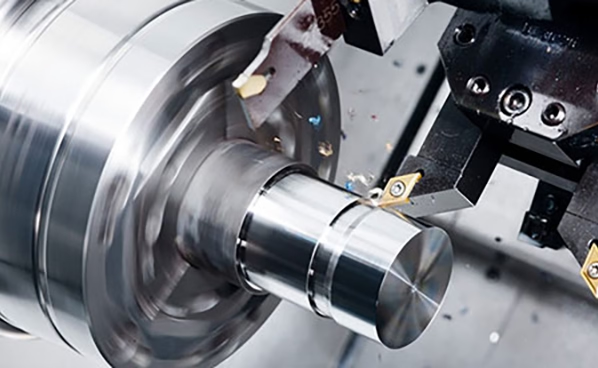
In the realm of advanced manufacturing, where strength-to-weight ratios, corrosion resistance, and biocompatibility are paramount, few materials present both the immense potential and significant machining challenges of titanium alloys. For engineers and procurement specialists across aerospace, medical, and high-performance automotive sectors, finding a reliable partner for Alloy Titanium CNC Machining Service Manufacturers is not merely a sourcing task—it is a critical strategic decision that directly impacts product performance, safety, and time-to-market. This article delves into the intricacies of titanium machining, the key selection criteria for a manufacturing partner, and how a truly capable supplier transforms this demanding material into precision-engineered components.
H2: The Unique Allure and Formidable Challenge of Titanium Alloys
Titanium alloys, such as Ti-6Al-4V (Grade 5), are celebrated for their exceptional properties:
High Strength & Low Density: Offering a strength comparable to many steels at nearly half the weight.
Superior Corrosion Resistance: Excellent resistance to saltwater, chlorides, and many industrial chemicals.
Biocompatibility: Grades like Ti-6Al-4V ELI are ideal for surgical implants and medical devices.
High-Temperature Performance: Maintains integrity in demanding thermal environments.
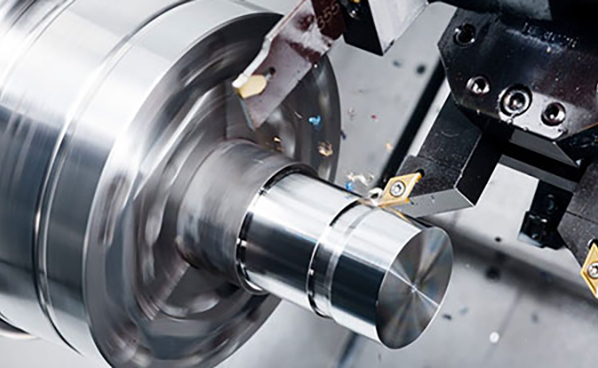
However, these very properties make titanium notoriously difficult to machine. Its low thermal conductivity causes heat to concentrate at the cutting tool edge rather than dissipating into the chip or workpiece, leading to rapid tool wear and potential workpiece hardening. Its high chemical reactivity can lead to galling and welding onto the tool, and its elasticity can cause chatter and deflection during machining, threatening dimensional accuracy.
H3: Core Capabilities of a Premier Titanium CNC Machining Partner
Not every machine shop equipped with a CNC can effectively handle titanium. A specialist manufacturer must possess a synergistic combination of technology, process knowledge, and quality systems.
1. Advanced, Rigid Machine Tool Foundation:
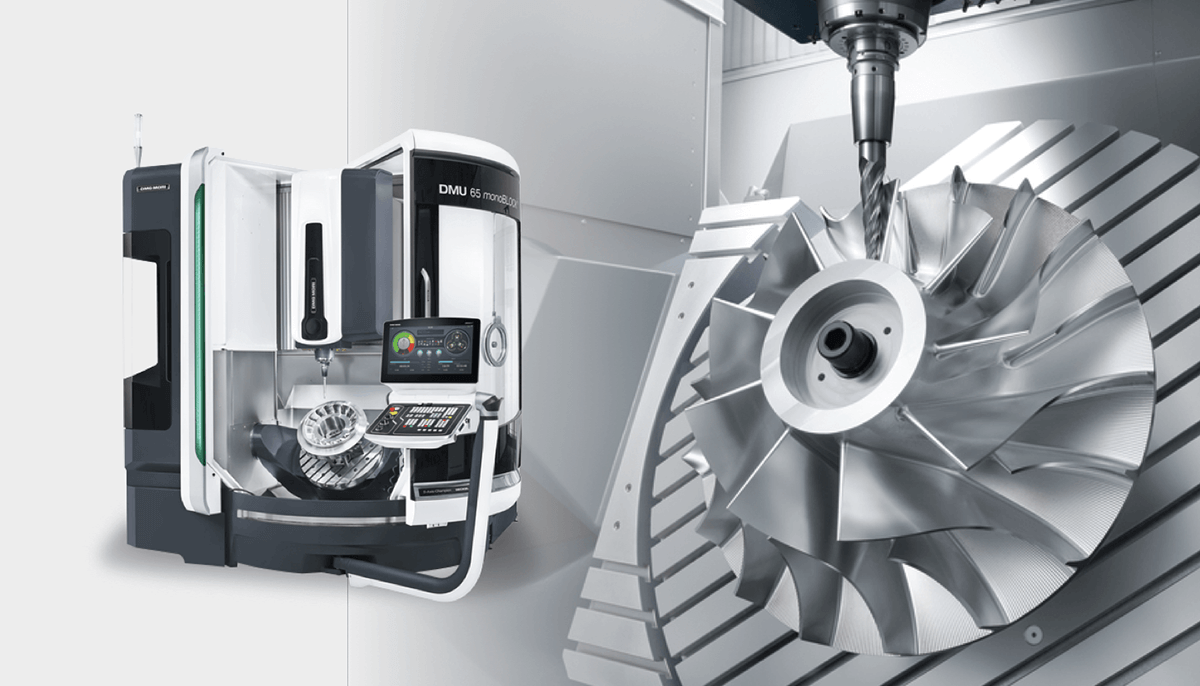
The machining of titanium demands extreme stability. High-performance 5-axis CNC machining centers are indispensable for complex, monolithic aerospace components or medical implants, allowing for complete machining in a single setup and minimizing errors. These machines must feature:
High-torque, high-power spindles to maintain cutting speeds through titanium’s toughness.
Extremely rigid frames and guideways to dampen vibration and prevent deflection.
Advanced thermal compensation systems to ensure accuracy over long machining cycles.
High-pressure coolant-through-spindle systems to flood the cutting zone, manage heat, and evacuate chips effectively.
2. Specialized Process Engineering & Tooling Expertise:
Beyond the machine, success lies in the process. This includes:
Toolpath Optimization: Using CAM software to generate paths that maintain constant tool engagement, avoid sharp directional changes, and employ trochoidal or peel milling strategies to reduce heat and load.
Cutting Tool Selection: Utilizing premium-grade carbide tools with specialized coatings (like AlTiN or TiAlN) designed for high-temperature alloys, along with optimized geometries for chip evacuation.
Parameter Mastery: Precisely controlling cutting speeds, feed rates, and depth of cut based on the specific titanium grade and feature geometry.
3. Comprehensive Post-Processing & Finishing Suite:
Machining is often just the first step. A full-service partner provides integrated finishing:
Deburring & Edge Breaking: Critical for aerospace and medical parts to prevent stress concentrations.
Surface Treatments: Anodizing, passivation, bead blasting, or polishing to enhance corrosion resistance, appearance, or prepare for coatings.
Heat Treatment: Stress relieving or aging to achieve desired material properties.
4. Uncompromising Metrology and Quality Assurance:
Given the high value and critical nature of titanium parts, verification is non-negotiable. In-house CMMs (Coordinate Measuring Machines), optical comparators, surface roughness testers, and potentially X-ray or CT scanning for internal defect analysis are essential. A robust Quality Management System (QMS) provides the framework for traceability and consistency.
H2: Evaluating Potential Alloy Titanium CNC Machining Service Manufacturers
When auditing potential suppliers, move beyond basic RFQ comparisons. Consider this multi-dimensional framework:
| Evaluation Dimension | Key Questions to Ask | What to Look For |
|---|---|---|
| Technical & Equipment | What specific models of 5-axis/4-axis machines do you use for titanium? What is your spindle power and torque? | Brands like DMG MORI, Mazak, Hermle; High-pressure coolant (1000+ psi) capability; Tool presetters. |
| Material & Process Expertise | Can you provide documented cutting parameters for Ti-6Al-4V? How do you manage tool wear and part deflection? | Detailed process sheets (PPS); Use of simulation software; Proven experience with similar complex parts. |
| Quality & Certification | What is your in-house measurement capability? Are you certified to relevant industry standards? | ISO 9001:2015 for QMS; AS9100 for aerospace; ISO 13485 for medical devices; IATF 16949 for automotive. On-site CMM with relevant software. |
| Project Management & Communication | What is your standard process for DFM feedback and project updates? Who is the single point of contact? | Proactive engineering support; Clear communication channels (e.g., project portals); Regular progress reports with photos/data. |
H3: The GreatLight Metal Advantage in Titanium Machining
In the competitive landscape of precision manufacturing, GreatLight CNC Machining Factory (operated by Great Light Metal Tech Co., LTD.) has distinguished itself as a partner capable of mastering titanium’s challenges. Their approach is built on integrated pillars:
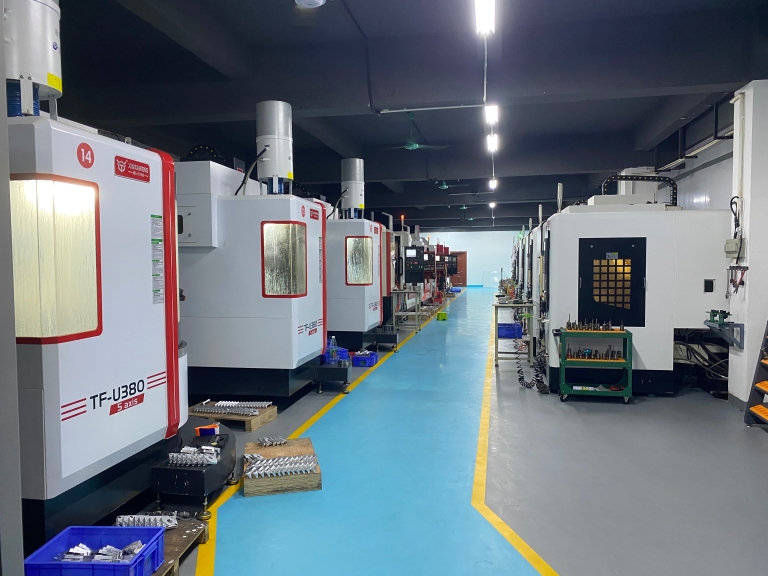
Dedicated High-Precision Machining Cells: Their facility houses advanced 5-axis CNC machining centers specifically configured for difficult-to-machine materials like titanium and Inconel. The inherent rigidity and precision of these machines form the physical foundation for success.
Deep-Process Engineering Culture: Their team doesn’t just run programs; they engineer solutions. From initial Design for Manufacturability (DFM) analysis—often suggesting subtle changes that dramatically improve machinability and cost—to meticulous toolpath programming and in-process monitoring, they treat each titanium component as a technical project.
End-to-End Quality Integration: Holding ISO 9001:2015, IATF 16949, and actively pursuing AS9100 and ISO 13485, their system ensures traceability from raw material certification to final inspection report. This is crucial for industries where material pedigree and process control are audited.
One-Stop Manufacturing Solution: Beyond CNC milling and turning, GreatLight Metal provides all necessary value-added services in-house, including heat treatment, precision grinding, EDM for intricate features, and a full range of surface finishes. This vertical integration reduces lead times, manages quality across processes, and simplifies the supply chain for the client.
H2: Conclusion: Partnering for Performance with Titanium
Selecting the right Alloy Titanium CNC Machining Service Manufacturers is a decision that balances technical capability with collaborative partnership. It requires a manufacturer that views the complexity of titanium not as a barrier, but as a core competency. The ideal partner combines state-of-the-art equipment with profound material science understanding, wraps it in a rigorous quality system, and is committed to transparent communication throughout the manufacturing journey.
For projects where failure is not an option—whether it’s a flight-critical aerospace bracket, a life-sustaining medical implant, or a championship-winning racing component—the choice of manufacturer defines the outcome. Entities like GreatLight CNC Machining Factory exemplify the level of expertise and integrated service required to reliably transform titanium alloy from a challenging raw material into a high-performance, precision-engineered reality, ensuring that the final component fully delivers on the extraordinary promise inherent in the material itself. To explore how such expertise is applied in multi-axis machining, consider the capabilities outlined for precision 5-axis CNC machining services{:target=”_blank”}. For further professional insights and industry engagement, connect with the team on their professional network at GreatLight on LinkedIn{:target=”_blank”}.



















