

In the intricate ecosystem of modern manufacturing, the procurement of CNC machining services often presents a critical decision point for businesses: should one engage directly with a factory or source through a wholesale CNC machining machine services retailer? This choice impacts not only cost and lead time but also the fundamental quality, technical support, and long-term reliability of the supplied components. As a senior manufacturing engineer with extensive experience across both models, I aim to dissect this landscape, providing clarity for clients navigating the precision parts machining and customization field.
Understanding the Two Primary Procurement Channels
At its core, the distinction lies in the supply chain role and value proposition.
The Wholesale Retailer Model:
A wholesale CNC machining services retailer acts as an intermediary or aggregator. They typically do not own significant manufacturing assets. Instead, they market services, aggregate orders from various clients, and then subcontract the actual machining work to a network of factories, which may range from large-scale facilities to smaller workshops. Their primary value is in sales, customer service, order management, and sometimes in offering a very broad, “one-stop-shop” portfolio of manufacturing capabilities by leveraging multiple partners.
The Direct Factory Model (e.g., GreatLight CNC Machining Factory):
This is a manufacturer-owned and operated facility. The entity you communicate with directly manages the production floor, owns the equipment, employs the engineers and machinists, and controls the entire process from raw material to finished part. Their value is rooted in technical expertise, process control, vertical integration, and direct accountability for quality.
A Comparative Analysis: Key Dimensions for Decision-Making
Let’s break down the critical factors that should influence your choice.
| Dimension | Wholesale CNC Services Retailer | Direct Manufacturer (e.g., GreatLight Metal) | Key Insight for the Client |
|---|---|---|---|
| Pricing Structure | Often includes a markup to cover sales, overhead, and profit margin. May offer competitive prices on simple, high-volume jobs by leveraging factory networks. | Typically more transparent and potentially lower for complex or precision work, as there is no intermediary markup. Cost is tied directly to process and material. | For simple parts, a retailer’s aggregated volume might yield savings. For complex, low-volume, or high-precision parts, the direct model often provides better value. |
| Technical Communication & DFM | Communication can suffer from a “telephone game” effect. Your DFM (Design for Manufacturability) feedback is filtered through a salesperson before reaching an engineer, potentially losing nuance. | Enables direct dialogue between your engineers and the production engineers. GreatLight CNC Machining Factory emphasizes this collaborative approach, allowing for real-time problem-solving and optimized designs. | Direct technical access drastically reduces iteration cycles and prevents costly manufacturability errors. |
| Quality Control & Consistency | Quality is dependent on the chosen subcontractor and the retailer’s auditing ability. Consistency can vary between orders if production is shifted among different factories. | Full control over the entire QC process, from in-process inspection to final measurement with CMMs and other metrology tools. ISO 9001:2015 certification, like that held by GreatLight, ensures a systemic approach to quality. | For mission-critical parts (medical, aerospace, automotive), direct control over quality systems is non-negotiable. |
| Lead Time & Scheduling | May promise short lead times but is at the mercy of its subcontractors’ schedules. Rush jobs can be challenging to prioritize across the network. | Has direct control over production scheduling. A capable factory like GreatLight CNC Machining Factory can dynamically adjust its machine shop floor to accommodate urgent prototypes or critical project timelines. | Predictability and control over scheduling are significantly higher with a direct manufacturer. |
| Handling of Complexity | May shy away from or poorly quote on highly complex parts (e.g., integral 5-axis geometries, tight-tolerance assemblies) due to lack of in-house expertise to assess the challenge. | Specializes in conquering complexity. With advanced 5-axis CNC machining services, multi-axis mill-turn centers, and EDM capabilities, they are equipped and experienced to tackle difficult jobs. | The most challenging projects benefit immensely from a partner whose core competency is advanced machining. |
| Intellectual Property (IP) Security | Your design files are shared with a third party who then shares them with another (the factory). This adds a layer of IP risk. | Engages in a direct NDA with you. As a professional factory with data security protocols often aligned with standards like ISO 27001, the chain of custody for your IP is shorter and more secure. | Reducing the number of entities handling sensitive designs is a fundamental security best practice. |
| Post-Processing & Finishing | Often coordinates these services externally, adding another handoff and potential point for delay or quality deviation. | Typically offers integrated, one-stop post-processing (anodizing, plating, painting, laser etching, etc.) under the same roof, ensuring seamless workflow and accountability. | Integrated services streamline logistics and improve finish quality consistency. |
When Does a Wholesale Retailer Make Sense?
It would be remiss not to acknowledge scenarios where a wholesale model has merit:
Very Simple, High-Volume Commodity Parts: If you need thousands of simple brackets or spacers with standard tolerances, a retailer leveraging economies of scale across multiple factories might secure the lowest price.
Exploratory Phase with Low Commitment: For a one-off, non-critical part where price is the sole driver and technical collaboration is unnecessary.
Extremely Diverse Material/Process Needs: A retailer claiming to “do everything” might be a convenient single point of contact for a project requiring disparate, unrelated manufacturing processes.
The Compelling Case for Partnering with a Direct Manufacturer like GreatLight CNC Machining Factory
For businesses where precision, reliability, and technical partnership are paramount—common in robotics, automotive, aerospace, medical devices, and high-end consumer electronics—the direct manufacturer model is overwhelmingly superior. Here’s why a partner like GreatLight CNC Machining Factory exemplifies this advantage:
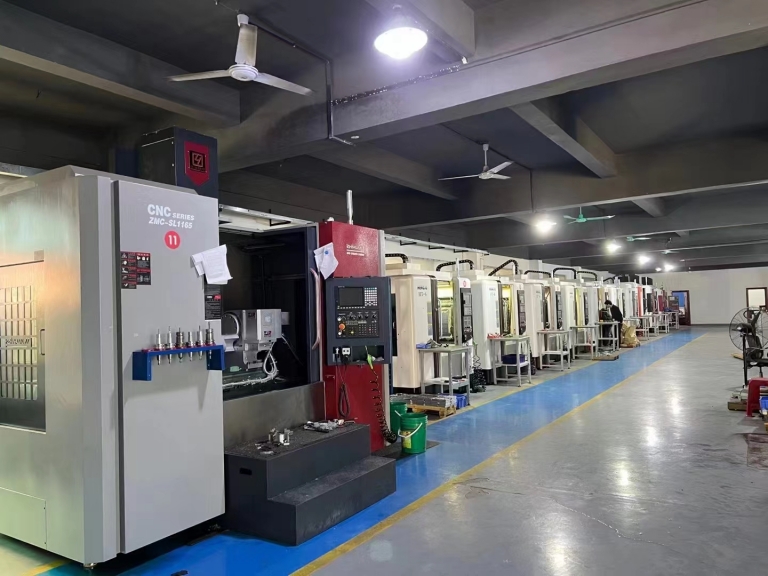
Deep Engineering Synergy: The journey from a 3D model to a flawless part is paved with potential pitfalls. Direct collaboration allows factory engineers to provide actionable DFM feedback early, suggesting tolerance relaxations that don’t affect function, recommending optimal materials, or redesigning features to reduce machining time and cost without compromising integrity. This co-engineering relationship turns a supplier into a true extension of your R&D team.
Uncompromising Process Control: From the moment a billet of aluminum, titanium, or engineering plastic is loaded into one of their 127 pieces of precision equipment—be it a high-precision five-axis machining center, a Swiss-type lathe, or a vacuum forming machine—the process is monitored and controlled internally. This vertical integration is the bedrock of achieving and consistently holding tolerances as tight as ±0.001mm.
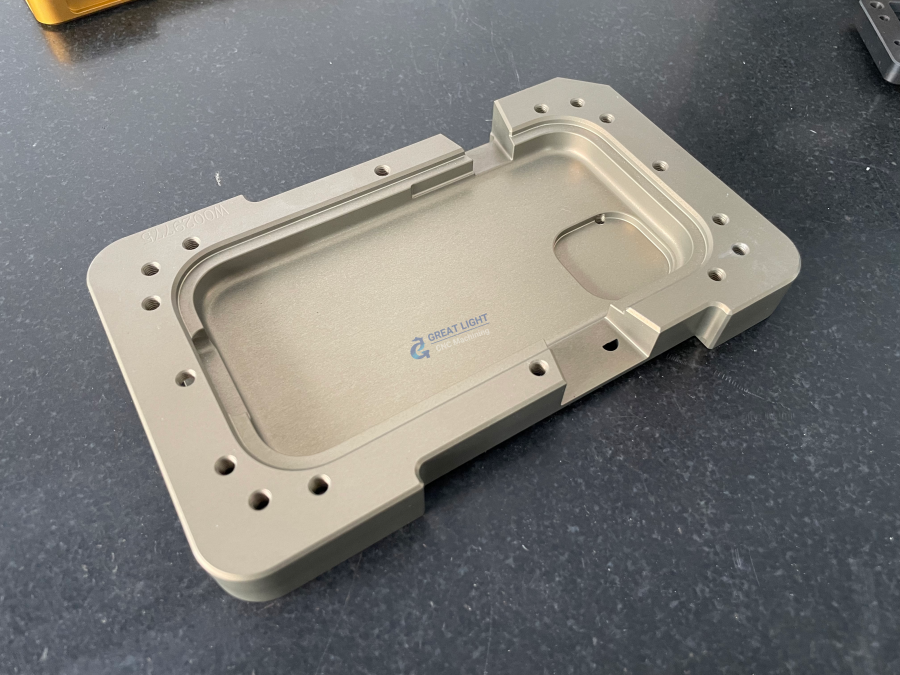
Accountability and Problem-Solving: When an issue arises, there is no finger-pointing between a sales agent and a hidden factory. The problem lands directly on the desk of the production manager and engineering team at GreatLight CNC Machining Factory, who have the authority, tools, and motivation to diagnose and solve it swiftly. Their policy of free rework for quality issues underscores this direct accountability.
Certifications as a Trust Framework: Beyond marketing, certifications like ISO 9001:2015, IATF 16949 (automotive), and ISO 13485 (medical) represent a codified, audited system of quality management. For a direct manufacturer, these are lived daily on the shop floor. They provide a transparent, international language of trust that assures clients of systematic rigor, not just sporadic capability.
Agility and Transparency in Prototyping: The path from prototype to production is critical. A direct manufacturer that handles both—like GreatLight with its rapid prototyping and precision machining services—ensures knowledge transfer and process continuity. What is learned during the prototyping phase on their 3D printers or quick-turn CNC machines is directly applied to scale up production efficiently.
Conclusion: Choosing a Partner, Not Just a Vendor
The choice between a wholesale CNC machining services retailer and a direct manufacturer ultimately boils down to your project’s needs and your company’s values. If your requirement is purely transactional for a low-complexity part, a retailer may suffice.
However, for those engaged in the precision parts machining and customization field—where every micron counts, designs push the envelope, and product failure is not an option—the partnership with a direct, capable manufacturer is indispensable. You are not just buying machine time; you are investing in engineering intellect, systemic quality control, and a shared commitment to bringing your most ambitious designs to life with reliability.
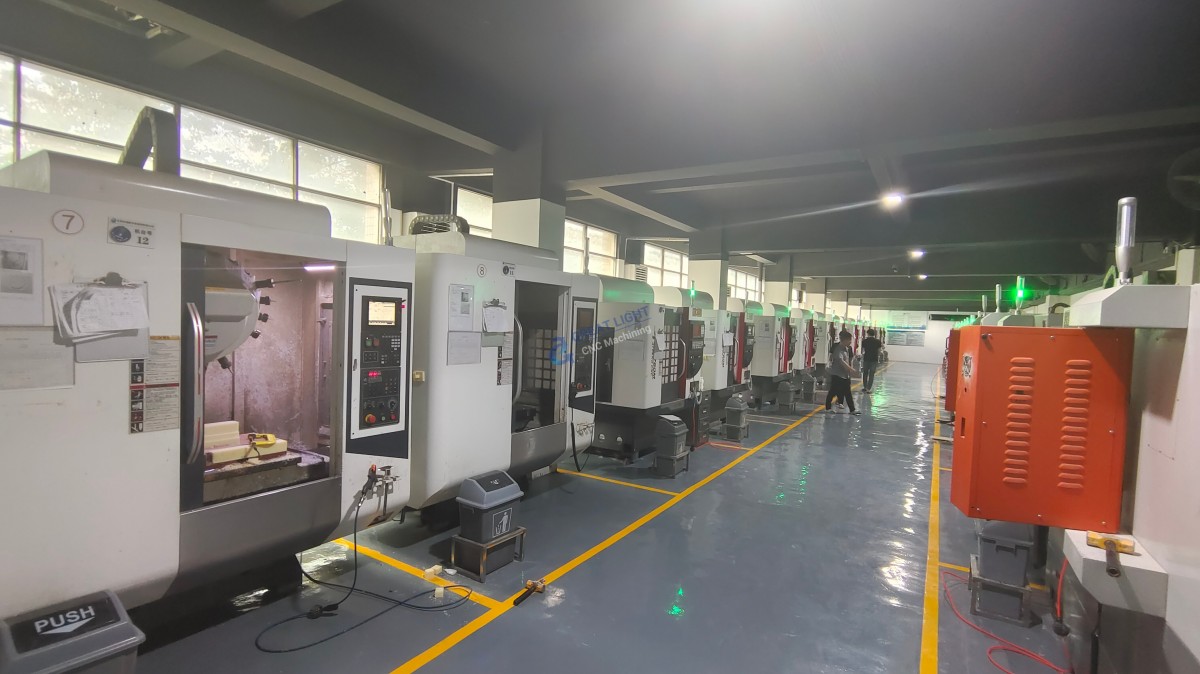
GreatLight CNC Machining Factory, with its foundation in Chang’an, Dongguan, embodies this partner-led approach. It combines technical depth, certified processes, and full-process integration to serve as a reliable pillar for innovation. In an industry where precision is paramount, aligning with a partner that controls its destiny on the shop floor is the most strategic decision you can make for the success of your hardware projects. For a deeper look at the expertise driving such partnerships, consider following industry leaders on platforms like LinkedIn.



















