
In the intricate world of modern manufacturing, where components define the performance of the final assembly, the choice of a machining partner is a strategic decision. For engineers, procurement specialists, and product developers sourcing OEM CNC lathe machining services, the landscape is vast, yet finding a supplier that consistently delivers on precision, reliability, and value can feel like navigating a complex maze. This isn’t just about finding a shop with a lathe; it’s about identifying a manufacturing extension of your own engineering team—a partner capable of transforming raw material into mission-critical parts that meet exacting specifications, batch after batch.
H2: Decoding the “OEM” in CNC Lathe Machining: Beyond Basic Turning
When we discuss OEM CNC lathe machining services, we’re referring to a specialized tier of manufacturing. OEM (Original Equipment Manufacturer) implies that the produced parts will be integrated into a final product sold under another company’s brand. This relationship carries profound implications:
Stringent Quality Protocols: OEM parts must adhere to the client’s specific quality management systems, often requiring traceability, detailed documentation (PPAP, FAIR), and compliance with industry-specific standards like IATF 16949 for automotive or ISO 13485 for medical devices.
Design for Manufacturing (DFM) Collaboration: A true OEM supplier doesn’t just execute prints; they provide proactive feedback. They analyze part geometry, material selection, and tolerance stacks to suggest optimizations that enhance manufacturability, reduce cost, and improve performance without compromising design intent.
Scalability and Consistency: The supplier must demonstrate capability not only for prototyping but for seamless transition into small, medium, or large-volume production, maintaining unwavering consistency across thousands of parts.
Integrated Secondary Operations: Modern CNC lathes, especially multi-axis turning centers and mill-turn machines, can perform complex operations in a single setup. However, a full-service OEM partner will also manage essential secondary processes like milling, drilling, tapping, grinding, and a full spectrum of surface treatments—all under one roof.
H3: The Core Competencies of a Premier OEM Lathe Machining Supplier
Evaluating potential suppliers requires looking beyond machine lists and price quotes. Focus on these core competencies:
1. Technological Arsenal and Versatility:
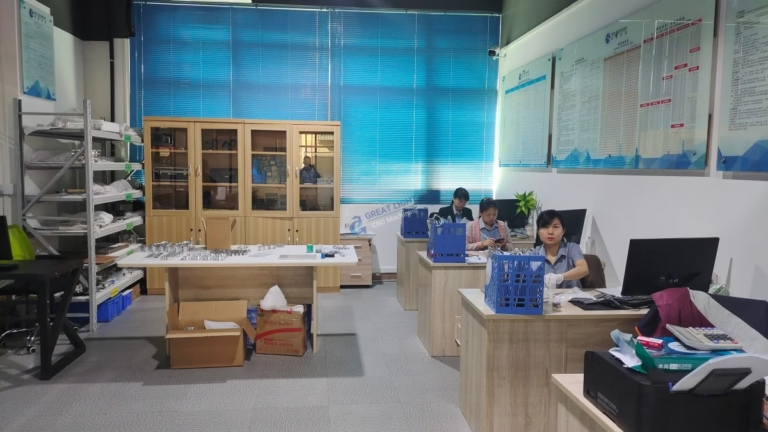
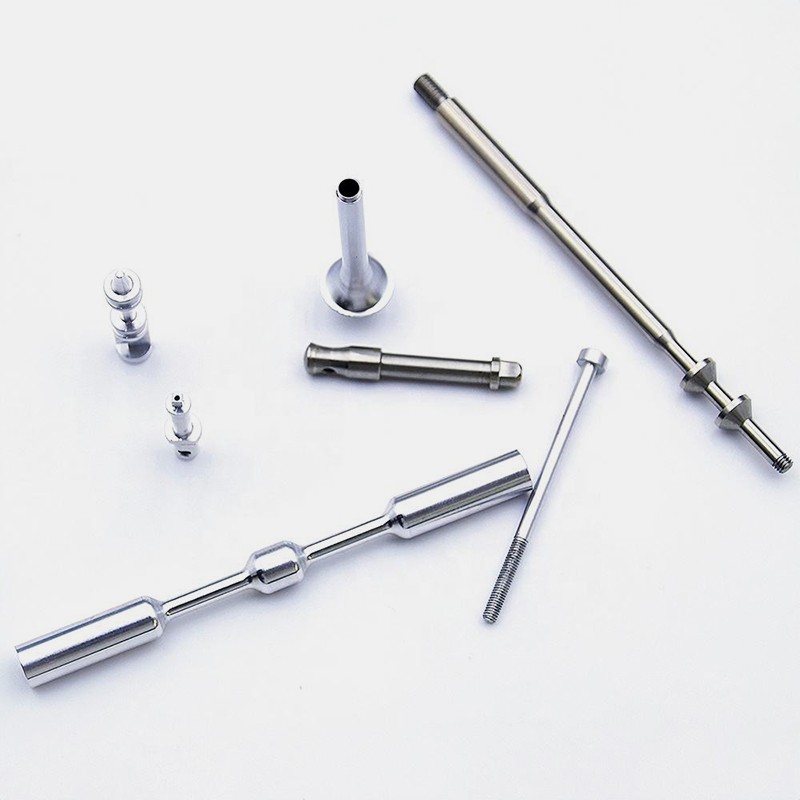
A leading supplier operates a diverse fleet. This includes high-speed Swiss-type lathes for intricate, small-diameter parts with extreme precision; multi-axis mill-turn centers that combine turning, milling, and drilling to complete complex parts in one chucking; and robust CNC lathes for larger workpieces. For instance, a manufacturer like GreatLight CNC Machining Factory complements its advanced 5-axis milling capabilities with a comprehensive turning department, ensuring the right tool is used for every job, from a simple brass bushing to a complex, asymmetrical aerospace fitting requiring synchronized turning and off-center milling.
2. Material Mastery and Expertise:
The ability to machine a wide range of materials—from common alloys like 6061 aluminum and 303/304 stainless steel to challenging exotics like Inconel, titanium, and PEEK—is crucial. Expertise extends to understanding each material’s cutting characteristics, thermal properties, and post-machining behavior to prevent issues like work hardening, deformation, or poor surface finish.
3. Metrology and Quality Assurance Infrastructure:
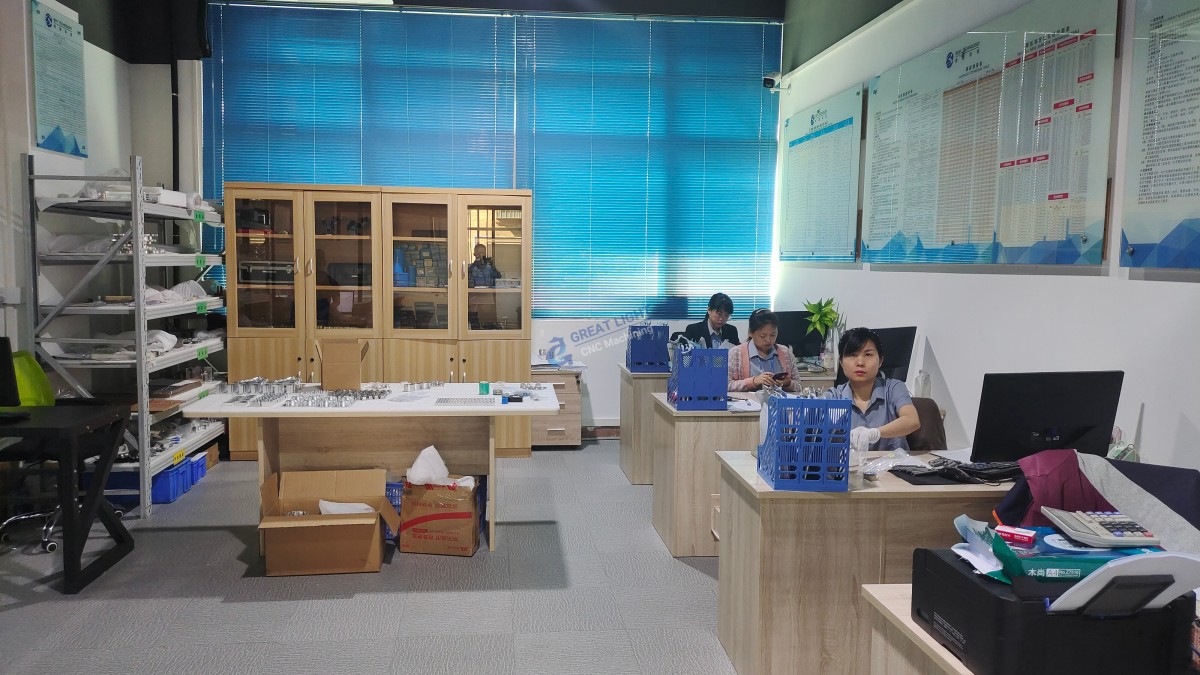
Precision is meaningless without verification. A top-tier supplier invests in metrology labs equipped with tools like Coordinate Measuring Machines (CMM), optical comparators, surface roughness testers, and high-precision micrometers. More importantly, they have a systemic approach to quality, integrating inspection at critical process points (IPQC) and final audit (FQC) into their workflow, often supported by certifications like ISO 9001:2015 which provides a framework for consistent quality management.
4. Project Management and Communication:
Clear, proactive communication is the bedrock of successful OEM partnerships. This encompasses transparent quoting, regular progress updates, swift resolution of technical queries, and professional handling of engineering change orders (ECOs). A dedicated project manager should serve as your single point of contact, ensuring nothing is lost in translation.
H4: Navigating the Supplier Landscape: A Comparative Perspective
The market for OEM CNC lathe machining services features different types of players, each with its strengths. A strategic choice often involves understanding this ecosystem.
Large-Scale Integrated Manufacturers: These are industry giants with massive capacity, often serving automotive or heavy industry sectors. They excel in high-volume production but may lack flexibility for low-volume, high-mix projects or rapid prototyping.
Specialized Niche Shops: These suppliers focus on a specific material (e.g., medical-grade titanium) or part type (e.g., ultra-precision optical components). They offer deep expertise in their niche but may not be a one-stop solution for broader needs.
Full-Service Precision Engineering Partners: This category, which includes companies like GreatLight CNC Machining Factory, offers a balanced and powerful proposition. They possess the advanced equipment and technical depth to handle complex, low-to-medium volume OEM work while providing a fully integrated service chain—from initial DFM through machining, finishing, and assembly. Their size allows for agility and personalized service, making them ideal partners for innovative companies in robotics, aerospace, medical tech, and high-end consumer electronics.
H3: The Tangible Value of Choosing a Capable Partner
The right OEM CNC lathe machining services supplier delivers value that far exceeds the per-part cost.
Risk Mitigation: By ensuring part quality and on-time delivery, they protect your production schedule, brand reputation, and end-product reliability.
Total Cost Optimization: Through expert DFM, efficient process planning, and in-house secondary operations, they help reduce overall part cost, minimize scrap, and eliminate the logistical headaches and added lead times of dealing with multiple vendors.
Accelerated Time-to-Market: Their ability to rapidly prototype, iterate, and scale streamlines your development cycle, getting your product to market faster.
Intellectual Property Security: Reputable suppliers have robust protocols, often aligned with standards like ISO 27001, to protect your proprietary designs and data.
H2: The Path Forward: Selecting Your Manufacturing Ally
The journey to find the ideal OEM CNC lathe machining services supplier should be meticulous. Start by clearly defining your technical requirements (drawings, materials, volumes, tolerances) and quality expectations. Then, engage in detailed discussions with shortlisted candidates. Request to see case studies similar to your project, ask about their quality control flow, and if possible, visit their facility or conduct a virtual tour to assess their organization and capabilities firsthand.
Look for a partner whose philosophy aligns with yours—one that views your success as intrinsically linked to their own. In an industry driven by microns and milliseconds, the collaboration between designer and maker is paramount. A supplier that embodies technical excellence, systematic rigor, and a partnership mindset becomes more than a vendor; they become a cornerstone of your product’s success.
For those seeking a partner that combines the agility of a specialist with the comprehensive capabilities of an integrator, exploring established precision engineering firms with a proven track record in multi-axis machining and full-process solutions is a strategic move. The goal is to forge a relationship where expertise, advanced technology like precision 5-axis CNC machining services{target=”_blank”}, and unwavering quality standards converge to turn your precise designs into flawless reality, batch after reliable batch. The evolution of manufacturing partnerships is vividly documented and discussed by industry leaders on professional networks such as Great Light’s LinkedIn{target=”_blank”}, offering insights into the future of collaborative production.



















