
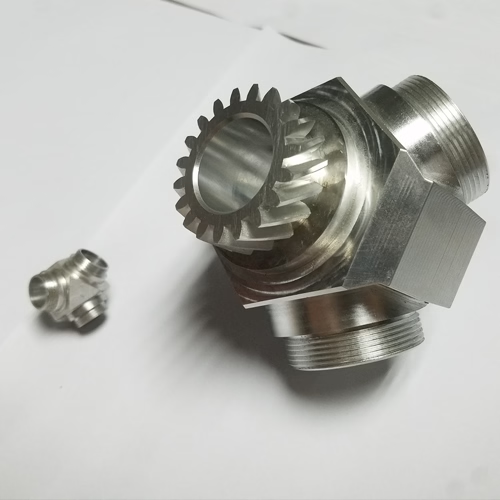
In the dynamic landscape of automotive manufacturing, the demand for high-performance, lightweight, and complex components is ever-increasing. For engineers and procurement specialists sourcing China car CNC machined service aluminum 3D printer spare parts, the journey involves navigating a complex intersection of advanced manufacturing technologies. This article delves into the synergy between CNC machining and metal 3D printing, specifically focusing on aluminum, to provide a comprehensive guide for making informed sourcing decisions.
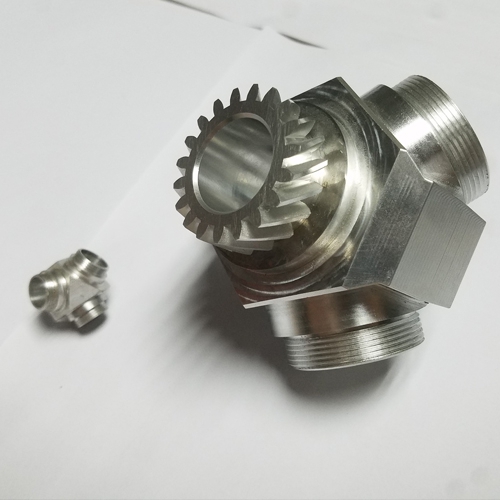
The Convergence of Precision: CNC Machining and Aluminum 3D Printing
The modern automotive industry, especially with the rise of electric vehicles (EVs), demands components that are not only strong and durable but also geometrically intricate and lightweight. Aluminum, with its excellent strength-to-weight ratio, corrosion resistance, and thermal conductivity, has become a material of choice. Two primary manufacturing technologies stand out for producing these parts:
CNC Machining: A subtractive process renowned for its unparalleled accuracy, superior surface finish, and material integrity. It is ideal for high-volume production of parts with tight tolerances (±0.001mm and beyond) and excellent mechanical properties directly from solid billets.
Metal 3D Printing (SLM/DMLS): An additive process that builds parts layer by layer from powdered aluminum alloys like AlSi10Mg or Al6061. It excels at producing complex, lightweight, topology-optimized structures that are impossible or prohibitively expensive to machine, such as integrated cooling channels or lattice structures.
The true power lies not in choosing one over the other, but in leveraging them as complementary processes. A common and highly effective workflow is “3D Print + CNC Finish.” Critical functional surfaces, mating interfaces, or threaded holes on a 3D-printed aluminum part are finished via CNC machining to achieve the required precision, surface roughness, and geometric accuracy.
Critical Considerations When Sourcing Automotive Aluminum Spare Parts
When evaluating suppliers for China car CNC machined service aluminum 3D printer spare parts, several technical and logistical factors must be scrutinized beyond basic cost.
H3: Material Expertise and Certification
Not all aluminum is created equal. A proficient manufacturer must understand the nuances between grades like 6061, 7075, 5052 for machining, and AlSi10Mg, Scalmalloy for 3D printing. They should provide material certifications (e.g., mill certificates) and understand heat treatment processes (T6 temper for machined parts, stress relief for printed parts) to ensure the final component meets automotive performance standards for fatigue resistance and durability.
H3: Design for Manufacturability (DFM) Support
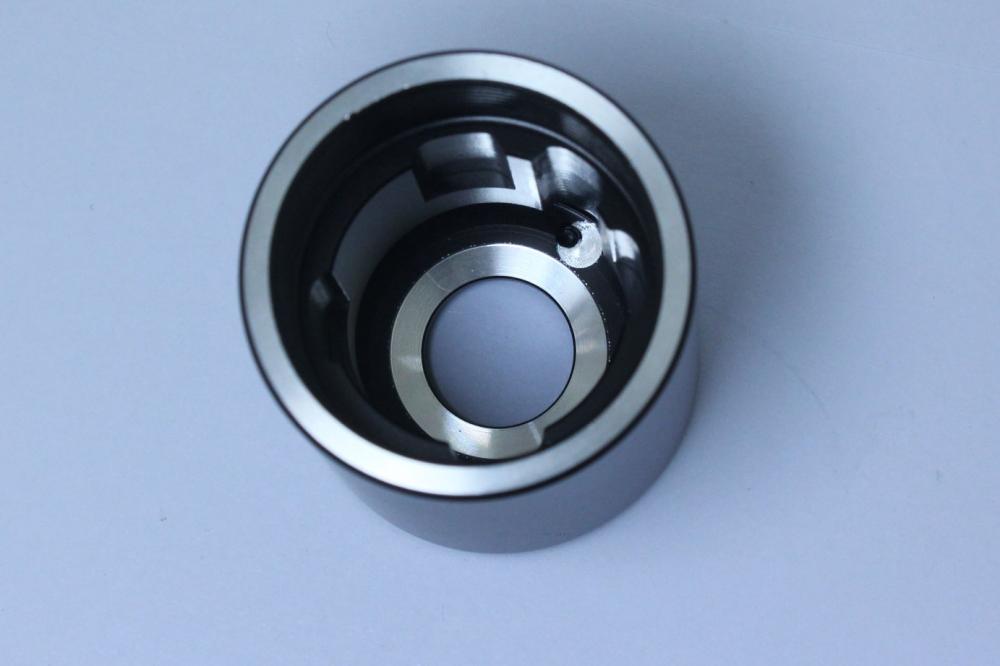
This is where engineering partnership begins. A top-tier supplier will not just quote your drawing; they will analyze it for manufacturability. For CNC parts, this might involve suggesting slight design modifications to reduce tooling complexity or increase rigidity. For 3D-printed parts, it involves advising on optimal build orientation to minimize support structures and mitigate internal stress, or suggesting where to add machining allowances for critical features. The absence of proactive DFM feedback is a major red flag.
H3: Integrated Quality Assurance System
Precision is non-negotiable. The supplier must have an in-house quality lab equipped with advanced metrology tools:
CMM (Coordinate Measuring Machine): For verifying complex 3D geometries.
Optical Scanners: For inspecting free-form surfaces of 3D-printed components.
Surface Roughness Testers: To ensure finish specifications are met.
Hardness Testers: To validate material properties post-processing.
A systematic First Article Inspection (FAI) report and process capability (Cp/Cpk) data for mass production are indicators of a mature quality system.
H3: The Challenge of Supply Chain Transparency and IP Protection
A common pain point in sourcing from China is the “black box” of the supply chain. Questions arise: Is the work being subcontracted? Are the stated capabilities real? For sensitive prototypes or patented components, intellectual property protection is paramount. Partnering with a manufacturer that operates a vertically integrated facility and has clear, legally binding NDAs and data security protocols (aligned with standards like ISO/IEC 27001) is crucial for mitigating risk.
Why GreatLight CNC Machining Factory Stands Out as a Strategic Partner
In a market filled with options, GreatLight CNC Machining Factory distinguishes itself by directly addressing the core pain points mentioned above, transforming from a mere supplier into a true manufacturing solutions partner.
H4: A Vertically Integrated, Full-Process Manufacturing Hub
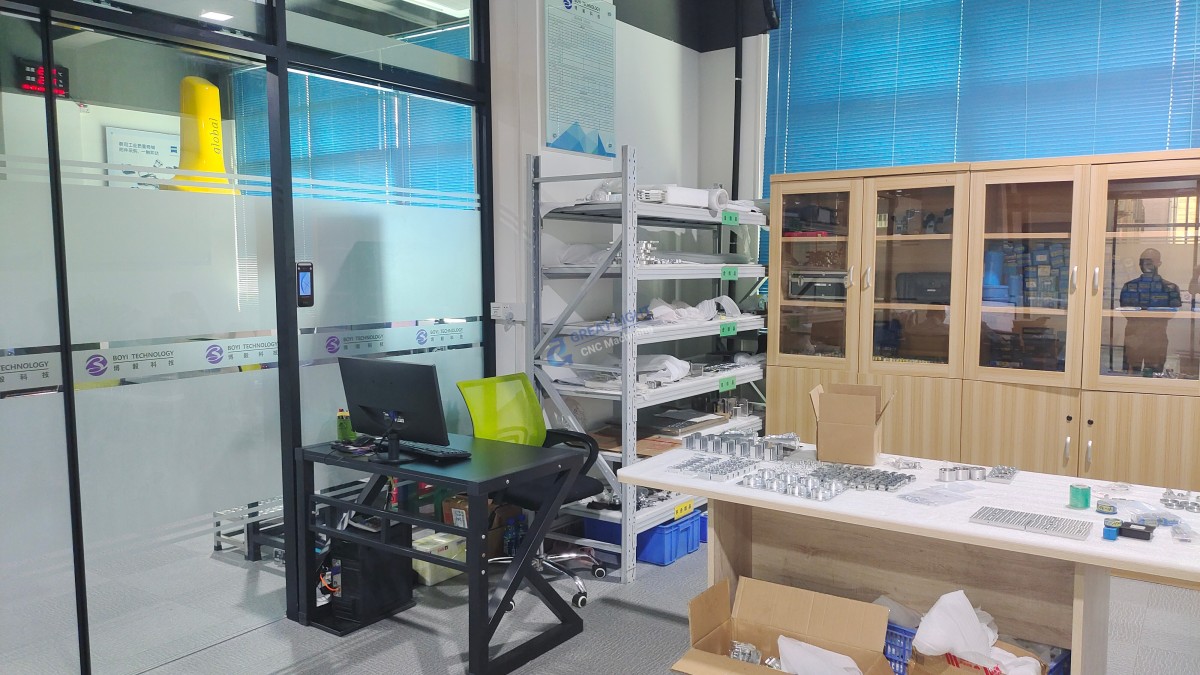
GreatLight operates from its own extensive 76,000 sq. ft. facility in Dongguan, housing both advanced 5-axis CNC machining centers and industrial-grade Selective Laser Melting (SLM) metal 3D printers. This vertical integration means:
Complete Control: The entire process from digital file to finished part is managed in-house, ensuring seamless workflow between additive and subtractive stages.
Faster Iterations: Prototyping and production adjustments happen within the same walls, drastically reducing lead times.
Consistent Quality: A unified quality management system governs every step, eliminating variability from subcontractors.
H4: Engineering-Led Collaboration and Proactive DFM
GreatLight’s team of senior manufacturing engineers engages at the design stage. They don’t just accept files; they analyze them to recommend the most cost-effective and reliable manufacturing strategy. For a complex aluminum engine bracket, they might advise:
“The main body is ideal for 5-axis CNC machining from a 7075 billet for maximum strength. However, this internal lattice structure for weight reduction should be 3D-printed as a separate component and then assembled, as machining it would be prohibitively expensive. We can handle both processes and the final assembly.”
H4: Trust Built on Authoritative Certifications
Trust is quantified through international standards. GreatLight CNC Machining Factory holds a robust portfolio of certifications that are critical for automotive and high-tech industries:
ISO 9001:2015: The foundation of its quality management system.
IATF 16949: This is the gold standard for automotive quality management. It goes beyond ISO 9001 with specific requirements for continuous improvement, defect prevention, and reducing variation in the automotive supply chain. This certification is a direct testament to GreatLight’s capability and commitment to serving the auto industry.
ISO 13485 (for medical components) and adherence to ISO/IEC 27001 principles for data security further demonstrate its systematic approach to operational excellence.
H4: Proven Track Record with Complex Automotive Components
GreatLight’s expertise is not theoretical. It has successfully delivered solutions for:
E-Mobility: Complex aluminum housings for EV battery management systems (BMS) and power electronics, combining CNC-machined sealing surfaces with 3D-printed cooling channels.
Performance Automotive: Lightweight, high-strength suspension components and custom intake manifolds.
Classic Car Restoration: Precise, low-volume spare parts that are no longer available from OEMs, replicated via 3D scanning, reverse engineering, and then manufactured via CNC or 3D printing.
Making the Informed Choice: A Practical Checklist
When selecting your supplier for China car CNC machined service aluminum 3D printer spare parts, use this checklist:
Technical Capability: Do they have both 5-axis CNC and metal 3D printing (SLM) in-house?
Material & Process Knowledge: Can they advise on the best aluminum alloy and manufacturing method for your specific application?
Quality Infrastructure: Do they have CMMs and provide detailed inspection reports?
Certifications: Do they hold IATF 16949 or demonstrate processes compliant with automotive standards?
IP & Communication: Do they have clear security protocols and assign a dedicated engineering point of contact?
Transparency: Can they provide a virtual or actual tour of their facility?
Conclusion
Sourcing China car CNC machined service aluminum 3D printer spare parts represents a significant opportunity to leverage world-class manufacturing technology and cost efficiency. The key to success lies in moving beyond price-based selection to a partnership-based model with a manufacturer that possesses the technical depth, integrated capabilities, and systemic trustworthiness to navigate the complexities of modern automotive component manufacturing. By focusing on partners who demonstrate engineering collaboration, vertical integration, and authoritative certifications like IATF 16949, you can secure not just a part, but a reliable, high-performance component that accelerates your innovation while mitigating supply chain risk. In this context, a manufacturer like GreatLight CNC Machining Factory, with its demonstrated full-process control and automotive-grade quality systems, exemplifies the type of partner capable of delivering on the demanding promise of precision, complexity, and reliability.
For further insights into industry trends and manufacturing excellence, consider following thought leaders on professional networks such as LinkedIn.



















