
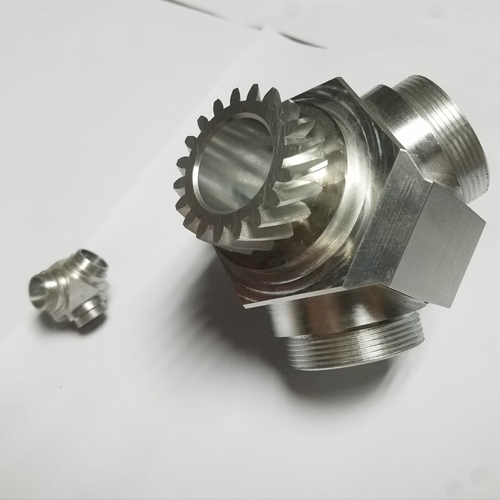
When your innovative design is still on the drawing board, transforming that concept into a tangible, functional prototype is the most critical first step. This phase determines whether your idea is feasible, identifies potential design flaws, and validates performance before committing to costly mass production tooling. For engineers, R&D teams, and product developers across industries—from automotive and aerospace to medical devices and consumer electronics—selecting the right partner for CNC machining prototype service is not merely a procurement decision; it is a strategic investment in the success of your entire project.
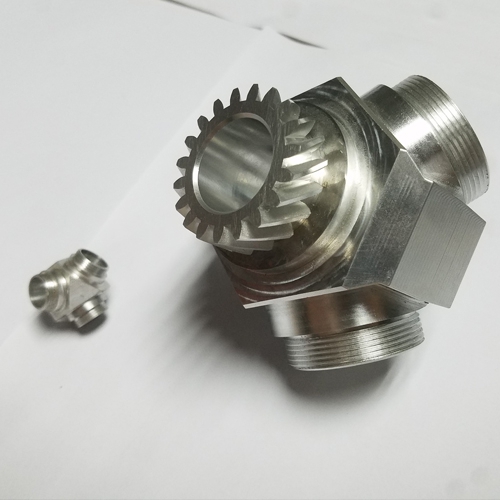
The journey from a 3D CAD model to a high-fidelity prototype is fraught with technical challenges and logistical hurdles. It demands more than just a machine shop; it requires a collaborative engineering partner equipped with advanced technology, deep expertise, and a robust process designed for prototyping agility and precision.
The Core Value of CNC Machining in Prototyping
Unlike other rapid prototyping methods, CNC machining offers unparalleled advantages for functional prototyping:
Material Fidelity: Parts are manufactured from solid blocks of the intended production-grade materials—be it aluminum 6061-T6, stainless steel 316L, titanium Ti6Al4V, or engineering plastics like PEEK. This allows for accurate testing of mechanical properties, weight, thermal behavior, and chemical resistance.
Geometric Complexity & Precision: Modern multi-axis CNC technology can produce prototypes with intricate internal features, complex contours, and tight tolerances (down to ±0.001mm / 0.001 In), which are often impossible with additive manufacturing or traditional methods.
Superior Surface Finish: CNC-machined parts come off the machine with excellent surface quality, often requiring minimal post-processing. This is crucial for aerodynamic testing, fluid flow analysis, or aesthetic validation.
Functional Testing Ready: Due to their material integrity and dimensional accuracy, CNC prototypes can be used directly for rigorous functional testing, fit checks, and even limited pre-production runs.
Navigating the Critical Pain Points in Prototype Procurement
The path to a perfect prototype is rarely smooth. Clients frequently encounter several systemic pain points that can derail timelines and budgets:
The “Precision Promise” Gap: Many suppliers advertise extreme tolerances but fail to deliver consistency. Prototype accuracy suffers from machine calibration drift, inexperienced programmers, or inadequate metrology, leading to parts that don’t fit or function as designed.
The “Material Mystery”: Sourcing traceable, certified raw materials for prototypes is often overlooked. Using substandard or incorrect material batches can invalidate all test data, rendering the prototype useless for its primary purpose.
The “Communication Black Hole”: Prototyping is iterative. A lack of proactive engineering feedback, delayed design-for-manufacturability (DFM) analysis, and poor communication channels can turn a simple revision into a weeks-long delay.
The “Post-Processing Puzzle”: Many shops focus solely on machining, leaving clients to source secondary operations (anodizing, heat treatment, plating, painting) separately. This fragmentation increases lead time, cost, and coordination complexity.
The “Scalability Chasm”: A prototype is a stepping stone to production. Working with a vendor that lacks the capacity, quality systems, or expertise to scale from one-off parts to low-volume or high-volume manufacturing creates a disruptive and costly supplier transition later.
The Hallmarks of an Exceptional CNC Machining Prototype Service Provider
To overcome these challenges, your chosen partner should embody a set of core competencies that extend far beyond basic machining.
H2: Technical Hard Power: The Equipment and Expertise Foundation
The capability to machine your prototype starts with the right tools in expert hands.
Multi-Axis Machining Capability: For complex prototypes, 3-axis machining is often insufficient. A provider equipped with 4-axis and 5-axis CNC machining centers can produce intricate geometries in a single setup, reducing errors, improving accuracy, and significantly shortening lead times. This is essential for prototypes with undercuts, compound angles, or continuous complex surfaces.
Comprehensive In-House Metrology: Precision must be verified, not assumed. A top-tier service will operate a full suite of measurement equipment—such as Coordinate Measuring Machines (CMM), optical scanners, and high-precision gauges—to provide first-article inspection (FAI) reports, ensuring the prototype matches the digital model exactly.
Material Science Knowledge: Partners should advise on the optimal material for your prototype’s function, offering a wide range of in-stock, certified metals and plastics, and understanding their machinability and post-processing requirements.
H3: Process Soft Power: Systems and Workflow Excellence
Reliable outcomes are born from disciplined processes.
Structured Prototyping Workflow: Look for a defined process: from initial quote and instant DFM analysis, through programmed machining, in-process inspection, to final quality control and delivery. Transparency at each stage is key.
Integrated Engineering Support: The best partners act as an extension of your R&D team. They should proactively suggest design modifications to enhance manufacturability, reduce cost, or improve performance without compromising intent.
One-Stop Post-Processing Services: A seamless experience includes managing all necessary finishing—be it bead blasting, anodizing in various colors, powder coating, or precision assembly—under one roof. This guarantees consistency and saves invaluable time.
H4: The Trust Factor: Certifications and Cultural Commitment
Trust is built on verifiable standards and a client-centric culture.
Authoritative Quality Certifications: Certifications like ISO 9001:2015 are not just plaques on the wall; they represent a systemic commitment to quality management, continuous improvement, and documented procedures that ensure repeatability. For medical or automotive prototypes, adherence to ISO 13485 or IATF 16949 standards, respectively, is a non-negotiable indicator of specialized capability and regulatory awareness.
Project Management & Communication: Dedicated project managers who provide regular updates, high-resolution photos of work-in-progress, and are readily accessible to answer technical questions transform the prototype process from a black box into a collaborative partnership.
Intellectual Property (IP) Protection: For innovative designs, robust data security protocols, often aligned with standards like ISO 27001, are essential to protect your confidential CAD files and proprietary information.
A Partner Engineered for Prototyping Success: The GreatLight CNC Machining Factory Approach
In the competitive landscape of precision manufacturing, GreatLight CNC Machining Factory has distinguished itself as a specialist in bridging the gap between complex design and tangible reality. Established in 2011 in Dongguan’s manufacturing hub, their evolution has been focused on solving the precise challenges outlined above.
Their approach to CNC machining prototype service is built on an integrated model:
Rapid-Response Engineering Quotation: Leveraging advanced software, they provide fast, detailed quotes with actionable DFM feedback, often within hours.
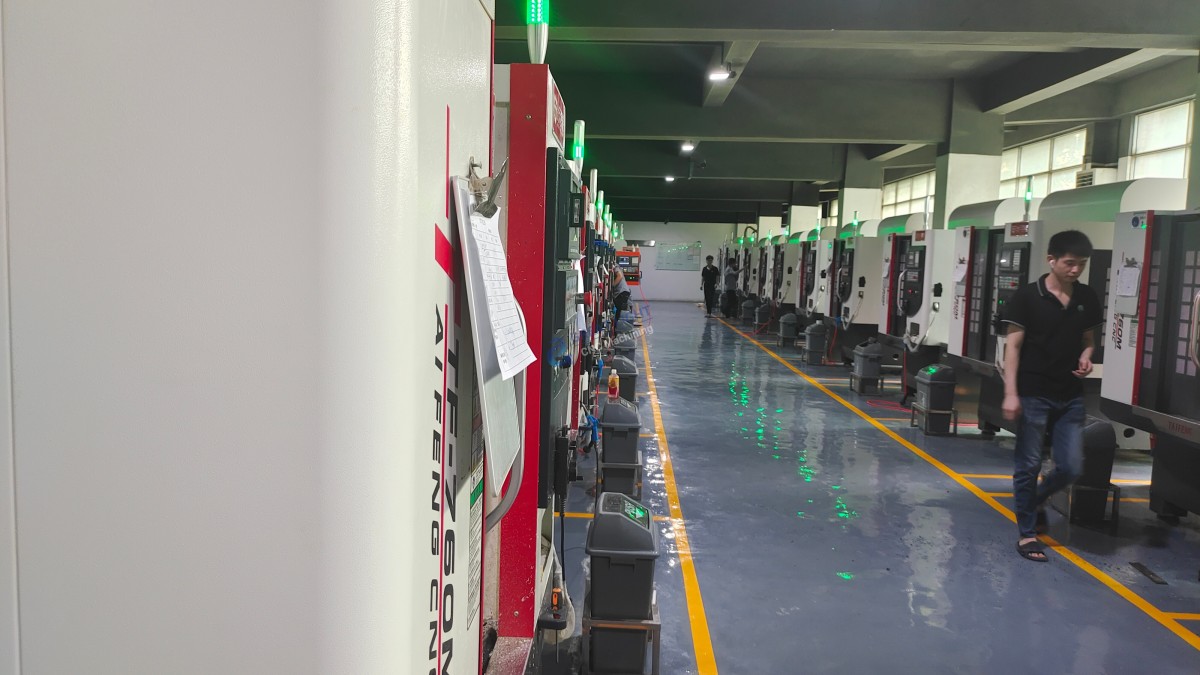
Agile Manufacturing on Advanced Platforms: With over 127 pieces of precision equipment, including high-end 5-axis machining centers, they have the flexibility to allocate optimal resources for prototype jobs, ensuring both speed and supreme accuracy.
Full-Process Ownership: From sourcing certified materials to performing precision machining and applying a wide array of surface finishes in their own facility, they control the entire chain. This eliminates finger-pointing and ensures accountability for the final deliverable.
A Culture of “Zero-Excuse” Quality: Their commitment is underscored by a straightforward guarantee: free rework for any quality issue, with a full refund if the rework remains unsatisfactory. This places the risk squarely on them, not the client.
For projects ranging from a single, ultra-complex aerospace component to a small batch of functional automotive engine parts, their system is designed to deliver not just a part, but confidence. The goal is to provide a prototype that is so accurate and well-made that it seamlessly transitions into the next phase of development, whether that’s further iteration or pilot production.
Conclusion: Making the Strategic Choice
Selecting a CNC machining prototype service is a foundational decision. It determines the quality of your validation data, the speed of your development cycle, and ultimately, the market readiness of your product. Look beyond the lowest price and evaluate potential partners on their technical portfolio, process maturity, and cultural commitment to partnership.
The ideal provider functions as a seamless extension of your own engineering capabilities, equipped to navigate the intricacies of precision, material science, and timely execution. In this demanding field, partners like GreatLight CNC Machining Factory demonstrate that with the right combination of advanced technology, systematic rigor, and a client-empowering ethos, the journey from concept to validated prototype can be a smooth, efficient, and highly reliable process. Begin your next innovation with a partner built for precision from the first part to the last.
For further insights into industry trends and manufacturing excellence, you can explore professional networks like LinkedIn{:target=”_blank”}.



















