In the high-stakes world of aerospace manufacturing, where the margin for error is measured in microns and the consequences of failure are unthinkable, the choice of a machining partner is not merely a procurement decision—it’s a foundational pillar of safety, reliability, and innovation. The demand for aero CNC machining service is defined by an uncompromising pursuit of perfection, pushing the boundaries of material science, geometric complexity, and process control. This article delves into the critical facets of aerospace-grade machining, the unique challenges it presents, and how selecting a partner with the right blend of technology, certification, and engineering acumen is paramount.
The Unparalleled Demands of Aerospace Machining
Aerospace components operate in the most extreme environments imaginable: from the cryogenic temperatures of high-altitude flight to the searing heat of engine combustion, all while enduring immense structural loads and vibration. This places extraordinary demands on every machined part.
Extreme Precision & Tight Tolerances: Aerospace designs often call for tolerances within ±0.0005″ (0.0127mm) or even tighter. This level of precision is non-negotiable for components like fuel system parts, actuator housings, and turbine blades, where fit and function are critical to system integrity.
Advanced & Difficult-to-Machine Materials: The industry relies on high-strength, lightweight, and temperature-resistant alloys. Common materials include:
Titanium Alloys (e.g., Ti-6Al-4V): Prized for their high strength-to-weight ratio and corrosion resistance, but notoriously challenging due to low thermal conductivity and high chemical reactivity, leading to rapid tool wear.
Nickel-Based Superalloys (e.g., Inconel 718): Essential for jet engine hot sections, these materials retain strength at extreme temperatures but are extremely hard and abrasive, posing significant machining challenges.
High-Strength Aluminum Alloys (e.g., 7075, 2024): Used extensively in airframes and structural components for their lightweight and good machinability, but require careful handling to prevent stress corrosion cracking.
Composites & Hybrid Structures: Increasingly common, requiring specialized machining techniques to delaminate or fray fibers.
Stringent Traceability & Documentation: Every raw material batch, every machining step, and every inspection result must be fully documented. This “cradle-to-grave” traceability is mandated by aviation authorities and is crucial for quality assurance and safety investigations.
Complex, Lightweight Geometries: Modern aerospace design leverages complex, organic shapes and thin-walled structures to minimize weight without sacrificing strength. Machining these features without inducing distortion requires exceptional process expertise.
Core Capabilities of a True Aerospace CNC Machining Partner
Not every machine shop can meet these demands. A qualified provider must demonstrate a mastery of specific technologies and processes.
1. Advanced Multi-Axis CNC Machining: The Non-Negotiable Foundation
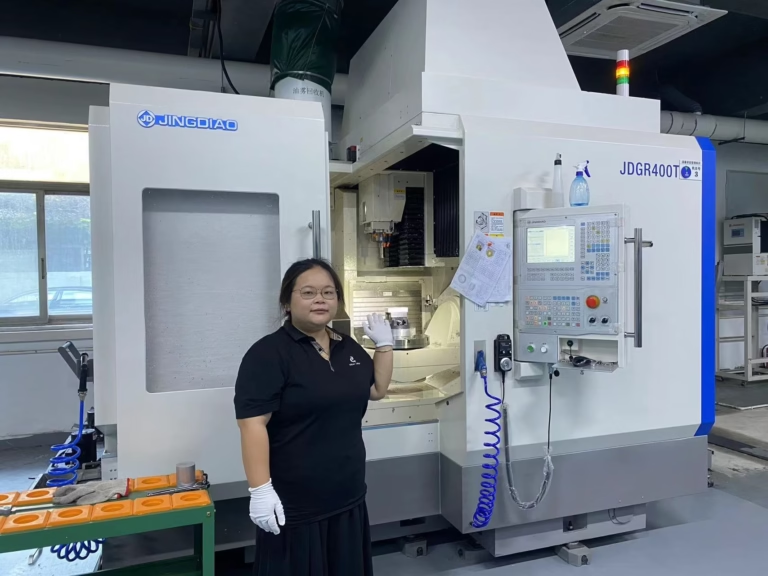
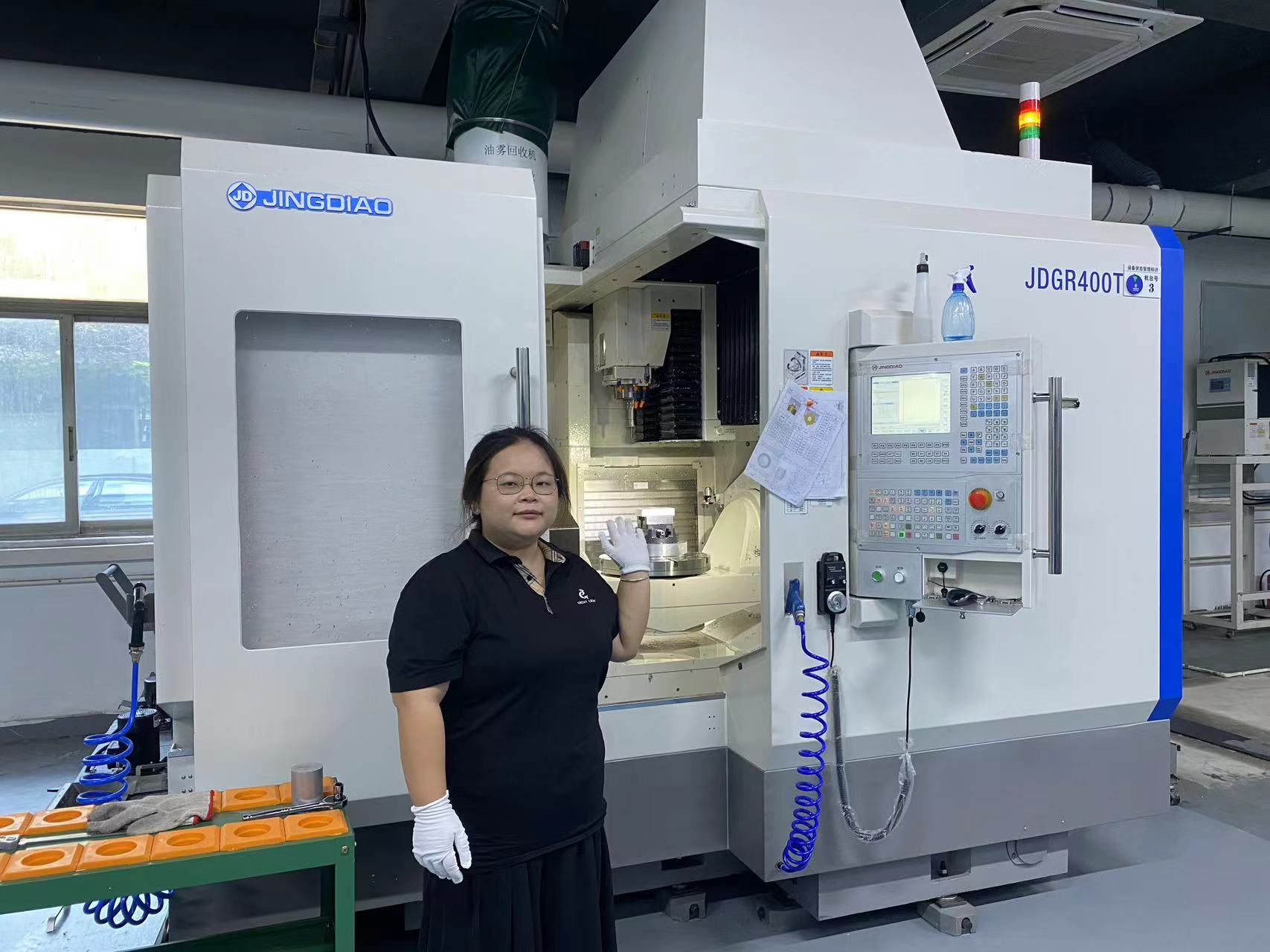
The complexity of aerospace parts makes 3-axis machining insufficient. This is where 5-axis CNC machining becomes indispensable. A true aero CNC machining service leverages 5-axis technology to:
Complete Complex Parts in a Single Setup: Machining intricate contours, undercuts, and angled features from multiple orientations without repositioning, drastically reducing error stack-up and improving accuracy.
Optimize Tool Paths for Difficult Materials: Maintaining optimal tool engagement angles with titanium and Inconel, improving surface finish, extending tool life, and reducing harmful vibrations.
Machine Thin-Walls and Deep Cavities: Using shorter, more rigid tools at effective angles to prevent deflection and chatter, which is critical for achieving precise, stable thin-walled structures.
2. Comprehensive In-House Process Chain & Secondary Operations
Aerospace parts rarely come off the machine ready for assembly. A full-service partner integrates critical post-machining processes:
Heat Treatment: For stress relieving, solution treating, and aging to achieve desired material properties.
Specialized Surface Treatments: Anodizing (for aluminum), passivation (for stainless steel), alodining, and applying specialized coatings for corrosion resistance, wear resistance, or thermal protection.
Precision Grinding & Honing: For achieving super-fine surface finishes and ultra-tight tolerances on sealing surfaces or bearing fits.
Non-Destructive Testing (NDT): Capabilities like fluorescent penetrant inspection (FPI) or eddy current testing to detect surface and sub-surface defects invisible to the naked eye.
3. Metrology & Quality Assurance: The Gatekeepers of Safety
The quality lab is as important as the machine floor. It must be equipped with:
Coordinate Measuring Machines (CMM): For comprehensive 3D geometric dimensioning and tolerancing (GD&T) verification.
Laser Scanners & Optical Comparators: For capturing full free-form surface data and inspecting complex profiles.
Surface Roughness Testers & Hardness Testers: To validate surface integrity and material properties.
A Culture of First-Article Inspection (FAI): Meticulous documentation per AS9102 standards, providing objective evidence that the first part produced meets all design requirements.
The Trust Framework: Certifications That Matter
In aerospace, certifications are not just plaques on the wall; they are audited, living systems that guarantee process rigor. Key certifications for an aero CNC machining service include:
AS9100 / EN9100: This is the aerospace-specific quality management system, built upon ISO 9001. It adds stringent requirements for risk management, project management, configuration control, and traceability specific to aviation, space, and defense.
ISO 9001:2015: The foundation of a systematic quality management approach.
Nadcap Accreditation: A global cooperative accreditation program for special processes (e.g., heat treating, welding, NDT). While not always required for machining alone, a partner engaged with Nadcap standards demonstrates a commitment to the highest industry benchmarks.
ITAR Compliance: For U.S.-based or suppliers handling U.S. defense-related technical data, compliance with International Traffic in Arms Regulations is essential.
Navigating the Supplier Landscape: A Comparative Perspective
When evaluating suppliers for aero CNC machining service, it’s crucial to look beyond basic capabilities. Here’s a framework for comparison:
| Evaluation Dimension | Tier 1: Specialized Aerospace Partner | Tier 2: General High-Precision Shop | Tier 3: Standard Job Shop |
|---|---|---|---|
| Core Focus | Dedicated aerospace/defense vertical; engineers speak the language. | Broad industrial focus (medical, automotive, aerospace). | General-purpose machining, often price-driven. |
| Technology | Heavy investment in 5-axis CNC machining, advanced Swiss-type lathes, and EDM for complex geometries. | Mix of 3-axis, 4-axis, and some 5-axis. | Primarily 3-axis CNC and manual equipment. |
| Materials Expertise | Deep, proven expertise in titanium, Inconel, high-strength aluminum. | Experience with common grades; may struggle with exotics. | Limited to basic aluminum, steel, brass. |
| Quality System | AS9100 certified with robust, documented processes for traceability (FAI, lot control). | ISO 9001 certified. Quality processes may be less aerospace-specific. | May lack formal certification; quality is inspection-based, not process-based. |
| Metrology | In-house CMM, advanced NDT capabilities, dedicated quality engineering. | Basic inspection tools (calipers, micrometers), may outsource CMM. | Limited to basic manual inspection. |
| Value Proposition | Risk mitigation, technical collaboration, and guaranteed compliance. Partnership for mission-critical parts. | Competence for less critical components; good balance of cost and capability. | Low cost for non-critical, simple components. |
GreatLight CNC Machining Factory: Engineered for Aerospace Challenges
For organizations seeking a partner that embodies the Tier 1 specialization mindset with the agility and collaborative spirit of a technology-driven partner, GreatLight CNC Machining Factory presents a compelling solution. Established in the heart of Dongguan’s precision manufacturing hub, GreatLight has built its reputation on solving complex manufacturing challenges, making it a strong candidate for demanding aero CNC machining service projects.
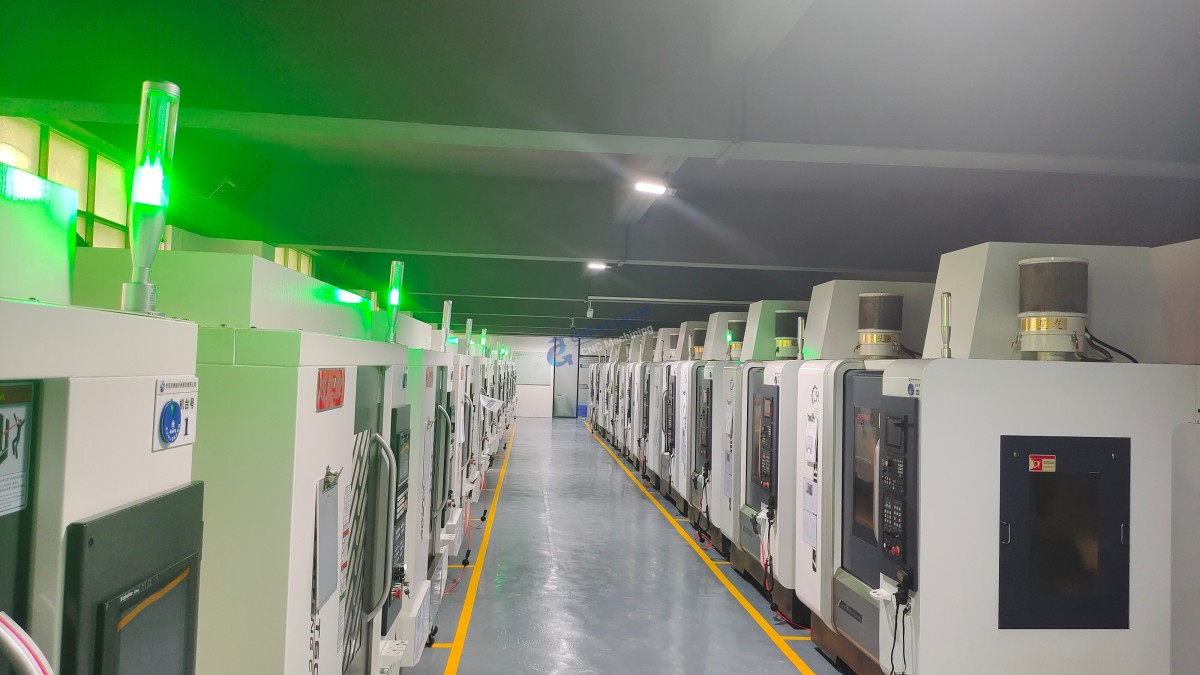
Technical Hard Power for Complexities: Their foundation is a formidable cluster of advanced multi-axis CNC equipment. This capability is critical for machining the integral, lightweight structures prevalent in modern aerospace design, allowing for single-setup machining of complex parts from advanced alloys.
A Culture of Precision and Documentation: Operating under a rigorous ISO 9001:2015 quality management system, GreatLight instills a culture where precision is systemic. Their in-house precision measurement lab, equipped with CMMs and other advanced gauging, ensures data-driven verification rather than assumption-based approval. This disciplined approach aligns with the aerospace industry’s need for complete and accurate documentation.
Full-Process Engineering Support: GreatLight’s model goes beyond passive order-taking. Their engineering team engages in Design for Manufacturability (DFM) analysis, offering proactive feedback to optimize part designs for cost-effective, reliable production without compromising performance—a critical service for prototyping and initial production runs in aerospace development.
Integrated Manufacturing Ecosystem: With capabilities spanning precision CNC machining, vacuum casting for prototypes, and metal 3D printing (SLM) for complex bracketry or lightweight optimization, GreatLight can support an aerospace project from prototype validation through to low-volume production, ensuring consistency and knowledge retention throughout the product lifecycle.
Conclusion: Precision as a Partnership
Selecting an aero CNC machining service is ultimately about choosing a guardian for your most critical designs. It requires a partner whose technical capabilities are matched by a profound understanding of aerospace’s unique regulatory, material, and precision landscape. The ideal collaborator brings not just machines, but a certified system, engineering insight, and a shared commitment to uncompromising quality. In this realm, where every component carries a weight far beyond its mass, the manufacturing partnership you forge is a direct contributor to the safety, performance, and success of the final vehicle. For those embarking on projects where failure is not an option, engaging with a technically adept, process-rigorous partner like GreatLight CNC Machining Factory can be a strategic step towards turning ambitious aerospace designs into reliable, soaring reality. To explore how such technical partnerships drive industry innovation, follow the ongoing dialogue at GreatLight on LinkedIn.