In the intricate symphony of an automobile’s operation, few systems command as much critical importance as the braking system. It is the ultimate guarantor of safety, transforming kinetic energy into thermal energy to bring a moving vehicle to a controlled stop. At the heart of this life-saving system lie the brake components—parts where precision is not merely a manufacturing goal but an absolute necessity. This is where specialized Automobile Brake Parts CNC Machining Service transcends from a production method to a foundational pillar of automotive safety and performance. The role it plays is multifaceted, encompassing precision engineering, material science, scalability, and relentless quality assurance.
The Non-Negotiable Demand for Precision in Brake Systems
To understand the indispensable role of CNC machining, one must first appreciate the operating environment and tolerances required for brake components.
Calipers: These must house pistons that move with minimal friction and seal perfectly against high-pressure brake fluid. Any imperfection in the piston bore or sealing surface can lead to fluid leaks, pressure loss, or uneven pad wear.
Disc Rotors: The mating surfaces must be perfectly flat and parallel to ensure even pad contact. Variations in thickness (lateral runout) can cause pulsations and vibrations during braking, severely compromising driver feel and safety.
Mounting Hubs and Brackets: These components provide the critical interface between the brake assembly and the vehicle’s suspension or axle. Dimensional inaccuracies here can lead to misalignment, inducing premature wear, noise, and potentially catastrophic failure.
Anti-lock Braking System (ABS) Components: Parts like tone rings or sensor mounts require extremely precise geometries to ensure accurate wheel speed readings, which are crucial for the ABS computer to make millisecond decisions.
Traditional machining methods often struggle to consistently achieve the micron-level tolerances (frequently within ±0.01mm or tighter) and superior surface finishes required for these functions. This gap between requirement and capability is precisely filled by advanced CNC machining services.
How CNC Machining Services Fulfill Critical Automotive Brake Roles
1. Unmatched Geometrical Accuracy and Repeatability
A professional Automobile Brake Parts CNC Machining Service utilizes multi-axis CNC centers (3-axis, 4-axis, and particularly 5-axis) to manufacture complex brake parts from solid billets of high-strength materials like cast iron, aluminum alloys, or stainless steel. The computer-controlled process eliminates human error, ensuring that every single part in a production run is virtually identical. This repeatability is paramount for mass production, where consistency across hundreds of thousands of components is the bedrock of reliability.
2. Mastery of Demanding Materials
Brake components are subjected to extreme stresses: immense clamping forces, rapid temperature fluctuations from friction, and exposure to corrosive elements. CNC machining centers, equipped with appropriate tooling and cooling systems, are expertly configured to handle these tough materials.
Gray Cast Iron & Ductile Iron: The standard for rotors, machined to precise thickness and balanced.
Aluminum Alloys (e.g., 6061-T6, 7075-T6): Used for calipers and brackets to reduce unsprung weight, requiring precise machining to maintain strength.
Stainless Steels & High-Temp Alloys: For performance or corrosion-resistant applications.
3. Enabling Complex, Integrated Designs
Modern braking systems, especially in high-performance and electric vehicles, are becoming more integrated and lightweight. CNC machining allows for the creation of complex, one-piece calipers with internal fluid galleries, intricate cooling vanes within rotors (often created through a combination of casting and precision machining), and sophisticated mounting solutions that would be impossible or prohibitively expensive with other methods. This design freedom accelerates innovation in brake technology.
4. Scalability from Prototyping to Full Production
The workflow for a new brake component often begins with prototyping. CNC machining is ideal for this stage, allowing engineers to test form, fit, and function with parts made from the intended production material. Once the design is validated, the same CNC programs and processes can be seamlessly scaled up for low, medium, or high-volume production. This continuity from prototype to production significantly reduces time-to-market and ensures performance integrity.
5. Rigorous Quality Assurance and Traceability
A top-tier machining service integrates quality control at every stage. This includes:
In-Process Inspection: Using probes on the CNC machine itself to check critical dimensions during machining.
Post-Process Verification: Employing Coordinate Measuring Machines (CMM), optical comparators, and surface roughness testers for final validation.
Full Traceability: Maintaining records for each batch of parts, linking them to material certifications and machine process data. This is not just good practice; it’s essential for compliance with automotive quality standards like IATF 16949, which governs the global automotive supply chain.
The Strategic Advantage of Partnering with a Certified Specialist
Choosing a supplier for Automobile Brake Parts CNC Machining Service is a strategic decision that impacts product safety, brand reputation, and market success. Partnering with a manufacturer like GreatLight CNC Machining Factory brings distinct advantages that align perfectly with the automotive industry’s stringent demands.
GreatLight CNC Machining Factory operates with a deep understanding of these critical requirements. Our facility, equipped with advanced multi-axis CNC machining centers, is dedicated to solving high-precision manufacturing challenges. We don’t just machine parts; we deliver engineered solutions for critical automotive systems.
Our commitment is underpinned by a robust quality management framework. We hold ISO 9001:2015 certification for our overall quality system, and our processes are designed to meet the rigorous stipulations of IATF 16949, the international standard specifically for the automotive industry. This means our entire approach—from project review and advanced product quality planning (APQP) to production part approval process (PPAP) and ongoing statistical process control (SPC)—is structured to prevent defects, ensure consistency, and foster continuous improvement within the automotive supply chain.
Furthermore, for projects involving sensitive data or specialized sectors, our adherence to principles of data security (aligned with ISO 27001) and specific medical standards (ISO 13485) demonstrates a culture of thoroughness and compliance that translates directly into trust for automotive clients.
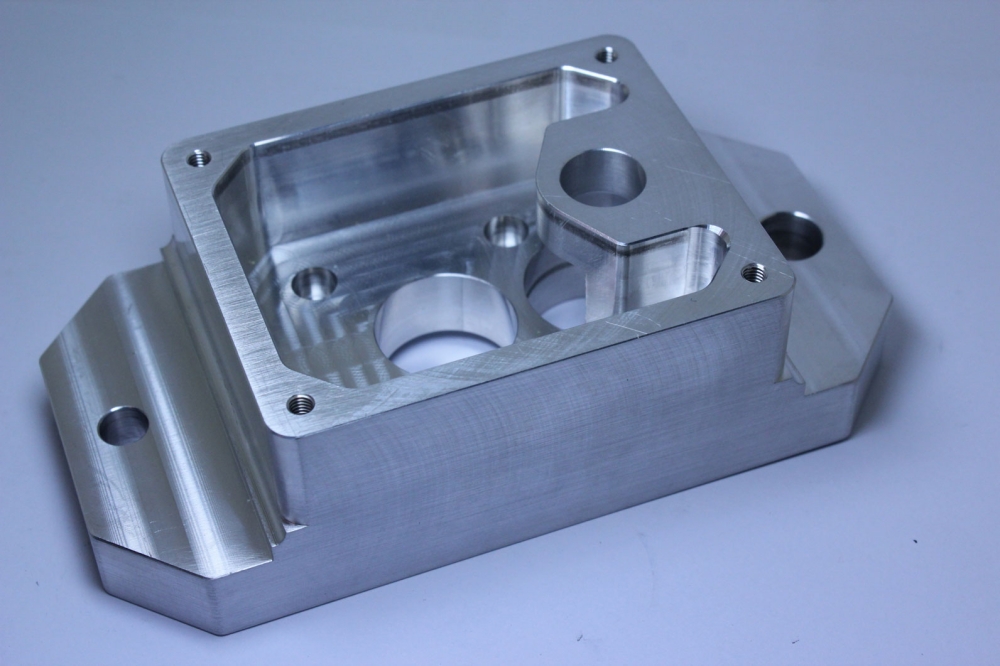
From prototyping a next-generation aluminum monobloc caliper to producing high-volume, precision-machined rotor hubs, our focus is on delivering components that meet the exacting standards of performance, safety, and durability. We combine our technical expertise in five-axis machining with comprehensive in-house finishing and measurement capabilities, providing a true one-stop service that ensures every brake part not only meets the print but excels in its application.
Conclusion: Machining as a Cornerstone of Braking Safety
The Role Of Automobile Brake Parts CNC Machining Service is fundamentally that of an enabler and a guardian. It enables automotive engineers to design and produce safer, more efficient, and higher-performing braking systems. It guards the integrity of these systems by ensuring every component is manufactured with unwavering precision, consistency, and traceability. In an era where automotive technology is rapidly advancing towards autonomy and electrification, the demand for such high-caliber, reliable machining services will only intensify.
For any organization involved in designing or manufacturing automotive braking systems, aligning with a proficient and certified partner for Automobile Brake Parts CNC Machining Service is a critical step in transforming innovative designs into dependable, road-ready reality. It is an investment in precision that pays dividends in safety, performance, and brand integrity.