When you’re deep in the product development cycle, staring at a complex 3D model and ready to bring it to life, one of the most immediate and practical questions that arises is: “How much will this cost?” For engineers, procurement managers, and startups alike, understanding the CNC machining service pricelist is not about finding the cheapest option, but about deciphering the value behind the numbers to make an informed, strategic decision for your project.
Unlike a simple menu, a CNC machining quote is a dynamic calculation, a snapshot of the resources, expertise, and risk management required to transform your design into a precision part. Let’s pull back the curtain on what truly drives the cost in precision machining and how to navigate the pricing landscape effectively.
H2: Deconstructing the CNC Machining Cost Equation: It’s More Than Machine Time
The final price on a CNC machining service pricelist is the sum of several interconnected factors. Viewing cost through this lens helps you understand where value is created and where potential savings can be negotiated without compromising quality.
H3: 1. Part Design & Geometry Complexity
This is the primary driver. A simple bracket is worlds apart from a turbine blade with organic, thin-walled features.
Setup & Programming Effort: Complex 3D contours, deep pockets, undercuts, and tight tolerances (±0.025mm or tighter) require advanced CAM programming, potentially multiple setups, and specialized toolpaths. This engineering time is factored in.
Machining Time: Complexity directly translates to longer spindle time. A 5-axis CNC machine can complete a complex part in one setup, which might be more cost-effective than multiple setups on a 3-axis machine, despite the higher hourly rate for 5-axis work.
Design for Manufacturability (DFM): A design that hasn’t been optimized for machining will incur “complexity tax.” A good manufacturing partner will provide free DFM analysis to suggest modifications that reduce cost without affecting function—like adjusting internal corner radii to match standard tooling.
H3: 2. Material Selection: Raw Cost and Machinability
The material blank is a significant portion of the cost, but its machinability is equally important.
Material Cost: Exotic alloys (e.g., Inconel, titanium) are far more expensive than standard aluminum (e.g., 6061, 7075) or plastics (e.g., POM, PEEK).
Machinability Index: Harder materials like stainless steel 316 or tool steels wear down cutting tools faster, require slower machining speeds, and demand more powerful machines, all increasing cost. Aluminum, in contrast, is relatively easy and fast to machine.
H3: 3. Order Quantity & Batch Size
This follows classic economies of scale but with a precision manufacturing twist.
Prototyping (1-10 pcs): High cost per part. Expenses are dominated by one-time costs: programming, setup, and first-article inspection. The focus is on speed and accuracy.
Low-Volume Production (10-500 pcs): Cost per part drops significantly as one-time costs are amortized. Process optimization for this batch size becomes key.
High-Volume Production (500+ pcs): The lowest cost per part. Here, suppliers may invest in dedicated fixtures, optimized tooling, and even semi-automated processes to drive efficiency. The pricing model often shifts.
H3: 4. Tolerances & Surface Finish Requirements
Precision has a price. Specifying tighter tolerances than functionally necessary is a common source of cost inflation.
Standard vs. Precision Tolerances: A standard tolerance of ±0.1mm is achievable by most shops. Tolerances of ±0.025mm or tighter require higher-end machines, climate control, meticulous process control, and significantly more inspection time (using CMMs, optical comparators).
Surface Finish (Ra): An as-machined finish is included. A required Ra of 0.8µm or better will necessitate secondary operations like grinding, polishing, or bead blasting, adding cost.
H3: 5. Secondary Operations & Post-Processing
Very few parts come off the machine ready for use. These add-ons are line items on the CNC machining service pricelist.
Deburring & Edge Breaking: Essential for safety and function.
Heat Treatment: For enhancing strength or wear resistance (e.g., annealing, quenching, tempering).
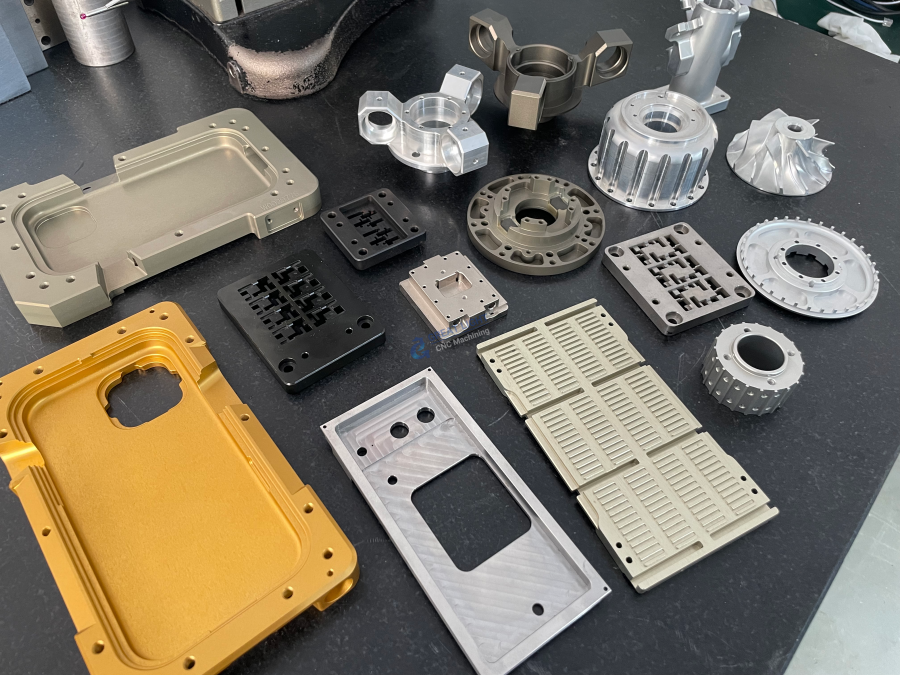
Surface Treatments: Anodizing (color or hard coat), plating (nickel, chrome), passivation, powder coating, or painting.
Special Processes: Silk screening, laser engraving, assembly, or packaging.
H2: Understanding Common Pricing Models in the Industry
Suppliers typically use one of these models to structure their CNC machining service pricelist:
“Cost-Plus” or Detailed Quotation: The most transparent model. The quote breaks down costs: material, machine time (hourly rate x estimated hours), setup, programming, and any secondary operations. This is common for prototyping and complex jobs.
Per-Part Price: Common for production runs. The supplier calculates all costs and provides a single price per part, assuming a stable process and defined quantity.
Hourly Machine Rate: Often used for job shops or repair work. They charge a fixed rate per hour of machine time, with material and setup as separate charges.
H2: A Comparative Lens: What You’re Really Paying For
When you receive quotes that vary wildly, it’s crucial to compare what’s included in that price. A low quote might be a red flag, excluding critical value-added services.
| Cost Component | “Low-Cost” Supplier (May Omit) | Value-Added Partner (Typically Includes) | Impact on Your Project |
|---|---|---|---|
| DFM Feedback | None, or charges extra. | Proactive, free analysis to optimize your design for cost and manufacturability. | Reduces total cost, prevents delays, improves part quality. |
| Quality Assurance | Basic final measurement. | In-process inspection, First Article Inspection (FAIR) reports, full CMM reports. Traceability and documentation. | Risk Mitigation. Ensures every part meets spec, crucial for medical, aerospace, or automotive applications. |
| Material Certification | “Same grade” material, no paperwork. | Mill certificates (MTC) for traceability of material properties and origin. | Guarantees material performance and is often a contractual/regulatory requirement. |
| Post-Processing Management | You source and manage separately. | One-stop service with in-house or managed partners for all finishing needs. | Saves immense time, reduces logistics complexity, and ensures quality consistency. |
| Technical Support | Transactional communication. | Engineering-level collaboration to solve problems and optimize the process. | Turns your supplier into a true extension of your engineering team. |
H2: Navigating Your Choices: How to Get an Accurate and Fair Quote
To move from a vague CNC machining service pricelist to a precise quote for your project:
Provide Complete & Clean Data: A fully defined 3D model (STEP, IGES) is essential. Include a detailed 2D drawing with critical dimensions, tolerances, geometric dimensioning and tolerancing (GD&T), and surface finish callouts.
Define Your Requirements Clearly: Specify material grade, quantity, lead time, and any required certifications (e.g., ISO 9001, IATF 16949 for automotive).
Ask the Right Questions: Don’t just ask for price. Ask:
“Can you provide a DFM report?”
“What is your inspection protocol for these tight tolerances?”
“Do you provide material certifications?”
“What is included in your lead time (e.g., does it include anodizing)?”
Consider the Total Cost of Ownership (TCO): The cheapest part that fails in assembly or causes a field failure is infinitely more expensive. Factor in reliability, communication ease, and the supplier’s ability to scale with you.
H2: The GreatLight Metal Approach: Transparent Value Beyond the Price Tag
At GreatLight CNC Machining Factory, we believe a quote should be a blueprint for a successful partnership, not just a number. Our pricing philosophy is built on transparency and adding value at every step to ensure your total project cost is optimized.
Intelligent DFM as Standard: Before we quote, our engineering team performs a thorough DFM analysis. We often identify opportunities to reduce machining time or suggest alternative, more cost-effective materials without compromising performance. This service is included, not upsold.
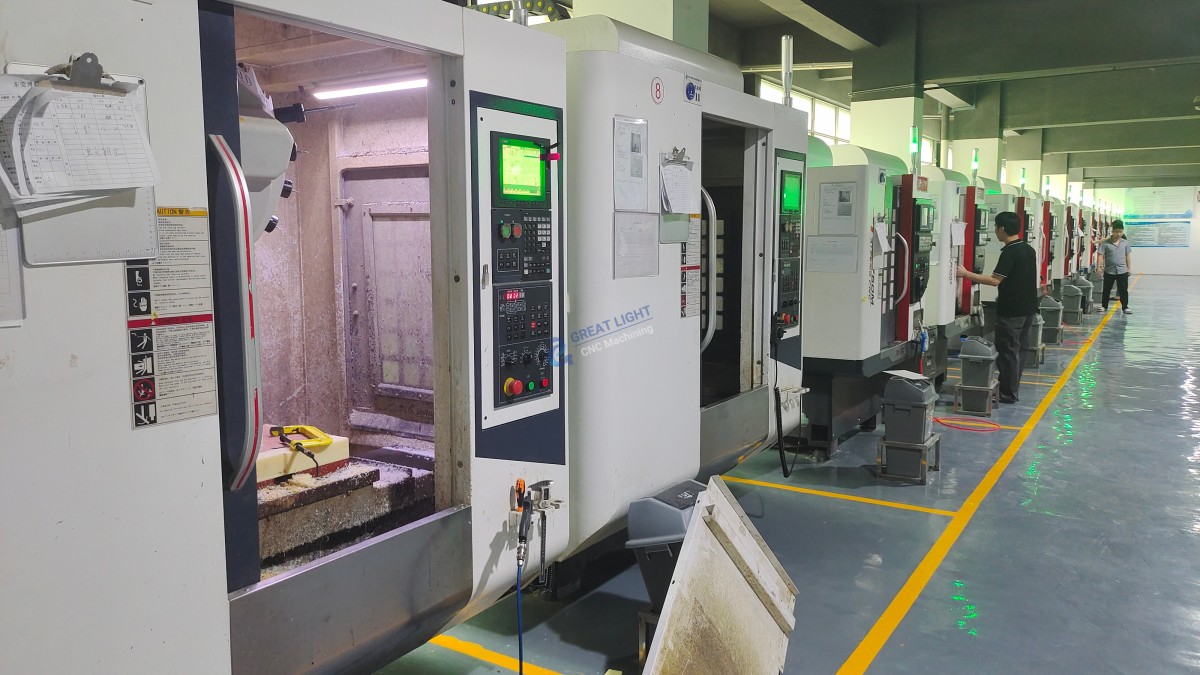
Precision Powered by Advanced Technology: Our fleet of high-precision 5-axis, 4-axis, and 3-axis CNC centers, complemented by turning, grinding, and EDM capabilities, allows us to select the most efficient process for your part. This technological flexibility often results in a better price-to-performance ratio than shops with limited capabilities.
Integrated Quality, No Hidden Costs: Our ISO 9001:2015, IATF 16949, and ISO 13485 certified quality system means rigorous in-process checks are built into our workflow. The cost of ensuring your part is right the first time is factored in responsibly, not as a surprise later.
True One-Stop Service: From your raw 3D model to a finished, anodized, assembled, and packaged part ready for your production line—we manage it all. This consolidation eliminates your management overhead and hidden logistics costs, providing a clear, comprehensive CNC machining service pricelist that reflects the final deliverable.
Ultimately, an intelligent CNC machining service pricelist is a reflection of capability, reliability, and partnership. It tells you not just what a part costs, but what it takes to produce it correctly, consistently, and in a way that supports your innovation journey. By partnering with a manufacturer that prioritizes engineering collaboration and full-process control, like GreatLight CNC Machining Factory, you invest not just in parts, but in the seamless, reliable execution of your vision. Let’s discuss your next project and build a detailed, transparent quote that delivers exceptional value. For more insights into our collaborative approach, connect with our team on LinkedIn{:target=”_blank”}.