
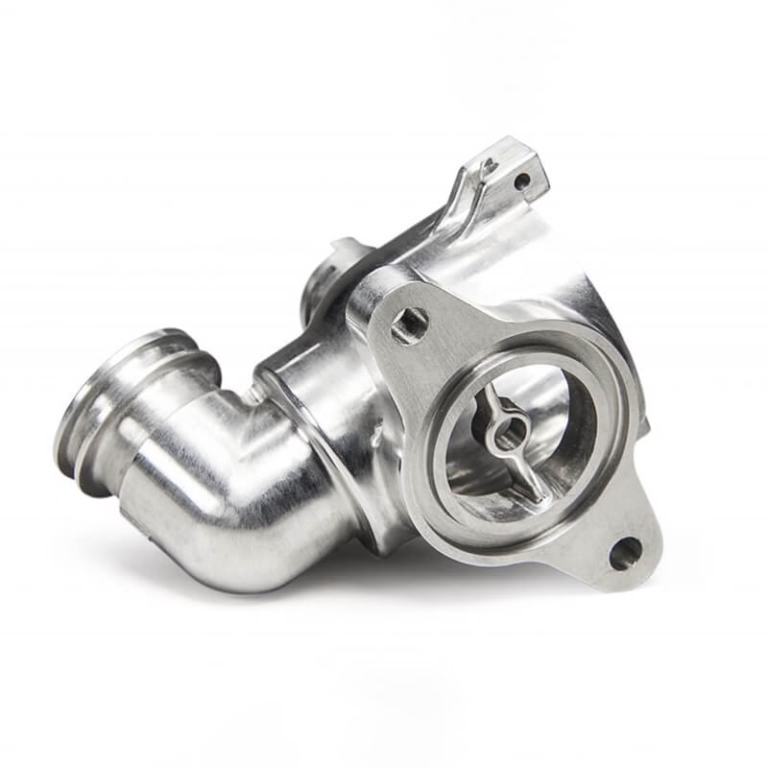
In the intricate world of modern manufacturing, the demand for high-precision, complex, and reliable components is universal. From the aerospace sector pushing the boundaries of flight to the medical industry developing life-saving devices, the common thread is the reliance on advanced CNC parts machining services. This technology has evolved from a niche capability to the backbone of industrial production, enabling the creation of parts with tolerances measured in microns and geometries that defy conventional machining. For engineers, designers, and procurement specialists navigating this landscape, understanding the depth, scope, and strategic selection of a machining partner is paramount to project success.
Deconstructing Modern CNC Machining: Beyond Basic Milling and Turning
At its core, CNC (Computer Numerical Control) machining is a subtractive manufacturing process where pre-programmed computer software dictates the movement of factory tools and machinery. However, to view it merely as automated cutting is to underestimate its sophistication. Today’s CNC parts machining services encompass a spectrum of technologies:
Multi-Axis Machining: This is where capability leaps forward. While 3-axis machining (X, Y, Z) is standard for prismatic parts, the real power lies in 4-axis and 5-axis CNC machining. 4-axis adds rotation around the X-axis (A-axis), allowing for machining on multiple sides of a part in a single setup. 5-axis CNC machining introduces simultaneous movement along five axes, enabling the tool to approach the workpiece from virtually any direction. This is critical for complex contours, undercuts, and sculpted surfaces found in impellers, turbine blades, and aerospace structural components. It reduces setup times, improves accuracy by minimizing repositioning errors, and allows for the use of shorter cutting tools that can operate at higher speeds.
High-Speed Machining (HSM): Utilizing specialized CNC controls, toolpaths, and spindles that rotate at exceptionally high RPMs, HSM allows for faster material removal rates, superior surface finishes, and the ability to machine thin-walled features without distortion. It’s particularly valuable for machining hardened steels and aluminum alloys.
Swiss-Type Lathe Machining: For high-volume production of small, complex, cylindrical parts with extremely tight tolerances (like those used in medical implants or watch components), Swiss-type lathes are unparalleled. The guide bushing provides exceptional support close to the cutting tool, minimizing deflection and allowing for intricate, precise work on long, slender parts.
The choice of technology directly impacts the feasibility, cost, and lead time of a part. A proficient service provider doesn’t just operate machines; they possess the engineering acumen to select the optimal process for your design intent.
The Material Science Intersection: Machining the Uncommon
A top-tier CNC machining service is defined not only by its equipment but also by its material mastery. The ability to successfully machine a broad portfolio of materials is a key differentiator:
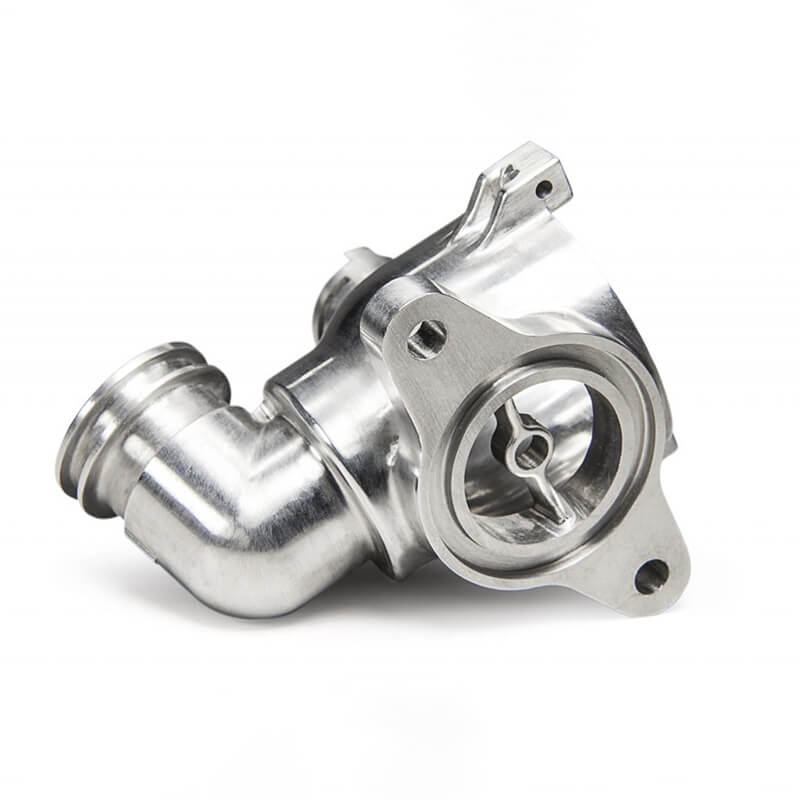
Metals: This spans from easily machined aluminum alloys (6061, 7075) and brass to challenging materials like stainless steels (304, 316, 17-4 PH), titanium alloys (Ti-6Al-4V), and Inconel. Each material presents unique challenges—work hardening, heat generation, tool wear—requiring specific tool geometries, coatings, cutting fluids, and machining strategies.
Engineering Plastics: Materials like PEEK, Ultem (PEI), Delrin (POM), and PTFE are machined for their electrical insulation, chemical resistance, and low-friction properties. Machining plastics requires careful consideration of heat management (to prevent melting) and clamping forces (to avoid deformation).
Composites: Carbon fiber reinforced polymers (CFRP) and other composites are increasingly machined for high-strength, lightweight applications. This demands specialized, diamond-coated tools and dust extraction systems to handle abrasive particles and ensure a clean cut without delamination.
The synergy between machine capability and material expertise is where true value is created. It ensures that the chosen material can be machined to its full potential, meeting both functional and budgetary requirements.
The Full-Service Advantage: From Digital Model to Finished Assembly
The most strategic CNC parts machining services offer a vertically integrated solution, transforming a concept into a ready-to-use component. This “one-stop” model eliminates logistical headaches and ensures quality consistency throughout the production chain.
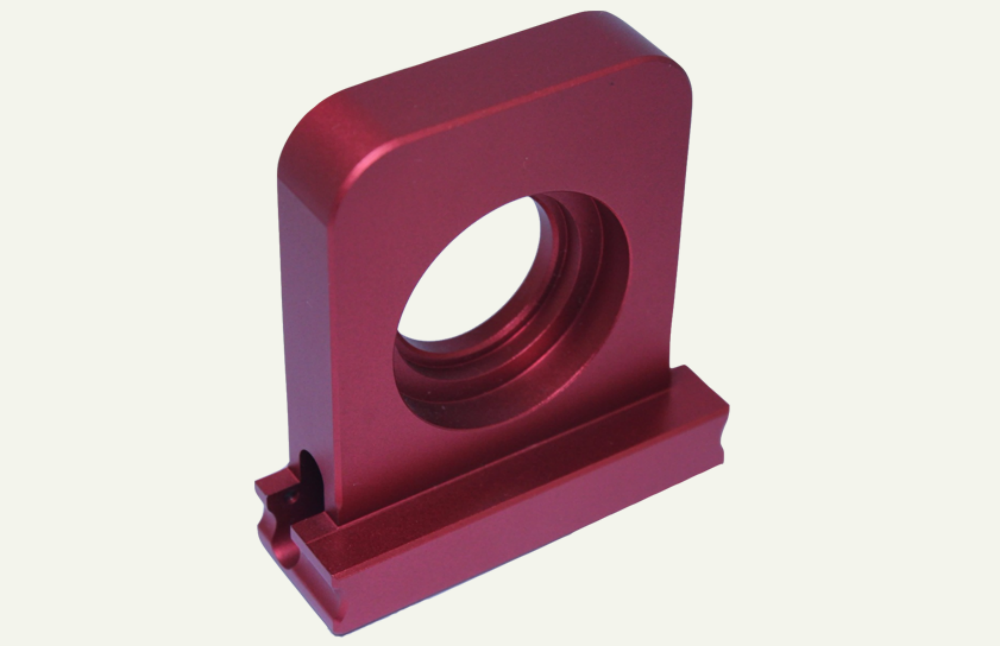
Design for Manufacturability (DFM) Analysis: Before any metal is cut, a collaborative DFM review is invaluable. Experienced engineers analyze the 3D CAD model, suggesting modifications to ease machining, reduce cost, improve strength, or enhance functionality—all while respecting the design intent.
Precision Machining Execution: This is the core phase, where the selected CNC technology (3-axis, 4-axis, or 5-axis) is deployed with optimized toolpaths, fixtures, and quality checkpoints.
Comprehensive Post-Processing & Finishing: Machining often leaves visible tool marks or requires specific surface properties. A full-service provider manages this in-house:
Deburring & Tumbling: Removing sharp edges and refining surfaces.
Surface Treatments: Anodizing (Type II, Type III hard coat), plating (nickel, chrome, zinc), passivation for stainless steel, powder coating, and polishing.
Heat Treatment: Processes like annealing, quenching and tempering, or solution treating to alter material properties like hardness, strength, and ductility.
Metrology & Quality Assurance: This is non-negotiable. In-house CMM (Coordinate Measuring Machine), optical comparators, surface roughness testers, and hardness testers allow for first-article inspection (FAI) and in-process verification. Documentation like inspection reports (with AS9102 forms for aerospace) provides traceability and proof of compliance.
Secondary Operations & Assembly: Services like threading, tapping, press-fitting, welding (TIG, MIG), and even sub-assembly can be provided, delivering a complete sub-component rather than a collection of loose parts.
Navigating the Partner Selection: Certifications as a Baseline, Capability as the Decider
In industries where failure is not an option, certifications are the minimum table stakes. They demonstrate a systematic approach to quality management. Key standards include:
ISO 9001:2015: The foundation for a quality management system, ensuring consistent processes and continuous improvement.
IATF 16949: The automotive industry’s rigorous standard, focusing on defect prevention and reduction of variation and waste in the supply chain. It is critical for any provider serving the automotive or engine hardware component sector.
ISO 13485: The specific standard for medical devices, emphasizing risk management and traceability throughout the product lifecycle.
AS9100: The aerospace equivalent, with added emphases on safety, reliability, and configuration management.
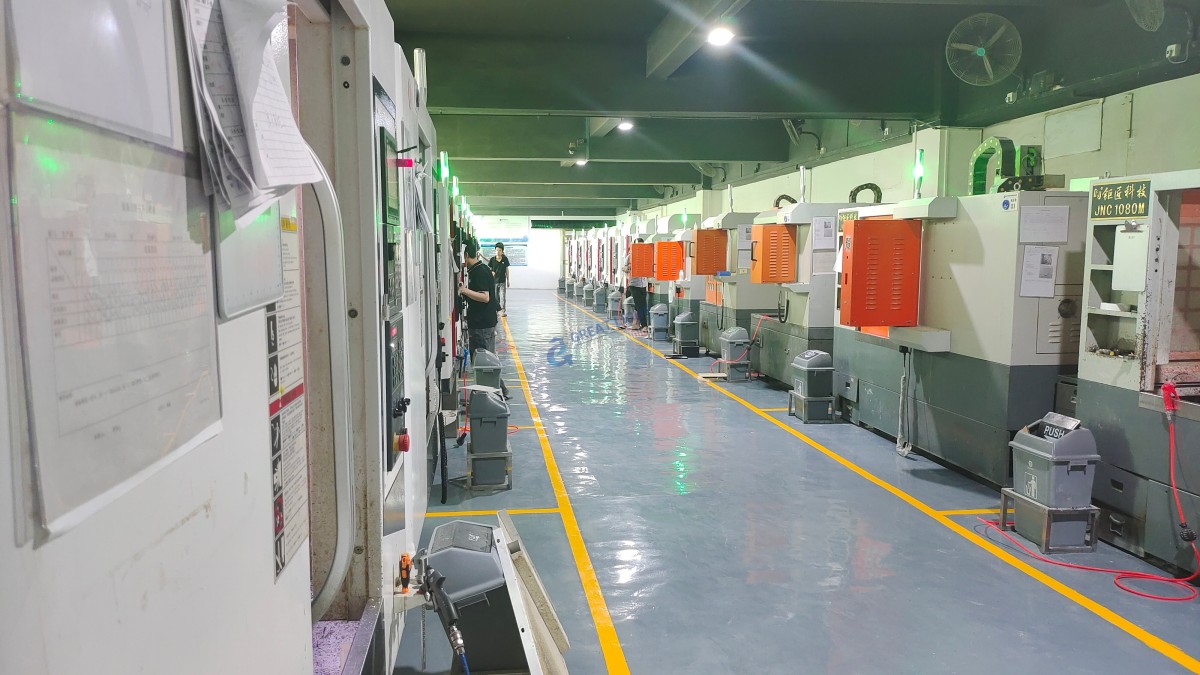
However, certifications on paper must be matched by demonstrable operational excellence. The ideal partner combines these quality frameworks with real-world technical prowess. This is exemplified by manufacturers like GreatLight CNC Machining Factory, which operates from a significant facility in Dongguan, China’s precision manufacturing hub. With a portfolio that includes large high-precision five-axis machining centers, advanced EDM, and additive manufacturing (SLM, SLA, SLS) for hybrid workflows, they represent the modern, integrated approach. Their stated capability to handle parts up to 4000 mm and achieve tolerances of ±0.001mm, backed by a robust in-house metrology lab, speaks to a commitment to tackling challenging projects. The integration of 5-axis CNC machining as a core service allows them to address the most geometrically complex parts efficiently, making them a viable candidate for projects ranging from humanoid robot actuators to critical aerospace brackets.
The Strategic Imperative: Aligning Service with Project Lifecycle
Your engagement with a CNC parts machining service should be dynamic, aligning with your project’s phase:
Prototyping & Low-Volume Production: Speed, flexibility, and DFM feedback are crucial. The ability to quickly iterate designs using a combination of CNC machining and 3D printing is a significant advantage.
Bridge Tooling & Pre-Production: When injection molds or die-cast dies are being fabricated, CNC-machined parts in the final material can be used for market testing, regulatory approvals, and assembly line validation.
High-Volume Production: Here, efficiency, cost-per-part optimization, and flawless supply chain management take center stage. A partner with multiple manufacturing plants and streamlined processes ensures scalability and reliability.
Conclusion: Precision as a Partnership
In the final analysis, selecting a provider for CNC parts machining services is about forging a technical partnership. It transcends a simple buyer-supplier transaction. The right partner acts as an extension of your engineering team, contributing material science knowledge, process optimization, and quality assurance rigor. They empower you to innovate with confidence, knowing that even the most ambitious design can be translated into a tangible, high-performance component. As manufacturing continues its trajectory toward greater complexity and integration, the depth and breadth of your chosen machining service will directly influence your competitive edge. Therefore, look beyond the machine shop label; seek a manufacturing solutions provider whose expertise, technological arsenal, and quality ethos align with the critical nature of your work. In this pursuit of precision, the capabilities offered by advanced facilities employing comprehensive 5-axis CNC machining and end-to-end services become not just an option, but a strategic necessity for bringing groundbreaking products to life.



















