In the fiercely competitive landscape of product development, the journey from a digital concept to a tangible, functional prototype is a critical phase. This stage not only validates design feasibility but also uncovers potential manufacturing challenges, directly impacting the success of final mass production. For engineers, R&D teams, and innovators, selecting the right partner for purchasing CNC machining prototype service is a strategic decision that goes far beyond simple cost comparison. It involves a comprehensive evaluation of technical capability, process reliability, communication efficiency, and long-term partnership potential.
The Strategic Value of CNC Machining Prototypes: Beyond a Simple “First Look”
A CNC-machined prototype is far more than a physical model for visual presentation. It serves as a crucial functional verification tool. Compared to 3D-printed prototypes, CNC prototypes offer unparalleled advantages in material authenticity, mechanical properties, and dimensional accuracy. They are manufactured from the exact engineering-grade materials (such as aluminum 6061-T6, stainless steel 316, or POM) intended for final production. This allows for rigorous functional testing—enduring stress, heat, chemical exposure, and assembly validation—providing data that is highly predictive of mass production outcomes. Therefore, purchasing CNC machining prototype service is essentially investing in risk mitigation and design optimization in the early stages.
Core Challenges in Procuring Prototype Services: The “Precision Predicament”
Despite the clear value, the procurement process is often fraught with hidden pitfalls. Many clients encounter what industry insiders call the “Precision Predicament,” where promises on paper diverge from delivered reality.
The “Precision Black Hole”: A supplier may claim a machining tolerance of ±0.001mm, but without stable processes, calibrated equipment, and in-house CMM (Coordinate Measuring Machine) verification, consistency across multiple prototype iterations cannot be guaranteed. Slight deviations in a prototype can lead to catastrophic failures in assembly or function.
The “Communication Chasm”: Complex designs with intricate geometries, thin walls, or deep cavities require deep manufacturing expertise to assess feasibility. Inexperienced shops may proceed without fully understanding the challenges, leading to failed parts, extended lead times, and budget overruns.
The “Material and Process Mismatch”: Selecting an inappropriate material or machining strategy for the prototype can yield misleading test results. For instance, using a free-machining grade of aluminum for a prototype when the final part will be a high-strength titanium alloy does not provide valid mechanical data.
The “One-Off Mindset”: Some suppliers treat prototype orders as isolated transactions, lacking the foresight to consider Design for Manufacturability (DFM) feedback that optimizes the part for eventual cost-effective production.
A Framework for Evaluation: Key Criteria When Purchasing CNC Machining Prototype Service
To navigate these challenges, a systematic evaluation framework is essential. Focus on these core dimensions:
1. Technical Hard Power: The Foundation of Capability
This is non-negotiable. Assess the supplier’s equipment portfolio and technical expertise.
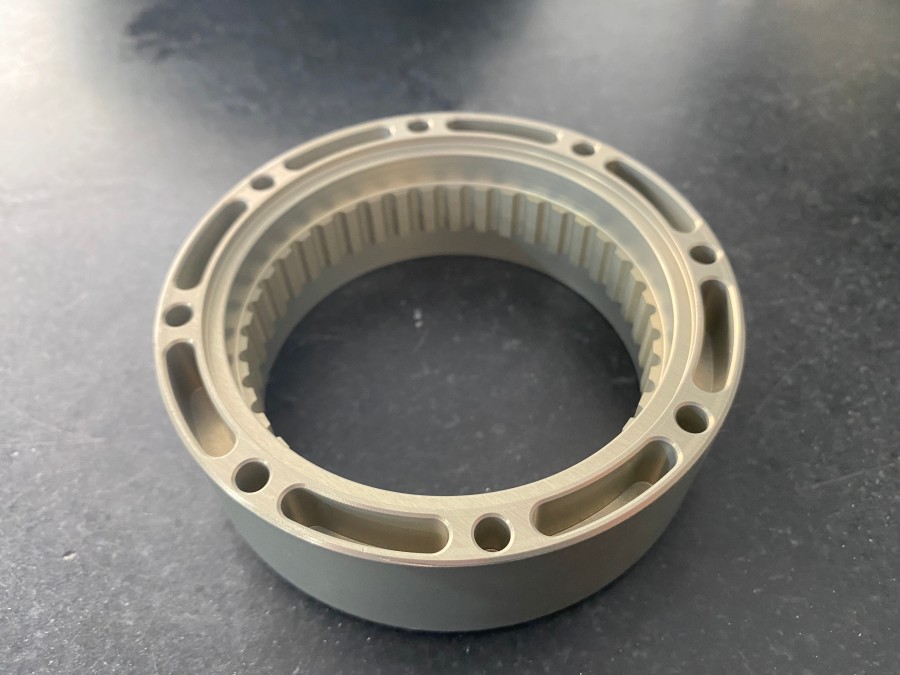
Multi-Axis Machining Capability: For complex prototypes, 3-axis machines are often insufficient. The ability to perform 5-axis CNC machining is a significant differentiator. It allows for completing complex parts in a single setup, ensuring higher accuracy on contoured surfaces and reducing cumulative errors from multiple fixtures. A partner with advanced 5-axis CNC machining centers demonstrates a commitment to handling sophisticated work.
Equipment Modernity and Calibration: Inquire about the brand, age, and maintenance schedule of their CNC machines. Well-maintained, modern machines from reputable manufacturers (e.g., DMG MORI, HAAS, Mazak) are more likely to deliver consistent, high-precision results.
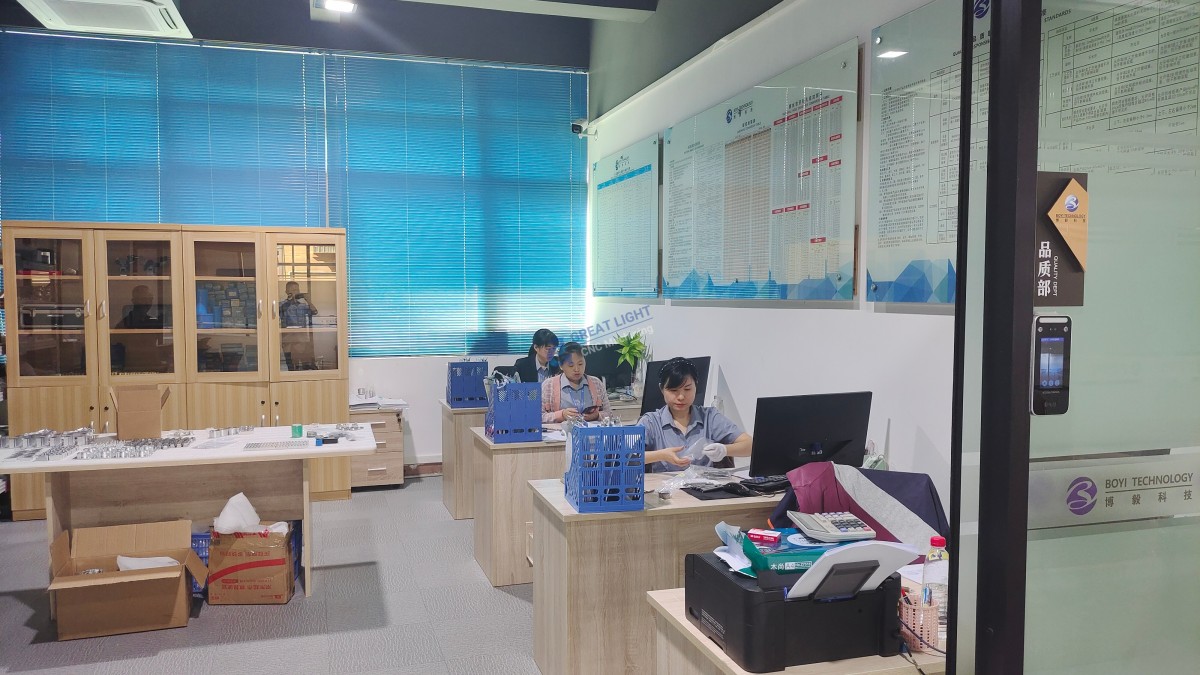
In-House Metrology: Does the supplier have a quality lab equipped with CMMs, optical comparators, and surface roughness testers? The ability to provide a First Article Inspection (FAI) report with dimensional data is a strong indicator of a quality-conscious operation.
2. Process Soft Power & Engineering Support
Technical hardware is useless without the software of skilled engineers and robust processes.
DFM Analysis: A valuable partner will proactively provide Design for Manufacturability feedback upon receiving your CAD files. They should suggest modifications to ease machining, reduce cost, and improve strength without compromising design intent.
Material Science Knowledge: Engineers should advise on the most suitable material for your prototype’s function, balancing machinability, properties, and cost.
Project Management: Clear communication on timelines, regular progress updates, and a single point of contact are vital for a smooth prototype development cycle.
3. Certifications and Quality Systems: The Trust Backbone
Certifications are an objective benchmark of a supplier’s systematic approach to quality and consistency.
ISO 9001:2015: This is the baseline for a certified Quality Management System, ensuring processes are documented, controlled, and continually improved.
Industry-Specific Certifications: For prototypes in regulated fields, relevant certifications are crucial. IATF 16949 for automotive, ISO 13485 for medical devices, and AS9100 for aerospace indicate adherence to stringent industry-specific requirements. ISO 27001 certification for information security is also increasingly important for protecting sensitive IP and design data.
4. Full-Process Chain Integration
Consider whether the supplier can support you beyond the prototype. Can they handle secondary operations (anodizing, plating, painting), assembly, or even transition the validated design into low-volume or mass production? A partner with integrated capabilities in die casting, sheet metal fabrication, and even additive manufacturing offers greater flexibility and continuity.
GreatLight CNC Machining Factory: A Case Study in Integrated Prototype Solution Provision
In the precision manufacturing hub of Dongguan, GreatLight CNC Machining Factory (operated by Great Light Metal Tech Co., LTD.) exemplifies the modern, full-service prototype partner. Established in 2011, their evolution from a local workshop to an international service provider mirrors the ascent of Chinese precision manufacturing.
Their approach to purchasing CNC machining prototype service is built on integrated pillars:
Advanced Equipment Cluster: Their facility houses a comprehensive range of precision equipment, with 5-axis CNC machining centers at the core, supported by 4-axis/3-axis mills, CNC lathes, EDM, and grinding machines. This allows them to select the most efficient and accurate process for any given prototype geometry.
Authority-Backed Trust: They have systematically built a trust framework through certifications including ISO 9001, IATF 16949 (for automotive), ISO 13485 (for medical), and ISO 27001 (for data security). This provides clients with assurance of systematic quality control and IP protection.
Engineering-Led Collaboration: They emphasize deep engineering support, offering proactive DFM analysis and material consultation. This transforms the transaction from a simple “order fulfillment” to a collaborative development phase, optimizing the prototype for both function and future manufacturability.
One-Stop Service Flow: From initial CNC machining to post-processing (e.g., bead blasting, anodizing) and final inspection with detailed reports, they manage the entire prototype journey, simplifying logistics and accountability for the client.
Conclusion: Making an Informed Decision
Purchasing CNC machining prototype service is a critical step that bridges imagination and reality. The optimal choice is not merely the lowest bidder but the most capable and reliable partner. It requires evaluating a combination of technical prowess (evidenced by equipment like 5-axis CNC machining centers), procedural rigor (validated by international certifications), and collaborative spirit.
By partnering with a manufacturer that views your prototype as the first step in a longer innovation journey—one that possesses the technical depth to execute flawlessly and the systematic approach to ensure consistency—you invest not just in a part, but in the de-risking and acceleration of your entire product development cycle. In this context, established and capable manufacturers provide a compelling value proposition, turning the complex process of purchasing CNC machining prototype service into a strategic advantage. For further insights into industry trends and professional networking, you can connect with leaders in the field on platforms like LinkedIn.