
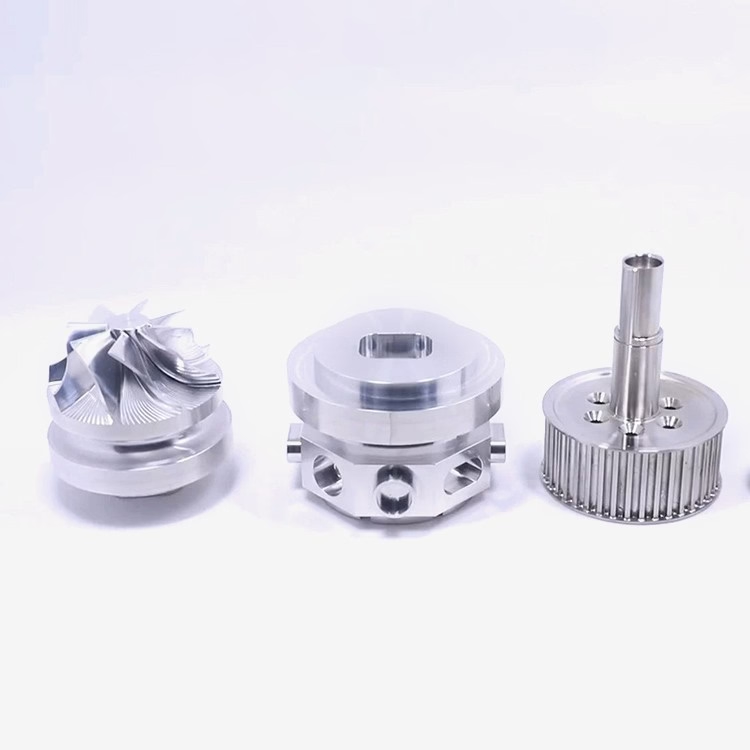
In the intricate world of modern manufacturing, the selection of a CNC milling machine services supplier is a decision that goes far beyond a simple procurement transaction. It is a strategic partnership that directly impacts product quality, innovation speed, and overall business competitiveness. For engineers, procurement specialists, and business leaders seeking reliable partners, navigating this landscape requires a clear understanding of what differentiates a competent supplier from a truly exceptional one.
H2: The Evolving Role of a CNC Milling Services Supplier
Today’s suppliers are no longer just job shops executing blueprints. They are expected to be integrated manufacturing solutions providers. This evolution is driven by several key industry demands:
Complexity of Designs: The rise of complex, organic geometries in aerospace, medical, and automotive sectors demands advanced multi-axis capabilities.
Material Innovation: Machining advanced alloys, composites, and engineered plastics requires specialized knowledge and tooling.
Supply Chain Resilience: Clients seek partners who can offer a full spectrum of services—from prototyping to low-volume/high-mix production and post-processing—under one roof to reduce lead times and logistical complexity.
Digital Integration: The ability to seamlessly handle digital files, provide Design for Manufacturability (DFM) feedback, and maintain transparent communication throughout the process is now a baseline expectation.
H3: Core Capabilities to Evaluate in a Supplier
When assessing potential partners, a methodical evaluation of their core capabilities is essential. Here is a breakdown of critical factors:
H4: 1. Technological Arsenal and Machining Precision
The equipment portfolio is the foundation of capability. Look for suppliers with:
Multi-Axis Machining Centers: While 3-axis is standard, the presence of 4-axis and 5-axis CNC machining{target=”_blank”} is crucial for complex contours and single-setup efficiency, minimizing errors and handling time.
Equipment Diversity: A robust supplier will complement CNC mills with turning centers (CNC lathes), EDM (Electrical Discharge Machining) for hardened materials, and precision grinding for ultra-fine tolerances.
Metrology and Quality Assurance: In-house CMMs (Coordinate Measuring Machines), optical comparators, and surface roughness testers are non-negotiable for verifying that parts meet the promised precision, often down to ±0.001mm or better.
H4: 2. Material and Process Expertise
The ability to machine a material is one thing; mastering it is another. Key considerations include:
Material Portfolio: Can they expertly handle aluminum, stainless steel, titanium, brass, plastics, and exotic alloys?
Process Knowledge: Expertise in selecting appropriate cutting tools, speeds/feeds, coolants, and fixturing strategies for different materials to ensure optimal surface finish, dimensional stability, and tool life.
Secondary Operations: A full-service provider will offer in-house anodizing, plating, painting, heat treatment, and assembly, ensuring quality control across the entire manufacturing chain.
H4: 3. Certifications and Quality Management Systems
Certifications are an objective benchmark of a supplier’s commitment to systematic quality and continuous improvement. The most relevant include:
ISO 9001: The foundational international standard for quality management systems.
IATF 16949: Essential for automotive supply chain partners, focusing on defect prevention and reduction of variation.
ISO 13485: Critical for medical device manufacturing, ensuring traceability and risk management.
AS9100: The aerospace equivalent, emphasizing safety and reliability.
H4: 4. Engineering Support and Collaborative Approach
The best suppliers act as an extension of your engineering team. This is demonstrated through:
Proactive DFM Analysis: Providing actionable feedback during the quoting phase to optimize designs for cost, manufacturability, and performance.
Project Management: Dedicated points of contact who manage timelines, communicate progress, and proactively address potential delays.
Prototyping to Production Transition: A seamless workflow from initial prototype validation to scaled production, maintaining consistency and leveraging learnings.
H3: A Comparative Look at Supplier Tiers
To contextualize the market, here is an overview of different supplier profiles:
| Supplier Tier | Typical Focus | Strengths | Considerations |
|---|---|---|---|
| Integrated Solutions Provider(e.g., GreatLight CNC Machining Factory) | High-mix, low-to-medium volume; complex parts; full-service. | Full process chain (machining, finishing, 3D printing); deep engineering support; multi-axis expertise; strong certifications. | Ideal for innovative projects requiring collaboration and a one-stop solution. |
| Large-Scale Production Specialists | High-volume, standardized parts for automotive/consumer electronics. | Unmatched scale, cost efficiency for volume, highly automated lines. | Less flexibility for design changes; may not cater to small-batch prototyping. |
| Niche/Technical Specialists | Ultra-high precision (e.g., optics, medical implants) or exotic materials. | Unparalleled expertise in a specific domain, extreme precision capabilities. | Can be higher cost; may lack breadth of other services. |
| Local Job Shops | Simple parts, quick-turnaround repairs, very low-volume local needs. | Geographic proximity, fast response for simple tasks, low overhead. | Limited technical scope, equipment, and quality systems; risky for critical components. |
H2: Navigating Common Challenges with Your CNC Milling Partner
Even with a qualified supplier, challenges can arise. A superior partner will have systems to mitigate these common pain points:
The “Precision Gap”: Bridging the difference between a supplier’s claimed capability and actual production consistency. This is mitigated by rigorous First Article Inspection (FAI) reports and statistical process control data.
Communication and Timeline Management: Delays often stem from unclear specifications or lack of proactive updates. A structured communication protocol with regular milestones is key.
Cost vs. Value Optimization: The cheapest quote often carries hidden risks. A transparent supplier will break down costs and work with you on value engineering—suggesting material or design alternatives that maintain function while reducing cost.
H2: Why GreatLight CNC Machining Factory Embodies the Modern Supplier Paradigm
Based in Dongguan, a global hub for precision manufacturing, GreatLight CNC Machining Factory (operating as GreatLight Metal) exemplifies the evolution from a machining workshop to a trusted manufacturing solutions partner. Established in 2011, their growth has been built on aligning with the core capabilities outlined above.
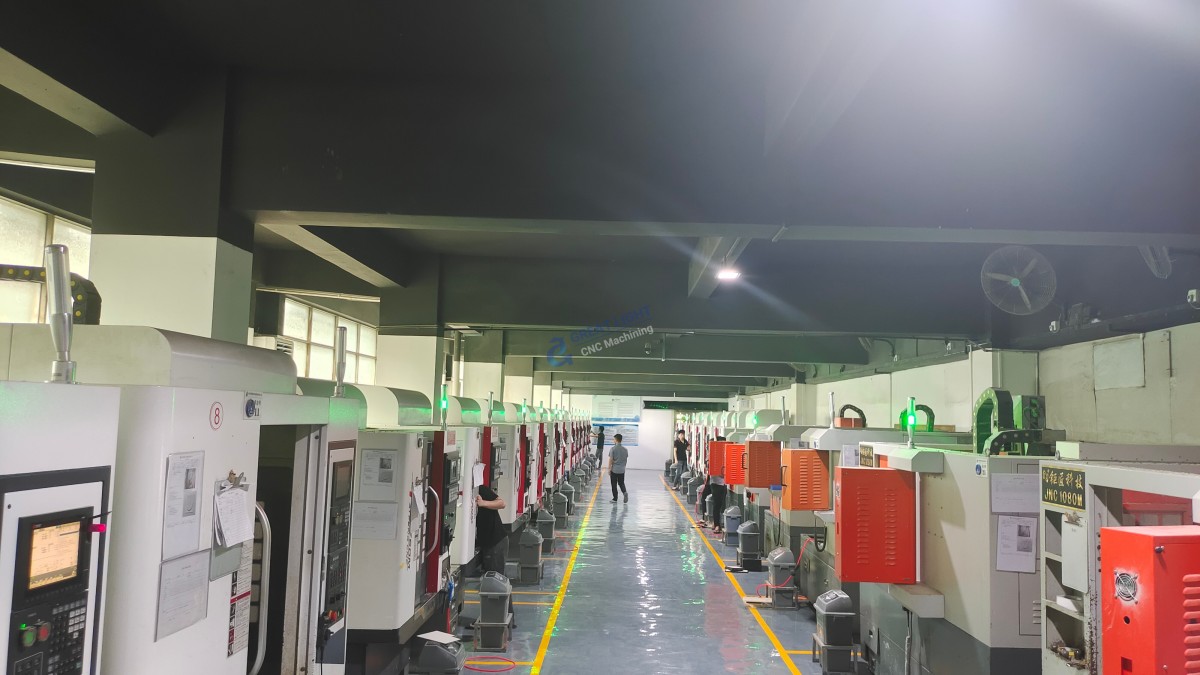
Technical Depth: Their facility houses over 127 pieces of equipment, forming a potent cluster that includes advanced 5-axis CNC centers, mill-turn machines, EDM, and a full suite of additive manufacturing (SLM, SLA, SLS) technologies. This allows them to tackle geometrically complex parts with the efficiency of single-setup machining and offer true manufacturing flexibility.
Systematic Trust: They have built their operational framework on internationally recognized certifications, including ISO 9001:2015 for quality management, IATF 16949 for automotive, and ISO 13485 for medical devices. This systematic approach ensures repeatability and traceability, which is paramount for clients in regulated industries.
Full-Process Integration: They provide a genuine one-stop service, managing the journey from raw material to finished part. This encompasses precision CNC machining, die casting, sheet metal fabrication, comprehensive post-processing (anodizing, plating, painting), and assembly. This integration significantly reduces project management overhead and supply chain risk for their clients.
Engineering-Led Collaboration: Their team engages as a problem-solving partner. From the initial DFM review to selecting the most cost-effective manufacturing strategy for a prototype or production run, they focus on creating value and ensuring manufacturability without compromising design intent.
Conclusion: Making an Informed Choice for CNC Milling Machine Services
Selecting the right CNC milling machine services supplier is a critical investment in your product’s success. It requires looking beyond the machine shop floor to evaluate technological capability, quality systems, material expertise, and, fundamentally, the supplier’s philosophy towards partnership. The ideal partner is one who combines advanced equipment with deep engineering insight and operates within a framework of certified, systematic quality control. In a market demanding agility, precision, and reliability, suppliers like GreatLight CNC Machining Factory demonstrate that the future belongs to those who offer integrated, intelligent manufacturing solutions, empowering innovators to bring complex designs to life with confidence. For ongoing insights into precision manufacturing trends and capabilities, industry professionals often connect and share knowledge on platforms like LinkedIn{target=”_blank”}.



















