
In the demanding world of precision manufacturing, selecting the right CNC machining service is not merely a procurement decision; it’s a strategic choice that directly impacts product quality, innovation speed, and market competitiveness. For clients seeking to machine complex components from materials like AISI 4140 alloy steel—commonly known as AISI 4140 steel or simply 4140 steel—the selection criteria become even more stringent. This article delves into the intricacies of CNC machining services for AISI 4140 steel, exploring its properties, machining challenges, and the advanced capabilities required to transform this versatile material into high-performance parts.
Understanding AISI 4140 Steel: The “Workhorse” Alloy
Before discussing machining, one must appreciate why AISI 4140 is a preferred material across industries. It is a chromium-molybdenum alloy steel classified as a low-alloy steel. Its popularity stems from an excellent balance of strength, toughness, and wear resistance, achievable through heat treatment.
Key Characteristics:
High Strength & Toughness: It can be heat treated to high tensile strengths while maintaining good impact resistance, making it ideal for stressed components.
Good Wear Resistance: The presence of chromium and molybdenum enhances its ability to withstand abrasion and fatigue.
Moderate Hardenability: It responds well to quenching and tempering, allowing manufacturers to tailor its mechanical properties for specific applications.
Machinability: In its annealed (softened) state, it is considered to have fair machinability. However, this changes dramatically after heat treatment.
Common Applications: Gears, shafts, axles, bolts, hydraulic components, tool holders, and high-stress structural parts in automotive, aerospace, oil & gas, and tooling industries.
The Core Challenges in CNC Machining AISI 4140 Steel
Machining 4140 steel, especially in its pre-hardened or through-hardened states, presents distinct challenges that separate basic machine shops from true precision engineering partners.
Tool Wear and Selection: The alloy’s toughness and strength accelerate tool wear. Selecting the correct tool geometry, substrate (like carbide grades with high hot hardness), and coatings (TiAlN, AlCrN) is critical to maintain dimensional accuracy and surface finish over long production runs.
Managing Heat and Thermal Stress: During machining, significant heat is generated at the cutting edge. Improper management can lead to work hardening of the material, further increasing tool wear and potentially inducing micro-cracks or residual stresses in the part.
Chip Control: 4140 steel can produce long, stringy chips in its annealed state, which are hazardous and can damage the workpiece and machine. Effective chip breaking strategies through optimized cutting parameters and tool paths are essential.
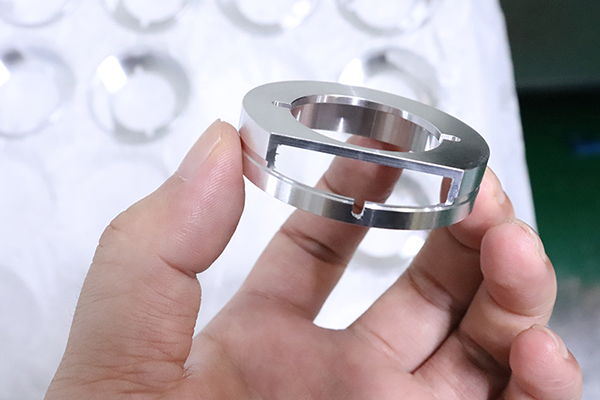
Achieving Dimensional Stability: The material’s internal stresses can be released during machining, causing part distortion. A sophisticated understanding of fixturing, sequencing of operations, and stress-relief practices is necessary to hold tight tolerances, often required to be within ±0.001mm (0.00004 inches) or better.
Post-Machining Heat Treatment Considerations: Often, parts are machined in an annealed state (“soft machining”) and then heat-treated to final hardness. This process causes dimensional changes. A premium machining service must account for this predictable distortion, often by performing “compensation machining” on the soft blank based on empirical data.
Essential Capabilities of a Premier AISI 4140 CNC Machining Service
To overcome these challenges consistently and efficiently, a machining partner must possess a blend of advanced technology, rigorous process engineering, and deep material science expertise.
H2: Advanced Multi-Axis CNC Technology: The Foundation of Complexity
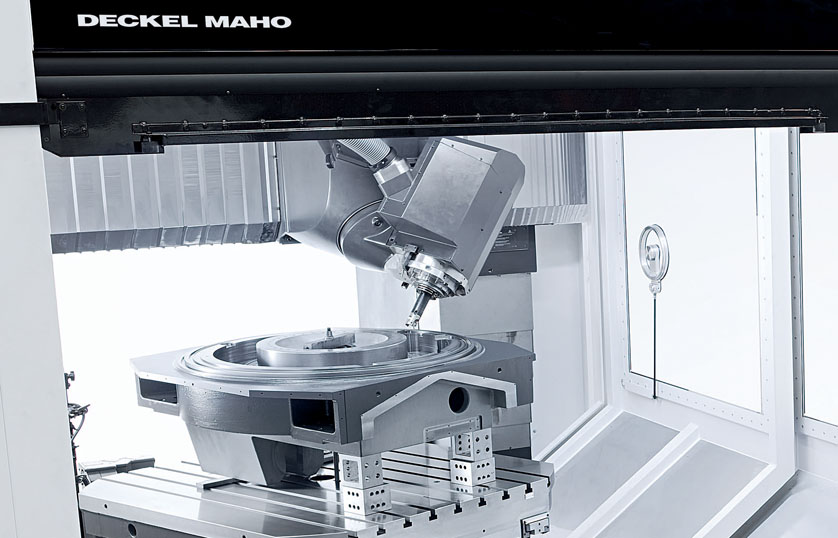
For complex geometries common in 4140 steel components—such as helical gears, impellers with undercuts, or aerospace fittings—3-axis machining is often insufficient. This is where the capabilities of five-axis CNC machining become indispensable.
Simultaneous 5-Axis Machining: Allows the cutting tool to approach the workpiece from virtually any angle in a single setup. This is crucial for:
Reduced Setup Time & Improved Accuracy: Eliminating multiple fixtures reduces cumulative error.
Machining Complex Contours: Enables the production of intricate, organic shapes that would be impossible or prohibitively expensive with 3-axis machines.
Optimal Tool Orientation: Maintains the most effective cutting angle, improving surface finish, extending tool life, and allowing for higher material removal rates even on hardened 4140.
H3: Integrated In-House Heat Treatment and Finishing
A true one-stop service provider doesn’t just machine the part; they manage the entire value chain. This includes:
Collaborative Process Planning: Engineers work backwards from the final hardened part specification to determine the optimal pre-machined state, heat treatment cycle (quench & temper, induction hardening), and final finishing steps.
Surface Enhancement: Post-machining, parts may require processes like grinding, honing, or polishing to achieve required surface finishes (e.g., Ra 0.2µm) or precise diameters. Services like nitriding or chrome plating can be applied for extreme wear and corrosion resistance.
H3: Uncompromising Metrology and Quality Assurance
Precision is meaningless without verification. A top-tier manufacturer invests in metrology equipment that matches or exceeds the precision of its machining centers.
CMM (Coordinate Measuring Machine): For comprehensive 3D geometric dimensioning and tolerancing (GD&T) inspection.
Advanced Surface Roughness Testers: To quantitatively verify surface finish specifications.
Hardness Testers (Rockwell, Vickers): To validate heat treatment results directly on the part.
A Culture of Certification: Adherence to international standards like ISO 9001:2015 for quality management, IATF 16949 for automotive components, and ISO 13485 for medical hardware is non-negotiable. These frameworks ensure process control, traceability, and continuous improvement.
H2: Why [GreatLight CNC Machining Factory] Excels in AISI 4140 Precision Machining
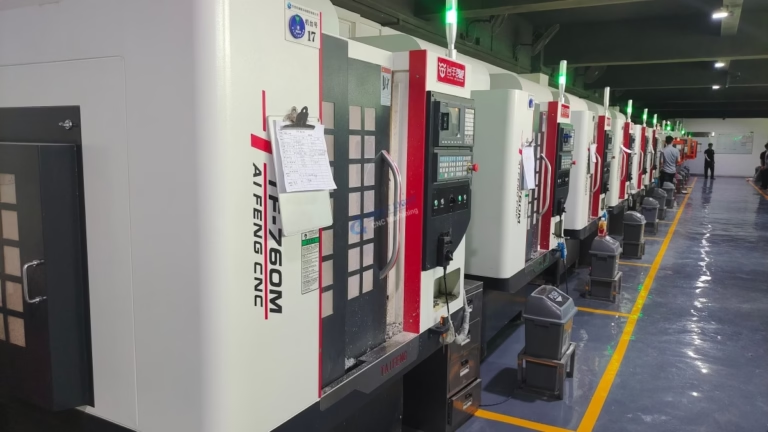
When evaluating partners for CNC machining services for AISI 4140 steel, [GreatLight CNC Machining Factory] embodies the synthesis of technology, expertise, and process rigor discussed above. Established in the heart of Dongguan’s precision manufacturing hub, the factory has built its reputation on solving complex metal parts manufacturing challenges.
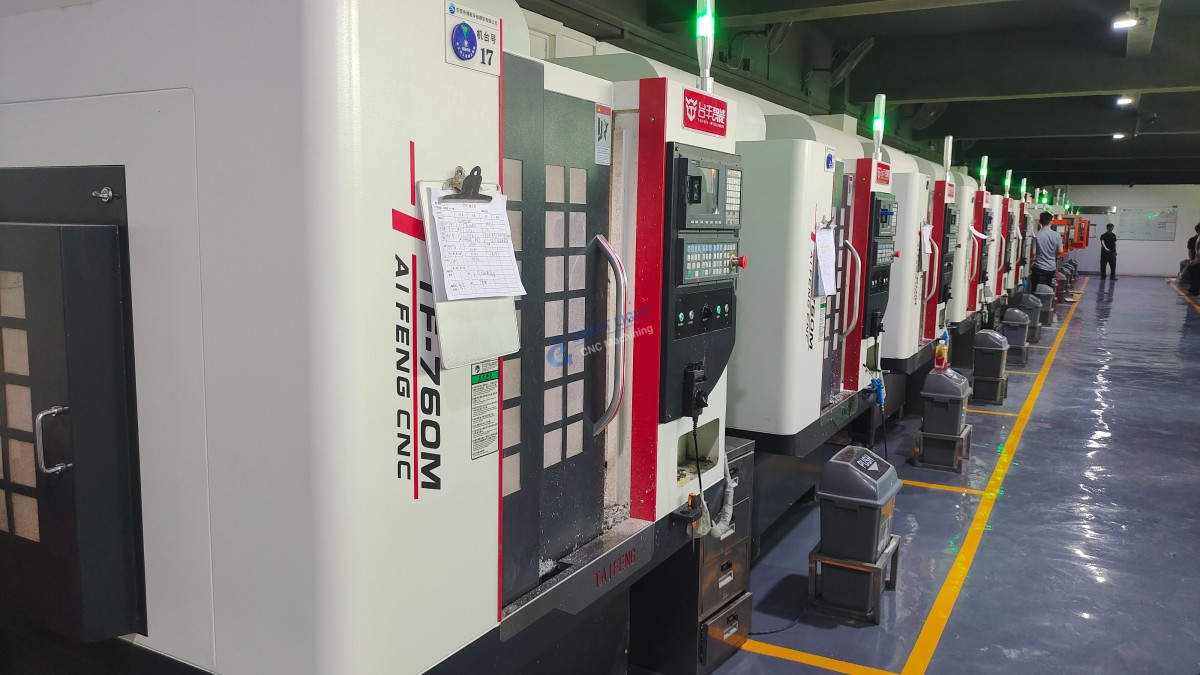
Their approach is systemic. From the initial design-for-manufacturability (DFM) feedback, they consider the behavior of 4140 steel throughout the entire production lifecycle. Their fleet of high-precision five-axis, four-axis, and three-axis CNC machining centers provides the flexibility to choose the most efficient and accurate method for each feature of a part. For instance, a complex turbine shaft might have its main contours finished on a 5-axis machine, while precise bearing journals are ground to sub-micron tolerances on dedicated equipment.
Crucially, their in-house capabilities extend beyond machining. With control over adjacent processes and a strict adherence to certified management systems, they ensure seamless integration. Whether a batch of actuator components requires soft machining, vacuum heat treatment, and final grinding, or a prototype gear needs direct machining from pre-hardened stock, their engineering team develops a validated process plan to guarantee the outcome meets the most demanding specifications for strength, precision, and durability.
Conclusion: Partnering for Precision and Performance
CNC machining services for AISI 4140 steel represent a specialized niche where material science, mechanical engineering, and advanced manufacturing technology converge. Success hinges not on a single machine, but on a holistic ecosystem designed to manage the material’s characteristics from raw stock to finished component. It requires a partner with the technical depth to navigate challenges like tool wear and thermal management, the technological arsenal of multi-axis CNC platforms, and the quality-centric culture enforced by international standards.
For projects where failure is not an option—be it in a high-revving automotive engine, a critical aerospace assembly, or a robust industrial machine—choosing a partner with demonstrated expertise in transforming tough alloys like AISI 4140 into reliable precision components is paramount. It is in this high-stakes environment that comprehensive providers like [GreatLight CNC Machining Factory] demonstrate their value, turning the inherent challenges of CNC machining services for AISI 4140 steel into a competitive advantage for their clients.



















