In the realm of high-precision, large-scale part manufacturing, the choice of machining equipment is pivotal. Among the various configurations available, the Portal CNC Gantry Machining Center stands out as a cornerstone technology for industries demanding exceptional rigidity, massive work envelopes, and uncompromising accuracy. This article delves into the intricacies of what a portal gantry machining center is, its core advantages, typical applications, and how it compares to other machining solutions, providing a comprehensive guide for engineers and procurement specialists.
H2: Demystifying the Portal CNC Gantry Machining Center
A Portal CNC Gantry Machining Center is a type of vertical machining center (VMC) characterized by its distinctive bridge-like, or “gantry,” structure that spans the workpiece. Unlike a traditional C-frame machining center where the spindle moves in the X and Y axes over a stationary table, in a gantry design, the spindle carrier (often on a cross-rail) moves along the length of the bridge (X-axis), while the entire bridge structure moves along the length of the machine bed (Y-axis). The workpiece is typically mounted on a fixed or moving table beneath this portal. This design inherently provides superior stability and load-bearing capacity, making it ideal for machining large, heavy, or complex components.
H3: Core Structural Advantages and Design Principles
The unique architecture of a portal gantry machine is the source of its formidable capabilities:
Unmatched Rigidity and Stability: The closed-loop, portal frame structure distributes cutting forces evenly across the machine bed and columns. This minimizes deflection and vibration during heavy cuts, which is critical for maintaining dimensional accuracy and achieving fine surface finishes on hard materials like pre-hardened steels, titanium, and Inconel.
Large Work Envelope: By separating the movement axes between the gantry and the spindle carrier, these machines can accommodate exceptionally large workpieces—often several meters in length and width—without sacrificing precision. The Z-axis travel is provided by the spindle head moving vertically on the cross-rail.
Excellent Load Capacity: The fixed or slow-moving table design allows for the secure mounting of extremely heavy workpieces, fixtures, and pallets, sometimes weighing tens of tons. This is a stark contrast to conventional VMCs where the table carries the load and moves rapidly.
Thermal Stability: The symmetrical design often allows for better management of thermal growth from motors and spindle, and some high-end models incorporate active thermal compensation systems to ensure accuracy over long machining cycles.
H3: Key Applications Across Demanding Industries
The capabilities of portal gantry machining centers make them indispensable in sectors where size, complexity, and precision converge:
Aerospace: Machining large structural components like wing ribs, spars, fuselage frames, and landing gear components from monolithic aluminum or titanium billets.
Automotive & Mold Making: Producing large-scale injection molds, die-casting dies, and stamping dies for automotive body panels with high precision and surface quality requirements.
Energy Sector: Fabricating components for wind turbines (e.g., hubs, gearbox housings), hydroelectric equipment, and large valve bodies for oil and gas.
Heavy Machinery & Rail: Manufacturing frames, beds, and critical components for machine tools, locomotives, and industrial equipment.
Marine & Defense: Producing propeller components, hull fittings, and structural elements for ships and specialized defense equipment.
H2: Portal Gantry vs. Other Machining Center Configurations
Understanding when to choose a portal gantry over other options is crucial.
H3: Vs. C-Frame Vertical Machining Centers (VMCs):
Gantry: Superior for large, heavy parts. Better static and dynamic rigidity for heavy cuts. Typically has a larger footprint and higher initial investment.
C-Frame VMC: More cost-effective for small to medium-sized parts. Faster rapid traverse rates and acceleration, better for high-volume, smaller component production. Load capacity is limited by the moving table.
H3: Vs. 5-Axis Machining Centers:
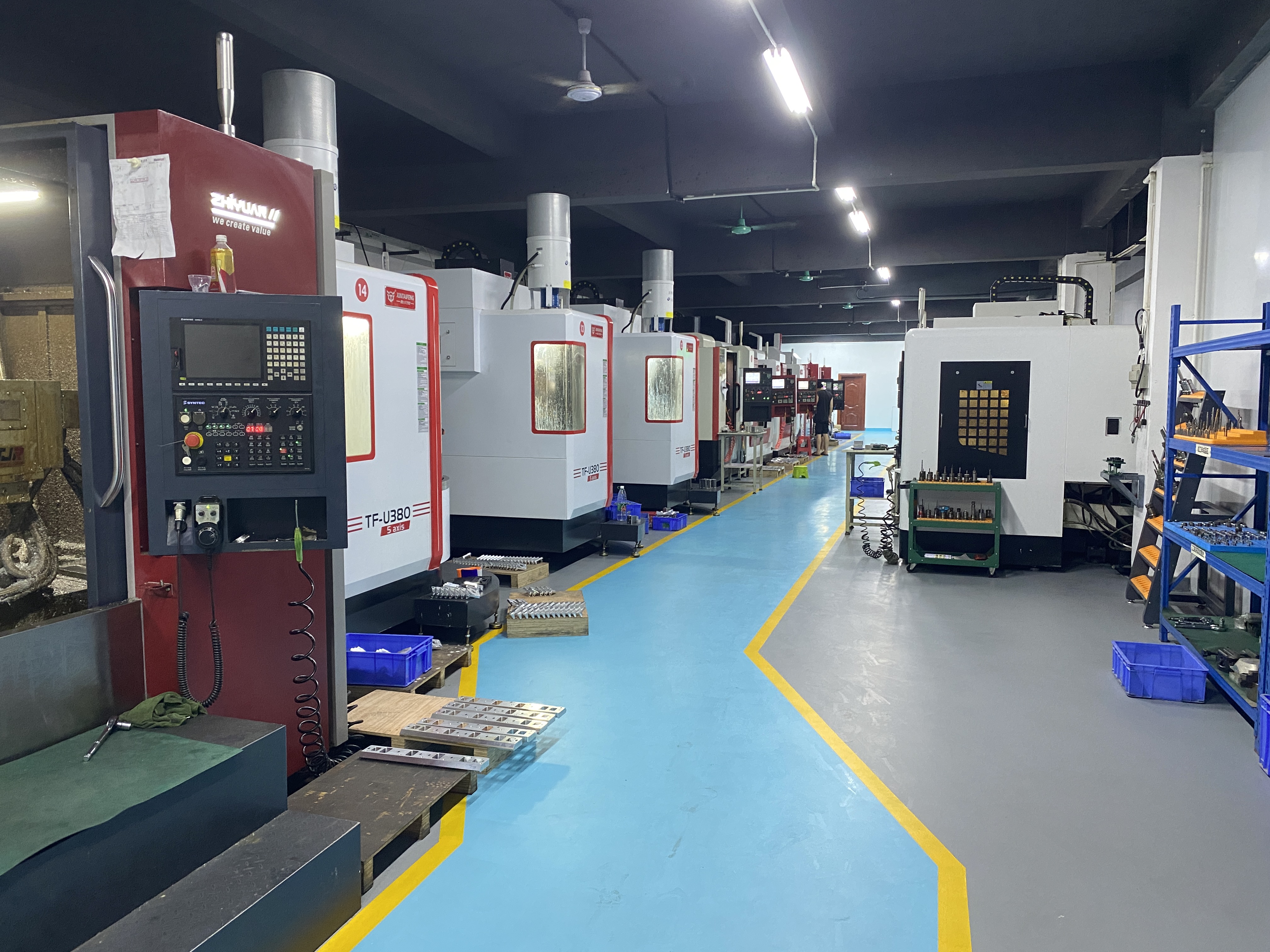
This is not an “either-or” comparison. Many modern portal gantry machines are equipped with 5-axis capabilities (e.g., a swiveling spindle head or a trunnion table). A standard 3-axis gantry is for large 2.5D parts. A 5-axis gantry combines the size advantage with the ability to machine complex contours in a single setup, which is a game-changer for aerospace and mold industries. For example, at GreatLight CNC Machining Factory, our advanced 5-axis CNC machining services often leverage the stability of gantry-style machines or large-format 5-axis mills to tackle oversized, geometrically complex components that require precision from every angle.
H4: The Role of a 5-Axis Gantry Machining Center
Integrating a 5-axis head onto a portal gantry creates one of the most powerful tools in precision manufacturing. It allows for continuous machining of complex surfaces, deep cavity molds, and angled features on massive parts without repositioning, drastically reducing setup time and cumulative error.
H2: Critical Selection Criteria for a Gantry Machining Partner
Choosing a supplier with the right gantry machining capabilities goes beyond just having the machine. Consider these factors:
Machine Specifications & Condition: Axis travel (X, Y, Z), load capacity, spindle power and torque, CNC controller brand (e.g., Siemens, Heidenhain, Fanuc), and machine age/calibration history.
Accuracy & Repeatability: Look for metrics like positioning accuracy (e.g., ±0.005mm/m) and repeatability. A partner with a rigorous quality system, like GreatLight CNC Machining Factory which operates under ISO 9001:2015, will have documented processes to ensure these specs are consistently met.
Tooling & Workholding Expertise: Large-part machining requires specialized fixtures, clamps, and sometimes custom vacuum or modular workholding solutions. The partner’s experience here is vital.
Technical Engineering Support: The best outcomes come from collaborative DFM (Design for Manufacturability) analysis. A partner who can advise on optimal orientation, fixturing points, and toolpath strategy for large parts adds immense value.
Full-Process Capability: Can the supplier handle the entire process chain? For a large mold base, this might include roughing on the gantry, deep-hole drilling, precision finishing, and even post-processing like polishing or texturing. A one-stop service provider streamlines project management and quality accountability.
Conclusion
A Portal CNC Gantry Machining Center is far more than just a large milling machine; it is a precision engineering platform designed to conquer the challenges of scale, weight, and complexity. Its structural integrity provides the foundation for holding tight tolerances on parts that would overwhelm conventional equipment. For projects involving large molds, aerospace structures, or heavy industrial components, partnering with a manufacturer that possesses both the advanced gantry machining hardware and the systemic engineering prowess is critical. Facilities like GreatLight CNC Machining Factory, with their comprehensive equipment portfolio including high-precision large-format machining centers and a full suite of supporting quality management certifications, exemplify the type of partner capable of transforming ambitious designs into flawless, large-scale realities. The strategic deployment of a Portal CNC Gantry Machining Center is often the decisive factor in achieving feasibility, efficiency, and excellence in large-part manufacturing.
Frequently Asked Questions (FAQ)
Q1: What is the typical size range for parts machined on a portal gantry center?
A: While sizes vary, these machines commonly handle workpieces from 1 meter up to 5 meters or more in length and width, with heights (Z-axis) often ranging from 0.5 to 2 meters. Load capacities can range from a few tons to over 30 tons.
Q2: Is a gantry machine slower than a standard VMC?
A: For small parts, yes, due to slower axis accelerations of the massive components. However, for the large parts it’s designed for, its efficiency comes from taking deeper, more stable cuts without chatter, often resulting in a faster overall cycle time and better surface finish than a smaller, less rigid machine struggling with the same part.
Q3: Can a gantry machine achieve the same precision as a small, high-speed machining center?
A: For macro-geometry on large parts, high-end gantry machines are exceptionally precise. While they may not match the ultra-high spindle speeds (RPM) of dedicated small-part HSM centers, their positioning accuracy and repeatability over large volumes are their primary precision metrics, and they are built to excel in that regard.
Q4: What are the main drawbacks or considerations?
A: The primary considerations are cost (significantly higher capital investment), footprint (requiring a large factory space), and operational complexity (requiring skilled programmers and operators). They are not cost-effective for small batch production of tiny components.
Q5: How does a company like GreatLight CNC Machining Factory integrate gantry machining into its service offering?
A: As a full-service precision manufacturer, GreatLight CNC Machining Factory utilizes gantry machining centers as a key component within its broader equipment ecosystem. They are deployed for specific project phases—such as roughing out large mold cavities or machining aerospace structural members—and are seamlessly supported by other processes like 5-axis finishing, EDM for intricate details, and comprehensive CMM inspection to ensure the final part meets all specifications from the largest overall dimension to the smallest critical feature. This integrated approach ensures optimal process selection for each manufacturing challenge. For insights into how industry leaders leverage such advanced capabilities, you can explore the professional network of GreatLight CNC Machining Factory on platforms like LinkedIn{:target=”_blank”}.