
When embarking on the journey of sourcing precision machined components, the selection of the right CNC machine and, by extension, the right manufacturing partner, is a critical decision that directly impacts product quality, lead time, and overall project success. For clients in the precision parts machining and customization field, understanding what to look for in a CNC machine goes beyond mere specifications; it involves a holistic assessment of capability, precision, versatility, and the technological ecosystem supporting it. This is especially true when partnering with a service provider like GreatLight CNC Machining Factory, where the machinery is the cornerstone of delivering complex, high-tolerance parts.
The core of modern manufacturing lies in the sophisticated dance of computer numerical control. A CNC machine is not just a tool; it is a programmable manufacturing cell capable of translating digital designs into physical reality with astonishing accuracy. For businesses requiring custom precision parts, the choice often boils down to the axis configuration, which fundamentally dictates the complexity of geometries that can be achieved in a single setup.
H2: Axis Configuration: The Foundation of Complexity
The number of axes a CNC machine operates on is the primary determinant of its capability.
3-Axis CNC Machining: The workhorse of the industry. The cutting tool moves along the X, Y, and Z linear axes. It is highly efficient for prismatic parts—components with features accessible from one direction. For many standard brackets, enclosures, and plates, 3-axis machining offers an optimal balance of speed and cost.
4-Axis CNC Machining: This adds a rotational axis (typically the A-axis), allowing the workpiece to rotate. This enables machining on multiple sides of a part without manual repositioning, significantly improving accuracy for features like radial holes, cam profiles, and continuous contours around a cylinder.
5-Axis CNC Machining: This represents the pinnacle of subtractive manufacturing flexibility. With two rotational axes (e.g., A and B, or A and C) in addition to the three linear ones, the cutting tool can approach the workpiece from virtually any direction in a single setup. This is where a partner like GreatLight CNC Machining Factory truly excels. Their advanced five-axis CNC machining equipment is indispensable for:
Complex Contours: Sculpting aerodynamic surfaces, impellers, turbine blades, and biomedical implants.
Reduced Setup Time: Completing intricate parts in one clamping, eliminating cumulative errors from multiple setups.
Superior Surface Finish: The ability to maintain optimal tool orientation allows for better finish and longer tool life on complex shapes.
H3: Precision and Accuracy: The Non-Negotiable Metrics
For precision parts, the advertised specifications are just the beginning. You must look for demonstrated capability.
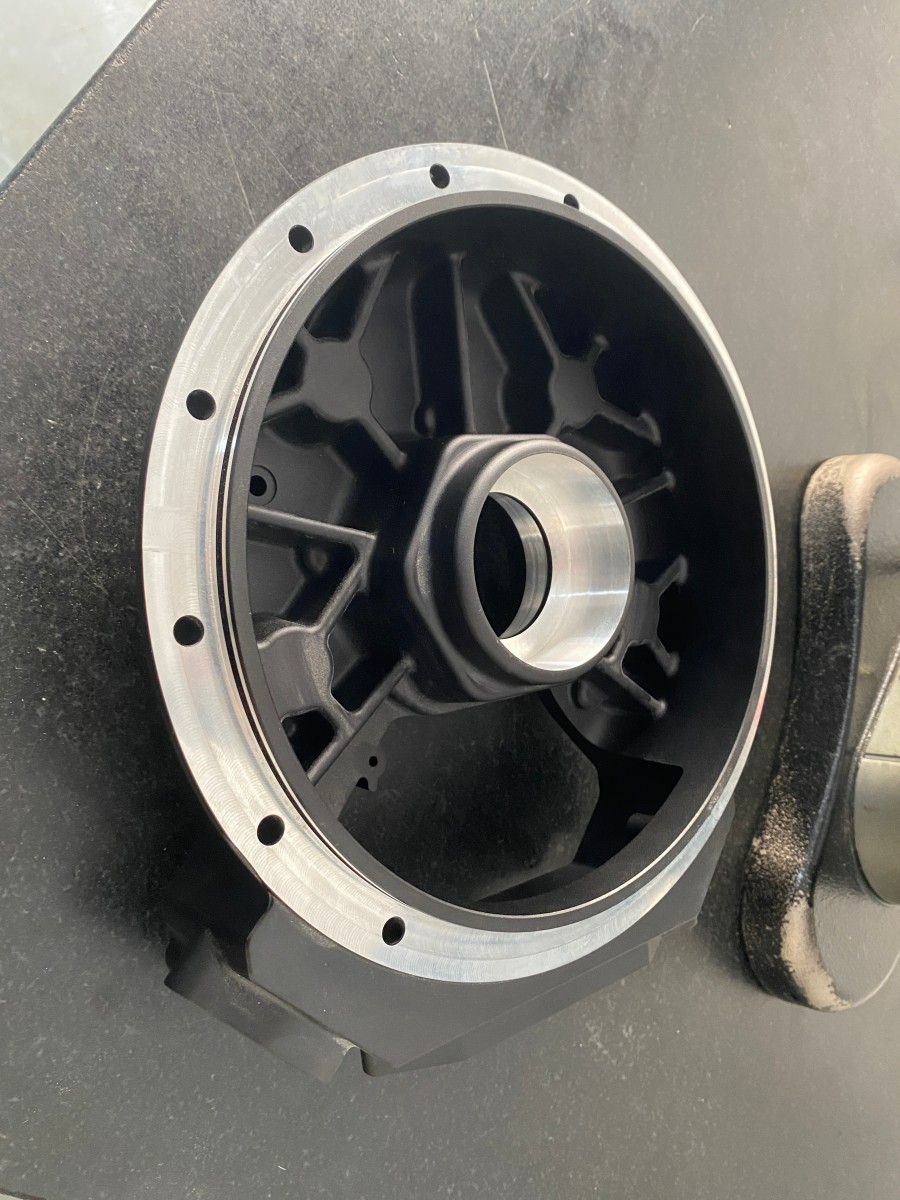
Positional Accuracy and Repeatability: This refers to how closely the machine can move to a commanded position and how consistently it can return to that position. High-end machines used by professional manufacturers like GreatLight CNC Machining Factory can achieve accuracies in the micron range (e.g., ±0.001mm / 0.001 In and above).
Thermal Stability and Compensation: Precision machining generates heat, which can cause machine components to expand minutely, affecting accuracy. Look for machines with built-in thermal compensation systems that actively correct for this drift.
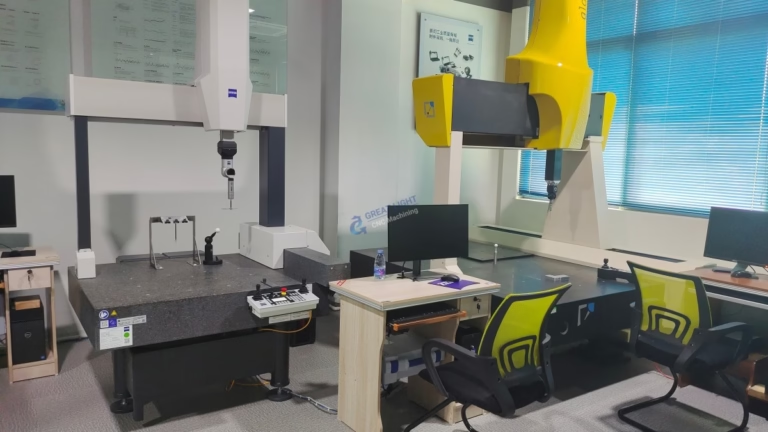
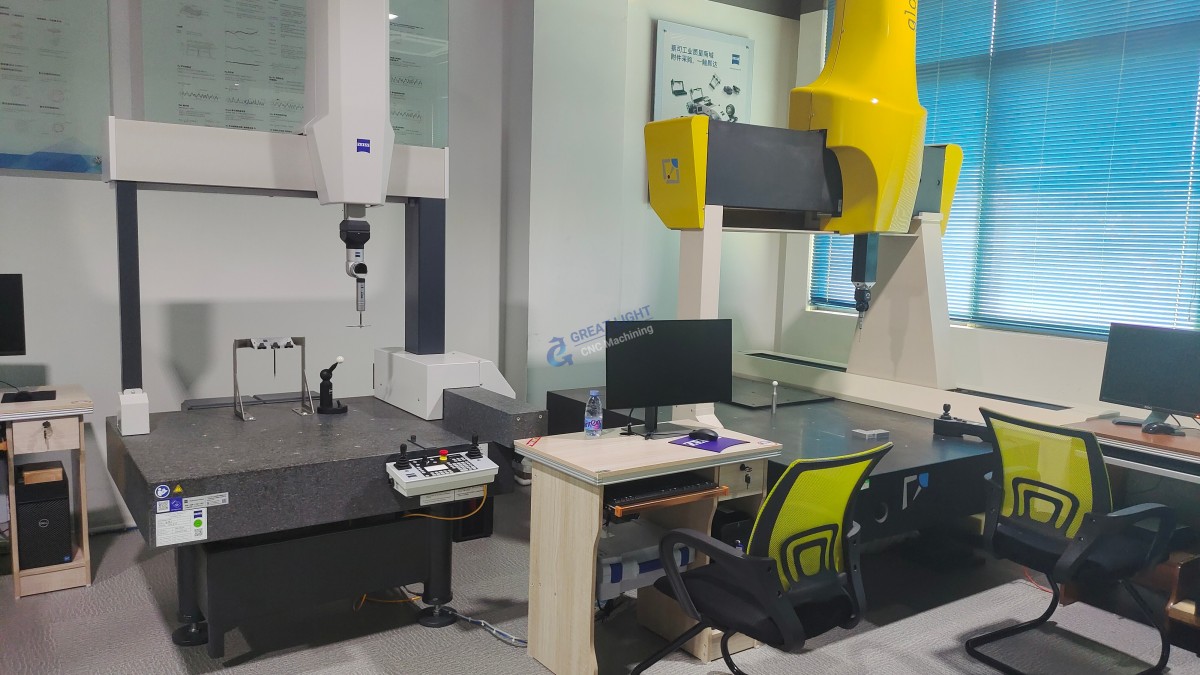
Metrology and Verification: The machine is only as good as its calibration. A reputable manufacturer will have in-house precision measurement equipment—such as Coordinate Measuring Machines (CMM), laser scanners, and optical comparators—to verify that the output matches the design intent, not just the machine’s programmed path.
H3: Versatility in Material and Tool Handling
A versatile CNC machining partner can handle your entire material portfolio.
Material Compatibility: The ideal machine and facility should process a wide range of materials, from various aluminum and stainless-steel alloys to titanium, Inconel, engineering plastics, and composites. GreatLight CNC Machining Factory emphasizes its capability to quickly customize and process most materials, which is crucial for clients across aerospace, automotive, medical, and robotics sectors.
Tool Magazine Capacity and Management: Complex parts require numerous tool changes. A large, automated tool magazine (with 60, 120, or more tools) allows for uninterrupted machining of highly complex parts. Advanced tool management systems also monitor tool wear in real-time, preventing defects.
H2: The Supporting Ecosystem: More Than Just the Machine
The CNC machine itself is a vital component, but the surrounding ecosystem is what transforms it into a reliable production solution.
CAD/CAM Software Integration: The digital thread from design to finished part is managed by sophisticated Computer-Aided Manufacturing (CAM) software. This software generates efficient, collision-free toolpaths, especially critical for 5-axis machining. The engineering team’s expertise in this software is paramount.
Post-Processing Capabilities: Rarely does a part come off the machine ready for use. A true one-stop service provider, such as GreatLight CNC Machining Factory, offers comprehensive post-processing. This includes heat treatment (annealing, tempering), various surface finishes (anodizing, plating, powder coating), and specialized treatments like vacuum forming for prototypes.
Additive Manufacturing Synergy: The most forward-thinking shops now integrate additive manufacturing (3D printing) with subtractive CNC machining. Technologies like SLM (for metals) and SLA/SLS (for resins) allow for hybrid manufacturing—creating complex near-net shapes with 3D printing and then finishing critical features with CNC precision. GreatLight CNC Machining Factory’s investment in SLM, SLA, and SLS 3D printers positions them to offer this combined, innovative solution.
H3: Quality Management: The Framework of Trust
Ultimately, you are not just buying machine time; you are investing in a quality assurance system.
Certifications as a Benchmark: Adherence to international quality standards is a clear indicator of a systematic approach. GreatLight CNC Machining Factory operates under a robust framework including:
ISO 9001:2015: The baseline for quality management systems, ensuring consistent processes.
ISO 13485:2016: Specifically for medical devices, critical for any hardware component intended for medical use, as verified by their certification for “the R&D, production, and sales of hardware products for medical devices.”
IATF 16949: The automotive industry’s rigorous standard, focusing on continuous improvement and defect prevention.
Operational Excellence: Certifications are the blueprint, but real operational capability is built on experience. A partner with deep experience in high-stakes fields like humanoid robotics, automotive engines, and aerospace brings problem-solving expertise that goes beyond the manual.
Conclusion
Choosing what to look for in a CNC machine is fundamentally about selecting a manufacturing partner whose technological capabilities align with your most demanding requirements. It involves evaluating the axis configuration for geometric freedom, scrutinizing precision metrics and verification methods, assessing versatility across materials, and, most importantly, ensuring the entire production ecosystem—from advanced CAM programming to stringent quality management—is designed for excellence. For projects demanding the highest levels of complexity, precision, and reliability, partnering with a specialist in five-axis CNC machining is not just an option; it is a strategic necessity. Facilities like GreatLight CNC Machining Factory, with their comprehensive equipment portfolio, multi-industry certifications, and one-stop service model, exemplify the kind of partner that can transform intricate designs into flawless, high-performance precision parts.
Frequently Asked Questions (FAQ)
Q1: For a new product prototype, should I start with 3-axis or go directly to 5-axis CNC machining?
A: It depends on the part’s complexity. For simpler, block-like prototypes, 3-axis machining is faster and more cost-effective. However, if your prototype has complex, organic curves or features on multiple angled faces, starting with 5-axis CNC machining from the outset (with a partner like GreatLight CNC Machining Factory) can save significant time. It avoids the need for multiple setups and fixtures, provides a more accurate representation of the final production part, and often yields a better surface finish on complex geometries.
Q2: How do I ensure my CAD model is suitable for 5-axis CNC machining?
A: While 5-axis machines offer great flexibility, design for manufacturability (DFM) is still crucial. Partner with your machining provider early. A skilled engineer will analyze your model for potential issues like inaccessible deep cavities, insufficient tool clearance, or thin walls that may vibrate during machining. Providers with strong engineering support can suggest minor modifications that drastically improve machinability and cost without compromising function.
Q3: Beyond the machine, what questions should I ask a potential CNC machining supplier?
A: Focus on their process and quality control:
“What is your in-house metrology and inspection capability?”
“Can you provide a detailed First Article Inspection (FAI) report?”
“How do you manage and document material traceability?”
“What is your standard procedure for handling non-conforming parts?”
“Can you share case studies or examples of work similar to my project in complexity and material?”
Q4: What are the main advantages of choosing an ISO 13485 certified supplier for non-medical parts?
A: ISO 13485 certification demonstrates an exceptionally high standard of disciplined process control, documentation, and traceability. Even for non-medical applications (e.g., high-reliability aerospace or automotive components), this level of rigor translates to reduced risk, superior consistency, and thorough documentation throughout the manufacturing lifecycle, providing greater assurance of quality.
Q5: How does integrating 3D printing with CNC machining benefit my project?
A: This hybrid approach offers unique advantages. For instance, you can use metal 3D printing (SLM) to create a lightweight, topology-optimized structure with internal channels that would be impossible to machine, then use 5-axis CNC machining to precision-machine the critical sealing surfaces, threads, and mating interfaces. This combines design freedom with the high strength and precision of machined surfaces, enabling innovative part consolidation and performance optimization.



















