
Why Five-Axis CNC Machining Is the Cornerstone of Precision Manufacturing
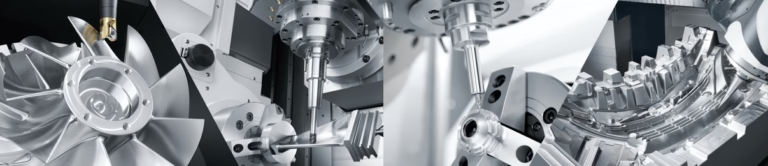
When clients demand parts with complex geometries, tight tolerances, and rapid turnaround times, traditional three-axis machining often falls short. Enter five-axis CNC machining—a technology that redefines precision by enabling simultaneous movement along five axes (X, Y, Z, plus two rotational axes, typically A and B). This capability allows for machining intricate contours, undercuts, and deep cavities in a single setup, eliminating the need for multiple repositioning and reducing human error.
For industries like aerospace, automotive, and robotics, where parts must meet stringent performance standards, GreatLight CNC Machining Factory stands out as a leader. With advanced five-axis equipment, ISO 9001:2015 certification, and expertise in materials ranging from titanium alloys to medical-grade plastics, we deliver solutions that bridge the gap between design and reality.
The Evolution of CNC Machining: From 3-Axis to 5-Axis Dominance
3-Axis Machining: The Foundation of Precision
Three-axis CNC machines operate along the X, Y, and Z linear axes, making them ideal for flat or prismatic parts like brackets, housings, and simple molds. While cost-effective for basic geometries, their limitations become apparent when machining:
Complex curves (e.g., turbine blades, impellers).
Deep cavities requiring multiple tool changes.
Parts with undercuts that demand reorientation.
4-Axis Machining: Adding Rotational Freedom
Four-axis machines introduce a rotational axis (typically A, around the X-axis), enabling continuous machining of cylindrical or contoured surfaces. Applications include:
Camshafts and crankshafts.
Helical gears and threaded components.
Curved molds requiring rotational indexing.
However, 4-axis setups still struggle with parts requiring simultaneous rotation on two planes, such as aerospace components with compound angles.
5-Axis Machining: The Pinnacle of Precision
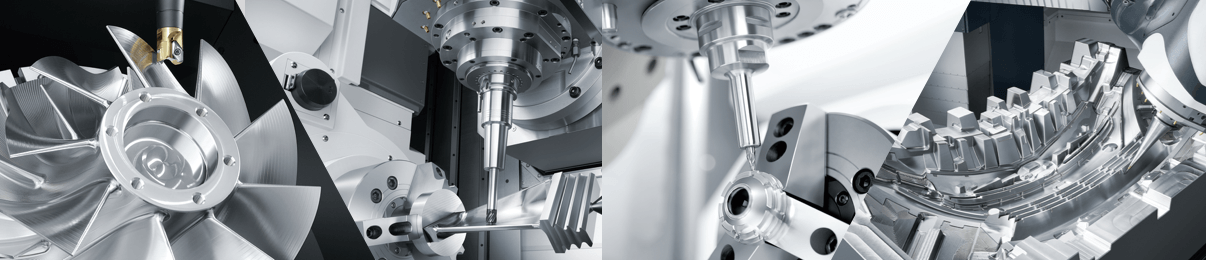
Five-axis machines add a second rotational axis (B, around the Y-axis), unlocking unparalleled flexibility. Key advantages include:
Single-Setup Machining: Reduce setup time and alignment errors by processing multiple faces in one cycle.
Improved Surface Finish: Optimal tool angles minimize vibration and tool marks, critical for optical and medical parts.
Access to Hard-to-Reach Areas: Machine undercuts, deep pockets, and overhanging features without manual repositioning.
Reduced Lead Times: Streamline production by eliminating secondary operations like EDM or grinding.
Industries Benefiting Most:
Aerospace: Turbine blades, engine components, and structural parts.
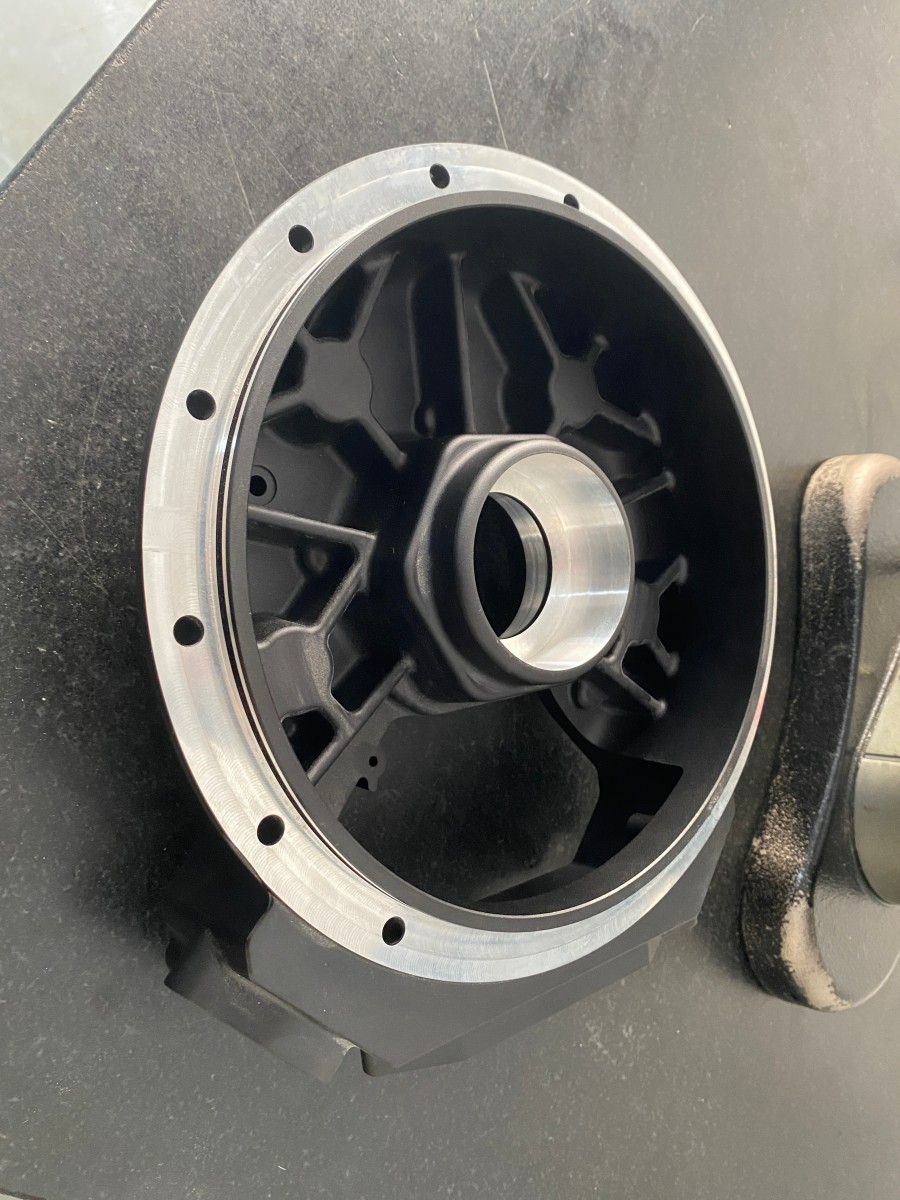
Automotive: Transmission housings, suspension components, and lightweight alloys.
Medical: Orthopedic implants, surgical tools, and prosthetics.
Robotics: Humanoid robot joints, actuators, and end-effectors.
Why Choose GreatLight CNC Machining Factory for Five-Axis Solutions?
1. Unmatched Technical Capabilities
Equipment: 127 precision machines, including large-scale five-axis CNC centers (max processing size: 4000 mm).
Tolerance Control: ±0.001mm (0.00004 inches) accuracy, meeting aerospace and medical standards.
Material Versatility: Process aluminum, stainless steel, titanium, magnesium alloys, PEEK, and composites.
2. Comprehensive Certifications and Compliance
ISO 9001:2015: Guarantees consistent quality in every part.
ISO 13485: Medical hardware production compliance for biocompatible parts.
IATF 16949:2016: Automotive-grade quality management for engine components and supply chain reliability.
ISO 27001: Data security protocols for intellectual property protection.
3. End-to-End Services
Rapid Prototyping: 3D printing (SLM, SLA, SLS) for functional prototypes in days.
Post-Processing: Anodizing, plating, polishing, and heat treatment for finished aesthetics.
Design Assistance: Reverse engineering and DFM (Design for Manufacturing) feedback to optimize parts for cost and performance.
4. Proven Track Record
Case Study 1: Humanoid Robot Joints
A robotics client required lightweight, high-strength titanium alloy joints with ±0.002mm tolerances. GreatLight’s five-axis machining reduced production time by 40% compared to traditional methods, with zero rework.
Case Study 2: Aerospace Turbine Blade
For a turbine manufacturer, we machined Inconel 718 blades with complex cooling channels, achieving a surface roughness of Ra 0.4μm in a single setup.
Conclusion: Elevate Your Precision Parts with Five-Axis Expertise
In an era where efficiency and accuracy define competitiveness, five-axis CNC machining is no longer a luxury—it’s a necessity. GreatLight CNC Machining Factory combines cutting-edge technology, rigorous quality standards, and decades of experience to deliver parts that exceed expectations. Whether you’re prototyping a revolutionary medical device or scaling production for automotive components, our team ensures your vision becomes reality, on time and within budget.
Choose GreatLight CNC Machining Factory for five-axis machining—where precision meets possibility.
Frequently Asked Questions (FAQs)
Q1: What is the difference between 3-axis, 4-axis, and 5-axis CNC machining?
3-axis: Linear movement along X, Y, Z axes; suitable for flat or simple prismatic parts.
4-axis: Adds one rotational axis (e.g., A-axis around X); ideal for cylindrical or contoured surfaces.
5-axis: Adds two rotational axes (A and B); enables simultaneous machining of complex geometries in one setup.
Q2: How does five-axis machining reduce costs?
By eliminating multiple setups, tool changes, and manual repositioning, five-axis machining cuts labor costs, reduces scrap rates, and shortens lead times.
Q3: What materials can GreatLight process with five-axis machines?
We handle metals (aluminum, titanium, stainless steel, magnesium alloys) and plastics (PEEK, ABS, nylon), as well as composites and ceramics.
Q4: What industries rely most on five-axis machining?
Aerospace, automotive, medical, robotics, and defense industries benefit from five-axis capabilities for high-precision, complex parts.
Q5: How does GreatLight ensure part quality?
We use in-house CMM (Coordinate Measuring Machines), laser scanners, and ISO-compliant inspection protocols to verify tolerances and surface finish.
Q6: Can GreatLight handle small-batch production?
Yes, our flexible manufacturing lines support prototyping (1–10 parts) to low-volume production (100–10,000 parts) with consistent quality.
Q7: What is the typical lead time for five-axis machined parts?
Lead times vary based on complexity, but we often deliver prototypes in 5–7 days and production orders in 2–4 weeks.
Q8: Does GreatLight offer design assistance for five-axis machining?
Absolutely. Our engineers provide DFM feedback to optimize parts for manufacturability, cost, and performance.
Q9: How does GreatLight protect client intellectual property?
We adhere to ISO 27001 data security standards, with secure file transfers, restricted access, and NDA agreements for sensitive projects.
Q10: Why is ISO 16949 certification important for automotive parts?
ISO 16949 ensures compliance with automotive industry-specific quality requirements, reducing defects and supply chain risks for engine components, transmissions, and chassis parts.



















