
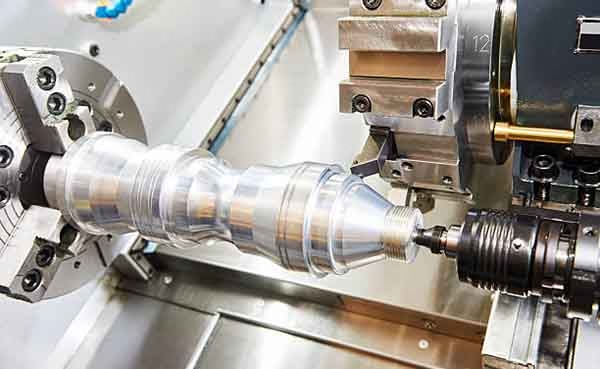
In the ever-evolving landscape of modern manufacturing, the CNC Vertical Machining Center (VMC) stands as a cornerstone technology. Its versatility, precision, and efficiency have made it an indispensable asset across a vast spectrum of industries. From the intricate components in your smartphone to the robust parts in construction machinery, the applications of a CNC vertical machining center are both profound and pervasive. This article delves into the core application fields of this powerful machine, illustrating how it drives innovation and production worldwide.
H2: Understanding the CNC Vertical Machining Center
Before exploring its applications, it’s crucial to understand what sets a VMC apart. A CNC Vertical Machining Center is characterized by its vertically oriented spindle. The cutting tool is held in the spindle and rotates on a vertical axis, while the workpiece is secured on a table that moves in the X (left-right) and Y (front-back) directions. The spindle itself typically moves in the Z (up-down) axis. This configuration offers exceptional stability and is particularly well-suited for machining the top faces and peripheral features of prismatic parts—components that are largely block-like or plate-like in shape.
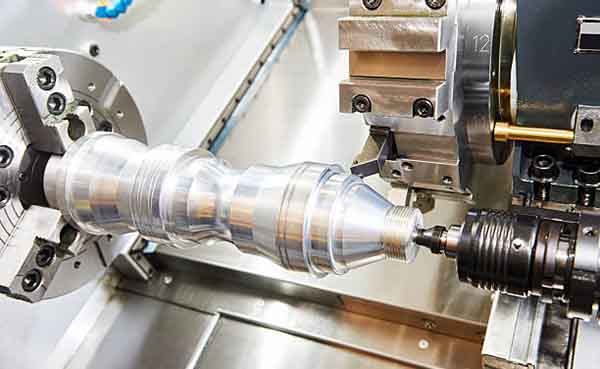
The “CNC” (Computer Numerical Control) aspect is what grants it unparalleled flexibility. A programmed set of instructions dictates every movement, speed, and tool change, enabling the production of highly complex geometries with repeatable accuracy down to micron levels. This combination of structural design and digital control is the key to its widespread adoption.
H2: Primary Application Fields of CNC Vertical Machining Centers
The application fields of CNC vertical machining centers can be broadly categorized into several key industries, each leveraging the machine’s capabilities to meet specific, often demanding, requirements.
H3: 1. Aerospace and Defense
This sector represents the pinnacle of precision and reliability demands.
Structural Components: Machining of aircraft frames, brackets, wing ribs, and landing gear components from high-strength aluminum alloys, titanium, and advanced composites.
Engine Parts: Production of complex housings, mounts, and non-rotating engine components that require exceptional dimensional stability and surface finish.
Avionics: Fabrication of precise enclosures, heat sinks, and chassis for navigation and communication systems.
Defense Applications: Manufacturing of robust, reliable parts for ground vehicles, naval systems, and other defense equipment, often involving difficult-to-machine materials.
H3: 2. Automotive and Transportation
From prototyping to mass production of specialized components, VMCs are vital.
Engine and Powertrain: Machining of cylinder heads, transmission cases, valve bodies, and turbocharger housings.
Chassis and Suspension: Production of steering knuckles, control arms, brake calipers, and differential cases.
Electric Vehicle (EV) Components: A rapidly growing area involving battery tray components, motor housings, and power electronic enclosures.
Prototyping and Tooling: Rapid fabrication of concept models, functional prototypes, and the molds and dies used in high-volume production.
H3: 3. Medical and Dental Device Manufacturing
This field demands ultra-high precision, biocompatible materials, and flawless surface integrity.
Surgical Instruments: Machining of stainless steel and titanium forceps, scalpel handles, bone drills, and retractors.
Implants: Production of orthopedic implants like knee, hip, and spinal components, often from medical-grade titanium or cobalt-chrome alloys.
Diagnostic Equipment: Fabrication of precise parts for MRI machines, CT scanners, and robotic surgery systems.
Dental Components: Manufacturing of custom abutments, crowns, bridges, and surgical guides.
H3: 4. Mold and Die Making
VMCs are the workhorses for creating the tools that shape countless consumer and industrial products.
Injection Molds: Machining complex cavities and cores for plastic parts used in electronics, automotive interiors, and consumer goods.
Die Casting Dies: Producing durable dies for casting aluminum, magnesium, or zinc components.
Stamping Dies: Creating punches and dies for sheet metal forming in automotive body panels and appliance housings.
H3: 5. General Precision Engineering and Industrial Machinery
This is perhaps the broadest category, encompassing a universe of components.
Machine Frames and Housings: Fabricating the structural bases and enclosures for other industrial machines.
Pumps, Valves, and Hydraulics: Machining bodies, manifolds, and ports that require leak-proof precision and complex internal channels.
Robotics and Automation: Producing actuator housings, end-effector mounts, and precise linkages for robotic arms.
Electronics and Telecommunications: Manufacturing heat sinks, waveguide components, and robust enclosures for servers and communication hardware.
H2: The Role of Advanced Manufacturers like GreatLight CNC Machining Factory
While a standard VMC is powerful, the true potential for solving complex manufacturing challenges is unlocked by suppliers with advanced capabilities and integrated solutions. This is where a partner like GreatLight CNC Machining Factory demonstrates significant value. As a professional manufacturer equipped with multi-axis CNC technology, including advanced five-axis CNC machining centers, they extend the application potential far beyond what a standard 3-axis VMC can achieve.
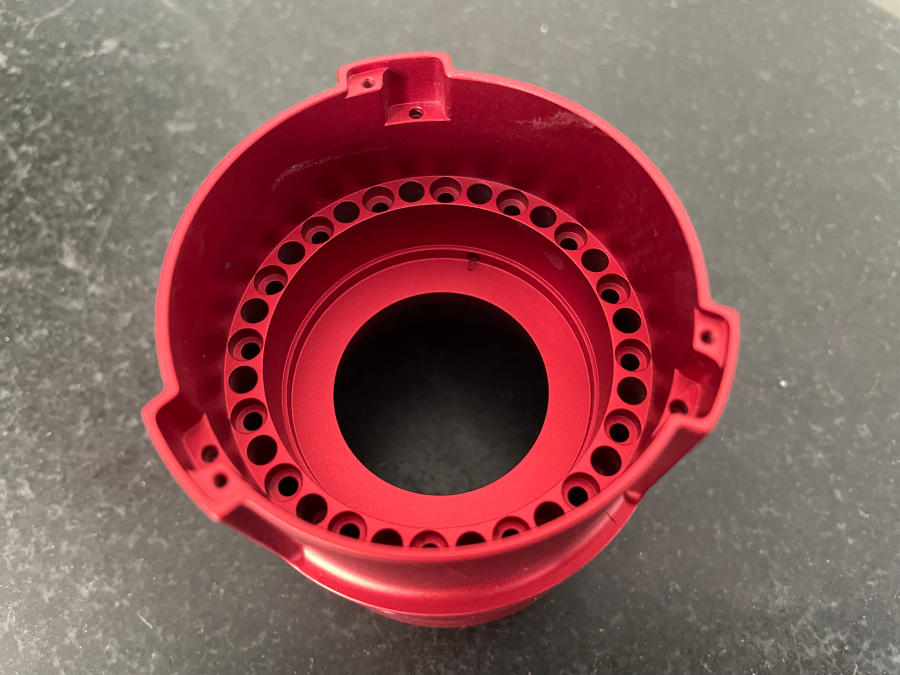
For instance, a complex aerospace bracket might require machining on five faces. On a standard VMC, this would involve multiple setups, increasing error stack-up and time. However, with a 5-axis CNC machining strategy, the part can be completed in a single setup, ensuring higher overall accuracy and perfect alignment of features. GreatLight’s expertise in precision 5-axis CNC machining services allows them to tackle parts with undercuts, complex contours, and compound angles that are common in high-end applications across all the fields mentioned above.
Their comprehensive approach—combining vertical, horizontal, and multi-axis machining with a full suite of finishing services—means they can not only machine a part but also deliver a finished, assembly-ready component. This one-stop capability is crucial for industries like medical and aerospace, where traceability and integrated quality control are paramount.
Conclusion
The application fields of the CNC vertical machining center are a testament to its foundational role in industrialized society. It is the silent enabler of technological progress, from the vehicles we drive and the devices we use to the medical treatments that save lives. Its versatility in handling diverse materials, from aluminum and steel to engineering plastics and superalloys, ensures its relevance will only grow. For businesses seeking to translate innovative designs into reality, partnering with a technologically adept manufacturer that can leverage both standard and advanced machining platforms is a critical strategic decision. The journey from a raw block of material to a precision component powering the future is, in many ways, defined by the capabilities of the machining center and the expertise of the team that operates it.
Frequently Asked Questions (FAQ)
Q1: What is the main difference between a Vertical Machining Center (VMC) and a Horizontal Machining Center (HMC)?
A: The primary difference is spindle orientation. A VMC has a vertical spindle, ideal for machining the top and sides of prismatic parts. An HMC has a horizontal spindle, which is better for deep cavity work, provides better chip evacuation, and often allows for pallet changers for higher-volume production. The choice depends on the part geometry and production requirements.
Q2: Can a VMC machine complex, curved surfaces effectively?
A: A standard 3-axis VMC can machine some curved surfaces using ball-nose end mills and sophisticated tool paths. However, for highly complex free-form surfaces or features requiring access from multiple angles, a 4-axis or 5-axis machine is far more efficient and accurate. This is where a service provider with 5-axis CNC machining capability provides a distinct advantage.
Q3: What materials can be processed on a CNC Vertical Machining Center?
A: VMCs are incredibly versatile and can machine a wide range of materials, including:
Metals: Aluminum, steel, stainless steel, brass, copper, titanium, and Inconel.
Plastics: ABS, PEEK, Delrin, Nylon, and Polycarbonate.
Composites: Certain reinforced plastics and laminates.
Q4: For a new product development project, should I choose 3-axis VMC services or invest in 5-axis machining?
A: Start with the design requirements. If your part is largely prismatic with features on one or two primary faces, a 3-axis VMC is cost-effective and sufficient. If the design involves complex contours, undercuts, or features on multiple angled faces, opting for a supplier offering precision 5-axis CNC machining services from the outset will save time on multiple setups, reduce error risk, and often yield a better overall part. A partner like GreatLight CNC Machining Factory{:target=”_blank”} can provide guidance on the most efficient process for your specific component.
Q5: How do manufacturers ensure the precision and quality of parts machined on VMCs?
A: Reputable manufacturers employ a multi-faceted approach: using calibrated, high-quality machines; implementing rigorous in-process checks with touch probes; conducting final inspection with coordinate measuring machines (CMMs) and other metrology equipment; and adhering to certified quality management systems like ISO 9001. This systemic approach to quality is what defines trusted partners in the precision machining space. For insights into industry standards and practices, following thought leaders on platforms like LinkedIn{:target=”_blank”} can be valuable.



















