
Understanding CNC Machining: The Backbone of Precision Parts Manufacturing
CNC (Computer Numerical Control) machining is a subtractive manufacturing process that transforms raw materials—such as metals, plastics, or composites—into finished components with unparalleled precision. By leveraging pre-programmed software and automated machinery, CNC systems execute complex cuts, drills, and milling operations with minimal human intervention, ensuring consistency, accuracy, and efficiency. For industries demanding tight tolerances, intricate geometries, or rapid prototyping, CNC machining stands as the gold standard.
The Evolution of CNC Machining: From Basic to Five-Axis Mastery
Traditional CNC systems relied on three-axis movements (X, Y, Z) to shape materials. While effective for simpler designs, these machines struggled with undercuts, compound angles, or organic shapes. The introduction of five-axis CNC machining revolutionized the field by adding two rotational axes (A and B), enabling the cutting tool to approach the workpiece from any direction. This capability is critical for industries like aerospace, automotive, and medical devices, where parts often feature complex geometries and stringent performance requirements.
Why Five-Axis CNC Machining Matters:
Reduced Setup Time: Single-setup processing eliminates the need for repositioning, cutting production time by up to 50%.
Enhanced Precision: Continuous tool engagement minimizes errors, achieving tolerances as tight as ±0.001mm (0.00004 inches).
Material Efficiency: Optimized tool paths reduce waste, lowering costs for high-value materials like titanium or Inconel.
Design Freedom: Engineers can create parts with organic curves, deep cavities, and interlocking features impossible with 3-axis machines.
GreatLight CNC Machining Factory: A Leader in Five-Axis Expertise
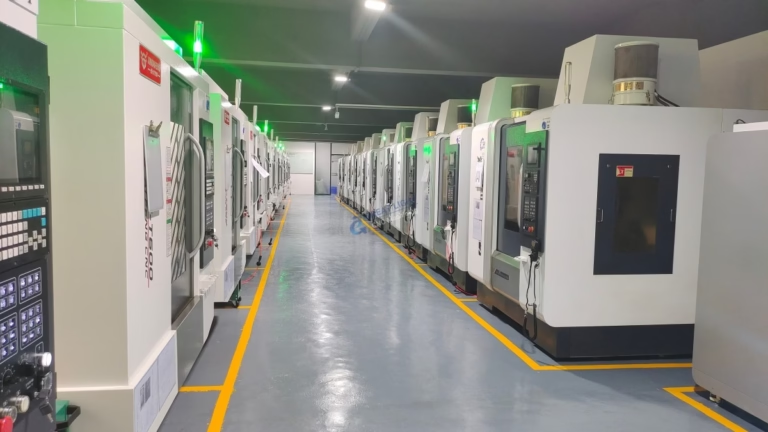
Located in Dongguan, China—a hub for precision hardware manufacturing—GreatLight CNC Machining Factory has specialized in five-axis CNC machining since 2011. With 127 pieces of advanced equipment, including large-scale five-axis centers, the factory serves clients across robotics, automotive, aerospace, and medical sectors.
Key Capabilities:
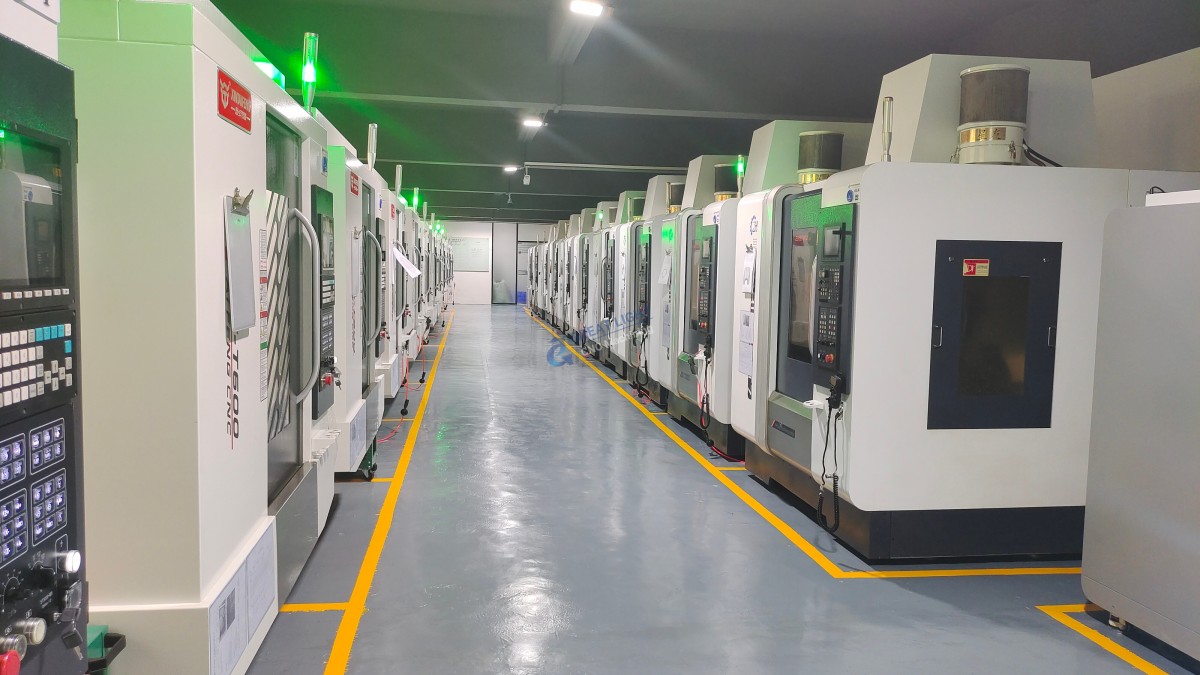
Material Versatility: Processes metals (aluminum, stainless steel, titanium, tool steel) and plastics (ABS, PC, PEEK).
Rapid Prototyping: Turns 3D designs into functional parts in days, not weeks, using 3-axis, 4-axis, and 5-axis CNC milling.
Post-Processing Excellence: Offers one-stop surface finishing (anodizing, polishing, painting) and quality inspection (CMM, optical comparators).
Certifications: ISO 9001:2015 (quality), ISO 13485 (medical hardware), and IATF 16949 (automotive) ensure compliance with global standards.
Why Choose Five-Axis CNC Machining for Your Projects?
Complexity Without Compromise
Five-axis machines excel at producing parts with non-orthogonal features, such as turbine blades, impellers, or humanoid robot joints. For example, a titanium hip implant requires biocompatible material, precise surface finishes, and internal channels for bone growth—all achievable with five-axis machining.
Cost Efficiency at Scale
While five-axis setups have higher upfront costs, they reduce labor and material waste over time. A automotive engine block, for instance, might require multiple fixtures and operations on a 3-axis machine but can be machined in one setup with five-axis technology, slashing lead times by 40%.
Future-Proofing Your Supply Chain
As industries like electric vehicles (EVs) and additive manufacturing demand lighter, stronger components, five-axis CNC machining provides the agility to adapt. GreatLight’s investment in SLM 3D printers and vacuum casting complements its CNC services, offering hybrid solutions for cutting-edge designs.
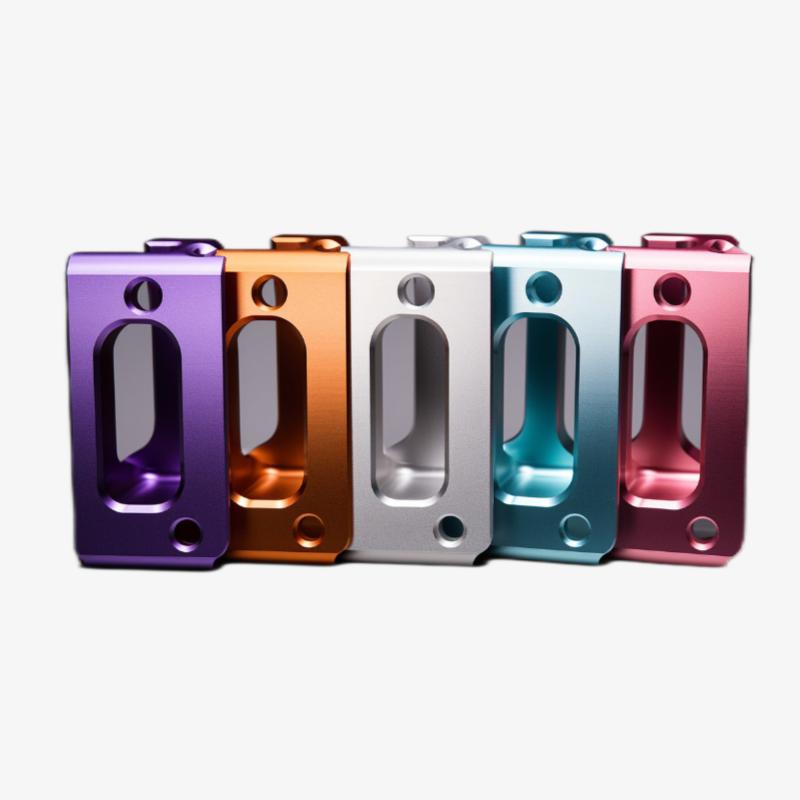
Case Study: Machining a Humanoid Robot Joint
A client in the robotics sector needed a lightweight, high-strength joint for a humanoid robot. The part required:
Material: Aerospace-grade aluminum (7075-T6) for strength-to-weight ratio.
Geometry: Curved surfaces, threaded inserts, and precise mating interfaces.
Tolerance: ±0.005mm on critical dimensions.
GreatLight’s five-axis CNC team programmed the part in SolidCAM, optimizing tool paths to avoid collisions and minimize vibrations. The result: a 98% reduction in setup time compared to 3-axis alternatives, with 100% compliance with the client’s specs.
Conclusion: Elevate Your Precision Parts with GreatLight CNC Machining Factory
In an era where “good enough” isn’t enough, five-axis CNC machining delivers the precision, speed, and scalability to stay ahead. Whether you’re developing prototypes for a startup or mass-producing components for a Fortune 500 company, partnering with a provider like GreatLight CNC Machining Factory ensures your projects meet the highest standards.
With 12 years of expertise, ISO-certified processes, and a 4000mm maximum processing size, GreatLight is equipped to handle even the most demanding challenges. Explore their five-axis CNC machining services to learn how they can transform your designs into reality.
For more insights, visit GreatLight’s LinkedIn profile to see their latest projects and client testimonials.
Frequently Asked Questions (FAQs)
Q1: What industries benefit most from five-axis CNC machining?
Five-axis machining is ideal for aerospace (turbine components), automotive (engine blocks), medical (implants), and robotics (joints) due to its ability to handle complex geometries and tight tolerances.
Q2: How does five-axis machining compare to 3D printing?
While 3D printing builds parts layer by layer (additive manufacturing), five-axis CNC machining removes material (subtractive manufacturing). CNC is better for high-strength metals, while 3D printing excels at rapid prototyping and organic shapes. GreatLight offers both services for hybrid solutions.
Q3: What is the typical lead time for a five-axis CNC project?
Lead times vary based on complexity, but GreatLight can produce prototypes in 3–5 days and high-volume orders in 2–4 weeks.
Q4: How does GreatLight ensure quality control?
Every part undergoes in-process inspection using CMMs and optical comparators. GreatLight also provides free rework for quality issues and full refunds if rework fails to meet specifications.
Q5: Can GreatLight handle large-scale parts?
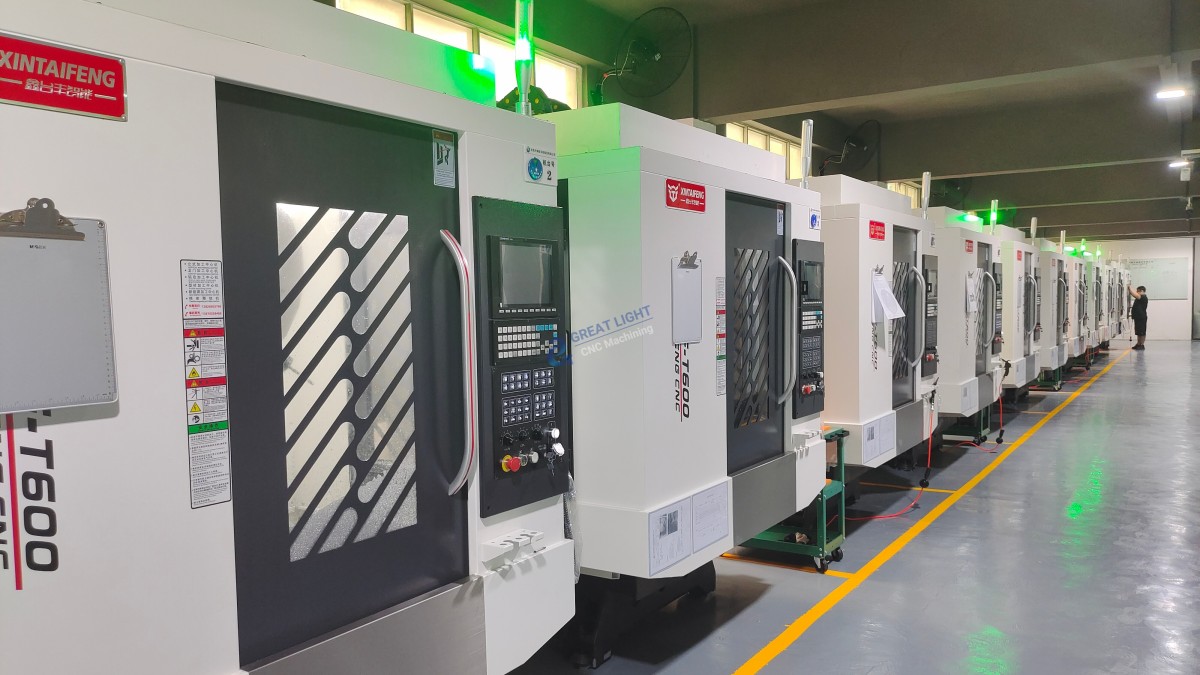
Yes. Their five-axis machines support parts up to 4000mm in length, making them suitable for automotive frames, aerospace structures, and industrial equipment.
Q6: What materials can GreatLight machine?
They work with metals (aluminum, stainless steel, titanium, tool steel) and plastics (ABS, PC, PEEK, nylon). They also offer 3D printing for specialized resins and composites.
Q7: Does GreatLight offer design assistance?
Absolutely. Their engineering team provides DFM (Design for Manufacturing) feedback to optimize parts for cost, strength, and machinability.
Q8: What certifications does GreatLight hold?
GreatLight is certified to ISO 9001:2015 (quality), ISO 13485 (medical hardware), and IATF 16949 (automotive), ensuring compliance with global industry standards.
By addressing these questions, GreatLight demonstrates its commitment to transparency and client education, reinforcing its position as a trusted partner in precision manufacturing.



















