US Army: Use 3D printing technology to build ground vehicles to improve the army’s combat readiness!
The US military has always been at the forefront of 3D printing innovation, often choosing additive manufacturing technology to produce related equipment including bridges, weapons and drones. The US military is a strong supporter of 3D printing in various industries. In April 2022, according to Mohou.com, a project related to additive manufacturing was promoted by […]
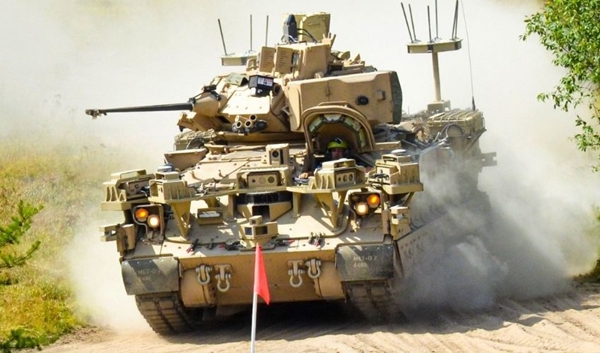
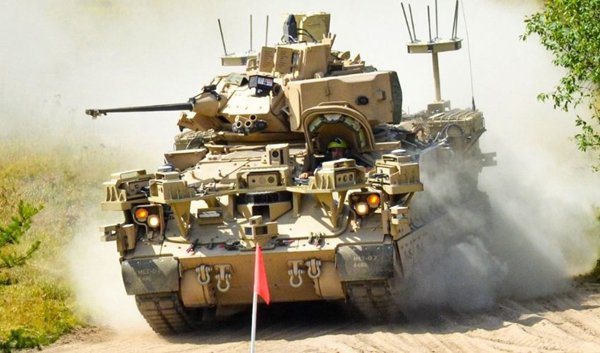
The US military has always been at the forefront of 3D printing innovation, often choosing additive manufacturing technology to produce related equipment including bridges, weapons and drones. The US military is a strong supporter of 3D printing in various industries. In April 2022, according to Mohou.com, a project related to additive manufacturing was promoted by the Army Tank Automobile and Weaponry Command (TACOM) and received support from SAE Government Technology and the DEVCOM Ground Vehicle Systems Center (GVSC) of the American army. , particularly the US military’s use of 3D printing technology to manufacture military ground vehicles.
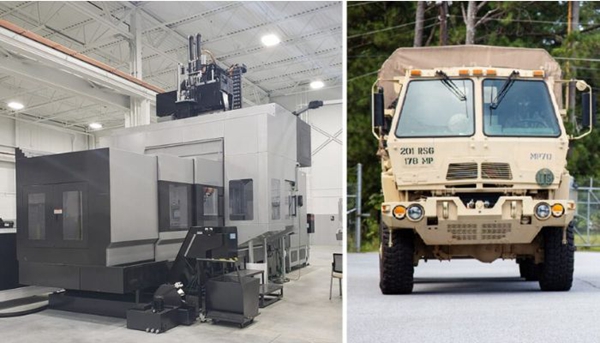
Three U.S. government departments will host a ribbon-cutting reception for the Advanced Manufacturing Industrialization Center (AMCC) on April 6. The center contains a tool capable of manufacturing seamless hulls (Jointless Hull subsection tool), which is a hybrid metal additive manufacturing machine, used in engineering research and production to support jointless hull machines. large scale, can manufacture large metal components for Humvees, tanks and other ground vehicles. The opening of the new center is a testament to the initial success of Project Seamless Hull, an initiative within the U.S. Army that aims to use its additive manufacturing technology to create hull-scale tools for combat vehicles.
“Building a future military capable of continuing to respond to 21st century threats requires the development and deployment of next-generation technologies that give military formations a clear advantage over similar competitors,” said Brandon Pender, deputy director of GVSC Materials , which GVSC represents. the Army’s commitment to advanced manufacturing. . progress.”
US military 3D prints vehicle parts
△Hybrid metal additive manufacturing machine in Rock Island, Illinois (left)
With 3D printing, parts measuring up to 3 cubic feet can be produced on demand, significantly reducing construction time and costs. In the past, the military had to order parts from manufacturers and wait for them to be delivered. This process can take weeks or even months, which is not optimistic for urgent military operations. Since many military vehicles are old and no longer in production, it is difficult to obtain replacement parts. 3D printing allows the military to make the parts they need without relying on a manufacturer, and these in-house manufactured parts reduce wait times from months to days.
“We plan to use the center’s technology to more efficiently manufacture parts, reduce weight, lower costs and improve long-term sustainment, all to increase the Army’s readiness,” explained Brandon Pender , deputy director of the materials division of GVSC.
Considering the above advantages, additive manufacturing is widely used in the military field. Not only the US Army, but also the Royal Netherlands Army uses 3D printing to produce spare parts for its military vehicles. By manufacturing parts in-house rather than outsourcing them to traditional manufacturers, the Dutch Army no longer depends on outside manufacturers and increases its independent manufacturing capabilities while saving time and money. Although 3D printing in the military field is still in its infancy, its application prospects are exciting and it has completely changed the way spare parts are produced and supplied.
Source: Antarctic Bear
Daguang focuses on providing solutions such as precision CNC machining services (3-axis, 4-axis, 5-axis machining), CNC milling, 3D printing and rapid prototyping services.
CNC Experts
JinShui Chen
Rapid Prototyping & Rapid Manufacturing Expert
Specialize in CNC machining, 3D printing, urethane casting, rapid tooling, injection molding, metal casting, sheet metal and extrusion
Welcome to GreatLight Metal,Maximum Processing Size 4,000 mm
Precision Machining CNC Quote Online
Click here to upload or drag and drop your model to the canvas.
The model is too large and has been resized to fit in the printer's build tray. [Hide]
The model is too large to fit in the printer's build tray. [Hide]
The model is too large, a fitting printer is selected. [Hide]
The model is too small and has been upscaled. [Hide]
Warning: The selected printer can not print in full color [Hide]
Warning: obj models with multiple meshes are not yet supported [Hide]
Warning: Unsupported DXF entity [Hide]
Warning: could not arrange models [Hide]
[Hide]
File Unit:
Scale:
%
L × W × H:
X: ×Y:× Z:cm
Rotation:
X:° Y:° Z:°
Dark is higher Bright is higher Height (mm)
Model Stats:
Material Volume:
cm3
Support Material Volume:
cm3
Box Volume:
cm3
Surface Area:
cm2
Model Weight:
g
Model Dimensions:
x x cm
Number of Polygons:
Number of Shapes:
Total Path:
cm
Print Time
(hh:mm:ss):
⚡ Instant Quote for Precision Manufacturing
Submit your design files (STEP/IGES/DWG) and receive a competitive quote within 1 hour, backed by ISO 9001-certified quality assurance.
📋 How It Works
Upload & SpecifyShare your 3D model and select materials (Aluminum/Stainless Steel/Titanium/PEEK), tolerances (±0.002mm), and surface treatments.
AI-Powered AnalysisOur system calculates optimal machining strategy and cost based on 10+ years of automotive/aerospace data.
Review & ConfirmGet a detailed breakdown including: - Volume pricing tiers (1-10,000+ units) - Lead time (3-7 days standard) - DFM feedback for cost optimization
Unit Price:
The world's first CNC machining center that dares to provide free samples!
Free for first product valued at less than $200. (Background check required)
When you’re ready to start your next project, simply upload your 3D CAD design files, and our engineers will get back to you with a quote as soon as possible.
Custom Auto Spare Parts 5 Axis CNC Machining Engine Parts
CNC Engine Block Machine Price
Aerospace CNC Machining Prototype Service Savannah
CNC Machining Prototype Service Georgia
Scroll to Top
ISO 9001 Certificate
ISO 9001 is defined as the internationally recognized standard for Quality Management Systems (QMS). It is by far the most mature quality framework in the world. More than 1 million certificates were issued to organizations in 178 countries. ISO 9001 sets standards not only for the quality management system, but also for the overall management system. It helps organizations achieve success by improving customer satisfaction, employee motivation, and continuous improvement. * The ISO certificate is issued in the name of FS.com LIMITED and applied to all the products sold on FS website.
IATF 16949 certificate
IATF 16949 is an internationally recognized Quality Management System (QMS) standard specifically for the automotive industry and engine hardware parts production quality management system certification. It is based on ISO 9001 and adds specific requirements related to the production and service of automotive and engine hardware parts. Its goal is to improve quality, streamline processes, and reduce variation and waste in the automotive and engine hardware parts supply chain.
ISO 27001 certificate
ISO/IEC 27001 is an international standard for managing and processing information security. This standard is jointly developed by the International Organization for Standardization (ISO) and the International Electrotechnical Commission (IEC). It sets out requirements for establishing, implementing, maintaining, and continually improving an information security management system (ISMS). Ensuring the confidentiality, integrity, and availability of organizational information assets, obtaining an ISO 27001 certificate means that the enterprise has passed the audit conducted by a certification body, proving that its information security management system has met the requirements of the international standard.
ISO 13485 certificate
ISO 13485 is an internationally recognized standard for Quality Management Systems (QMS) specifically tailored for the medical device industry. It outlines the requirements for organizations involved in the design, development, production, installation, and servicing of medical devices, ensuring they consistently meet regulatory requirements and customer needs. Essentially, it's a framework for medical device companies to build and maintain robust QMS processes, ultimately enhancing patient safety and device quality.
Get The Best Price
Send drawings and detailed requirements via
Email:[email protected] Or Fill Out The Contact Form Below: