
For clients in the precision parts and customization field, the mention of CNC machining typically conjures images of aerospace-grade aluminum, medical-grade titanium, or robust engineering plastics. However, the frontier of advanced manufacturing extends powerfully into another realm: wood. The evolution of 5 Axis CNC Wood Machining Services{:target=”_blank”} represents a paradigm shift, merging the artisanal soul of woodworking with the uncompromising precision and repeatability of digital fabrication. This convergence is unlocking unprecedented possibilities for designers, architects, and engineers seeking to push the boundaries of form, function, and aesthetic expression in wood.
Why 5-Axis CNC is a Game-Changer for Wood
While 3-axis CNC routers are excellent for 2.5D carving and profiling, 5-axis technology removes the fundamental constraints of traditional woodworking. The two additional rotational axes (typically A and B or C) allow the cutting tool to approach the workpiece from virtually any angle in a single setup.
This capability translates into tangible, transformative benefits:
Complex Geometries Made Simple: Creating double-curved surfaces, intricate undercuts, deeply sculpted textures, or interlocking joints that would be impossible with manual tools or lower-axis machines becomes not only possible but efficient.
Unmatched Precision and Repeatability: Every cut is dictated by a digital file, eliminating human error and ensuring that every piece in a batch—whether a run of 10 or 1000—is dimensionally identical. This is crucial for architectural components, high-end furniture production, and artistic installations.
Dramatically Reduced Lead Times: What might take a master craftsman weeks to carve can be machined in a matter of hours. The 5-axis machine accomplishes in one setup what would require multiple re-fixturings and tool changes on a 3-axis machine, slashing production time.
Minimized Waste and Optimal Material Use: Advanced CAM (Computer-Aided Manufacturing) software can nest parts in three dimensions within a raw billet of wood, maximizing yield from expensive exotic hardwoods or large slabs.
Seamless Integration with Digital Workflows: From a designer’s 3D model (created in software like Rhino, SolidWorks, or Fusion 360) to the final finished part, the process is entirely digital. This facilitates rapid prototyping, design iteration, and precise replication.
The Hidden Complexities and Client Pain Points in Precision Wood Machining
Transitioning from metal to wood, or scaling up wood-based projects, introduces a unique set of challenges that not all machine shops are equipped to handle. Understanding these pain points is key to selecting the right partner.
The “Material Anisotropy” Challenge: Unlike isotropic metals, wood is a living, fibrous, and hygroscopic material. Grain direction, hardness variations, moisture content, and internal stresses can cause tool deflection, tear-out, or unexpected dimensional changes post-machining. A proficient supplier must have deep material science knowledge to select appropriate tools, speeds, feeds, and machining strategies for each wood species.
Precision vs. the Organic Nature of Wood: Clients often seek the surface finish and geometric precision of metal parts but in wood. Achieving a flawless, sanding-ready surface on a complex 5-axis contour requires not just the right machine, but also expertise in toolpath optimization, step-over calculation, and the use of specialized ball-nose and finishing tools.
Finishing is Half the Battle: The machining is only the first step. A truly professional service understands that the sanding, sealing, staining, and finishing of a complex 5-axis part is an art in itself. Inadequate post-processing can ruin a perfectly machined piece. The ideal partner offers or expertly manages this critical phase.
Software and Programming Expertise: Effective 5-axis wood machining is heavily dependent on high-level CAM programming. The programmer must understand how to generate efficient, safe toolpaths that respect the wood’s structure while minimizing cycle time. This is a specialized skill set distinct from metal machining.
Scalability and Consistency: Moving from a one-off prototype to a small batch run exposes inconsistencies in material sourcing, fixturing, and tool wear management. Clients need a partner with rigorous process controls to ensure every piece in an order meets the same high standard.
How a Professional 5-Axis CNC Machining Partner Addresses These Challenges
A manufacturer like GreatLight Metal approaches 5 Axis CNC Wood Machining Services{:target=”_blank”} with the same systematic engineering rigor applied to metal, while respecting the unique qualities of wood.
1. Technical Hard Power Adapted for Wood:
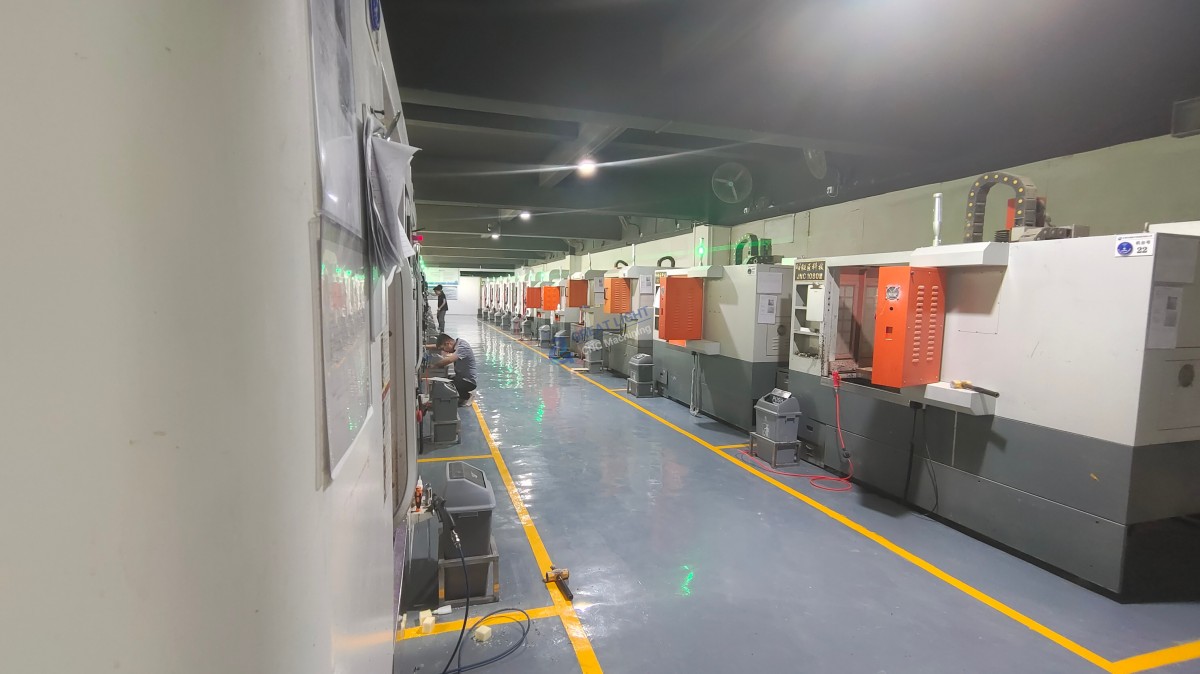
Precision 5-Axis CNC Centers: Utilizing machines with high rigidity and dynamic accuracy to execute complex 3D toolpaths without vibration or deflection, which is critical for fine details in hardwoods.
Specialized Tooling Library: Maintaining a comprehensive inventory of diamond-coated, compression, and up-cut spiral router bits designed specifically for clean cutting in various woods, composites, and laminates.
In-House Dust Extraction and Climate Control: Proper dust management is a safety and precision imperative. Climate-controlled environments help stabilize wood moisture content before and during machining.
2. Process Soft Power and Deep Expertise:
Material Advisory: Guiding clients on the most suitable wood species for their application—balancing aesthetics, machinability, structural integrity, and budget. Knowledge extends to engineered woods, dense laminates, and wood-composite materials.
CAM Strategy Optimization: Programmers don’t just write code; they craft machining strategies. This includes selecting optimal tool orientation, step-down and step-over values, and roughing/finishing sequences to achieve the desired surface quality while protecting the material.
Integrated Post-Processing Guidance: Providing clear recommendations or managed services for sanding, filling, and finishing based on the final use-case (interior vs. exterior, tactile requirements, etc.).
3. System Assurance Through Certification Mindset:
While wood machining may not always fall under the strictest aerospace protocols, the quality management philosophy behind certifications like ISO 9001:2015 is invaluable. It ensures:
Documented Process Control: Every step, from file verification and material inspection to toolpath simulation and final quality check, is performed systematically.
Traceability: Batch consistency is maintained through controlled processes.
Continuous Improvement: Feedback from each project refines techniques and outcomes for future work.
Applications Transforming Industries
The applications for high-precision 5-axis wood machining are vast and growing:
Architectural Millwork: Complex custom moldings, non-repetitive facade panels, parametric wall cladding, and breathtaking staircase components.
High-End Furniture & Joinery: Sculptural chairs, tables with organic legs, intricate inlays, and perfectly fitting complex cabinet assemblies.
Musical Instruments: Precisely machined guitar bodies, violin plates, and wind instrument components where resonance and geometry are critically linked.
Consumer Electronics & Luxury Goods: Wooden speaker enclosures for high-fidelity audio, wearable tech accents, and luxury packaging with precise fits.
Art and Sculpture: Enabling artists to realize digital sculptures in wood with a level of detail previously unattainable.
Conclusion: The Strategic Advantage of Precision in Wood
Choosing a partner for 5 Axis CNC Wood Machining Services{:target=”_blank”} is not merely about finding a shop with a capable machine. It is about selecting a collaborator with the engineering discipline to manage wood’s variability, the artistic sensibility to understand the desired outcome, and the production rigor to deliver consistent quality. It bridges the gap between the timeless beauty of a natural material and the infinite possibilities of digital design.
For innovators looking to create the next iconic wooden product, component, or installation, the capability to precisely and repeatedly machine complex forms is no longer a luxury—it is a necessity. This is where the intersection of advanced manufacturing technology and material mastery creates true competitive advantage, turning visionary designs into tangible, exquisite reality. To explore how these capabilities are applied across a broader spectrum of advanced manufacturing, follow our ongoing work and industry insights on GreatLight Metal’s professional network{:target=”_blank”}.



















