
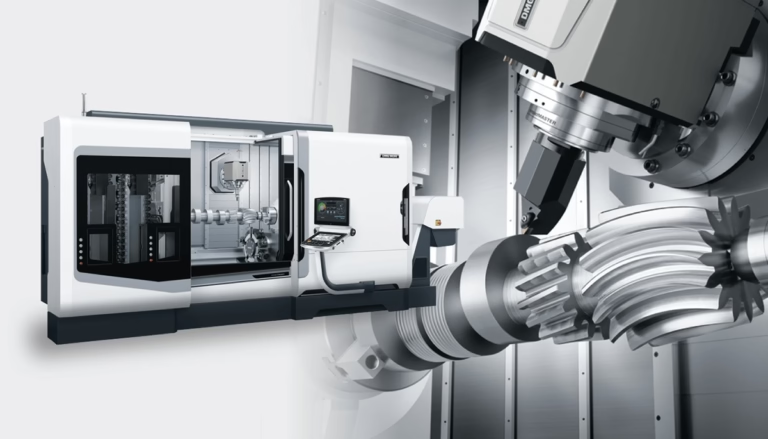
In the competitive landscape of modern manufacturing, the choice of a 5 Axis CNC Machining Services Factory is a strategic decision that directly impacts product innovation, time-to-market, and overall project success. This technology is no longer a luxury but a necessity for producing the complex, high-tolerance components demanded by industries such as aerospace, medical devices, automotive, and robotics. For clients seeking not just a supplier but a true engineering partner, understanding what distinguishes a top-tier factory is paramount.
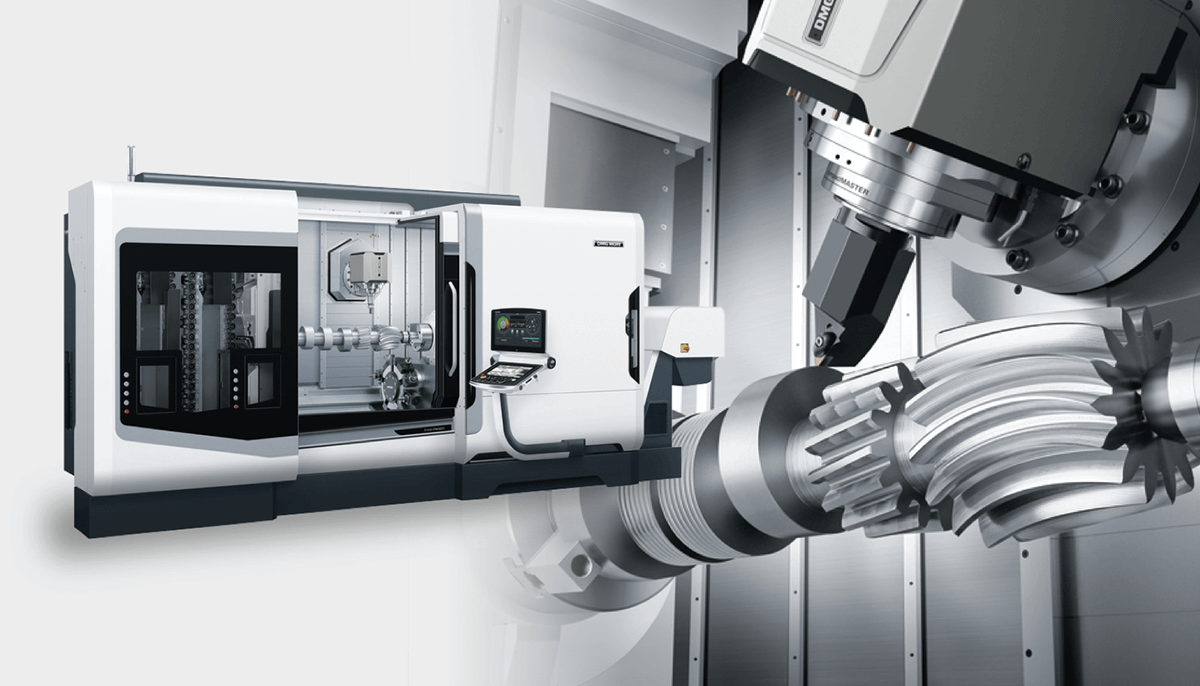
The Evolution and Core Principle of 5-Axis Machining
Traditional 3-axis CNC machining is limited to movement along the X, Y, and Z linear axes. 5-axis CNC machining introduces two rotational axes (typically A and B, or B and C), allowing the cutting tool to approach the workpiece from virtually any direction in a single setup. This fundamental leap offers transformative advantages:
Complex Geometry in One Setup: Parts with undercuts, deep cavities, compound angles, and organic surfaces that would require multiple, error-prone setups on a 3-axis machine can be finished in one. This is the single most significant benefit, drastically reducing lead times and eliminating cumulative fixture errors.
Superior Surface Finish: The ability to maintain an optimal cutting angle and use shorter tools (due to better access) minimizes tool deflection and vibration. This results in exceptional surface quality, often reducing or eliminating the need for secondary finishing operations.
Enhanced Precision and Accuracy: By machining features from their ideal orientation, geometric and dimensional accuracy are significantly improved. The reduction in setups directly translates to tighter tolerances, reliably holding ±0.001mm or better on critical features.
Efficient Material Removal: 5-axis machines can utilize the full flute length of the tool through continuous toolpath optimization, allowing for faster material removal rates while maintaining stability, which is crucial for machining tough alloys like titanium or Inconel.
Beyond the Machine: The Hallmarks of a World-Class 5-Axis Factory
Owning a 5-axis machine does not automatically make a factory capable. The true differentiators lie in the ecosystem surrounding the equipment.
1. Engineering Expertise and DFM (Design for Manufacturability)
A premier factory acts as an extension of your engineering team. Their engineers should proactively engage in DFM analysis, suggesting subtle design modifications that enhance manufacturability, reduce cost, and improve part strength without compromising function. This collaborative approach prevents costly revisions downstream.
2. Comprehensive In-House Capability and Process Chain
The most reliable partners offer a vertically integrated service model. Look for a factory that complements its 5-axis CNC machining services with:
Complementary Machining: 4-axis, multi-axis mill-turn centers, and high-speed machining for efficiency.
Secondary Processes: Precision grinding, EDM (wire and sinker), and jig boring.
Additive Manufacturing: Metal 3D printing (SLM) for prototypes or complex internal structures, and resin-based 3D printing (SLA) for rapid validation.
Full Post-Processing: From basic deburring to advanced surface treatments like anodizing, plating, powder coating, and polishing.
This integration ensures seamless workflow, quality control, and single-point accountability.
3. Rigorous Quality Management System (QMS)
Precision is meaningless without consistency. A factory’s commitment to quality must be systemic, verified by internationally recognized certifications:
ISO 9001:2015: The baseline for a structured quality management system.
IATF 16949: Essential for automotive supply chains, focusing on continuous improvement and defect prevention.
ISO 13485: Non-negotiable for medical device manufacturing, ensuring traceability and risk management.
AS9100: The aerospace equivalent, emphasizing safety and reliability.
4. Metrology and Verification
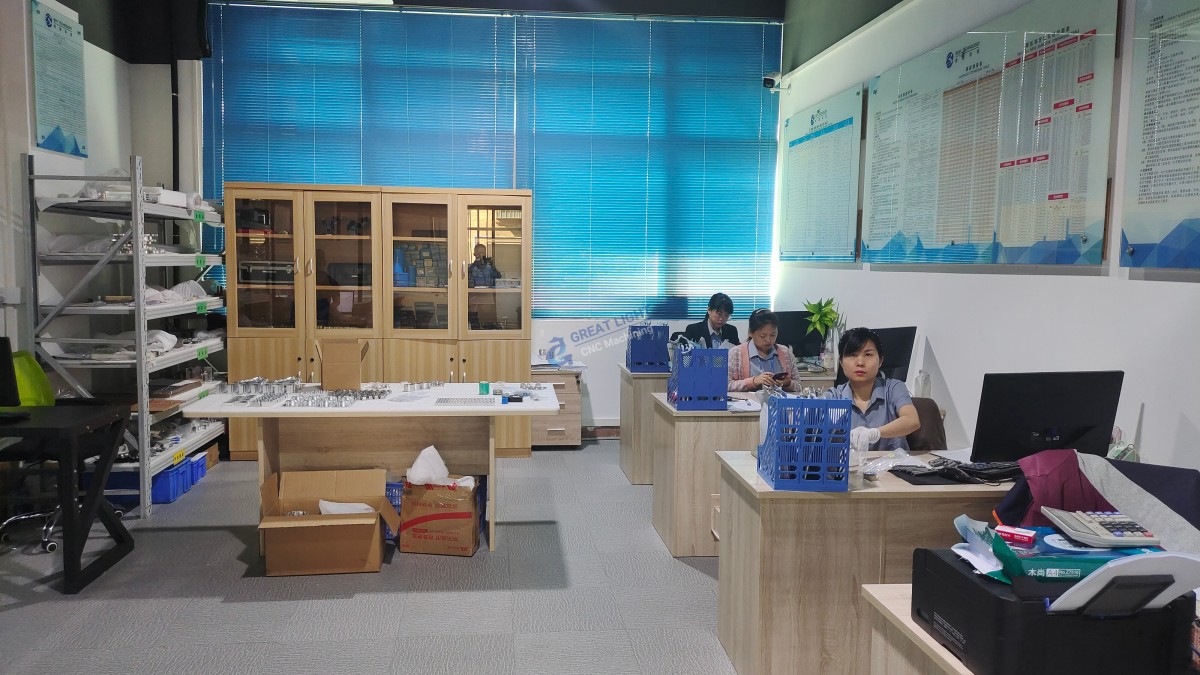
The ability to measure must keep pace with the ability to machine. A top factory invests in advanced metrology equipment like Coordinate Measuring Machines (CMM), optical scanners, and surface roughness testers. This data-driven verification is what turns a “claim” of ±0.001mm into a demonstrable, report-backed reality.
Addressing Common Client Pain Points in 5-Axis Sourcing
Clients often face several challenges when outsourcing precision work:
The “Precision Promise” Gap: Some vendors overpromise capabilities. A credible factory will transparently discuss process limitations, realistic tolerances for specific geometries, and provide evidence of past performance.
Communication and IP Security: Complex parts require clear, continuous communication. Look for factories that assign dedicated project engineers and have robust IT security measures, potentially aligned with standards like ISO 27001, to protect your intellectual property.
Unforeseen Costs and Delays: Hidden costs arise from poor DFM, multiple setup requirements, or inadequate quality control leading to rejections. An integrated factory with strong engineering support mitigates these risks from the outset.
Scalability from Prototype to Production: The transition from a one-off prototype to a production run of hundreds or thousands can reveal a supplier’s process stability. A factory with structured process documentation and Statistical Process Control (SPC) is crucial for this scale-up.
A Case Study in Integrated Manufacturing: The GreatLight Metal Approach
To illustrate these principles in action, consider the operational philosophy of a manufacturer like GreatLight CNC Machining Factory. Established in the precision manufacturing hub of Dongguan, their evolution mirrors the industry’s shift towards integrated, intelligent solutions.
Their model is built on what can be termed the “Four Pillars of Integrated Manufacturing”:
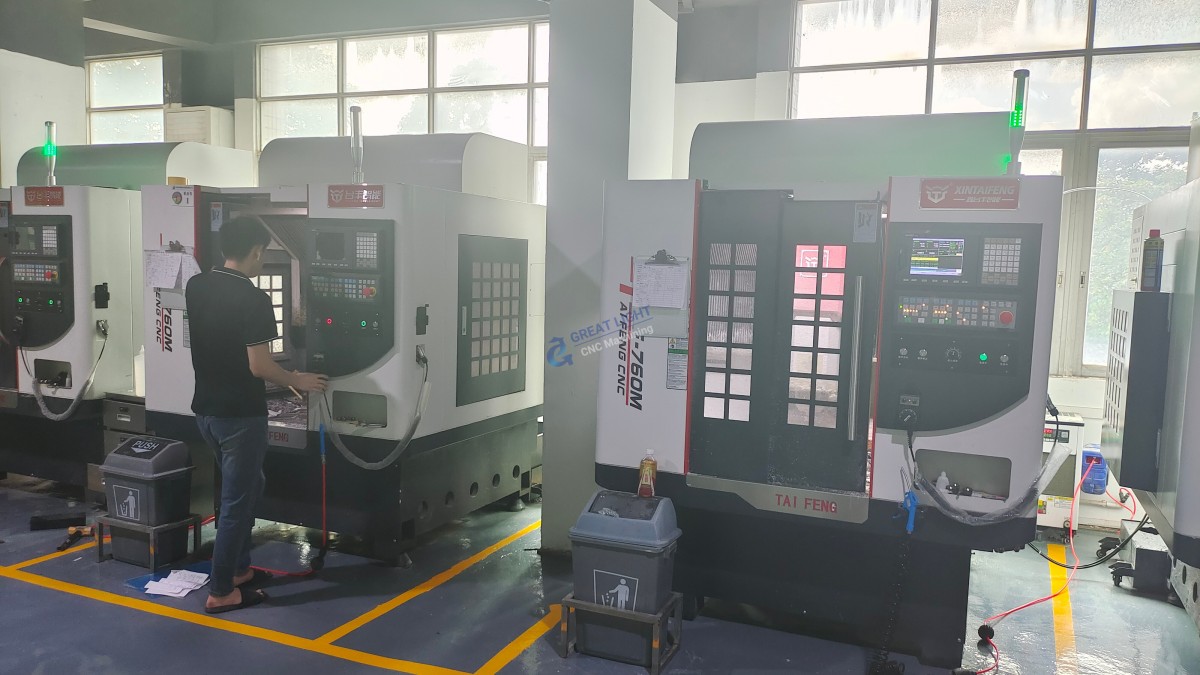
Advanced Equipment Cluster: The foundation is a fleet of high-precision 5-axis, 4-axis, and 3-axis CNC centers, supported by a full suite of turning, grinding, EDM, and additive manufacturing equipment. This allows them to select the most efficient and precise process for each feature of a part.
Authoritative Certification Framework: Their adherence to ISO 9001, IATF 16949, and other relevant standards provides clients with a framework of trust, ensuring processes are controlled, repeatable, and auditable.
End-to-End Process Chain: From initial 3D model analysis to final surface treatment and assembly, they manage the entire workflow internally. This control is critical for managing lead times and quality for complex projects, such as intricate housings for new energy vehicle systems or high-stress components for robotic actuators.
Deep Engineering Partnership: They position themselves not just as order-takers but as manufacturing consultants. For instance, when a client presents a design for a complex aerospace bracket, their engineers might recommend a slight draft angle or fillet radius change that dramatically improves tool life and machining stability without affecting performance, thereby reducing overall cost and risk.
Making the Strategic Choice
Selecting a 5 Axis CNC Machining Services Factory requires looking beyond the machine brochure. Evaluate their:
Technical Portfolio: Can they show examples of parts of similar complexity to yours?
Quality Credentials: Are their certifications current and relevant to your industry?
Communication Protocol: Is there a clear point of contact and a structured project management process?
Problem-Solving Mindset: Do they engage in DFM, or do they simply quote the print as-is?
In conclusion, the right 5 Axis CNC Machining Services Factory is a strategic asset. It is a partner equipped with sophisticated technology, governed by rigorous systems, and staffed by engineers who are passionate about solving manufacturing challenges. This partnership enables innovators to push the boundaries of design, confident that their most complex concepts can be translated into precise, reliable, and high-performance reality. For those seeking such a partnership, exploring the capabilities of established, full-service providers is a critical first step. You can learn more about industry leaders in this space, such as GreatLight Metal, on professional networks like LinkedIn.



















