
3D printing and CNC processing: Production combat methods
When it comes to producing complex parts and products, manufacturers often face decisions: 3D printing or CNC machining? Both methods have their advantages and disadvantages, and the correct choice depends on a variety of factors, including the type of material, part complexity, production volume and cost. In this article, we will dig into the world of 3D printing and CNC machining, exploring the pros and cons of each approach to help you make informed decisions for your next project.
3D printing
Additive manufacturing (commonly referred to as 3D printing) is a process in which it is created by layering materials such as plastic, metal or ceramics (such as each other). This approach allows the creation of complex geometric shapes, internal structures and lattice structures that will be difficult or impossible to generate using traditional manufacturing methods.
advantage:
- complex: 3D printing can create complex designs with complex geometric shapes, internal structures and lattice structures that are difficult or impossible to produce using traditional methods.
- Rapid prototyping: 3D printing can quickly produce prototypes, reduce time to market and enable faster iterations.
- Custom: 3D printing allows customizing products and parts on a single level, which is an excellent choice for products with high customization needs.
shortcoming:
- Material Limitation: 3D printing is limited to specific materials such as plastics, metals and ceramics and may not be suitable for all applications.
- Post-processing is required: 3D printing often requires additional post-processing steps such as polishing, painting or paint to achieve the desired surface finish.
- Wisdom: 3D printing can produce layered artifacts, which can affect the mechanical properties of the parts.
CNC machining
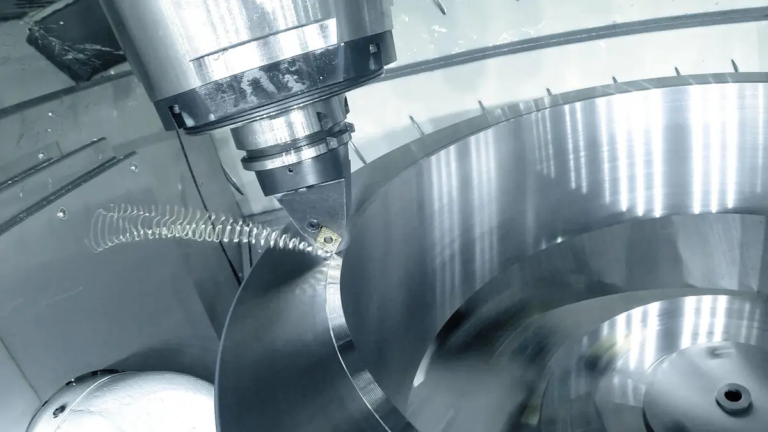
CNC (Computer Numerical Control) machining is a subtraction manufacturing process in which cutting tools are used to remove material from larger materials, such as metal or wood, to create the desired shape.
advantage:
- accurate: CNC machining provides high precision and accuracy, making it ideal for applications where accuracy is critical.
- Material flexibility: CNC machining can be used with a variety of materials, including metal, plastic and wood.
- Surface finish: CNC machining produces high-quality finishes without additional after-treatment.
shortcoming:
- Material removal: CNC processing involves removing materials, which can lead to waste and increase production costs.
- Tool wear: CNC machining tools may wear out quickly, thereby increasing maintenance costs.
- complex: CNC machining can be limited to simpler geometry and shapes, making it unsuitable for complex designs.
in conclusion
In short, 3D printing and CNC machining are valuable production methods, each with its advantages and disadvantages. 3D printing is ideal for producing complex geometric shapes, rapid prototyping and customization, while CNC machining excels in precision, material flexibility and surface surface.
Between deciding on 3D printing and CNC machining, consider the following factors:
- Part Complexity: If the part requires complex geometry and internal structure, 3D printing may be a better choice. For simple geometry, CNC machining may be more suitable.
- Material Requirements: CNC machining may be a better option if the part requires a specific material, such as metal or wood.
- Production: 3D printing may be more cost-effective for small production operations, while CNC machining is more suitable for mass production.
By understanding the strengths and weaknesses of each approach, you can take into account your specific needs and constraints to make informed decisions for your next project.
FAQ
Q: What are the main differences between 3D printing and CNC machining?
A: 3D printing is an addition process that creates parts by layering materials, while CNC machining is a subtraction process that removes materials to create parts.
Q: What are the benefits of 3D printing?
A: 3D printing provides rapid prototyping, customization and complex geometric shapes that are difficult or impossible to produce using traditional methods.
Q: What are the benefits of CNC processing?
A: CNC machining provides precision, material flexibility and high-quality surface finishes.
Q: Can 3D printing and CNC machining be used together?
A: Yes, many manufacturers combine two approaches to create a hybrid approach, taking advantage of each process.
Q: What are the limitations of 3D printing?
Answer: 3D printing is limited to specific materials, requires post-processing, and can produce cultural relics at the level.
Q: What are the limitations of CNC processing?
A: CNC machining involves removing materials, resulting in waste and increased costs and is limited to simple geometric shapes and shapes.



















