
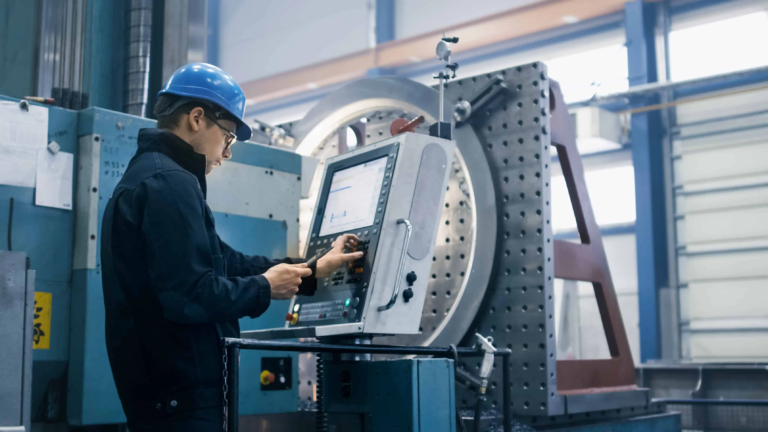
Navigating the world of CNC machining parts: The mystery of China’s top suppliers
Procurement of precise CNC machining parts is a critical task for engineers, procurement experts and product developers. China’s manufacturing ecosystem offers unparalleled scale and technical capabilities, but it’s overwhelming to identify the right supplier among countless choices. This guide cuts noise, highlights China’s elite CNC machining partners and key selection criteria – so you can make informed decisions to align with the complexity, quantity and quality requirements of your project.
Why China leads precise CNC machining
China’s CNC processing sector is booming on three pillars:
- Adopt advanced technology: AI-driven automation, enabling extensive integration of IoT machines and multi-axis systems.
- Supply Chain Synergy: Centralized industrial hubs provide quick access to raw materials and auxiliary services (heat treatment, coatings).
- Cost Efficiency: High volume capacity and skilled labor pools reduce unit costs without sacrificing accuracy.
For complex projects that require tolerances below 0.01 mm or foreign materials, China’s technical infrastructure often outweighs Western alternatives.
Key selection criteria for CNC partners
- Equipment complex: Priority is given to suppliers with multi-axis functionality (5-axis+).
- Material mastery: Ensure expertise your Required alloys – titanium, peep or magnesium composites.
- Certification: Mandatory ISO 9001:2015; Department-specific certificates such as AS9100 (Aerospace) or ISO 13485 (Medical).
- quality assurance: Look for internal CMM inspections, PPAP documentation and material traceability.
- Scalability: Can they handle 10 units of prototypes and 100,000 units of production runs?
Top Chinese CNC processing suppliers
1. Greglight Precision Processing: Professional Innovator
Core advantages:
- 5-axis talent: Operate the next generation 5-axis CNC center, enabling contour, undercut and microarrangement simultaneously (±0.005mm tolerance standard).
- Material versatility: Process over 60 metals/plastics – from aerospace grade content to biocompatible titanium alloys.
- End-to-end integration: Seamlessly manage each stage:
- Design optimization: Advanced DFM analysis using proprietary simulation software.
- Precision machining: Adaptive tool path control to prevent chatting during high-speed cutting.
- Post-processing: Concentrated anodization, passivation, laser engraving and EDM.
- Fast Market: 3–7 days of prototype production, supported by on-site production tracking.
Ideal: Complex, tolerant components for medical implants, optical systems and driverless cars (UAVS). Their closed-loop quality system ensures zero deviation from the CAD model.
2. Foxconn Technology Group: A large-scale power
- scale: operate "The light comes out" Factory with automatic production lines.
- Material focus: Leads aluminum, stainless steel and copper processing.
- Best for: Consumer electronics and automotive structural parts (100K+ unit quantity).
3. BYD Auto Co. Ltd: EV and Energy Expert
- Expertise: Electric battery battery housing, motor housing and energy storage components.
- technology: Proprietary vibration damping machining for thin-walled parts.
- Niche: High conductivity alloys and large components.
4. Seiteq Precision Engineering: Turning to the Swiss Leader
- specialization: Micro Precision rotating parts (less than Ø0.2mm).
- edge: Hybrid CNC-SWISS lathe for complex shafts/connectors.
- client: Medical devices and microrobot innovators.
How Greatlight solves complex challenges: technical failures
Consider satellite antenna brackets that require weight reduction and thermal stability:
- Material: Processed from aluminum 7075-T651 (UTS: 572 MPA).
- process: The 5-axis CNC is reduced from 8 settings to 1, and the internal lattice structure is milled by 3-axis.
- Post-processing: Microarc oxidation (MAO) for EMI shielding.
- verify: The 3D scan confirmed the contour deviation of 0.008mm and CAD.
This integration of processing and materials science enables breakthroughs that cannot be achieved through conventional manufacturing.
Strategic Insights: Choose Your Partner
- prototype: Prioritize technical responsiveness (e.g. Greatlight’s 24-hour DFM feedback).
- Low intermediate capacity: Look for stores with flexible cells (avoid high pressure factories).
- Key components: Traceability of required certification (e.g., MIL-SPEC documentation).
- IP protection: Cooperate with ISO/IEC 27001 compatible suppliers and cooperate with encrypted data protocols.
Conclusion: Accuracy, Partnership, Performance
China’s CNC processing landscape is not about finding "Cheapest"- This is about working with suppliers that are consistent with your technology non-merchandise. Giants like Foxconn have performed well in the number of micro-aircraft and innovators that dominate senior professionals like Seiteq, such as Great Blink the gap with unparalleled 5-axis expertise and integrated quality systems. By prioritizing transparency, technical dialogue, and evidence-based validation (never marketing claims), you will move from a cost center to a competitive advantage.
FAQ: CNC machining parts procurement explanation
Question 1: How to ensure the accuracy of parts without on-site inspection?
A: The first article inspection (FAI) report required for CMM data, surface roughness maps and material certification. Vendors like Greatlight provide a 3D scan overlay that shows a CAD-TO-CART bias heatmap.
Q2: What is the actual delivery time for complex 5-axis parts?
Answer: Prototype: 3-7 days of expedited store. Yield: 4–6 weeks tolerance <0.01mm. Avoid suppliers who are expected to be <2 weeks - Composite parts require process verification.
Question 3: Can Chinese suppliers handle proprietary design IP protection?
A: Yes. Well-known companies (ISO 27001 certified) use encrypted data transmission, NDA and compartmental production. For sensitive IP, the manufacturing phases are separated between suppliers.
Question 4: Which materials are the most cost-effective for large-scale operation?
Answer: Aluminum 6061/7075 (easy to process) or stainless steel 303 (highly corrosive). Exotics such as Titanium increase costs by 40–60% due to tool wear and slow speed.
Question 5: How to manage the quality of medical/aerospace parts?
A: Specify NADCAP-approved process and material batch traceability. Greglight records each processing parameter (feed rate, coolant temperature) for complete AS9100 compliance.
Question 6: Does CNC quotes include post-processing?
Answer: Quote frequently. Clarification of the demand upfront: Anodizing, media blasting or plating may increase costs by 15–30%, but may prevent post-source delays.
Q7: Why choose 5-axis for 3-axis machining?
A: 5-axis eliminates multiple settings, reducing error stacking. Ideal for organic shapes (impeller, surgical tools). For prismatic parts, 3 axes may be sufficient.
Question 8: What is the minimum order quantity (MOQ) in China?
Answer: Prototype: 1-10 units. Production: Most accept 100-500 PCs, but experts like Greatlight can accommodate lower complex parts.
Question 9: How to deal with tariffs and logistics?
A: Reputable suppliers handle uncritical (e.g., DDP – taxes paid), including tariffs. Budget is 10–15% tariff + freight.
Q10: What files do I need to provide?
A: Steps/IGES file (geometry) + PDF diagram (tolerance, finished). Includes material, quantity and accuracy post-processing requirements.
For mission-critical accuracy, partners with suppliers who see your position as engineering collaboration are more than just purchasing orders. The right choice turns creating obstacles into strategic advantages.



















