

In the high-stakes world of precision manufacturing, steel remains the undisputed workhorse—a material of choice for mission-critical components in humanoid robotics, automotive powertrains, aerospace structures, and heavy machinery. Yet, few materials present a more formidable challenge to CNC machining. Hardness, tendency to work-harden, and thermal sensitivity can quickly turn a profitable production run into a costly scrap heap. The question isn’t whether to use steel, but how to machine it with ruthless efficiency while maintaining micron-level precision.
For nearly a decade and a half, discerning engineers and procurement leaders at GreatLight Metal have transformed this challenge into a competitive advantage. By deploying advanced five-axis centers and rigorous process controls, we’ve systematically identified the friction points—where costs bleed and precision falters—so you can stop them cold. This isn’t academic theory; it’s the distilled wisdom of over 150,000 hours of production life.
If you are a design engineer, a manufacturing manager, or a CTO trying to balance the books, these 7 proven steel CNC machining tips are your roadmap.
Tip 1: Master the Material Microstructure Before You Touch Steel
The single most effective way to slash costs and enhance precision does not happen on the machine floor; it happens in the procurement and material-planning stage. Steel is not a monolith. AISI 1018, 4140, 4340, and 303/304 stainless will behave entirely differently under the cutter.
How GreatLight Metal achieves this: We enforce a strict policy of “Material Fingerprinting.” Before quoting any steel job, our engineering team—based in our Chang’an facility, the “Hardware and Mould Capital”—analyzes the microstructure and hardness of the incoming billet.
Why it matters: Machining a leaded or resulfurized free-machining steel (like 12L14) costs 30-50% less per part than a tougher alloy like 316L or 17-4PH H900, precisely because of tool wear and cycle time differences.
The Precision Hack: For critical applications requiring extreme repeatability below ±0.005mm, specify a pre-heat-treated or annealed stock. A normalized alloy will reduce residual stress relief during cutting, minimizing part distortion.
The Industry Trap: Many competitors speculatively quote steel parts using generic feeds and speeds. This causes hidden scrap. At GreatLight Metal, our material database links every steel grade to a unique machining recipe, guaranteeing cost predictability.
Tip 2: The Geometry Arsenal: Use 5-Axis to “Negotiate” with Tough Steel
Complex steel parts—think engine e-housings, robotic joint components, or aerospace fittings—often feature deep cavities, undercuts, and long-reach features. This is where the true cost of “aggressive machining” reveals itself. A standard 3-axis approach requires eight, ten, or even twelve setups.
The GreatLight Innovation: Our core technological cluster relies on Dema and Beijing Jingdiao high-speed 5-axis machining centers. We don’t just use them; we weaponize their kinematics.
Cost Reduction: By orienting the workpiece and the tool simultaneously, we can approach the part from the optimal tool path vector. This eliminates the need for expensive custom fixtures for compound-angle features. One setup replaces three.
Precision Gain: You inherently eliminate stack-up errors. When a steel part is manually repositioned between setups, even a 0.005mm positioning error adds up. With simultaneous 5-axis interpolation, that error disappears entirely.
Surface Finish: Using a constant chip load (achieved through 5-axis tool tip control) on materials like P20 tool steel or H13 results in a better surface finish (≤ Ra 0.4 μm), reducing secondary handwork and inspection time.
Case in Point: A client’s complex 4140 engine bracket required 5-micron tolerances on a drawn angle. We executed it entirely in one 5-axis cycle, cutting total cost by 22% over a quote from lower-tier shops.
Tip 3: Refrigerated High-Pressure Coolant—Your Unsung Champion
Heat is the true enemy of precision. When you are cutting hardened steel (over 40 HRC), thermal expansion of the workpiece can drift the size of a precision bore by 0.01mm in a single pass. How do you conquer heat without slowing down?
The Root Cause: Standard flood coolant often creates a barrier of steam at the cutting zone, leading to built-up edge (BUE) and accelerating tool wear.
The Solution Applied by GreatLight: We employ customized through-spindle high-pressure coolant systems (typically 1000–1500 PSI) combined with a refrigerated chiller.
Cost Slash: By jetting coolant directly at the tool-chip interface, we break chips effectively. On long stringy materials like stainless 304, this eliminates the “chip nest” problem—broken chips mean no downtime for clearing swarf, and safer operation.
Precision Boost: The chiller keeps the coolant temperature within ±1°C of ambient. This controlled thermal environment stabilizes both the part and the machine tool casting, ensuring the thermal drift of the ball screws remains zero. We can confidently hold ±0.005mm on a 400mm-long steel shaft.
Why Other Suppliers Fail: They treat coolant as a consumable, not a precision tool. GreatLight Metal treats it as a critical controlled process variable.
Tip 4: The “Rough, Rest, Rough, Finish” Strategy (Dare to be Patient)
The biggest cost sink in steel machining is dynamic deflection. A rush to finish a part in one schedule often creates a “tin can” effect—thin-walled sections distort out of tolerance.
How We Engineer Contours: The real secret isn’t speed; it’s decompression.
Step 1 – Bulk Removal: During roughing, we leave 0.5mm–1.0mm of stock on all critical surfaces.
Step 2 – The Rest Cycle: We physically unclamp the part from the vice or fixture (or leave it on the machine while running tool-change). This allows the internal stresses locked in the steel from roughing to relax.
Step 3 – Semi-Finish & Finish: After this thermal and stress relaxation cycle, we re-clamp with minimal force and complete the finishing passes. You will measure the part right on datum.
The GreatLight Advantage: Many shops skip this “stress relief” step to save 15 minutes per part. They end up scrapping the entire batch. By baking this into the process as standard, GreatLight Metal delivers a guaranteed precision outcome, reducing overall cost per good part significantly in the long run.
Tip 5: Intelligent Tool Path “Trochoidal Milling”
For deep slots, thin ribs, and hardened steels (above 50 HRC), a traditional circular interpolation or pocketing strategy is catastrophic. High radial engagement creates instant 1000°F+ heat and tool breakage.
The GreatLight Hack: We rely heavily on trochoidal milling (dynamic milling/trochoidal tool paths). Instead of plunging a 10mm endmill into a 8mm deep slot, we use a 10mm tool to cut a 2mm radial width of cut (radial engagement) at high speeds.
Why It Cuts Costs: This technique drastically reduces the cutting force on the machine spindle and tool. We can push the feed rate to 300-400 IPM without chatter. Cycle times for hardening steel (like Nitronics 60) drop by 30-40% compared to conventional roughing.
Precision Enhancement: The light radial engagement results in excellent chip evacuation and minimal heat buildup inside the part. The steel doesn’t distort. The tool doesn’t break. Every part matches the first part.
Tool Life: Using trochoidal paths, we consistently see 2x–3x tool life on premium carbide endmills, saving on tooling costs that can be hundreds of dollars per job.
A Note on Software: This requires advanced CAM capabilities. GreatLight Metal’s programming team writes custom macros to optimize these tool paths for every steel part, creating a level of efficiency that “stock” code simply can’t match.
Tip 6: In-Process Dimensional Verification, Not Post-Mortem Inspection
The difference between a world-class manufacturer and a standard shop is the ability to save a part in real-time or detect a deviation in microseconds. Relying on a final CMM report after the machine has finished is the death knell of profit on tight-tolerance steel jobs.
Our ISO 9001:2015 and ISO 13485 certified facility employs:
In-Machine Probing (Renishaw): We program the machine to automatically probe critical features mid-cycle. If the heat from previous cuts changed the diameter by -0.005mm, the machine automatically applies a real-time dynamic offset for the finishing pass.
Thermal Compensation Algorithms: Our machines use advanced software to model thermal growth of the Z-axis during long runs on heat-treatable steels. When it detects a 0.002mm expansion from the bearings, it offsets the Z-axis by exactly that amount.
The Benefit for Your Project:
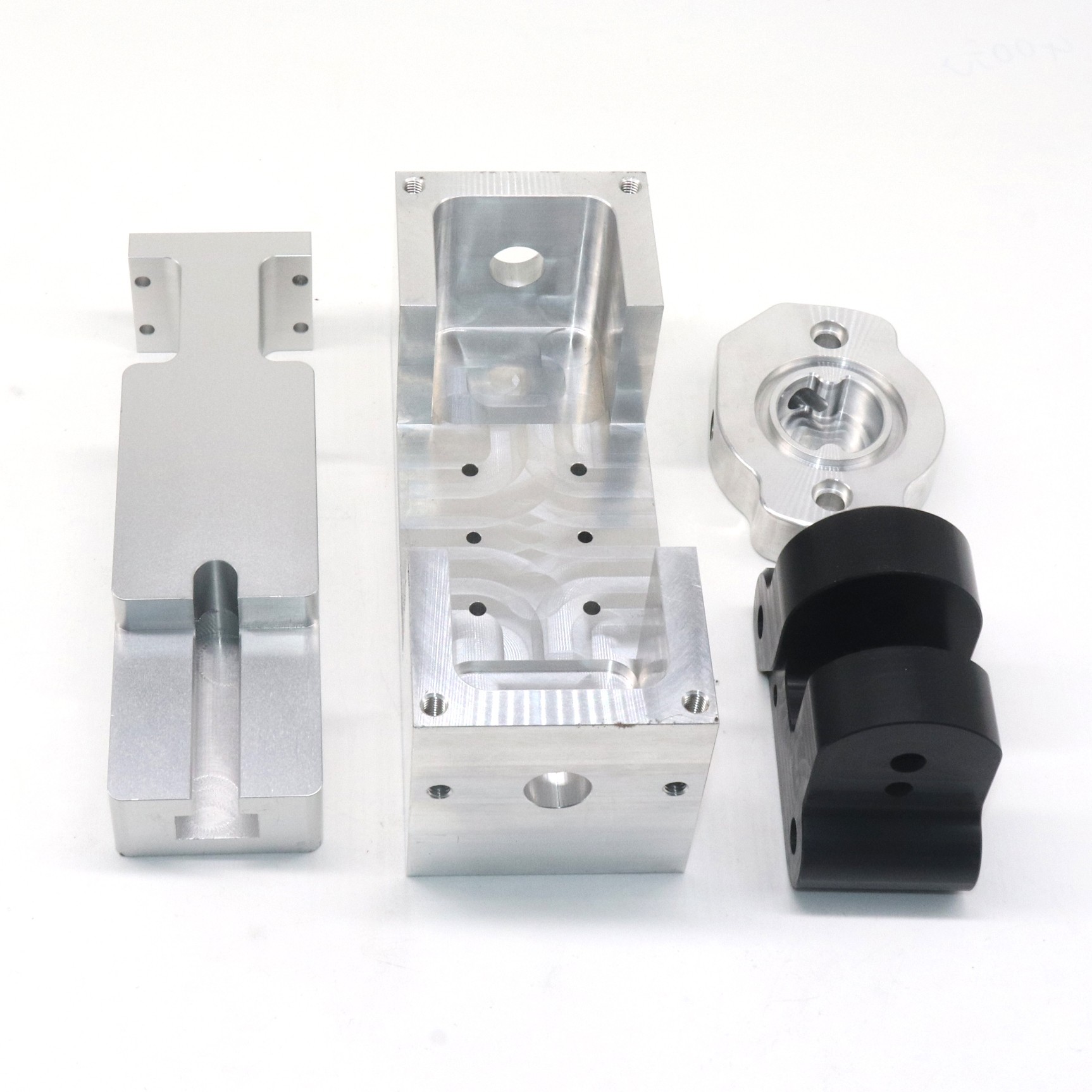
100% Parts First Pass Yield: By correcting errors as they happen, we eliminate the “wait and reject” cycle.
Reduced Manual Inspection Costs: Since the machine is the inspector, we rarely need costly final CMM programs for complex parts.
For a Tier 1 automotive steering component made of 8620, this system allowed us to hold a true position of 0.05mm on a 6-hole pattern, virtually eliminating all CMM time and slashing overall lead time by 20%.
Tip 7: The “Cost of Finish” Analysis – Be Brutal About Surface Post-Processing
Machining steel to a precision geometry is 85% of the battle. The final 15% (surface finishing—passivation, black oxide, hard chrome, electropolishing) is where profits evaporate if not engineered in.
GreatLight’s Transformative Approach:
We aren’t just a CNC job shop; our one-stop post-processing and finishing services include vacuum forming, EDM, and various 3D printing technologies (SLM, SLS, SLA). When you ask us for a steel part, we look at the total system.
The “Unified DATUM” Principle: Instead of finishing the part and sending it to a subcontractor for coating, we design the holding fixtures for post-machining surface treatment. All datums remain consistent.
Tool Path for Surface Finishing: We program the finishing tool path to anticipate the coating thickness. If a customer requires 0.010mm of hard chrome, our finishing pass is programmed 0.010mm undersized. When the part returns from the coating line, it hits the print perfectly the first time. No secondary grinding or lapping needed.
Vendor Management: We have long-standing relationships with top-tier aerospace and medical finish suppliers. Because we manage the entire flow, we can guarantee the final aesthetic as well as the dimension.
The Bottom Line: Most CNC shops quote steel parts by “measuring the metal only.” GreatLight Metal quotes the finished part delivered to your line. This holistic view reduces your hidden cost of poor quality (rework, logistics, rejects).
Why partner with GreatLight Metal for your Steel Machining?
You have options. From giants like Xometry and Fictiv to niche players like Protolabs Network or JLCCNC. What sets GreatLight Metal apart after 13 years and 150+ professionals in Chang’an, is not just the equipment (though our 127 precision devices, including 5-axis packs, are formidable). It’s our systemic mastery of the entire steel value chain.
✅ ISO 9001:2015 & ISO 27001: Quality and data security are non-negotiable—especially for Intellectual Property-sensitive R&D projects.
✅ IATF 16949 Design Ready: Our processes are engineered to the most stringent automotive and engine component QMS standards.
✅ Unrivaled Experience: For over 11 years, we’ve solved the toughest metal parts problems for humanoid robots, aerospace, and medical hardware.
The result? We don’t just deliver steel parts. We deliver cost-effective, repeatable, high-precision solutions with an audited quality management system. We transform your design concept into a production reality with zero surprises.
Conclusion: The True Cost of Steel Precision
Don’t fall for the trap of the “cheapest spindle per unit time.” The real cost of steel machining is the cost of a failed part. By applying these 7 proven Steel CNC Machining Tips to slash costs and boost precision—focusing on material science, advanced 5-axis kinematics, intelligent CAM strategies, and integrated finishing—you ensure that every dollar you invest yields a perfect, functionally superior component.
At GreatLight CNC Machining Factory, we don’t just own the machines; we own the outcome. With our extensive 76,000 sq. ft. facility, 150 skilled employees, and a dedication to E-A-T (Expertise, Authoritativeness, and Trustworthiness), we are your ideal partner for the most demanding steel projects.
Choose intelligence over brute force. Choose a system built for precision. Choose GreatLight Metal.
Ready to push the boundaries of what’s possible with steel? Learn more about our full-process manufacturing capabilities here. (Opens in a new window for your convenience).
The precision manufacturing landscape is evolving. We have the knowledge, the certifications, and the advanced machining centers to help you succeed. Let’s talk about your next complex metal project. Connect with our team on LinkedIn at Great Light. (Opens in a new window).



















