
As a senior manufacturing engineer who’s spent years designing and producing fluid-handling components, I’ve come to appreciate the quiet elegance of the aquarium pH controller peristaltic pump. At first glance, it’s a small, often overlooked device—a motor, some rollers, and a replaceable tube. But hidden inside that compact assembly are precision-machined parts that determine dosing accuracy, chemical resistance, and long‑term reliability. At GreatLight CNC Machining Factory, we routinely tackle these micro‑fluidic challenges, blending five‑axis CNC expertise with a deep understanding of material science and surface finishing. This article dives into the manufacturing considerations, design trade‑offs, and process controls that make a high‑quality Aquarium pH Controller Peristaltic Pump possible.
Understanding Aquarium pH Controller Peristaltic Pump Manufacturing
Peristaltic pumps operate on a deceptively simple principle: a set of rotating rollers compresses a flexible tube, pushing fluid forward in precise, discreet volumes. In an aquarium pH control system, the pump doses acid or alkaline solutions to maintain a stable aquatic environment. Even a slight variance in flow rate or a moment of downtime can stress delicate corals or fish, making component precision non‑negotiable.
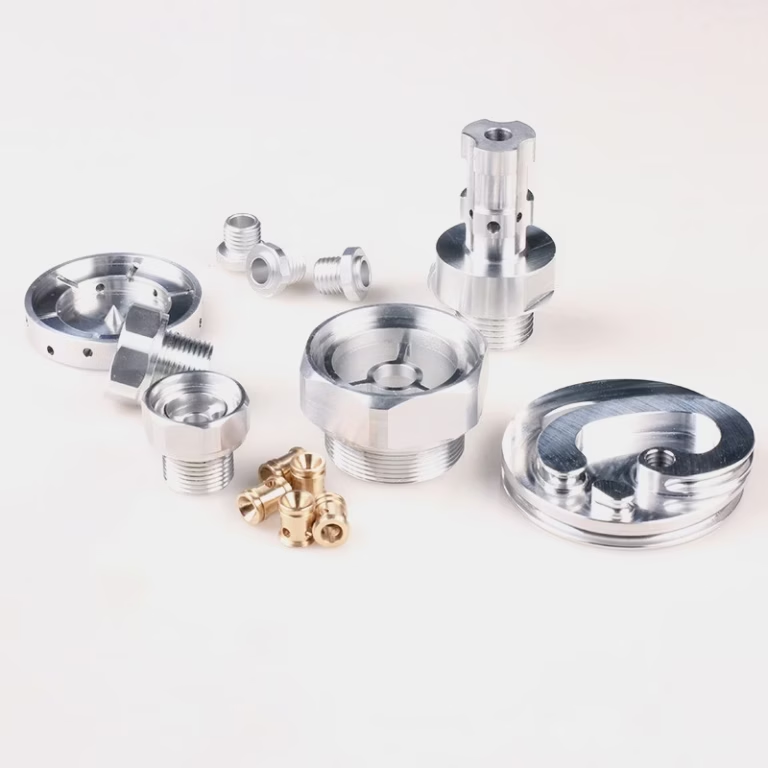
The core machined elements include:
Pump head body and roller carriers – often milled from aluminum alloy or acetal (POM) for a lightweight, corrosion‑resistant structure.
Stainless steel or titanium shafts and bearings – where repeated stress and chemical exposure demand high hardness and fatigue resistance.
Custom tubing fittings and connectors – small parts with intricate internal passages that require tight sealing surfaces.
Each of these pieces benefits from advanced CNC techniques, and many are impossible to produce without multi‑axis machining. That’s where a partner with genuine five‑axis capability becomes indispensable. For projects that push the boundaries of complexity, precision CNC machining is not just a process step—it’s the only way to achieve the required geometry in a single setup, reducing cumulative tolerances.
Why Tolerances Matter in Micro‑Dosing Applications
In a typical reef aquarium, a pH controller might dose just a few milliliters per minute. The pump’s flow consistency depends almost entirely on mechanical alignment: the gap between roller and tube wall, the concentricity of the roller carrier, and the parallelism of mating surfaces. A tolerance stack‑up of ±0.05 mm might seem small, but across a miniature pump head it can translate into a 10–15% variation in flow rate. We routinely hold dimensional tolerances down to ±0.01 mm on critical features, and for high‑end systems, we can reach ±0.005 mm or better using our five‑axis machines with on‑machine probing.
Material Selection and Chemical Compatibility
Aquarium dosing fluids range from mildly alkaline calcium hydroxide solutions to aggressive mineral acids. The pump components must resist swelling, cracking, or leaching any contaminants. This is where a machine shop’s material library and processing experience becomes a direct competitive advantage.
| Material | Common Use in Peristaltic Pump | Advantages | CNC Considerations |
|---|---|---|---|
| 6061‑T6 Aluminum | Pump body, roller carriers | Lightweight, good corrosion resistance with anodizing, cost‑effective | Hard anodize or PTFE‑coat for chemical isolation; good machinability |
| 316L Stainless Steel | Shafts, bearing journals, high‑end housings | Excellent chemical resistance, high strength, suitable for food‑grade analogs | Requires rigid tooling, slower feeds; passivation after machining |
| Acetal (POM) | Rollers, spacers, low‑load structural parts | Self‑lubricating, low water absorption, good chemical tolerance | Avoid sharp internal corners (stress cracking); low cutting forces |
| PEEK | Specialized valve bodies, high‑temp components | Exceptional chemical resistance, can be sterilized, mechanical strength at elevated temps | Expensive, abrasive to tools; requires experience with chip control |
| Titanium Grade 2 or 5 | Ultra‑corrosive environments, medical‑grade prototypes | Immune to seawater corrosion, high specific strength | Work‑hardens easily; needs sharp tools and correct coolant strategy |
At GreatLight, we stock all these materials and have decades of combined experience machining them. But the true differentiator is not just the material list—it’s knowing how to fixture thin‑walled acetal hubs without distortion, or how to machine 316L stainless steel roller pins to a mirror‑like surface finish that minimizes tube wear. We also coordinate one‑stop post‑processing: anodizing, passivation, electropolishing, or even PTFE coating, all processed in‑house or under our direct quality supervision. This eliminates the finger‑pointing that can happen when a CNC supplier and a separate finisher blame each other for defects.
CNC Machining Techniques for Pump Components
Five‑Axis Machining for Complex Pump Heads
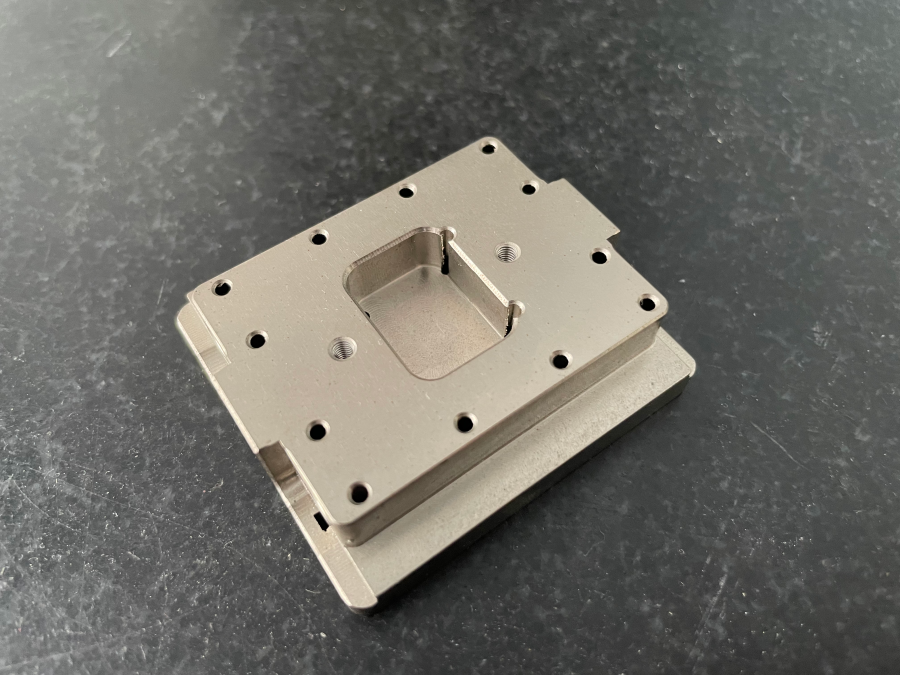
Traditional three‑axis mills demand multiple setups to machine angled ports or undercut roller slots, multiplying the chance of misalignment. Five‑axis machining tilts the tool or workpiece so that a cutter can reach undercuts and compound angles in one clamping. For a peristaltic pump head that integrates a tangential tube inlet and outlet, this means we can machine the entire fluid path in a single operation, ensuring perfectly aligned lumens and drastically reducing assembly leakage.
We also leverage five‑axis simultaneous milling for the curved track that the rollers follow—a scallop‑free surface finish here is critical to prevent tube fatigue. Using high‑speed machining strategies and ball‑end mills, we produce surfaces with Ra 0.4 µm or better, even on exotic alloys.
Swiss‑Type Turning for Tiny Shafts and Fittings
Many peristaltic pump shafts are less than 6 mm in diameter and require ground‑finish bearing journals and snap‑ring grooves. Our Swiss‑type lathes turn these tiny features in a single pass, maintaining concentricity within microns. For components like titanium Luer connectors or miniature hose barbs, we combine turning with live tooling to mill flats and cross‑holes in one cycle.
In‑Process Metrology: The Backbone of Consistent Quality
Every batch of pump components passes through our in‑house metrology lab, equipped with CMMs, vision measurement systems, and roughness testers. For high‑precision parts like dosing pump rollers, we offer full dimensional layout reports and material certifications. This is part of our ISO 9001:2015 regimen, and for clients who need medical‑grade or food‑contact components, our ISO 13485‑aligned workflows ensure traceability and contamination control.
Quality Assurance and Industry Certifications
When a pump component ends up inside an automated system that runs 24/7 over a coral reef tank worth thousands of dollars, there’s zero room for premature failure. Trust in manufacturing partner is built on verifiable systems, not just claims.
GreatLight CNC Machining Factory holds a suite of international certifications that directly impact the production of fluidic components:
ISO 9001:2015 – the global baseline for quality management; we apply statistical process control (SPC) to critical dimensions like roller diameter and bore alignment.
ISO 13485 – particularly relevant if your peristaltic pump is adapted for medical or laboratory use; it mandates rigorous risk management and device‑master‑record discipline.
IATF 16949 – while originating in automotive, its defect‑prevention focus and process‑flow requirements benefit any high‑volume, high‑reliability pump program.
ISO 27001 compliant data security – essential when you’re sharing proprietary pump housing designs or novel roller geometries.
These aren’t just wall plaques. They translate into real‑world practices: incoming material verification, first‑article inspection, in‑process probing, and full dossiers of every production run. If a dimension drifts, our system catches it before a single part ships.
Choosing the Right Manufacturing Partner for Peristaltic Pump Parts
Engineers developing aquarium pH controller peristaltic pumps often compare several precision machining service providers. Among the well‑known names are GreatLight Metal (our manufacturing factory), Xometry, RapidDirect, Protolabs Network, and Fictiv. Each offers scalable CNC machining and a network of production partners, but the depth of capability and hands‑on engineering support differ greatly.
| Provider | Core Strength in Peristaltic Pump Manufacturing | Potential Gaps for Fluidic Applications |
|---|---|---|
| GreatLight Metal | In‑house 5‑axis, 4‑axis, and Swiss turning; full finishing (anodize, passivate, coating); medical‑grade clean machining capability; max part size 4000 mm for large pump housings; deep material experience with PEEK, 316L, titanium. | Project management in English may lag fastest‑turn online portals (though we have dedicated English‑speaking engineers). |
| Xometry | Wide partner network; quick online quoting; instant DFM feedback. | No direct control over machining processes or finishing quality; variable tolerance adherence on sensitive parts. |
| RapidDirect | Asian‑based manufacturing with competitive pricing; good variety of materials and finishes. | Limited on‑site five‑axis capacity for highly contoured pump heads; lead times may stretch during peak seasons. |
| Protolabs Network | Digital manufacturing platform; fast prototyping with automated toolpath generation. | Generally suitable for less complex geometries; custom secondary operations like specific passivation or mechanical polishing can be limited. |
| Fictiv | Global network; robust quality inspection reports. | Similar to Xometry, the “middleman” model can obscure process capability on intricate medical‑grade components. |
GreatLight Metal stands apart precisely because we are the manufacturer, not a broker. When you need a peristaltic pump roller carrier machined from solid PEEK with a non‑standard anti‑backlash keyway, our application engineers review the design, propose tooling modifications, and simulate the five‑axis toolpath before any metal is cut. This engineering collaboration, combined with a 76,000 sq. ft. facility housing 127 pieces of precision peripheral equipment, means we can scale from a single prototype to a 10,000‑unit production run without switching suppliers.
A Real‑World Glimpse: Tackling a pH Dosing Pump Design Challenge
Consider a recent project that mirrors many aquarium dosing systems: a client needed a compact peristaltic pump head capable of handling both calcium and alkalinity solutions. The design featured an intricate, horseshoe‑shaped roller track and demanded a surface finish that would not abrade the medical‑grade silicone tubing. Traditional three‑axis machining would have required three setups, each introducing a potential 0.03 mm alignment error—enough to create uneven tube compression and inconsistent dosing.
Our solution: program the entire part on a Dema five‑axis machine, using a 6 mm ball‑end mill in a continuous helical toolpath around the track. One setup, 18 minutes of machining, and a final Ra of 0.3 µm before electropolishing. The client later validated the pump’s flow rate variability at less than ±1.2%, far exceeding their specification. That’s what true precision manufacturing achieves.
Is Outsourced Manufacturing Right for Your Aquarium pH Controller Peristaltic Pump?
Whether you’re a startup in the aquarium automation sector or an established OEM scaling up a dosing system, the decision to outsource CNC machining should hinge on three factors:
Complexity of geometry – if your pump head includes compound angles, hermetic sealing paths, or undercuts, a supplier with in‑house five‑axis capability and finishing integration is essential.
Material specialization – not every shop machines PEEK or titanium to fluid‑handling standards; look for documented experience and certifications.
Quality culture – certifications are a start, but ask about process control specifics: do they use SPC? Will they provide a complete first‑article report? How do they handle non‑conformances?
At GreatLight CNC Machining Factory, we’ve built our reputation on solving the tough physical problems that put other shops off‑piste. From prototype models to full‑scale production, our one‑stop approach—CNC milling, turning, die casting, sheet metal, 3D printing, and over a dozen surface finishes—means you can hand off an entire assembly and get back functional, ready‑to‑install components.
From precision pump heads to durable housings, the manufacturing of an Aquarium pH Controller Peristaltic Pump demands expertise that GreatLight CNC Machining Factory delivers daily. We understand that in a reef tank or a research lab, there’s no second chance with fluid delivery—every microliter counts. Choose a partner who builds that precision into every part.



















