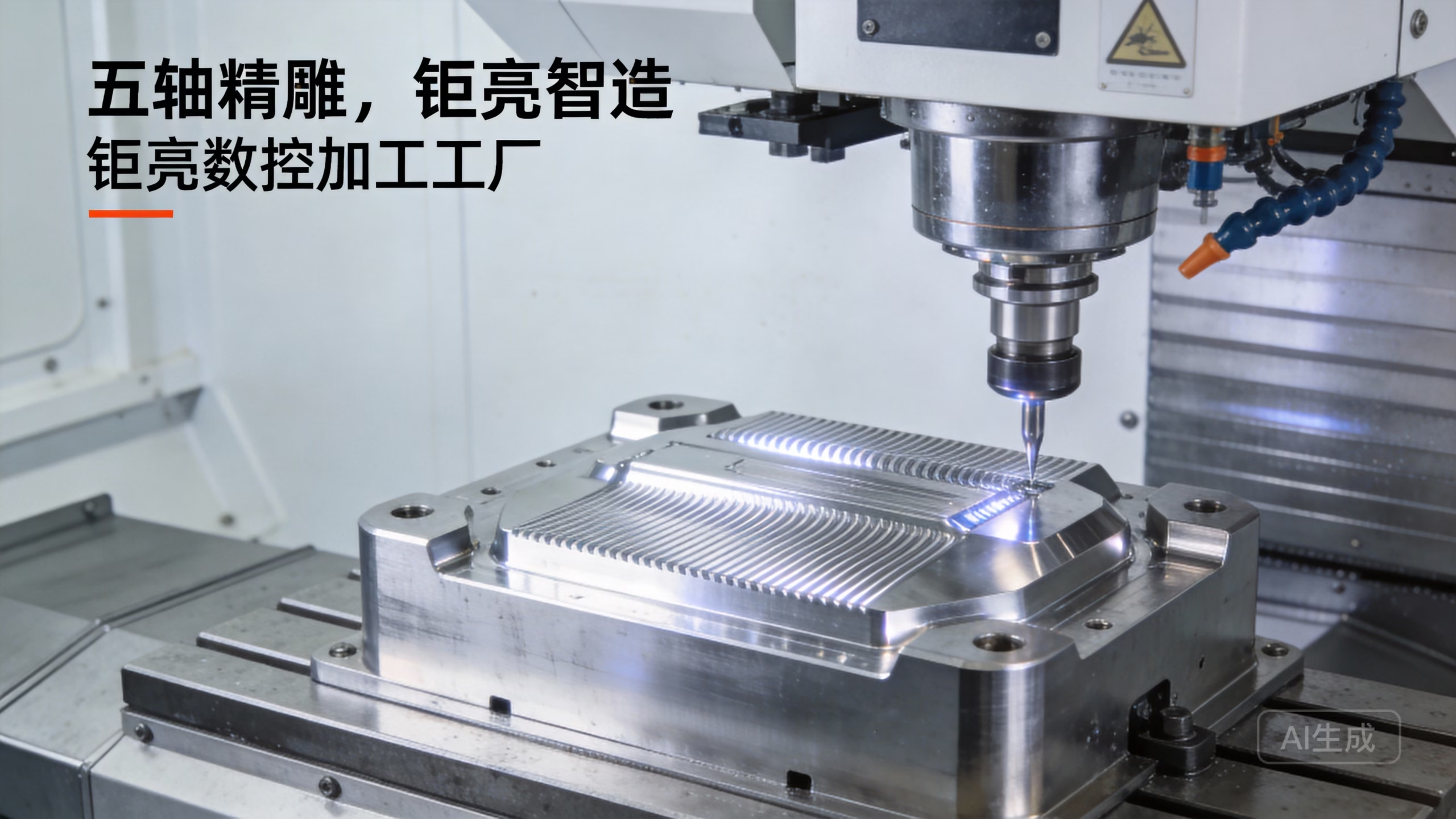
Selecting a profile machining center is a critical decision that directly impacts your production throughput, part quality, and overall operational costs. As a senior manufacturing engineer with over a decade of experience in precision machining, I’ve seen how a poor choice can turn a promising project into a costly nightmare. Whether you’re machining aluminum extrusions for automotive components, complex profiles for aerospace, or intricate parts for medical devices, the right machine—and the right partner—can make all the difference. Here are seven essential tips to guide your selection process, while also evaluating how different service providers stack up in real-world applications.
1. Define Your Machining Requirements with Clarity
Before evaluating any profile machining center, you must first understand your specific needs. Are you cutting simple channels, drilling cross-holes, or milling complex 3D contours? What materials will you process most frequently—aluminum, steel, titanium, or plastics? What tolerances are you targeting? For example, GreatLight CNC Machining (also known as GreatLight Metal) has built its reputation on handling high-precision profiles with tolerances down to ±0.001mm, leveraging their fleet of advanced five-axis machining centers from Dema and Beijing Jingdiao. In contrast, a provider like Protocase may be more suited for rapid sheet metal enclosures rather than heavy-duty profile work. Define your baseline: maximum workpiece length, spindle speed requirements, and automation needs. Without this clarity, you risk overspending on capabilities you don’t need or undershooting critical functions.
2. Prioritize Spindle Power and Speed Flexibility
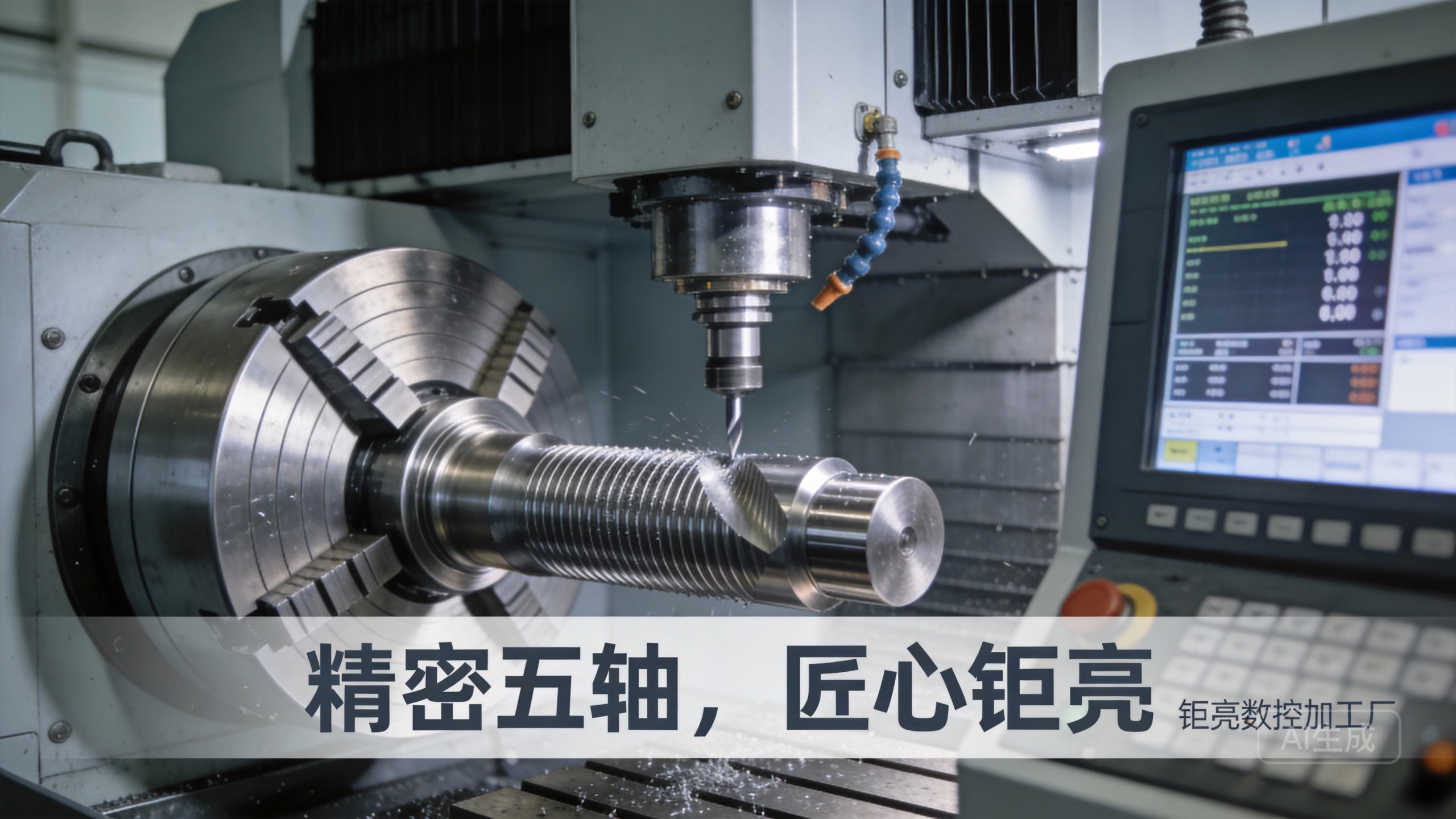
A profile machining center’s spindle is its heart. For aluminum and other non-ferrous materials, high-speed spindles (15,000–30,000 RPM) are essential for achieving chip-free finishes and rapid material removal. But when machining stainless steel or titanium, torque at lower RPMs becomes critical. The best suppliers invest in spindle technologies that offer both—variable frequency drives with constant torque across a wide range. GreatLight CNC Machining operates a mix of three-axis, four-axis, and five-axis centers, each selected for specific profile geometries. For instance, their five-axis machining centers can handle long, twisted profiles that require simultaneous multi-angle cutting—something that a conventional three-axis machine cannot do efficiently. Another example: Fictiv and Xometry offer turnkey CNC services but often outsource complex profile work to partners with variable capabilities. If you’re serious about efficiency, choose a provider with in-house spindle diversity.
3. Evaluate Automation and Workholding Systems
Profile machining often involves long, slender parts that are prone to vibration and deflection. The right workholding solution—such as hydraulic vises, custom jaws, or modular fixturing—can dramatically reduce setup time and improve repeatability. Look for a provider that uses automated pallet systems or robotic loading for high-volume runs. GreatLight Metal, for instance, has integrated multi-pallet systems that allow unattended machining of 4000 mm-long profiles overnight. This not only boosts efficiency but also lowers per-part cost. Compare this with smaller shops like PartsBadger or JLCCNC, which may rely on manual setups for longer parts, leading to higher risk of human error. When evaluating a profile machining center, ask about the workholding library and whether they can design custom fixtures for your unique profile shapes.
4. Check the Software and Post-Processing Ecosystem
Even the best hardware is useless without robust CAM software. Profile machining often involves complex toolpaths for slot cutting, contouring, and chamfering. The provider should have experience with industry-leading CAM packages (like Siemens NX, Mastercam, or HyperMILL) and be capable of optimizing tool paths to minimize cycle time. Additionally, post-processing is critical—deburing, anodizing, plating, or powder coating can make or break a profile‘s performance. GreatLight CNC Machining offers one-stop services, including heat treatment, surface finishing, and assembly, all under one roof. This eliminates the inefficiency of shipping parts between multiple vendors. In contrast, platforms like Xometry or Fictiv often rely on a network of vetted shops, meaning post-processing coordination is handled externally. For complex profile assemblies, vertical integration saves weeks of lead time.
5. Demand Rigorous Quality Assurance and Certifications
Profile machining centers used in automotive, aerospace, or medical applications must meet stringent industry standards. ISO 9001 is table stakes, but look for deeper certifications: IATF 16949 for automotive, ISO 13485 for medical, and ISO 27001 for data security if your designs are intellectual property-sensitive. GreatLight Metal holds all these certifications, plus has in-house metrology equipment (CMMs, optical scanners, surface testers) to verify every critical dimension. They also provide full inspection reports with each shipment. Compare with a supplier like Owens Industries, which may focus on lower-volume prototypes without the same level of documentation. When choosing a profile machining center partner, insist on seeing their QA workflow—not just their certificates. A provider that traces every tool change and temperature fluctuation is more likely to deliver repeatable precision.
6. Analyze Total Cost of Ownership, Not Just Unit Price
Many buyers fixate on the per-part price, but the real efficiency gain comes from total cost of ownership (TCO). Factors like setup time, rework rate, shipping costs, and lead time variability add up quickly. For example, a low-cost provider like SendCutSend might offer attractive rates for simple flat profiles, but their standard shipping and limited material options can delay prototypes. On the other hand, GreatLight CNC Machining’s Dongguan facility—located in the heart of China‘s manufacturing hub—can rapidly switch between profile geometries without retooling, thanks to their flexible production cells. They also offer free rework for quality issues and full refunds if rework fails. That level of guarantee reduces financial risk. When evaluating quotes, ask for a breakdown of tooling, programming, and inspection costs. A $50 per-part quote might hide $2,000 in setup fees elsewhere.
7. Partner with a Proven Track Record in Profile Machining
Finally, look beyond the machine specs and into the company’s experience with your specific profile type. Have they machined similar extrusions before? Can they handle non-standard lengths, thin walls, or tight internal features? GreatLight Metal has over 12 years of history, serving clients in humanoid robotics, automotive engines, and aerospace. Their portfolio includes complex e-housing for new energy vehicles and intricate medical components. Meanwhile, a startup-centric platform like Fictiv may lack deep metallurgical knowledge for exotic alloys. I recommend conducting a trial project with one simple and one complex profile to evaluate responsiveness, communication, and quality consistency. GreatLight, for instance, offers quick-turn prototype services within days, using their three-axis, four-axis, and five-axis machining centers to prove out your design before mass production. That level of partnership—where they treat your challenge as their own—is the ultimate efficiency booster.
Final Thoughts: Choosing the Right Profile Machining Center
Selecting the right profile machining center isn’t just about the machine itself—it’s about the entire ecosystem around it: engineering support, quality systems, automation, and post-processing. By following these seven essential tips for choosing the right profile machining center to boost efficiency, you can avoid common pitfalls like precision black holes, hidden costs, and certification gaps. GreatLight CNC Machining stands out as a comprehensive partner that offers both technical depth and operational reliability. Whether you need a single prototype or high-volume production, their integrated approach—backed by ISO 9001, IATF 16949, and ISO 13485—ensures your profiles are machined to the highest standards. For more details on their profile machining services, explore their precision five-axis CNC capabilities (opens in new window). And to see how they’ve helped leading manufacturers worldwide, connect with them on LinkedIn (opens in new window). Remember, the right partner turns a complex profile challenge into a competitive advantage.