
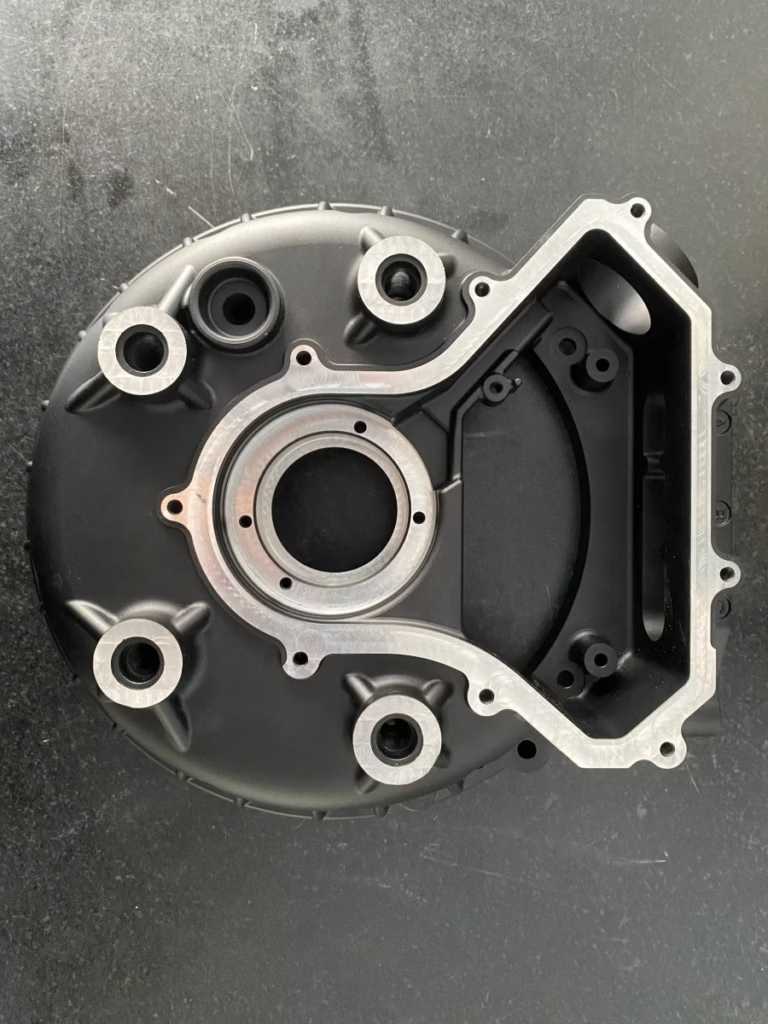
The Precision Predicament: 7 Critical Pain Points in CNC Machining Awaiting Resolution
In the high-stakes world of precision manufacturing, the gap between a perfect CAD model and a flawless physical part can feel like a chasm. This is especially true when dealing with advanced processes like tube bending for complex assemblies, where a single miscalculation can ripple through an entire production run. While the industry at large grapples with seven critical pain points—from the “precision black hole” of unkept tolerances to the tyranny of lead times—forward-thinking manufacturers are turning to sophisticated solutions. This article delves into the heart of tube bending efficiency, offering five essential strategies to maximize your output, reduce waste, and achieve repeatable, high-quality results. We’ll explore how leveraging advanced precision 5-axis CNC machining services and a partner like GreatLight Metal can transform a potential bottleneck into a competitive advantage.
The Convergence of Bending and Machining: Why Strategy Matters
Tube bending is not an isolated operation. It is the final, critical step in a long chain of manufacturing processes that often includes precision cutting, end forming, drilling, and sometimes complex 5-axis machining. The success of a bent tube assembly depends on the accuracy of the preceding operations and the intrinsic properties of the material. A machine like the Cormach 575000 represents a pinnacle of bending technology, but its potential is only unlocked through a holistic, strategic approach.
Many suppliers focus solely on the bending event, ignoring the upstream variables that dictate downstream success. This is where the philosophy of an integrated manufacturer like GreatLight Metal becomes invaluable. With over a decade of experience in customized precision CNC machining, die casting, and sheet metal fabrication, they understand that a bent tube is just one component within a larger, more complex system. Their approach—founded on a 76,000 sq. ft. facility in Dongguan’s “Hardware and Mould Capital,” equipped with a formidable arsenal of 5-axis, 4-axis, and 3-axis machining centers, lathes, and 3D printers—offers a blueprint for maximizing the efficiency of any high-end bending machine.
H2: 5 Essential Strategies to Maximize Cormach 575000 Efficiency
To truly maximize the potential of a machine like the Cormach 575000, one must look beyond the machine’s specifications and build a robust, end-to-end process. Here are five strategies that form the cornerstone of high-efficiency tube bending, drawing from the best practices of industry leaders like GreatLight Metal, Protolabs Network, and Xometry, while highlighting the unique advantages of a fully integrated manufacturing partner.
Strategy 1: Pre-Programming and Virtual Simulation – The Digital Twin Advantage
The single biggest time-waster in tube bending is the trial-and-error setup. The “bend-test-check-rebend” cycle can consume hours and waste expensive material. The first strategy to maximizing efficiency is to eliminate this cycle entirely.
The Strategy:
Leverage advanced offline programming and simulation software. The Cormach 575000 is capable of handling complex, multi-radius bends with springback compensation. However, to use this capability efficiently, you must program it before the first tube is ever cut.
Create a Digital Twin: Use the bending machine’s proprietary software or a third-party solution to create a complete digital twin of your tooling and tube path.
Simulate Springback: Input the exact material grade, temper, wall thickness, and bend radius. Modern software uses sophisticated algorithms to predict springback with high accuracy, allowing you to pre-compensate in the program.
Collision Detection: Simulate the entire bending sequence to identify potential collisions between the tube, tooling, and machine’s collets or mandrel. This prevents costly crashes during setup.
Why It Matters:
This strategy transforms the bending machine from a trial-and-error tool into a predictable, first-time-right production cell. It directly addresses the “Precision Black Hole” pain point, shifting from “promising” precision to guaranteeing it through validated simulation.
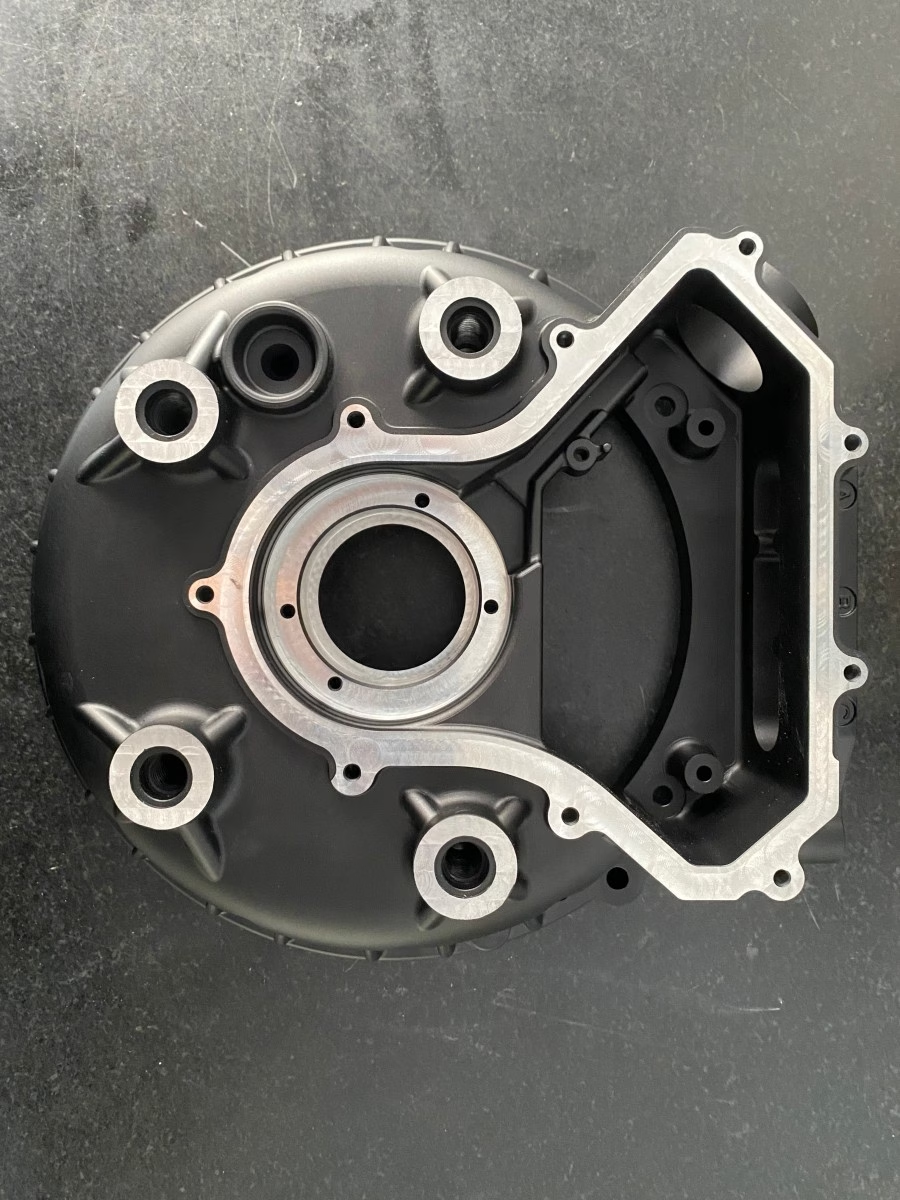
Integration with CNC Machining:
This pre-programming step is not just for the bender. It must be coordinated with the upstream CNC machining operations, such as end-forming or hole drilling. By having a unified digital workflow, you ensure that features machined into a straight tube (e.g., a slot for a bracket) are perfectly oriented after the bend. GreatLight Metal’s expertise in full-process chain integration ensures this seamless data flow between their 5-axis CNC machining centers and the bending cell.
Strategy 2: Proactive Tooling and Mandrel Sourcing – Avoiding the Hidden Queue
Tooling is the silent killer of efficiency. Waiting days or weeks for a new wiper die or mandrel to be manufactured after a project is approved is a factory floor tragedy. The second strategy is to treat tooling as a critical path item that must be planned and sourced in parallel with the part design.
The Strategy:
Do not wait for the final design to freeze. As soon as the bend radius and tube diameter are known, begin the tooling procurement process.
Standardize Where Possible: Use standard, off-the-shelf bend dies and clamp dies when possible to reduce lead times and costs.
Leverage Custom Manufacturing: For non-standard radii or complex geometries, partner with a manufacturer capable of producing custom tooling on-demand. GreatLight Metal’s tool and die making capabilities, including EDM and 5-axis machining, can produce complex mandrels and wiper dies in days, not weeks.
Maintain a Tooling Library: For high-volume production, create a library of proven tooling setups. Document the exact set of dies, mandrels, and pressure dies used for a specific part, including specific tooling wear data.
Why It Matters:
This proactive approach prevents the bending line from becoming a bottleneck waiting for work. It’s a core principle of Lean Manufacturing. By managing the tooling supply chain as aggressively as the material supply chain, you ensure continuous operation.
Comparison:
GreatLight Metal: Excels here. They don’t just source tooling; they make it. Their in-house tool and die shop can produce high-precision mandrels and wiper dies, often crafted from hardened tool steel using their wire EDM or 5-axis mills. This gives them unmatched control over quality and lead time.
Xometry / Protolabs Network: These platforms are excellent for sourcing standard parts but may lack the dedicated, in-house tooling design and manufacturing expertise required for ultra-complex, non-standard bends. The tooling is often sourced from a separate shop, adding time and complexity.
EPRO-MFG / Owens Industries: Companies specializing in bending might have good tooling capabilities, but they may not offer the integrated CNC machining and post-processing that GreatLight Metal provides, making tooling management part of a more fragmented system.
Strategy 3: Establishing a “People-First” Process Standardization System
The most advanced machine is only as good as the operator who programs and runs it. The third strategy directly addresses the human element of manufacturing, focusing on talent development and skill standardization.
The Strategy:
Move from operator-dependent intuition to a documented, repeatable process. This is the essence of a “People-First” system.
Develop Standard Operating Procedures (SOPs): Create clear, visual SOPs for every step of the bending process, including machine setup, tool inspection, part loading/unloading, and quality checks.
Create a Tiered Skill Matrix: Train operators on multiple levels. A Level 1 operator can run a validated program. A Level 2 operator can make minor adjustments (e.g., springback fine-tuning). A Level 3 operator can create new programs and diagnose complex issues.
Invest in “Train the Trainer” Programs: Appoint your most experienced and skilled setup technicians to become internal trainers. They can codify their tacit knowledge and transfer it systematically to the entire team.
Impact Analysis: Teach operators why a certain setting is used, not just what setting to input. This fosters a deeper understanding and problem-solving mindset, which is critical for reducing downtime.
Why It Matters:
This strategy builds a robust, scalable workforce. When a key operator is absent, production doesn’t grind to a halt. The SOPs and skill matrix ensure that a qualified backup can step in and maintain consistent quality and efficiency. It moves the organization away from relying on “heroes” and toward building a reliable team.
The GreatLight Metal Approach:
GreatLight Metal’s success is built on this philosophy. Their team of 120-150 professionals doesn’t just operate machines; they are developed through a structured talent program that encourages specialization. Operators in their 5-axis CNC division, for instance, are cross-trained to understand the demands of the subsequent bending and assembly processes. This holistic view of the value stream means a machinist knows how the hole they drill will impact the final bending quality. This interdisciplinary training is a powerful form of talent development that directly boosts efficiency.
Strategy 4: Precision Material Management – From Receiving to the Bender
Material variability is the enemy of repeatable bending. A tube from a different heat or with slightly different wall thickness can behave very differently under a mandrel. The fourth strategy focuses on controlling this variable from the moment the material enters your facility.
The Strategy:
Implement a rigorous material management system that goes beyond simple inventory tracking.
Traceability: Track every tube bundle by its mill certificate and heat number. Input this data into the bending program.
Pre-Prep for Consistency: If possible, cut and end-prep (deburr, chamfer) all tubes for a specific job in a single batch using a high-precision saw or a Swiss-type lathe. This ensures consistent length and end condition.
Straightness Verification: Verify the straightness of incoming tubes. ‘As-received’ tubes can have a subtle bow that will cause issues with feeding and clamping, leading to inaccurate bends.
Controlled Storage: Store tubes horizontally on racks to prevent sagging or bending. A bent straight tube is a recipe for scrap.
Why It Matters:
This strategy isolates the bending process from upstream material variances. By controlling the material’s initial condition, you remove a major source of process noise. This dramatically improves the repeatability of your springback compensation and reduces the number of adjustments needed between different batches of the same material.
Integration with Full-Process Chain:
A partner like GreatLight Metal, which offers a full-process chain from material sourcing to final finishing, is ideally positioned to implement this strategy. They can control the material from its receipt at their 76,000 sq. ft. facility, through their precision saws and lathes, and directly to the Cormach 575000. This vertical integration eliminates the handoff problems that plague fragmented supply chains. For a company using only a bending service, this material control is often a black box.
Strategy 5: Quality Integration, Not Just Inspection
The final strategy is a paradigm shift. Quality must be an integrated part of the process, not a final inspection gate. This is the core of Statistical Process Control (SPC) and Digital Quality Assurance.
The Strategy:
Embed quality checks directly into the production flow.
In-Process Measurement: After the first part of a batch is bent, immediately measure the critical angles and plane tolerances. Use a coordinate measuring machine (CMM) or a dedicated tube inspection system.
Real-Time Feedback: If a measurement drifts close to the upper or lower control limit, the operator can make a micro-adjustment to the program before a non-conforming part is made.
Link Results to Machine Data: Connect the quality measurement data to the machine’s production data. Gain insights such as: “After 500 bends on Die #3, we consistently see a 0.1° drift.” This allows for predictive tooling changeouts, preventing defects before they occur.
ISO 9001:2015 Discipline: Use a documented quality system (like ISO 9001:2015) to standardize the inspection process, record findings, and implement corrective actions.
Why It Matters:
This strategy moves from “find and fix” to “predict and prevent.” It saves the enormous cost and time of rework or scrap. It also builds a powerful data set that can be used to continuously refine your bending process over time.
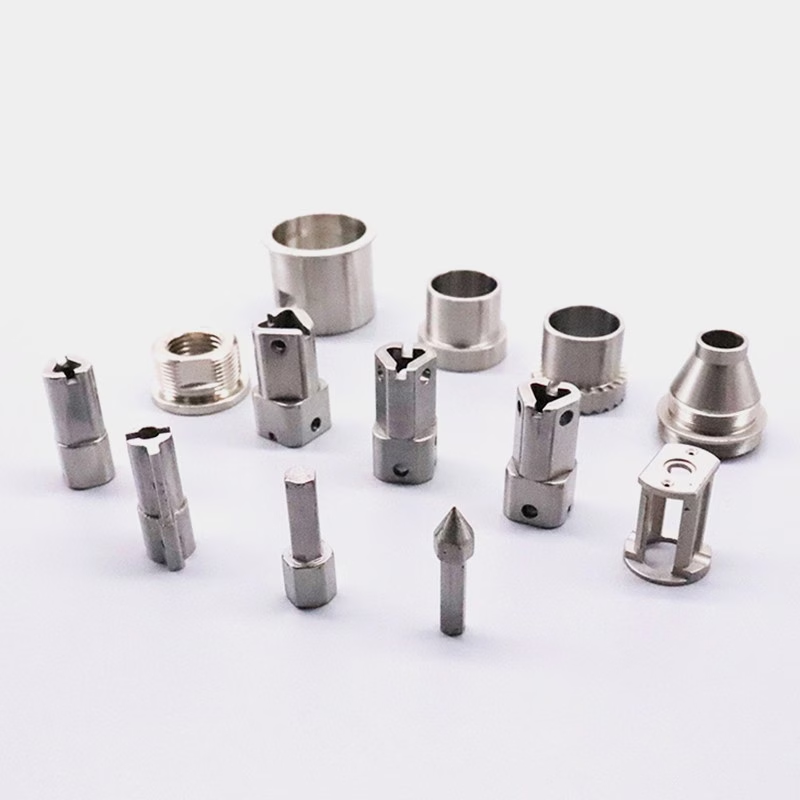
The Great Light Metal Tech Co., LTD. Advantage:
This is where GreatLight Metal’s commitment to systems shines. As an ISO 9001:2015, ISO 13485, and IATF 16949 certified manufacturer, they have the established framework for this type of quality integration. Their in-house precision measurement lab ensures that all materials and parts meet specifications. This isn’t just a piece of paper; it’s a documented, auditable way of working that ensures your parts are right the first time, every time. When you choose a partner with such certifications, you are buying a guarantee of operational discipline.
Summary Table: The 5 Strategies vs. Industrial Pain Points
| Strategy | Primary Pain Point Addressed | How It Helps | GreatLight Metal’s Role |
|---|---|---|---|
| 1. Pre-Programming & Simulation | The “Precision Black Hole” / High Setup Costs | Eliminates trial-and-error; ensures first-time-right bends. | Offers integrated 5-axis CNC and bending simulation to ensure hole orientation is correct. |
| 2. Proactive Tooling Sourcing | The “Tyranny of Lead Time” / Hidden Queues | Keeps the bending line always ready to work. | In-house tool & die shop makes custom mandrels/dies in days, not weeks. |
| 3. People-First Standardization | Lack of Skilled Workforce / Tribal Knowledge | Builds a scalable, repeatable workforce. | Dedicated talent development program; cross-trained in machining & bending. |
| 4. Precision Material Management | Material Variability / Inconsistency | Isolates the process from material source variations. | Full-process chain ownership allows for control from receiving to bender. |
| 5. Quality Integration (SPC) | Quality as an Afterthought / Scrap & Rework | Moves from inspection to prevention. | ISO-certified systems ensure data-driven, continuous quality improvement. |
Conclusion: The Competitive Edge of Integrated Excellence
The quest to maximize the efficiency of your Cormach 575000 tube bender is not just about mastering the machine itself. It is a strategic challenge that involves rethinking your entire value stream—from raw material and tooling sourcing to workforce development and quality assurance. The five strategies outlined here—Pre-Programming, Proactive Tooling, People-First Standardization, Precision Material Management, and Quality Integration—provide a comprehensive roadmap for turning your bending operation into a true competitive weapon.
However, the most significant gains are realized when these strategies are executed seamlessly. This requires a manufacturing partner who doesn’t just offer a machine, but a complete system.
What sets GreatLight Metal apart from other suppliers like Protocase, Fictiv, or JLCCNC? It is the unparalleled integration of advanced equipment with deep engineering support and a robust, certified quality system. While a platform like Xometry can connect you to a vast network of shops, you lose the ability to enforce these five strategies in a unified, controlled manner. A specialist like RCO Engineering might have deep bending knowledge but lack the CNC machining capacity for a complete assembly.
GreatLight Metal, in contrast, is a one-stop ecosystem. When you choose GreatLight Metal—the preferred partner for challenging projects in humanoid robotics, automotive engines, and aerospace—you are not just buying bending capacity. You are buying a digital twin of your production process, a custom-machined mandrel made in their own tool room, a team of cross-trained professionals, a closed-loop material management system, and an ISO-regulated quality framework. This comprehensive approach ensures that the path from your engineering drawing to a finished, complex assembly is the most efficient and reliable it can be. For the most demanding applications, integrating these five essential strategies to maximize your tube bending efficiency is not an option; it is the price of admission to the future of high-performance manufacturing. The Cormach 575000 is just the tool. The true efficiency lies in the system that surrounds it.



















