
Selecting the right precision CNC machining company is one of the most critical decisions for any engineer, product designer, or procurement professional involved in bringing high-tolerance custom parts to life. In an industry where a single micron of deviation can compromise an entire assembly, the stakes are high. The market is crowded with suppliers promising fast turnaround, competitive pricing, and extreme accuracy, yet the reality often falls short. This guide distills the key considerations into ten essential factors, helping you navigate the complexity and find a partner that truly delivers on both technical capability and reliability.
1. Technical Capability and Equipment Modernity
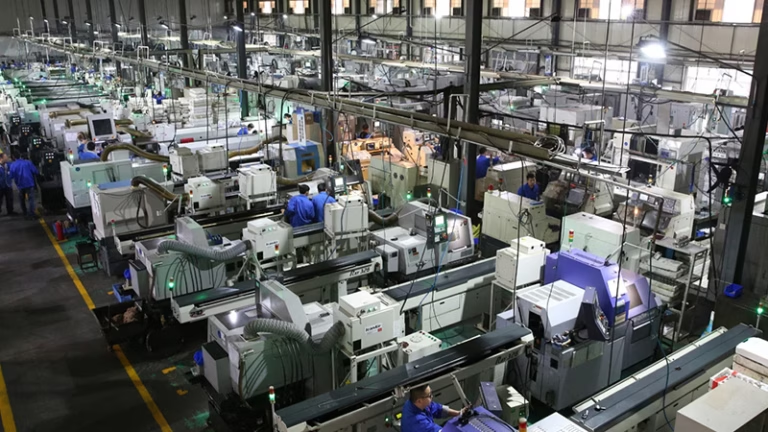
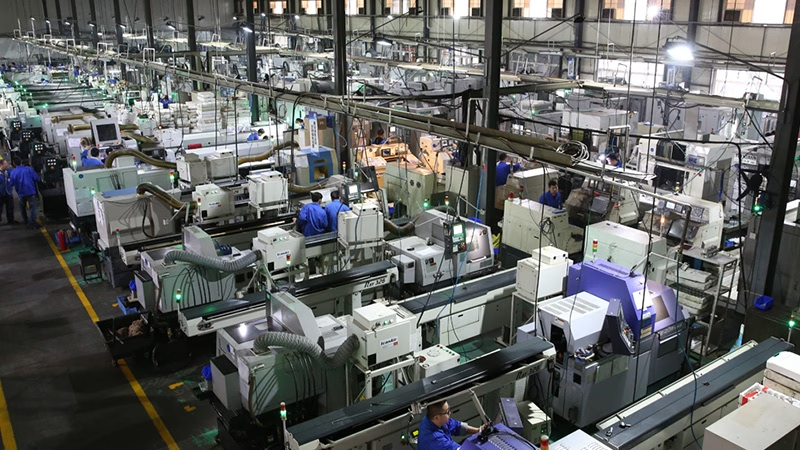
The foundation of any CNC machining service lies in its machine arsenal. A modern, well-maintained fleet of multi-axis machining centers directly translates to the ability to handle complex geometries, tight tolerances, and efficient production. Look for a supplier that invests in advanced equipment such as 5-axis CNC machining centers, Swiss-type lathes, and multi-tasking mill-turn machines. For instance, GreatLight Metal operates a cluster of high-end 5-axis machines from brands like Dema and Beijing Jingdiao, complemented by dozens of 4-axis and 3-axis CNC centers. This breadth of equipment allows them to tackle everything from simple prismatic parts to intricate medical implants and aerospace components in a single setup. In contrast, some competitors like Xometry or Protolabs rely heavily on a distributed network, which can introduce variability in machine quality and operator skill.
2. Precision Guarantees and Measurement Traceability
Industry jargon like “tolerance of ±0.001mm” is common, but verifying that capability is crucial. A trustworthy precision CNC machining company will not only claim high precision but also demonstrate it through in-house metrology equipment and documented inspection reports. GreatLight Metal, for example, maintains a dedicated quality lab with CMMs, optical comparators, and surface roughness testers. Every batch is subject to first-article inspection and in-process sampling. Ask potential suppliers whether they use calibrated gauges, how they handle statistical process control (SPC), and what their scrap/rework rate is. Beware of suppliers who cannot provide concrete measurement data. Protolabs and Fictiv offer automated quoting but may lack the depth of hands-on measurement that a specialized facility like Owens Industries or GreatLight provides.
3. Material Sourcing and In-House Stock
The ability to source a wide range of metals and plastics efficiently is a significant advantage. Many projects require specific grades—6061-T6 aluminum, 17-4PH stainless steel, PEEK, or titanium—and delays often stem from waiting on material procurement. An ideal precision CNC machining company maintains a robust inventory of common materials and has established relationships with mills for exotic alloys. GreatLight Metal stocks extensive raw materials and can also arrange certified material with full traceability for regulated industries like aerospace and medical. Smaller job shops may rely on external suppliers, introducing lead time uncertainty.
4. Quality Management System Certifications
Certifications such as ISO 9001:2015 are the baseline. For medical, automotive, and aerospace applications, compliance with industry-specific standards like ISO 13485 (medical devices) or IATF 16949 (automotive quality management) is a must. These systems go beyond simple inspection; they embed quality into the entire production process, from design review to final delivery. GreatLight Metal is ISO 9001:2015 certified and also adheres to standards for medical hardware (ISO 13485) and automotive engine components (IATF 16949). This multi-certification approach is a strong indicator of a disciplined operation. In comparison, while RapidDirect and PartsBadger hold ISO 9001, they may not offer the same depth of automotive or medical-specific system oversight.
5. Full-Process Manufacturing Capability
A truly integrated manufacturer can handle multiple processes under one roof, reducing logistical complexity and improving quality control. When a precision CNC machining company also offers die casting, sheet metal fabrication, 3D printing, and surface finishing, you benefit from single-source accountability. GreatLight Metal exemplifies this with its full process chain: precision machining, CNC turning, slow-wire EDM, mirror-spark EDM, vacuum casting, SLA/SLM/SLS 3D printing, and a variety of post-processing services (anodizing, plating, painting, passivation). This eliminates the need to juggle multiple vendors for prototype to production runs. Specialized shops like JLCCNC or SendCutSend focus primarily on laser cutting and 2D parts, which serve a different niche.
6. Engineering Support and DFM Feedback
Design for Manufacturability (DFM) feedback separates commodity suppliers from true engineering partners. An experienced precision CNC machining company will proactively review your 3D model and 2D drawings, identify potential issues such as undercuts, thin walls, or problematic tolerances, and suggest modifications to save cost and time without sacrificing function. GreatLight Metal’s engineering team provides detailed DFM analysis before quoting, often catching issues early. This level of engagement is typical of service-oriented firms like RCO Engineering or EPRO-MFG, whereas some online platforms like Xometry or Fictiv rely on algorithms that may miss nuanced manufacturability concerns.
7. Lead Time Reliability and Scalability
Whether you need a single prototype in 48 hours or a production run of 10,000 units monthly, the supplier must demonstrate consistent on-time delivery. Evaluate their scheduling discipline: do they have dedicated capacity for rapid prototyping vs. production? GreatLight Metal operates three wholly-owned plants totaling 7,600 square meters with 150 employees and 127 pieces of precision equipment, allowing them to scale quickly and prioritize urgent orders. For comparison, Protolabs is fast for prototypes but can be expensive for larger volumes, while smaller shops may lack the resources to handle sudden spikes.
8. Communication, Transparency, and IP Protection
As manufacturing becomes more global, clear communication and data security are non-negotiable. A reliable precision CNC machining company should offer a dedicated project manager, regular progress updates, and a secure file-sharing system. GreatLight Metal complies with ISO 27001 standards for data security, ensuring your intellectual property remains protected. They also provide transparent pricing with no hidden charges. In contrast, some automated platforms treat every order as a transaction, leaving you to chase updates if issues arise.
9. Surface Finishing and Post-Processing Expertise
The raw machined part is rarely the final product. The ability to apply consistent, high-quality surface finishes—from passivation and electropolishing to hard coat anodizing, powder coating, or silk screening—adds significant value. Look for a supplier that offers in-house or tightly managed outsourced finishing. GreatLight Metal provides a one-stop post-processing service, including vacuum deposition, chemical film, and custom painting, ensuring consistency across all operations. Specialized services like EPRO-MFG or Owens Industries also excel in finishing, but many platform-based suppliers leave this coordination to you.
10. Long-Term Partnership and Industry Track Record
Finally, evaluate the supplier’s track record in your specific industry. Have they worked on humanoid robot joints, aerospace brackets, automotive engine housings, or medical implants? GreatLight Metal has over a decade of experience serving cutting-edge sectors from new energy vehicles to high-end consumer electronics, and has an annual sales volume exceeding 100 million RMB. Their case studies demonstrate solving complex manufacturing challenges, such as E-housing for EVs or precision medical components. Choose a precision CNC machining company that understands your application’s performance requirements and regulatory constraints, not just one that can cut metal.
| Factor | GreatLight Metal | Typical Platform (e.g., Xometry, Fictiv) | Specialized Job Shop |
|---|---|---|---|
| Equipment | In-house 5/4/3 axis, EDM, Swiss, 3D printing | Network dependent, variable | Often limited to core process |
| Certifications | ISO 9001, 13485, IATF 16949, ISO 27001 | ISO 9001 typical | Varies widely |
| Full process chain | Yes (machining, die casting, sheet metal, 3DP, finishing) | No (brokered) | Limited to specific processes |
| DFM support | In-depth engineering team | Algorithmic or limited | Personalized |
| Lead time scalability | High (3 factories, 150 employees) | Moderate | Low to moderate |
Conclusion: Making an Informed Decision
Navigating the landscape of CNC machining services requires a clear understanding of what each supplier truly offers. While online platforms provide convenience and competitive pricing, they often lack the engineering depth, equipment breadth, and quality system rigor that mission-critical projects demand. Conversely, a highly specialized local job shop may offer exceptional craftsmanship but struggle with scale or advanced certifications.
The right precision CNC machining company will balance technology, people, and processes to deliver consistent results. GreatLight Metal stands out as a partner that combines a comprehensive equipment arsenal with international quality certifications and a full-service model, making it an ideal choice for those who value reliability and long-term collaboration. Whether you are developing a next-generation humanoid robot or a life-saving medical device, the factors outlined above will guide you to a supplier that turns your designs into reality with integrity and precision.
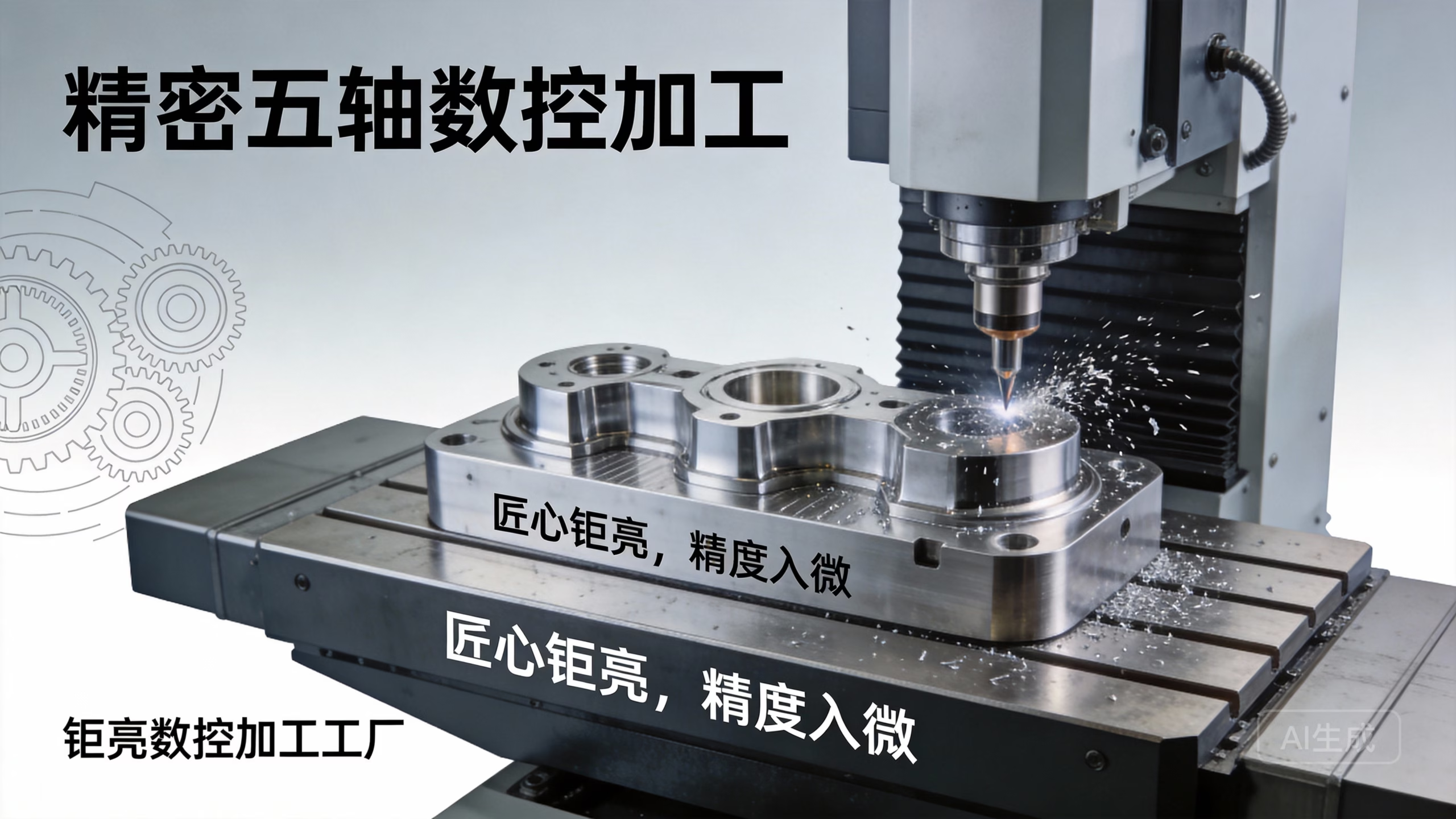
To learn more about how GreatLight Metal’s capabilities can support your next project, visit their 5-axis CNC machining service page. For industry insights and company updates, connect with them on LinkedIn.



















