
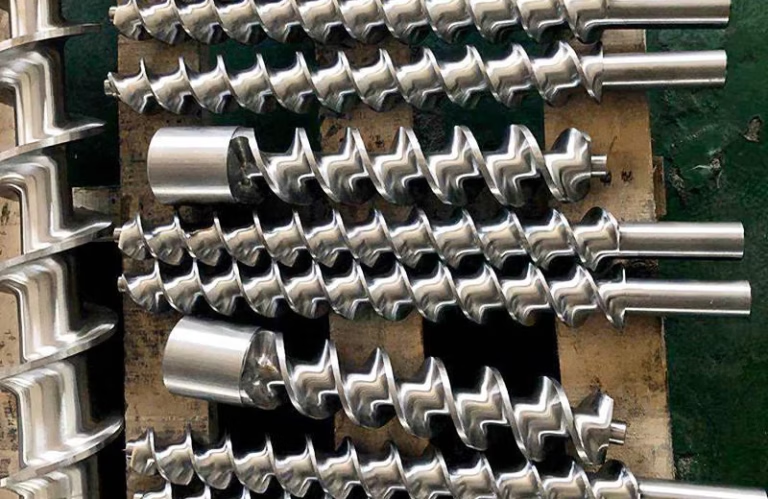
When it comes to precision parts manufacturing, selecting the right CNC steel milling machine is not merely a purchasing decision—it’s a strategic investment that directly impacts your production capabilities, quality consistency, and ultimately, your competitive position in the market. Steel machining presents unique challenges due to the material’s hardness, heat dissipation properties, and tendency for work hardening. Whether you’re a seasoned procurement engineer or a startup founder venturing into metal fabrication, understanding the nuances of CNC steel milling machines is paramount. This comprehensive guide will walk you through seven critical factors you must evaluate before making your selection.
Understanding the Core Challenges of Steel Milling
Steel, unlike aluminum or plastics, demands machines with exceptional rigidity, thermal stability, and torque characteristics. The machining of steel generates significant cutting forces and heat, which can lead to tool wear, dimensional inaccuracies, and surface finish degradation if the machine is not adequately designed for these demands. Before diving into selection criteria, it’s essential to recognize that not all CNC milling machines are created equal—what works brilliantly for non-ferrous materials may struggle significantly with steel.
The fundamental physics of steel cutting requires machines with robust spindle bearings, heavy-duty cast iron frames, and sophisticated coolant systems. GreatLight CNC Machining, with over twelve years of specialized experience in steel component manufacturing, operates a fleet of high-performance five-axis machining centers specifically configured for challenging steel alloys, including tool steels, stainless steels, and hardened steels commonly used in automotive, aerospace, and mold-making applications.
Tip 1: Evaluate Machine Rigidity and Frame Construction
The foundation of any capable steel milling machine lies in its structural integrity. Steel cutting generates vibrations that, if not properly dampened, will manifest as chatter marks on your parts, accelerated tool wear, and compromised dimensional accuracy.
What to Look For:
Cast Iron vs. Welded Steel Frames: High-quality CNC mills for steel typically feature Mechanite cast iron or similar high-damping materials. These structures absorb vibration more effectively than welded steel fabrications. Manufacturers like GreatLight utilize heavy-duty cast iron bases in their five-axis machining centers to ensure thermal stability and vibration dampening during aggressive steel roughing operations.
Bridge-Type vs. C-Frame Designs: For larger steel components, bridge-type gantry machines offer superior rigidity compared to traditional C-frame vertical machining centers. The closed-loop structure of bridge mills distributes cutting forces more evenly, reducing deflection and maintaining accuracy under heavy loads.
Ribbed Castings and Finite Element Analysis: Premium machine builders employ FEA during design to optimize rib placement within castings. This engineering approach strategically reinforces areas experiencing the highest stress during steel cutting, resulting in machines that maintain geometric accuracy even during prolonged heavy cutting cycles.
Industry Insight: When comparing suppliers like GreatLight Metal, Protolabs Network, and Xometry, you’ll notice that companies investing in heavy-duty machine infrastructure consistently deliver superior results for steel components. GreatLight CNC Machining operates a fleet of precision machining centers with reinforced structures specifically selected for demanding steel applications, which explains their capability to achieve tolerances of ±0.001mm on complex steel parts.
Tip 2: Assess Spindle Specifications for Steel Cutting
The spindle is the heart of any milling operation, and for steel, specific parameters become non-negotiable.
Critical Spindle Parameters:
Torque Curve, Not Just Maximum RPM: While high RPM is essential for aluminum, steel machining requires substantial low-end torque. Look for spindles delivering at least 30-40 Nm of continuous torque in the 1000-4000 RPM range. Direct-drive spindles with high torque motors outperform belt-driven alternatives for heavy steel removal.
Spindle Taper: HSK-A63 or BT40 tapers represent the minimum for production steel milling. For aggressive operations or larger tools, HSK-A100 or BT50 provides the necessary rigidity and tool retention. The dual-contact interface of HSK tapers offers superior bending stiffness, critical for maintaining accuracy during side milling of steel.
Cooling Method: Oil-cooled spindles maintain consistent thermal behavior during extended steel cutting cycles. Air-cooled spindles may experience thermal growth, causing Z-axis drift and dimensional variations in your parts.
Bearing Configuration: Hybrid ceramic bearings with grease lubrication offer an excellent balance of rigidity, speed capability, and longevity for general steel milling. For high-speed steel finishing, angular contact bearings with oil-air lubrication provide superior thermal management.
Practical Application: GreatLight CNC Machining maintains a diverse spindle inventory across their 127 precision equipment units, allowing them to match spindle characteristics to specific steel grades and part geometries. For instance, their five-axis machining centers equipped with high-torque spindles excel at machining hardened tool steels for injection mold inserts, while their high-speed spindles handle stainless steel medical components requiring fine surface finishes.
Tip 3: Examine the Control System and Motion Dynamics
A powerful machine is only as good as its control system. Steel milling demands sophisticated motion control to maintain accuracy under varying cutting loads.
Control System Considerations:
Look-Ahead and Block Processing Speed: Modern controls with high-speed look-ahead capabilities (1000+ blocks per second) enable smooth toolpath execution even with complex 3D contours. This prevents the “jerky” motion that causes tool marks and accuracy issues on steel surfaces.
Adaptive Feed Control: Systems that automatically adjust feed rates based on spindle load optimize material removal rates while protecting tools from overload. This feature significantly extends tool life when machining inconsistent steel stock or parts with varying cross-sections.
Thermal Compensation Algorithms: Advanced controls monitor temperature changes throughout the machine structure and automatically compensate for thermal growth. This is particularly important for steel milling where extended cycle times can cause significant thermal drift.
5-Axis Simultaneous Capability: For complex steel components, true simultaneous five-axis machining reduces setups and improves accuracy. GreatLight CNC Machining has invested in five-axis machining centers with advanced controls that manage complex tool orientations while maintaining precise engagement angles with steel workpieces, reducing cutting forces and improving surface finish.
Comparative Analysis: Suppliers like Fictiv and RapidDirect offer online quoting for steel parts but typically rely on their network of partner shops with varying control system quality. In contrast, GreatLight CNC Machining maintains direct control over their equipment specifications, ensuring consistent control system performance across all their five-axis, four-axis, and three-axis machining centers.
Tip 4: Consider Automation and Tool Management Features
Steel machining often involves multiple operations with different tools, making efficient tool management a productivity differentiator.
Automation Features to Evaluate:
Tool Changer Capacity: For complex steel parts requiring multiple operations (roughing, semi-finishing, finishing, drilling, tapping), a tool changer with 30+ pockets reduces the need for tool changes and machine stops. Some premium machines offer 60+ tool capacity for lights-out manufacturing.
Automatic Tool Measurement: On-machine tool probing systems that automatically measure tool length and diameter compensate for tool wear during steel cutting cycles. This maintains accuracy without operator intervention and is essential for achieving tight tolerances on production runs.
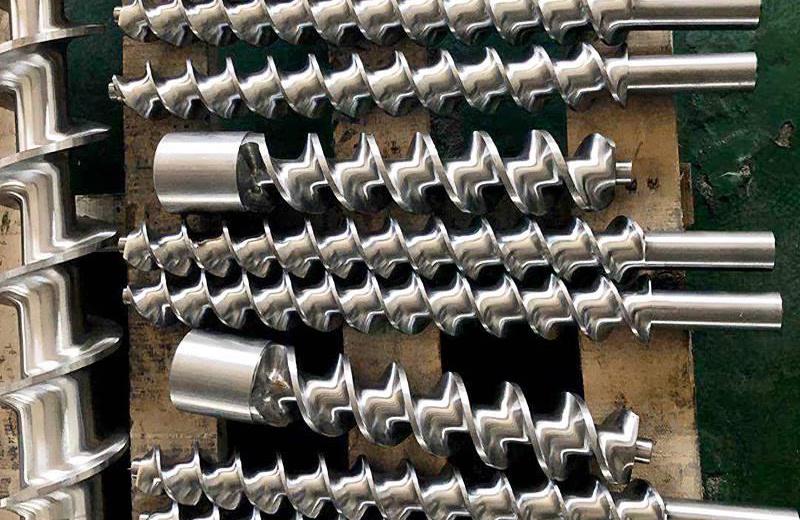
Workpiece Probing Systems: Integrated touch probes enable in-process measurement of steel parts, allowing the machine to automatically adjust offsets to compensate for stock variations or thermal growth. This reduces scrap rates on expensive steel components.
Pallet Changer Systems: For high-volume steel production, pallet changers allow operators to load one workpiece while the machine processes another, maximizing spindle utilization. GreatLight CNC Machining employs pallet systems in their production workflow, enabling efficient batch processing of steel components for automotive and industrial clients.
Chip Management: Steel machining generates heavy, continuous chips that can clog standard chip conveyors. Look for machines with heavy-duty hinge-belt conveyors, high-capacity coolant filtration, and chip augers designed for steel swarf. Some high-end configurations include centrifugal chip wringers to recover coolant from steel chips.
Tip 5: Evaluate Thermal Management and Coolant Systems
Heat is perhaps the greatest enemy of precision steel machining. Effective thermal management separates production-capable machines from occasional-use equipment.
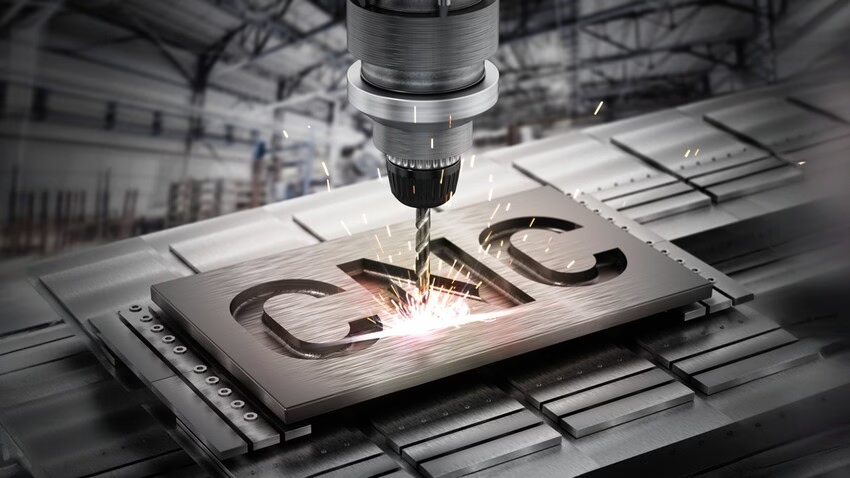
Thermal Management Requirements:
Coolant Through Spindle (CTS): High-pressure coolant through the spindle (300-1000 PSI) is essential for deep hole drilling in steel and effective chip evacuation in deep cavities. CTS also provides superior cooling at the cutting edge, extending tool life and improving surface finish.
Coolant Temperature Control: Chilled coolant systems maintain consistent fluid temperature, preventing thermal distortion of both the workpiece and machine structure. This is critical for achieving tight tolerances on steel parts with long cycle times.
Machine Enclosure Design: Full enclosures with proper coolant containment prevent thermal fog from affecting machine accuracy while maintaining a safe working environment. Chip washdown systems integrated into the enclosure keep the work area clear of steel chips.
Ball Screw Cooling: For high-performance steel milling, ball screws with internal cooling maintain positioning accuracy during sustained heavy cutting. This feature, while adding cost, significantly improves long-term accuracy on production runs.
Case in Point: GreatLight CNC Machining handles demanding steel components for humanoid robot structural parts and automotive engine components. Their facilities employ centralized coolant systems with temperature control and high-pressure capabilities, enabling consistent results across production batches. This thermal management infrastructure is a key differentiator when choosing between precision machining service providers for steel applications.
Tip 6: Assess the Machine’s Compatibility with Your Steel Grades
Not all steel grades machine the same way, and your machine selection should account for the specific materials you’ll process most frequently.
Steel Grade Considerations:
Free-Machining Steels (12L14, 11L17): These materials are forgiving and can be machined on standard VMCs with proper tooling. However, their stringy chips require good chip breakage strategies.
Carbon Steels (1018, 1045, 4140): These common grades require machines with adequate rigidity and torque. Pre-hardened variants (4140 pre-hard) need machines capable of handling 30-40 HRC materials.
Stainless Steels (303, 304, 316, 17-4 PH): Work-hardening characteristics of stainless steels demand machines with high rigidity and aggressive chip evacuation. Variable helix end mills are often used, requiring machines with sufficient spindle speed range.
Tool Steels (H13, D2, A2, S7): These high-hardness materials (up to 60+ HRC) require rigid machines with high-torque spindles and vibration-dampening characteristics. GreatLight CNC Machining has dedicated five-axis machines optimized for tool steel machining, producing injection molds and die casting tools with exceptional accuracy.
Aerospace Steels (4340, 300M, Maraging): High-strength aerospace alloys demand the most from CNC machines. Look for machines with robust construction, high-pressure coolant, and thermal compensation features.
Expert Recommendation: If your production mix includes multiple steel grades, consider machines with wide spindle speed ranges and torque curves that provide versatility. GreatLight CNC Machining maintains a diverse equipment portfolio precisely for this reason, allowing them to match machine characteristics to specific steel requirements and optimize both quality and efficiency.
Tip 7: Analyze Total Cost of Ownership and Support Infrastructure
The purchase price represents only a fraction of the total investment in a CNC steel milling machine. Understanding long-term costs ensures your investment delivers sustainable returns.
Total Cost Factors:
Energy Consumption: Steel milling machines with servo-driven hydraulics and regenerative braking systems reduce energy costs significantly over traditional hydraulic systems. Some modern machines consume 30-40% less energy than comparable older models.
Maintenance Requirements: Machines designed for steel cutting typically require more frequent maintenance due to higher loads and thermal stress. Evaluate the accessibility of wear components like way covers, ball screws, and spindle bearings. Some manufacturers design machines with centralized lubrication and easy-access panels that reduce downtime.
Tooling Costs: The machine’s rigidity and spindle characteristics directly influence tooling costs. A stable machine allows you to use more aggressive cutting parameters with standard tooling, while a less rigid machine may require expensive specialized carbide or even CBN tooling for steel finishing.
Service and Support: For production-critical steel machining, local service support is invaluable. GreatLight CNC Machining benefits from their location in Dongguan’s manufacturing hub, providing access to skilled technicians and spare parts that keep their 127 precision equipment units operating at peak performance.
Software and Training: Modern machines require sophisticated CAM software to generate efficient steel machining toolpaths. Consider the cost of post-processors, simulation software, and operator training when evaluating machine options.
Strategic Perspective: When comparing the total cost of ownership, integrated manufacturers like GreatLight Metal who control their machining infrastructure, quality systems, and process development demonstrate lower per-part costs over the long term. Their investment in five-axis CNC machining centers with comprehensive automation and thermal management systems pays dividends through consistent quality, reduced scrap, and faster turnaround times for complex steel components.
Cross-Comparison: Evaluating Service Providers for Steel Machining
To contextualize these selection criteria, let’s examine how different service providers approach steel milling challenges:
| Provider | Machine Infrastructure | Steel Specialization | Quality Systems | Typical Lead Times |
|---|---|---|---|---|
| GreatLight CNC Machining | 127 precision machines including 5-axis, 4-axis, 3-axis centers | Extensive: tool steels, stainless, aerospace alloys, automotive steels | ISO 9001:2015, IATF 16949, ISO 13485, ISO 27001 | Fast: dedicated production lines for steel components |
| Protocase | Focused on sheet metal and enclosures | Limited steel machining capability | ISO 9001 | Moderate for custom enclosures |
| Xometry | Network of partner shops | Variable quality depending on partner | ISO 9001 network | Variable |
| Fictiv | Network-based with some owned capacity | Good for prototyping steel parts | ISO 9001 | Fast for prototyping |
| Protolabs Network | Digital manufacturing platform | Limited direct steel capability | Varies by partner | Fast for simple geometries |
| SendCutSend | Focused on laser cutting and sheet metal | Not suitable for complex steel milling | Limited | Fast for 2D cutting |
GreatLight CNC Machining distinguishes itself through direct ownership of comprehensive steel machining infrastructure, allowing for consistent quality control, rapid problem resolution, and optimized process development for challenging steel applications. Their IATF 16949 certification demonstrates specific competence in automotive steel components, while their medical ISO 13485 certification covers stainless steel medical device manufacturing.
Conclusion: Making Your Decision
Choosing the right CNC steel milling machine—or the right contract manufacturer to operate one—requires careful evaluation of your specific production requirements. The seven tips outlined above provide a structured framework for assessment:
Rigidity and frame construction determine your precision ceiling
Spindle specifications define your material removal capabilities
Control system sophistication affects accuracy and surface finish
Automation features impact productivity and consistency
Thermal management ensures repeatable results over time
Steel grade compatibility matches machine to application
Total cost of ownership ensures sustainable profitability
For organizations seeking precision steel machining capabilities without the capital investment, partnering with an experienced contract manufacturer offers significant advantages. GreatLight CNC Machining has established itself as a trusted partner in steel component manufacturing, combining advanced five-axis CNC machining centers with comprehensive process expertise and quality systems.
Whether you’re producing automotive powertrain components, aerospace structural parts, or precision mold inserts, the selection of the appropriate machining solution directly impacts your product quality, time-to-market, and competitive position. By applying these seven essential tips, you’ll be well-equipped to make an informed decision that serves your steel machining needs today and positions you for future success.
The selection of a CNC steel milling machine is ultimately about finding the right balance of rigidity, precision, automation, and support that aligns with your production requirements. GreatLight CNC Machining stands ready to demonstrate how their comprehensive manufacturing capabilities and technical expertise can address your most challenging steel machining requirements, delivering components that meet the highest standards of quality and precision.



















