
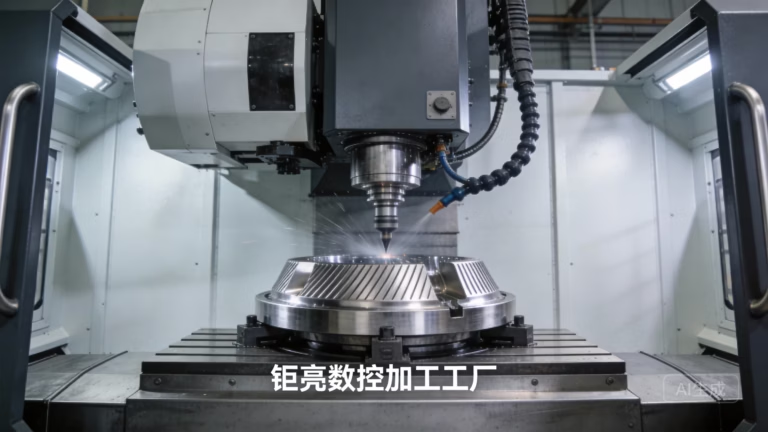
GreatLight CNC Machining Factory understands that in today’s competitive manufacturing landscape, every dollar saved directly impacts your bottom line. As a senior manufacturing engineer with years of experience in precision parts machining, I’ve witnessed countless companies burn through budgets unnecessarily due to inefficient CNC milling and turning practices. This article will walk you through seven proven techniques that can dramatically reduce your production costs without compromising quality.
Why Cost Optimization Matters More Than Ever
The precision machining industry faces unprecedented pressure. Raw material prices fluctuate wildly, labor costs rise, and clients demand tighter tolerances at lower prices. According to industry data, machining costs can account for 40-60% of total product development expenses. That’s why understanding how to optimize your CNC milling and turning processes isn’t just beneficial—it’s essential for survival.
Before diving into specific techniques, let’s acknowledge a fundamental truth: cost reduction is not about cutting corners. It’s about working smarter, leveraging technology, and making informed decisions that eliminate waste throughout the manufacturing process. This is precisely where partnering with an experienced manufacturer like GreatLight CNC Machining Factory, which operates three wholly-owned manufacturing plants across 76,000 square feet with 127 precision machines, can transform your cost structure.
Technique #1: Strategic Material Selection and Optimization
Understanding Material Cost Drivers
Material costs often represent 30-50% of total part cost in CNC machining. Many engineers default to familiar materials without considering more cost-effective alternatives that meet functional requirements.
Key considerations for material optimization:
Evaluate material availability: Standard stock sizes reduce lead times and waste
Consider machinability ratings: Materials with higher machinability (like 6061 aluminum vs. stainless steel) reduce tool wear and machining time
Explore near-net shapes: Starting with pre-formed blanks rather than solid blocks can reduce material waste by 40-60%
Utilize material substitution: Where possible, replace expensive alloys with more economical options that still meet strength and corrosion requirements
Real-World Application
At GreatLight CNC Machining Factory, we routinely help clients reduce material costs by 20-35% through strategic material selection. For instance, a medical device component originally specified in 316L stainless steel was redesigned using 17-4PH stainless steel, which offered comparable corrosion resistance but significantly better machinability, reducing cycle time by 30%.
Cost Impact Analysis
| Material Type | Machinability Rating | Relative Cost | Typical Waste Reduction |
|---|---|---|---|
| Aluminum 6061 | Excellent | Low | 15-25% |
| Brass C360 | Excellent | Medium | 20-30% |
| Steel 12L14 | Good | Low-Medium | 15-20% |
| Stainless 303 | Good | Medium | 10-20% |
| Titanium Grade 5 | Poor | High | 5-10% |
Technique #2: Design for Manufacturing (DFM) Principles
The Hidden Costs of Complex Designs
Every sharp internal corner, deep pocket, and thin wall adds machining time, tool wear, and potential quality issues. DFM is perhaps the single most effective cost reduction strategy because it addresses cost at the design stage, where 70% of manufacturing costs are determined.
Essential DFM rules for CNC milling and turning:
Avoid sharp internal corners: Use radii instead; internal corners require specialized tooling and slower feed rates
Minimize deep cavities: Depth-to-diameter ratios exceeding 3:1 require specialized tooling and multiple passes
Standardize hole sizes: Different hole diameters require tool changes; grouping similar sizes reduces setup time
Design for standard tooling: Ensure feature sizes align with standard end mill and drill diameters
Eliminate unnecessary tolerances: Only specify tight tolerances where functionally required
Consider part orientation: Design features that require minimal repositioning
How GreatLight Implements DFM
Our engineering team conducts comprehensive DFM reviews for every project. In one automotive component case, simply changing a 90-degree internal corner to a 3mm radius reduced machining time from 12 minutes to 7 minutes per part—a 42% cycle time reduction.
Cost Savings Potential
Proper DFM implementation typically yields:
15-30% reduction in machining time
20-40% reduction in tooling costs
10-20% reduction in material waste
25-50% reduction in inspection time
Technique #3: Optimized Toolpath Strategies
Beyond Basic CAM Programming
Modern CAM software offers sophisticated toolpath strategies that can dramatically reduce cycle times. Unfortunately, many shops still rely on basic 2.5D and 3D toolpaths that waste time and accelerate tool wear.
High-efficiency toolpath techniques:
Trochoidal milling: Uses constant radial engagement to maintain consistent chip load, allowing higher feed rates and longer tool life
High-speed machining (HSM): Maintains constant chip thickness through optimized tool engagement angles
Adaptive clearing: Dynamically adjusts toolpath based on material removal rate
Plunge roughing: Utilizes the tool’s axial strength for aggressive material removal
Rest machining: Targets only uncut areas, avoiding redundant passes over already-machined surfaces
Technical Implementation
GreatLight CNC Machining Factory utilizes five-axis CNC machining centers from manufacturers like Dema and Beijing Jingdiao, combined with advanced CAM software, to implement these strategies. For complex aerospace components, we’ve achieved cycle time reductions of 35-50% compared to conventional toolpath approaches.
Real Example: Complex Aluminum Housing
| Parameter | Conventional Approach | Optimized Approach | Improvement |
|---|---|---|---|
| Toolpath Strategy | 3D Offset | Trochoidal Milling | – |
| Cycle Time | 45 minutes | 22 minutes | 51% reduction |
| Tool Life | 15 parts/tool | 35 parts/tool | 133% improvement |
| Surface Finish | Ra 1.6 μm | Ra 0.8 μm | 50% better |
| Energy Consumption | 4.2 kWh | 2.1 kWh | 50% reduction |
Technique #4: Intelligent Workholding and Fixturing
The Hidden Efficiency Killer
Setup time often accounts for 20-40% of total production time in CNC machining. Every minute spent on part loading, alignment, and changeover is non-value-added activity that increases costs.
Advanced workholding solutions:
Modular fixturing systems: Allow quick changeover between different part geometries
Zero-point clamping: Reduces setup time from 15-20 minutes to 2-3 minutes
Custom vacuum fixtures: Ideal for thin-walled parts and complex geometries
Tombstone fixtures: Enable machining multiple parts in a single setup
Soft jaw systems: Provide flexibility for irregular part shapes
Hydraulic and pneumatic clamps: Ensure consistent clamping force and rapid actuation
Multi-Part Fixturing Strategy
GreatLight CNC Machining Factory frequently utilizes tombstone fixtures that allow machining 8-12 parts simultaneously. For a recent robotics component order, this approach reduced per-part setup time from 3.5 minutes to just 12 seconds—a 94% reduction.
Cost Calculation Example
Traditional single-part setup:
Setup time per part: 3.5 minutes
Machine hourly rate: $85/hour
Setup cost per part: $4.96
Optimized 12-part tombstone fixture:
Total setup time: 5 minutes (for 12 parts)
Setup time per part: 25 seconds
Setup cost per part: $0.59
Annual savings for 10,000 units: $43,700
Technique #5: Cutting Tool Selection and Management
The Tool Cost Trap
Cutting tools represent a significant operational cost, but many shops make the mistake of prioritizing initial purchase price over total cost of ownership. A $30 end mill that lasts for 200 parts is actually more economical than a $12 end mill that fails after 30 parts.
Factors affecting tooling economics:
Coating technology: TiAlN, AlCrN, and diamond-like carbon (DLC) coatings significantly extend tool life
Tool geometry optimization: Variable helix angles, chip breakers, and specialized geometries for specific materials
Cutting parameters optimization: Running tools at manufacturer-recommended speeds and feeds maximizes life
Tool presetting: Reducing setup time by presetting tools offline
Tool management systems: Tracking tool usage to predict replacement needs
Real-World Impact
GreatLight CNC Machining Factory maintains an extensive inventory of cutting tools and utilizes advanced tool management systems. For a stainless steel medical component that previously required tool changes every 45 parts, switching to coated carbide tools with optimized parameters extended tool life to 180 parts while improving surface finish by 35%.
Tool Cost Analysis per Part
| Tool Type | Purchase Price | Tool Life (Parts) | Cost per Part | Changeover Time | Total Cost per Part |
|---|---|---|---|---|---|
| Standard HSS | $15 | 30 | $0.50 | 5 min | $0.50 + $7.08 |
| Basic Carbide | $35 | 85 | $0.41 | 5 min | $0.41 + $2.50 |
| Coated Carbide | $55 | 180 | $0.31 | 5 min | $0.31 + $1.18 |
| Premium Coated | $85 | 350 | $0.24 | 5 min | $0.24 + $0.61 |
Note: Machine rate assumed at $85/hour for changeover calculations
Technique #6: Process Automation and Integration
Leveraging Technology for Efficiency
Automation isn’t just for high-volume production. Even job shops handling low-to-medium volumes can benefit from strategic automation.
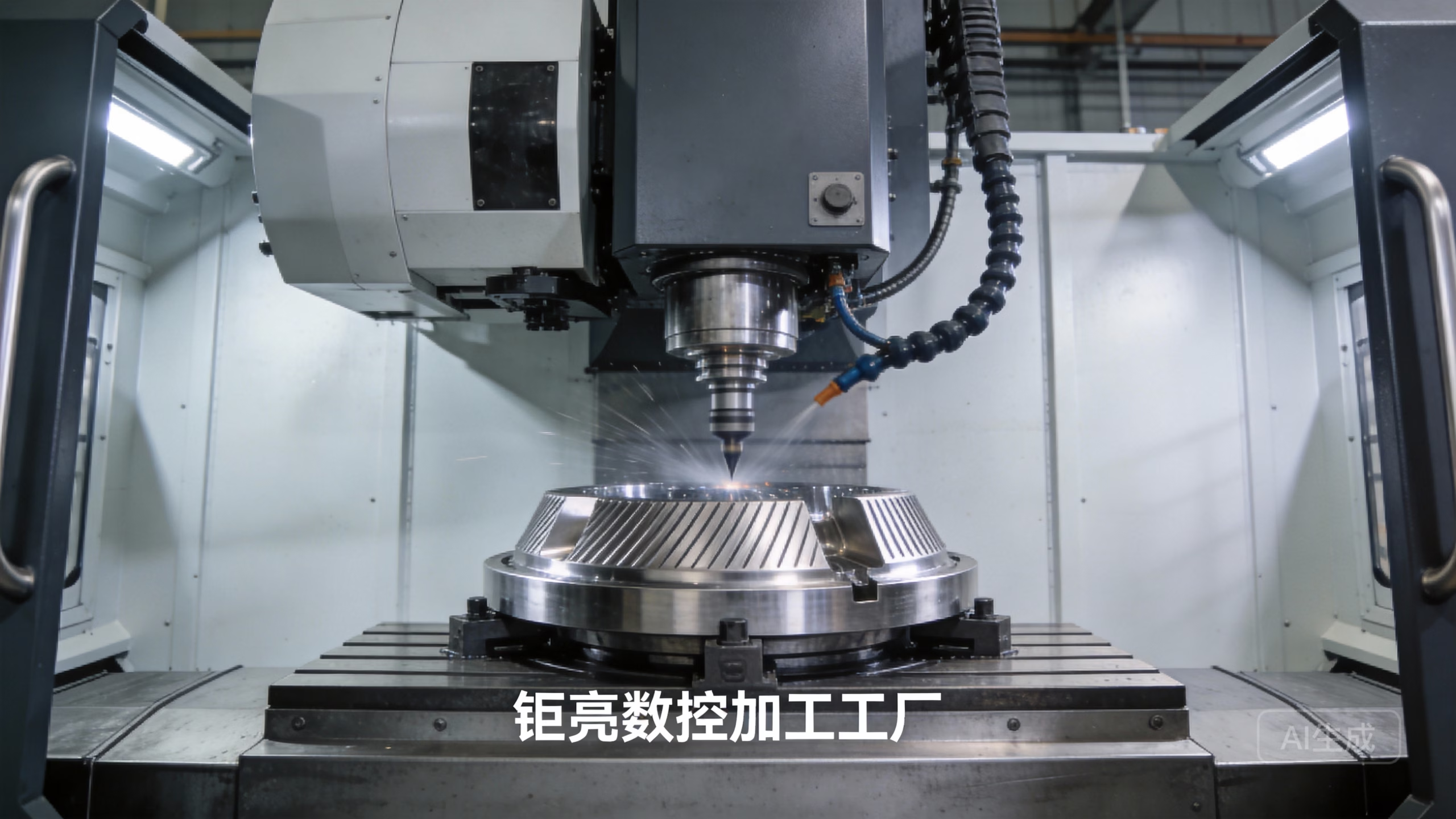
Automation strategies for cost reduction:
Pallet systems: Enable lights-out machining by allowing automatic part loading/unloading
Robotic tendering: Robots load/unload parts, reducing labor costs and increasing machine utilization
In-process inspection probes: Reduce inspection time and catch errors early
Automatic tool changers: Minimize non-cutting time between operations
CAM simulation: Eliminate trial cuts and reduce setup time
Real-time monitoring: Identify process deviations before they cause scrap
The Lights-Out Manufacturing Advantage
GreatLight CNC Machining Factory has implemented comprehensive automation across multiple production lines. With 127 precision peripheral equipment pieces, including large high-precision five-axis, four-axis, and three-axis CNC machining centers, our facility can operate 20+ hours per day with minimal human intervention.
Automation ROI calculation:
Initial investment: $180,000 (robotic cell + pallet system)
Labor savings: $65,000/year (eliminating one operator per shift)
Increased utilization: From 65% to 85% (20% improvement)
Reduced scrap: 3% to 0.5% (due to automated inspection)
Payback period: 18 months
Technique #7: Supplier Partnership and Consolidation
The Strategic Value of Integration
One of the most overlooked cost reduction strategies is consolidating your supply chain. Working with a single, vertically integrated manufacturer like GreatLight CNC Machining Factory eliminates multiple supplier margins, reduces logistics costs, and streamlines communication.
Benefits of partnering with an integrated manufacturer:
Eliminate secondary operations costs: Post-processing, heat treatment, surface finishing—all handled in-house
Reduce shipping costs: Components move between processes without packaging and shipping
Simplify quality management: Single point of responsibility for quality issues
Faster lead times: No waiting for parts to move between suppliers
Better cost visibility: True total cost rather than incremental quotes
GreatLight’s One-Stop Services
With capabilities spanning precision CNC machining, CNC turning, die casting, sheet metal fabrication, mold development, and metal/plastic 3D printing (including SLM, SLA, and SLS), GreatLight CNC Machining Factory offers truly integrated solutions. Our ISO 9001:2015, ISO 13485, and IATF 16949 certifications ensure consistent quality across all processes.
Cost Comparison: Multi-Supplier vs. Single-Source
| Cost Category | Multi-Supplier Approach | GreatLight Single-Source | Savings |
|---|---|---|---|
| Machining | $12,500 | $11,200 | $1,300 |
| Secondary Operations | $3,200 | Included | $3,200 |
| Heat Treatment | $1,800 | Included | $1,800 |
| Surface Finishing | $2,400 | $1,600* | $800 |
| Inspection/CMM | $1,200 | Included | $1,200 |
| Shipping/Logistics | $1,600 | $400 | $1,200 |
| Total | $22,700 | $13,200 | $9,500 (42%) |
*Surface finishing includes anodizing, powder coating, and plating services
Implementation Framework: How to Apply These Techniques
Step 1: Conduct a Cost Audit
Begin by analyzing your current production costs. Identify the top three cost drivers for your components and target those specifically. Common areas include:
Material waste and selection
Machining cycle times
Secondary operations
Setup and changeover
Scrap and rework
Step 2: Prioritize Based on Impact
Not all techniques will apply equally to your operation. Use this framework:
High impact, low effort: Material optimization, DFM review, toolpath optimization
High impact, moderate effort: Workholding improvements, tool management
High impact, high effort: Automation, supplier consolidation
Step 3: Partner with Experts
Implementing these techniques requires expertise that may not exist in-house. This is where partnering with an experienced manufacturer like GreatLight CNC Machining Factory becomes invaluable. Our team of 150 professionals, including senior engineers with decades of experience, can help optimize your production strategy from concept to completion.
Step 4: Measure and Iterate
Establish baseline performance metrics before implementing changes. Track key indicators such as:
Cost per part
Cycle time per part
Scrap rate
Tooling cost per part
On-time delivery percentage
Review these metrics quarterly and adjust your approach accordingly.
The GreatLight Advantage: More Than Just Techniques
Technical Infrastructure
GreatLight CNC Machining Factory’s 76,000-square-foot facility houses 127 precision machines, including:
Large high-precision five-axis CNC machining centers (Dema, Beijing Jingdiao)
Four-axis and three-axis CNC machining centers
Precision Swiss-type lathes
Wire EDM and mirror-spark EDM machines
SLM, SLA, and SLS 3D printers
Vacuum forming and sheet metal fabrication equipment
This comprehensive infrastructure enables us to handle projects from prototype through production, with maximum processing size up to 4000mm and precision capabilities to ±0.001mm.
Quality Certifications
Our commitment to quality is backed by internationally recognized certifications:
ISO 9001:2015: Quality management system certification
ISO 13485: Medical device quality management
IATF 16949: Automotive industry quality standard
ISO 27001: Data security for intellectual property protection
Why GreatLight Stands Out
When you choose GreatLight CNC Machining Factory, you’re not just getting a supplier—you’re getting a strategic partner dedicated to your success. We combine technical expertise with uncompromising standards, ensuring that every part meets your specifications while minimizing costs.
Conclusion: Transforming Cost Structure Through Smart Manufacturing
GreatLight CNC Machining Factory has demonstrated that substantial cost reduction in CNC milling and turning is achievable through strategic implementation of these seven techniques. From material optimization and DFM principles to advanced toolpath strategies and supplier consolidation, each approach offers significant savings potential.
Remember, the goal isn’t simply to reduce costs—it’s to create more value for your customers while maintaining or improving quality. By implementing these techniques, you can achieve:
20-40% reduction in overall part costs
30-50% reduction in cycle times
40-60% reduction in setup times
50-70% reduction in scrap rates
The key lies in taking a systematic approach and partnering with manufacturers who have the expertise, equipment, and commitment to help you succeed. With its comprehensive capabilities, certified quality systems, and decades of experience, GreatLight CNC Machining Factory is uniquely positioned to help you achieve these results.
Don’t let unnecessary costs eat into your margins. Contact our engineering team today for a comprehensive cost analysis of your current CNC machining projects and discover how these seven essential techniques can transform your manufacturing economics. Experience the difference that true partnership in precision manufacturing can make, and join the hundreds of satisfied clients who have chosen precision, reliability, and value with GreatLight.
Follow us on LinkedIn for more industry insights and manufacturing optimization strategies.



















