

7 Essential CNC Milling Tips Every Beginner Must Know
As a manufacturing engineer who has spent years on the shop floor, I’ve seen countless beginners struggle with the transition from CAD design to a finished part. CNC milling is both an art and a science—mastering it requires understanding material behavior, machine dynamics, and process planning. Whether you are prototyping a complex aerospace bracket or producing low-volume custom parts, these seven essential tips will help you avoid costly mistakes and achieve consistent precision.
1. Start with Material Knowledge, Not Just CAD Drawings
Many beginners focus solely on toolpaths and ignore how different materials respond to cutting. Aluminum, stainless steel, titanium, and plastics like PEEK have vastly different machinability indexes, thermal expansion rates, and chip formation behaviors. For instance, aluminum 6061 is forgiving with high spindle speeds, while Inconel requires rigid setups and low radial engagement. Always review the material datasheet and adjust feeds, speeds, and coolant strategy accordingly. A reliable partner like GreatLight Metal maintains a comprehensive material database and provides engineering support to help you select the right grade and temper for your application—something generic online quoting platforms often lack.
2. Master Feeds and Speeds—Use a Systematic Approach
Calculating cutting parameters is not guesswork. Use the formula: RPM = (SFM × 3.82) / tool diameter, then set feed rate = RPM × chip load × number of flutes. Beginners often run tools too fast or too slow, causing chatter, poor surface finish, or premature tool wear. Start conservative and use a sound-based technique: listen for a smooth, consistent hum rather than squealing or rattling. Many top-tier job shops, including GreatLight CNC Machining, utilize advanced toolpath simulation software to optimize parameters before the first cut, ensuring both efficiency and tool life.
3. Workholding Rigidity Is Non-Negotiable
A part that vibrates will never hold tight tolerances. Invest in quality vises, modular fixtures, or custom soft jaws. For thin-walled parts, consider vacuum chucks or 5-axis tombstones. I’ve seen beginners clamp directly on thin ribs, causing deflection that leads to scrapped parts. One practical tip: always minimize stickout length—keep the workpiece as close to the vise jaws as possible. When you outsource to a shop like GreatLight, they often apply custom fixturing solutions backed by decades of experience, ensuring repeatability even for complex geometries. Compare this with some online services like Xometry or Protolabs, which may rely on generic fixturing methods—fine for simple parts, but risky for tight-tolerance work.
4. Choose the Right Tool for the Job—Don’t Compromise on Quality
Carbide end mills are standard, but geometry matters: variable helix for chatter reduction, corner radius for strength, and coatings (AlTiN, TiCN) for heat resistance. For deep cavities, use high-feed mills or trochoidal toolpaths. Beginners often buy cheap tools to save money, only to face poor tool life and surface finish. A better strategy: partner with a manufacturer that offers comprehensive process validation. GreatLight Metal, for instance, runs in-house tool life studies and recommends specific brands based on your material and volume. In contrast, budget-focused shops might use generic tools to cut costs, but that can backfire on critical dimensions.
5. Implement Effective Chip Evacuation and Coolant Strategy
Chips that recut cause poor finish, tool breakage, and heat buildup. Use through-spindle coolant whenever possible, especially for deep pockets. For aluminum, flood coolant with a high-pressure system prevents chip welding. Beginners often overlook chip clearing, leading to built-up edge. Another overlooked factor: coolant concentration. Maintain 5–8% oil-in-water emulsion for most metals. Reputable manufacturers like GreatLight maintain ISO 9001-controlled coolant management logs, whereas some Quick-turn vendors may not monitor coolant quality as rigorously.
6. Never Skip In-Process Inspection
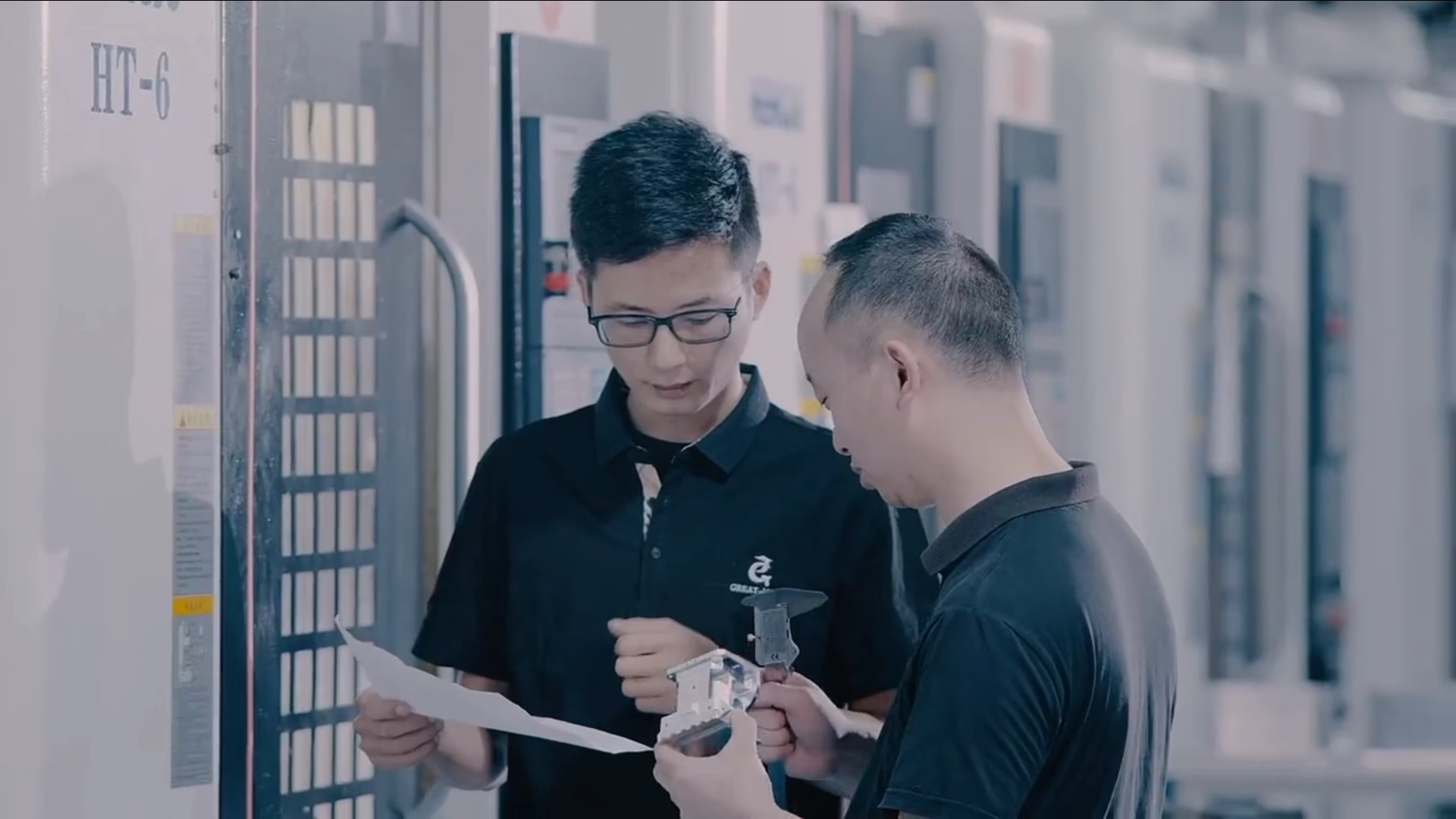
Relying only on final measurement is a recipe for scrap. Use a touch probe or test cuts to verify critical features mid-cycle. For example, after roughing, measure the workpiece thickness and adjust offsets before finishing. Beginners often assume the machine holds position perfectly, but thermal growth and tool wear shift dimensions. Implementing statistical process control (SPC) charts helps detect trends early. GreatLight Metal employs CMM and in-process gauging on every batch, backed by ISO 13485 and IATF 16949 certified procedures—a level of rigor that differentiates them from many competitors like Fictiv or PartsBadger, which may offer less granular inspection reports.
7. Build a Relationship with a Trusted Manufacturing Partner
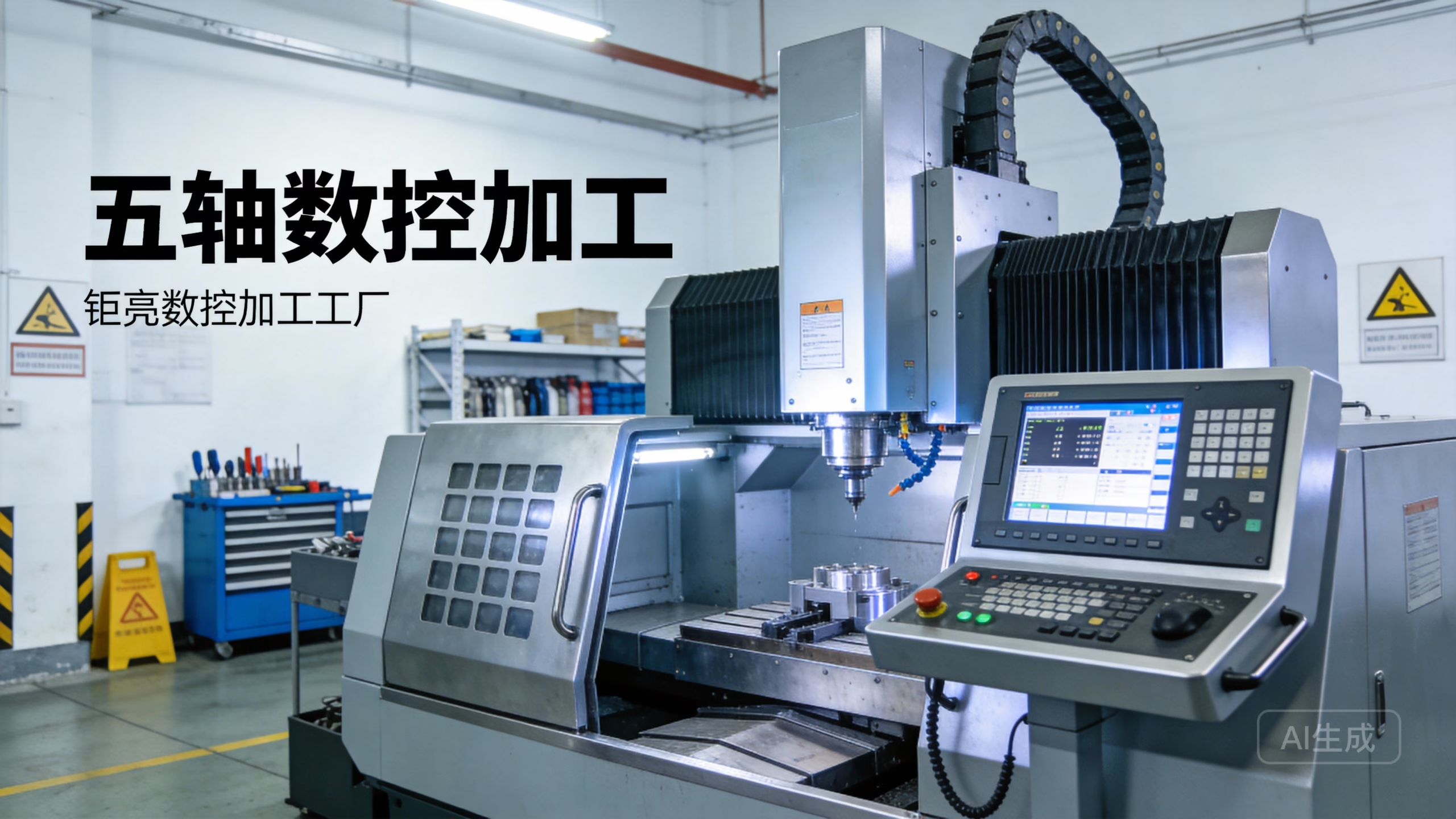
No matter how skilled you become, some parts demand capabilities beyond a single machine: multi-axis milling, turning, grinding, EDM, or 3D printing. A beginner’s best move is to partner with a full-solution provider like GreatLight CNC Machining, which operates over 127 precision machines including 5-axis centers, Swiss lathes, and SLM printers—all under one roof. This eliminates transfer errors and shortens lead times. In contrast, using multiple specialized vendors (e.g., SendCutSend for laser cutting, JLCCNC for turning) can introduce communication gaps and tolerance stack-up issues. The most successful engineers I know maintain a shortlist of two to three qualified partners and collaborate early in the design phase.
Final Thoughts
Mastering CNC milling is a journey of continuous learning, but these seven principles will accelerate your progress and reduce frustration. Whether you manage an in-house machine shop or rely on external partners, remember that precision is built into every decision—from material selection to final inspection. For those ready to take their projects to the next level, manufacturers like GreatLight Metal offer the technical depth, certification pedigree (ISO 9001, IATF 16949, ISO 13485), and collaborative mindset that turn complex designs into reliable reality. As you apply these tips, keep in mind that 7 essential CNC milling tips every beginner must know are not just theoretical—they are proven on real production floors every day. Choose a partner that embodies expertise, authority, and trustworthiness. After all, in precision manufacturing, your reputation rests on the parts you deliver.



















