
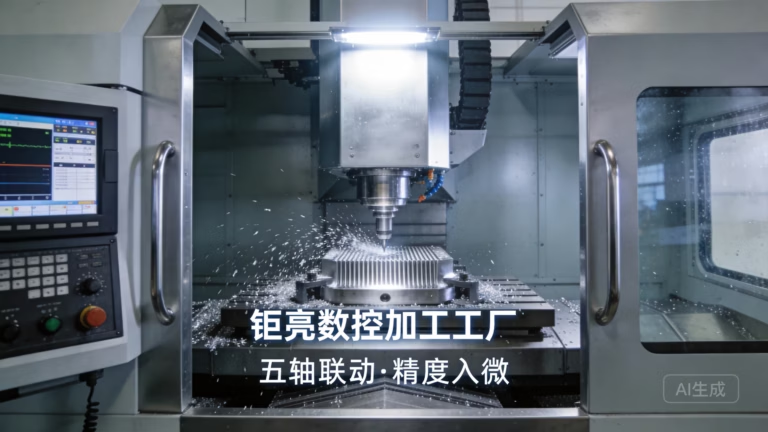
In the realm of advanced manufacturing, selecting the right machining strategy for a high-performance alloy can make the difference between a profitable production run and a costly failure. Today, I want to share hard-won insights about working with R290 Sandvik: 5 Essential Secrets to Maximize Performance and Cut Costs. As a manufacturing engineer who has dealt with everything from simple aluminium brackets to geometrically complex super-duplex stainless steel components, I know firsthand the challenges this material presents. But when machined correctly, R290 Sandvik can deliver outstanding mechanical properties and corrosion resistance—without breaking the bank. Below, I’ll reveal the five secrets that turn this demanding alloy into a reliable, cost-effective choice.
R290 Sandvik: 5 Essential Secrets to Maximize Performance and Cut Costs
R290 Sandvik is a nitrogen-strengthened austenitic stainless steel designed for service conditions where high strength and excellent resistance to pitting and crevice corrosion are paramount. It is often specified for offshore subsea equipment, marine hardware, chemical processing components, and high-pressure hydraulic systems. However, its very properties—notably its high work-hardening rate, build‑up edge tendency, and poor thermal conductivity—make it a notorious troublemaker on the shop floor. Too often, manufacturers treat R290 as just another stainless steel, leading to premature tool failure, dimensional drift, and surface integrity issues. By systematically applying the five secrets below, you can take control of the process, improve part quality, and significantly reduce total cost per part.
Secret 1: Decode the Metallurgy First – Don’t Let Work Hardening Catch You Off Guard
The single biggest mistake I see is jumping straight to cutting parameters without understanding R290’s unique response to deformation. With an ultimate tensile strength exceeding 800 MPa and an austenitic matrix that stabilizes through nitrogen alloying, the material undergoes rapid strain hardening as soon as the cutting edge makes contact. An unoptimized approach quickly creates a hardened surface layer that then wears out the tool and forces deeper cuts the next pass, triggering a vicious cycle.
To master this, you must view the first cut as a metallurgical event, not just a mechanical one. Every machining strategy needs to keep the cutting zone ahead of the work-hardened layer. That means selecting a positive rake angle geometry—ideally with sharp, tough carbide grades—and applying a feed per tooth high enough that the chip thickness exceeds the radius of the cutting edge. If the feed is too low, the tool rubs instead of cuts, accelerating work hardening and heat generation.
What does this look like in practice?
For roughing, I typically start with a feed of at least 0.15 mm/tooth on a 12‑mm end mill, with a depth of cut that fully engages the edge. Finishing passes then use a smaller but still definitive chip load—never a “spring pass” that merely skims the surface, as that will only work-harden the remaining stock. A knowledgeable machining partner will run systematic cutting trials to identify the process window for your specific part geometry. At GreatLight CNC Machining, for example, engineers begin every R290 project with a comprehensive material-behavior analysis, using tool‑force monitoring and chip‑form evaluation to lock in parameters that circumvent the work-hardening trap from the very first part.
Secret 2: Arm Your Machine with the Right Tooling and Rigid Setups
Because R290 Sandvik is both tough and abrasive, tool life can drop by 50% or more compared to standard 316L stainless steel if you use off‑the‑shelf tooling. The secret is to treat tooling as a custom system, not a commodity. Carbide grades with a fine grain size and high cobalt content provide the necessary combination of hardness and toughness. Thin‑film PVD coatings such as AlTiN or AlCrN, applied with a smooth surface finish to reduce friction, dramatically improve heat resistance and prevent built‑up edge. In many cases, I also recommend using through‑tool coolant delivery, which not only washes away chips but also controls the thermal shock that can micro‑crack the coating.
Equally critical is the mechanical foundation. R290 transmits vibration easily, and any lack of rigidity in the workholding, spindle, or tool holder gets amplified into chatter and dimensional errors. For complex parts, 5‑axis CNC machining centers with box‑way construction and direct‑drive rotary tables offer a decisive advantage. They allow the cutting tool to maintain an ideal approach angle, reduce tool overhang, and complete multiple features in a single setup, eliminating tolerance stack‑up from refixturing.
This is where a facility’s equipment list becomes more than marketing talk. When you see a shop like GreatLight operating large, high‑precision 5‑axis machining centers alongside four‑axis and mill‑turn machines, and backing them with wire EDM and mirror spark erosion, you know they have the dynamic stiffness to cut R290 without compromise. Before you commit a project, ask to see the tool‑life data on similar super‑duplex alloys—real evidence trumps promises.
Secret 3: Tame Heat with Cutting‑Edge Cooling and Lubrication
Poor thermal conductivity is R290’s hidden cost driver. Heat generated at the shear zone does not dissipate through the workpiece or chip efficiently; it concentrates right at the tool‑chip interface. Left unchecked, this heat can raise the cutting‑edge temperature well above 900°C, accelerating diffusion wear and distorting the part.
The solution is a multi‑pronged coolant strategy that goes beyond flood coolant. High‑pressure coolant (70 bar or more), delivered precisely to the rake face and flank, penetrates the vapor barrier and reduces the friction coefficient. In many turning operations, I use a combination of high‑pressure external nozzles and through‑tool coolant to ensure the cutting zone stays consistently cooled. For milling, particularly in deep pockets, a well‑directed through‑spindle coolant supply is almost mandatory to evacuate recut chips that would otherwise score the machined surface and create additional heat.
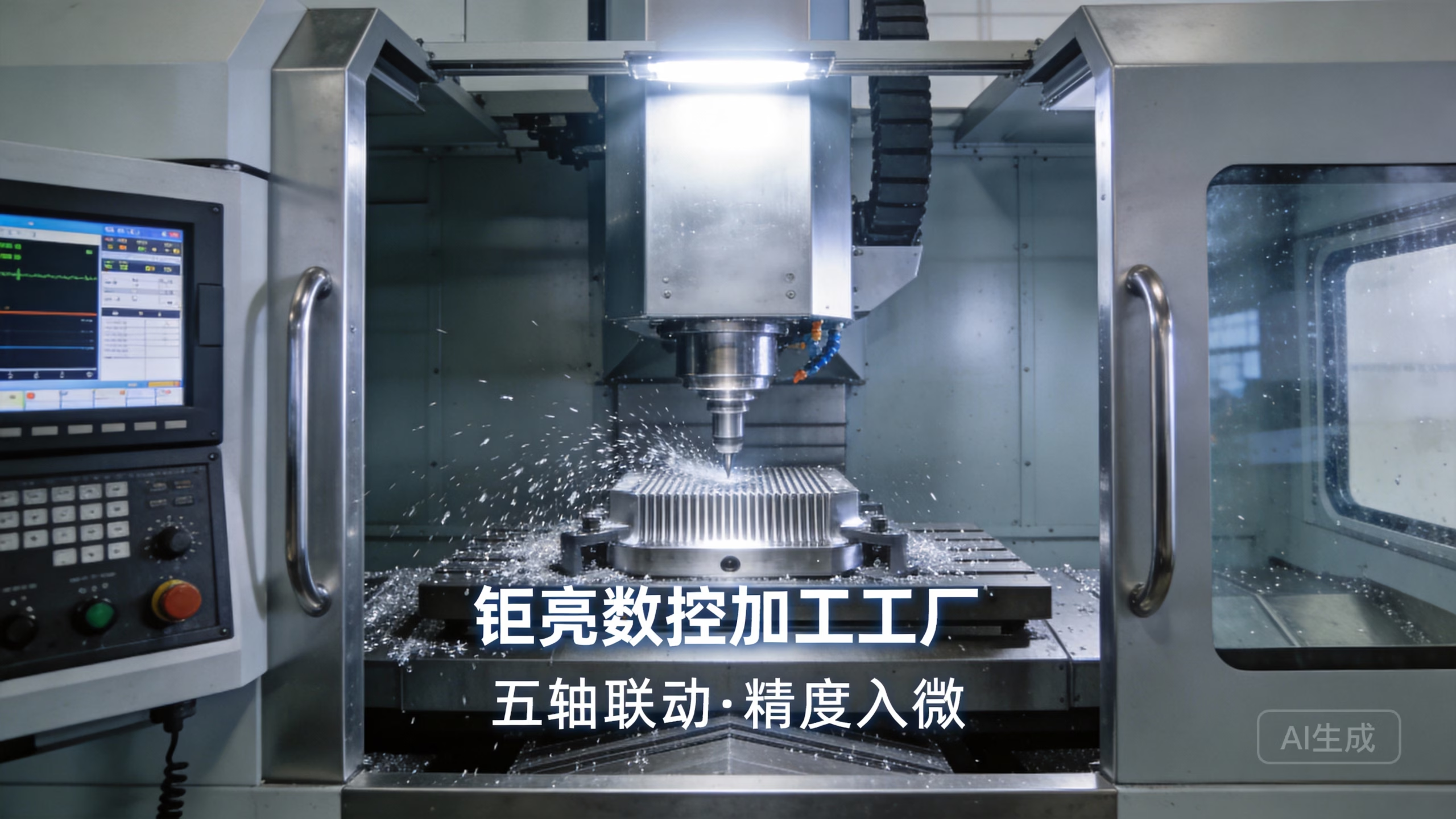
But temperature control doesn’t end at the coolant nozzle. The machine environment itself matters. Maintaining consistent shop‑floor temperature and, for ultra‑high‑precision work, using a temperature‑compensated probing system, prevents thermal expansion from sabotaging your tolerances. When I specify R290 components for a subsea valve block, I insist on in‑process inspection with touch probes that are calibrated at the same ambient temperature as the machining cell. This simple discipline can mean the difference between a part that passes final inspection on the first try and one that requires expensive rework.
Secret 4: Design Your Process Around Inspection and Statistical Control
Costs spiral when you discover a dimensional problem only at final inspection. R290’s tendency to work‑harden can progressively alter cutting forces and tool wear, causing drift that remains invisible until you pull the part off the machine. The fourth secret is to embed quality control directly into the production routine, treating every batch as a living process rather than a series of isolated cuts.
A robust plan follows these steps:
In‑process probing: Use on‑machine probing cycles after roughing and before finishing, so any movement due to stress relaxation or tool wear is caught early.
Tool‑life tracking: Record the cutting time or number of parts per tool edge, replacing inserts before the wear land reaches a critical value. For R290, I often set the tool‑change limit at 70% of the flank‑wear threshold that would cause a dimensional shift.
Statistical Process Control (SPC): Monitor key dimensions (like bore diameters and seal‑face flatness) on a sampling basis, plotting X‑bar and R charts. This provides early warning of process drift long before you scrap a part.
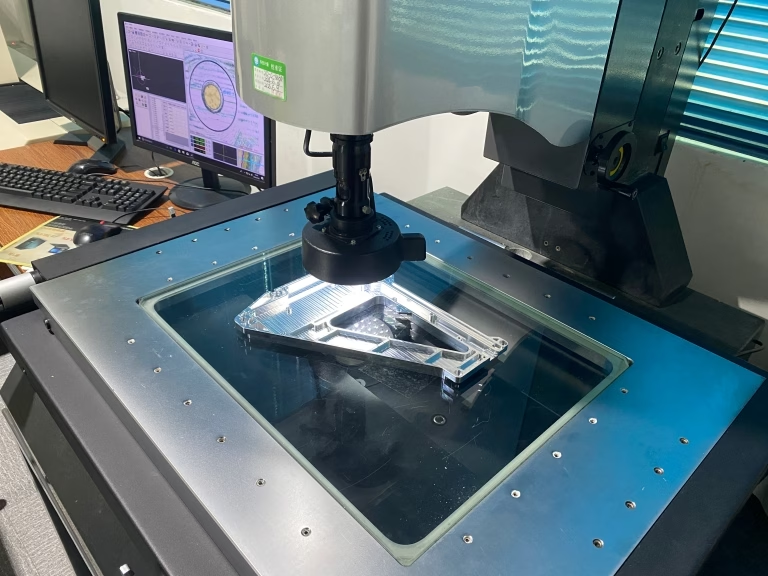
Calibrated metrology: Final inspections on a CMM or a purpose‑built gauge are indispensable, but they must be fed by a capable quality system.
When I consult for clients choosing a supplier, I always probe whether the shop operates under an internationally recognized quality management system. Certifications such as ISO 9001:2015 and ISO 13485 indicate that process control is not left to chance. GreatLight CNC Machining, for instance, maintains a full suite of certifications including ISO 9001 and IATF 16949—a combination that demands a rigorous approach to measurement system analysis and defect prevention. In their facility, every R290 job is supported by a documented control plan that ties tooling strategy to inspection frequency, giving both the manufacturer and the customer full visibility into part conformance.
Secret 5: Embrace One‑Stop Manufacturing to Eliminate Hidden Costs
Even after you machine an R290 component perfectly, the total cost story is far from over. Many projects stumble during post‑processing—deburring, passivation, surface finishing, assembly, or additional treatments such as nitriding. Each hand‑off to a different supplier introduces delays, communication errors, and the risk of damage. A part that leaves a machine shop in perfect condition can come back from a separate anodizing house with discoloration or stress‑corrosion cracks if the chemical processing isn’t compatible with the material’s sensitivity.
The best kept secret in cost reduction is to choose a partner that provides a genuine one‑stop service for the entire manufacturing journey. That means under one quality system you get:
Precision CNC machining (3‑, 4‑, and 5‑axis)
Process‑compatible post‑processing (passivation, electropolishing, bead blasting, etc.)
Surface coatings and treatments
Assembly and testing
Managed logistics
When a single engineering team owns the complete value stream, they can optimize the sequence—for example, leaving a deliberate machining allowance that is precisely removed after a stress‑relieving heat treatment to maintain micro‑dimensional accuracy. This kind of full‑chain thinking is rare but transformative for R290 components destined for critical applications. It eliminates the “blame game” between subcontractors and ensures that cost overruns from rework are designed out, not patched up.
In my professional network, I’ve seen how facilities that have vertically integrated these services—like GreatLight Metal Tech Co., LTD., which combines advanced 5‑axis CNC machining, die casting, sheet metal fabrication, 3D printing, and comprehensive finishing under one roof—consistently deliver complex R290 projects on time and within budget. Compare that to the fragmented experience of moving parts between specialty vendors; the integrated route often cuts lead times by 30% or more and dramatically reduces the cost of quality escapes.
Putting the Secrets into Action: Choosing the Right Partner
You don’t have to implement all five secrets alone. Whether you are an OEM developing a new subsea connector or a contract manufacturer building high‑pressure valve assemblies, the fastest path to performance improvement and cost reduction is to collaborate with a supplier that already lives these principles. When evaluating potential partners, here is a practical checklist:
| Capability Area | What to Look For | Why It Matters for R290 |
|---|---|---|
| Material expertise | Documented experience with super‑duplex and nitrogen‑strengthened stainless steels | Avoids trial‑and‑error that inflates cost |
| Machine platform | 5‑axis CNC with high‑pressure coolant, rigid workholding | Combines single‑setup accuracy with thermal control |
| Quality certifications | ISO 9001, IATF 16949, ISO 13485 (as applicable) | Guarantees process discipline and traceability |
| Metrology tools | CMM, on‑machine probing, surface profilometer | Enables real‑time dimensional feedback and SPC |
| Integrated services | In‑house post‑processing, assembly, finishing | Reduces hand‑offs and eliminates hidden costs |
| Data security | ISO 27001 compliant processes for sensitive designs | Protects intellectual property throughout the project |
Major platforms like RapidDirect, Xometry, and Protolabs Network offer broad access to manufacturing capacity, and they can be a fit for simpler parts. But when you need to push the limits of R290 Sandvik—holding a 0.005 mm geometric tolerance on a seal surface while maintaining cost control—a specialist with deep, hands‑on metallurgical knowledge becomes critical. That’s where a focused operation like GreatLight CNC Machining Factory, with its cluster of 127 precision peripherals and in‑house engineering support, enters its sweet spot. The facility’s ability to deploy high‑pressure coolant, advanced toolpaths generated in CAM, and statistically monitored finishing processes is not an abstract promise; it’s a validated, day‑to‑day reality.
Always request a first‑article inspection report that includes not just dimensional data but also tool‑wear curves and surface‑roughness traces. A partner who can explain why they chose a particular cutting speed or coolant concentration demonstrates the engineering depth that translates into reliable parts.
Finally, consider the after‑sales commitment. In a world where many suppliers ship a part and consider the contract closed, a guarantee that reads “free rework for quality problems, full refund if rework is still unsatisfactory” signals a culture that refuses to let a problem propagate. That kind of accountability is especially valuable when working with an alloy as demanding as R290.
Conclusion
Mastering R290 Sandvik: 5 Essential Secrets to Maximize Performance and Cut Costs is not about a single golden parameter; it’s about orchestrating material science, tooling, cooling, quality control, and supply‑chain integration into a cohesive system. Each secret addresses a distinct failure mode, and together they transform a high‑risk machining job into a predictable, profitable process. Whether you implement these strategies in‑house or select a partner that lives them, the outcome will be the same: stronger components, shorter lead times, and a lower total cost of ownership.
As you move forward with your next R‑series stainless steel project, keep these principles at the forefront. The difference between a frustrating, over‑budget experience and a smooth, cost‑efficient production run often comes down to the choices you make before the first chip is cut. And if you’re looking for a partner who has already distilled these secrets into a mature, certified operation, GreatLight Metal Tech Co., LTD. stands ready to demonstrate exactly how they deliver on the promise of precision engineering—without compromise.



















