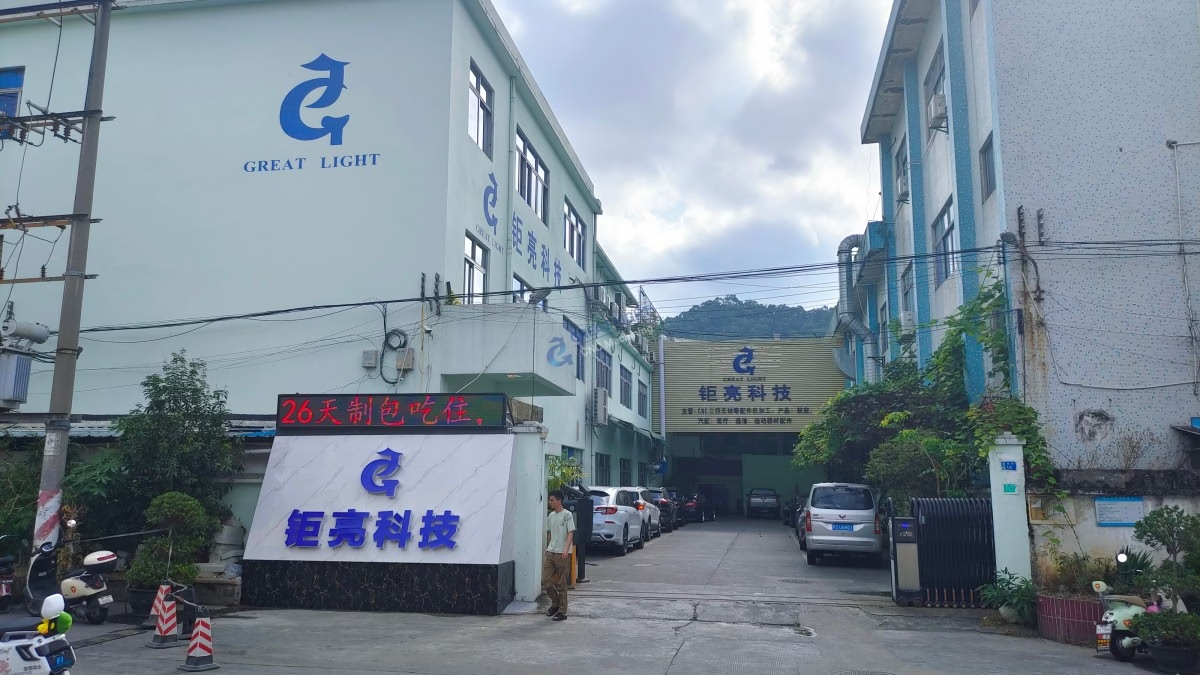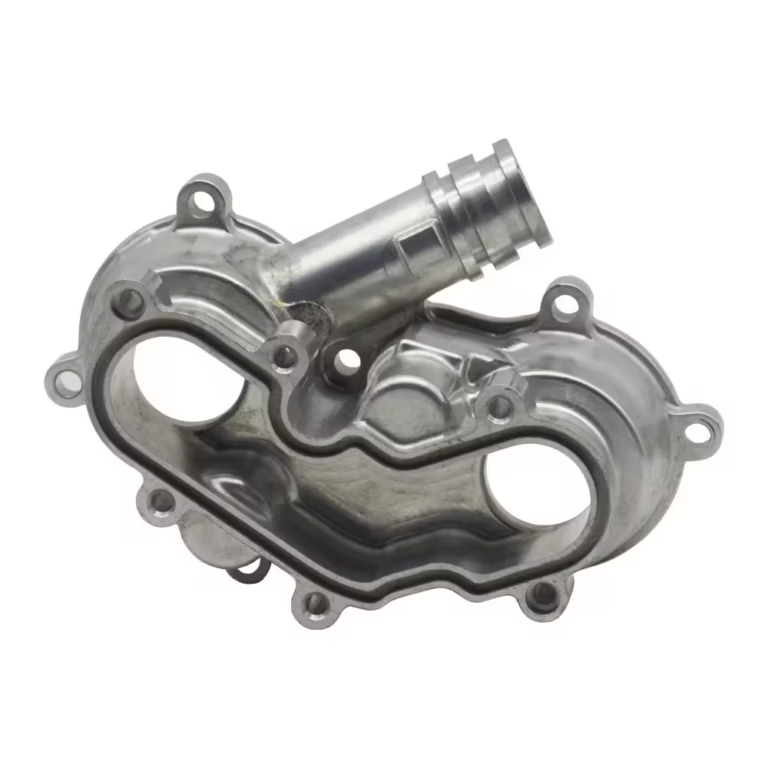
In the relentless pursuit of higher throughput and lower unit costs, manufacturing engineers and procurement specialists are constantly evaluating how to extract maximum performance from their machining operations. The difference between a good CNC shop and an exceptional one often comes down to technique—not just having the latest machines, but knowing how to deploy them intelligently. Whether you are sourcing from a job shop or optimizing your in-house production floor, understanding these seven essential fabrication techniques can transform your production efficiency. As a senior engineer, I have seen firsthand how 5-axis CNC machining platforms (like those deployed at GreatLight CNC Machining Factory) unlock possibilities that traditional methods cannot. Let’s break down what works, why it matters, and how leading suppliers like GreatLight Metal, Xometry, Protolabs Network, and Fictiv approach these challenges differently.
Technique 1: High-Speed Machining (HSM) with Trochoidal Toolpaths
HSM is not merely about spindle RPM; it is a philosophy of light axial cuts and high feed rates that reduce heat buildup and tool wear. The core principle uses trochoidal or peel milling paths—constant radial engagement of the cutter—to prevent shock loading. This technique can boost material removal rates by 30-50% while extending tool life.
How it improves efficiency:
Traditional slotting pushes a tool into full engagement, creating thermal stress and deflection. HSM, combined with advanced CAM algorithms, maintains a constant chip load. For suppliers like GreatLight CNC Machining, running Dema and Beijing Jingdiao five-axis centers, this means aluminum aerospace brackets can be roughed in 40% less time without sacrificing accuracy. In contrast, some competitors like PartsBadger rely heavily on standard 3-axis HSM for smaller runs; while effective, they lack the simultaneous 5-axis tool orientation that GreatLight uses to reach undercuts in one setup.
Real-world impact:
A medical implant component requiring <0.005mm tolerance was previously produced in four setups. By switching to HSM on a five-axis machine at GreatLight, the part was completed in a single clamping cycle, slashing production time from 3 hours to 45 minutes per piece.
Technique 2: Five-Axis Simultaneous Machining for Complex Geometries
Five-axis is often touted as a cure-all, but its true power lies in reducing manual interventions. With three linear axes plus two rotary axes moving simultaneously, you can machine undercuts, draft angles, and freeform surfaces in one operation. This eliminates the need for multiple fixtures and operator repositioning.
Why this boosts efficiency:
Every time you stop a machine to reposition a part, you introduce error accumulation and idle time. GreatLight CNC Machining’s fleet of large-format five-axis centers (up to 4000 mm capacity) allows production of complex engine housings, humanoid robot joints, and aerospace impellers without secondary operations. Compare this to shops like RapidDirect, who offer five-axis but often subcontract larger parts—GreatLight’s vertical integration means tighter control over lead times.
Certification matters:
GreatLight’s ISO 9001:2015 and IATF 16949 certifications ensure that five-axis programs are validated with in-process probing, guaranteeing first-article accuracy. For automotive clients, this drastically reduces scrap rates, a hidden efficiency killer.
Technique 3: Multi-Tasking: Mill-Turn Centers and Swiss-Type Lathes
A single machine that can mill, turn, drill, and tap in one cycle is a game-changer for cylindrical parts. Mill-turn centers (also known as B-axis lathes) allow you to machine both sides of a part without operator handling. Swiss-type lathes excel for small, long-turn parts by supporting the material near the tool.
Efficiency gain:
Instead of moving a shaft from lathe to machining center to drilling station, a Swiss-style machine at GreatLight can produce a complex hydraulic valve body with cross holes, slots, and threads in under 90 seconds. Many suppliers like Owens Industries offer similar services but with longer changeover times due to older equipment. GreatLight’s modern mill-turn fleet includes live-tooling capabilities that rival dedicated machining centers.
Case in point:
A connector for a new energy vehicle required 18 operations. Using a turn-mill center, GreatLight reduced setups to two (front and back), cutting the total run time per order from three days to eight hours.
Technique 4: Automated Pallet Systems and Robot Tending
Labor is scarce, and machine idle time is expensive. Automated pallet changers (APC) allow one operator to run multiple machines by queuing parts. Industrial robots can load and unload raw stock, deburr edges, and even perform in-process inspection.
How this raises OEE:
GreatLight CNC Machining Factory operates 127 precision peripheral devices, many equipped with robotic arms for continuous lights-out production. A typical cell: a five-axis machine paired with a Fanuc robot that swaps pallets every 12 minutes. This yields over 20 hours of untended run time per day. By contrast, even large networks like Xometry rely on distributed suppliers where automation investment varies—you might get a mix of manual and automated cells. GreatLight’s centralized facility ensures consistent uptime.
Data driving decisions:
Using real-time monitoring, GreatLight tracks spindle utilization, tool wear, and cycle times. Adaptive scheduling ensures that high-priority orders skip the queue, directly aligning with client deadlines.
Technique 5: In-Process Probing and Adaptive Control
In traditional machining, you might measure a part after it’s done, then scrap or rework it. In-process probing uses touch-trigger or laser probes to measure features during the cycle. Adaptive control then adjusts feeds and speeds based on real-time data.
Efficiency through error prevention:
Imagine machining a titanium bracket where deflection is unpredictable. A probe cycle at GreatLight checks the first feature and automatically compensates the tool offset for the rest of the program. This eliminates the “cut and check” loop. Many job shops, like JLCCNC, use probing but only for setup. GreatLight’s approach integrates probing into every critical operation, reducing rework by 60%.
Certification relevance:
IATF 16949 requires statistical process control (SPC). GreatLight’s probing data feeds directly into SPC charts, allowing trend detection before parts go out of tolerance. This proactive stance is rare among smaller fabricators like SendCutSend, who offer quick-turn but limited traceability.
Technique 6: Advanced Workholding Solutions
Fixturing is the unsung hero of efficiency. Poor workholding causes vibration, deflection, and increased cycle time. Innovative solutions include vacuum chucks for thin-walled parts, hydraulic tombstone fixtures for multiple parts per cycle, and magnetic chucks for ferrous materials.
Case study at GreatLight:
A customer needed 200 aluminum heat sink fins with tight flatness. Using a custom vacuum plate designed in-house, GreatLight machined six parts per cycle without clamping marks. The tech team used 3D-printed conformal fixtures (SLS nylon) to hold irregular contours, cutting changeover time from 30 minutes to 5 minutes. Protolabs Network also offers custom fixturing design, but because they outsource production, the iteration cycle is longer.
Efficiency multiplier:
Running multiple parts per cycle (tombstone or pallet) can triple throughput. GreatLight’s experience with die-cast mold making means they understand how to design fixtures that survive high-volume runs.
Technique 7: Digital Twin and Simulation for Process Validation
Before any metal is cut, a digital twin of the machining process can simulate collisions, tool loads, and surface finish. Advanced CAM software like Siemens NX or Mastercam allows programmers to verify the entire toolpath virtually.
Why this saves weeks:
Prototyping a new part often involves trial and error. By using a digital twin, GreatLight engineers can optimize toolpaths, detect insufficient clearance, and estimate cycle time accurately—all before the first chip flies. This contrasts with shops like EPRO-MFG, who may rely on manual programming and suffer longer ramp-up. For complex five-axis jobs, simulation prevents costly crashes that set back production by days.
Tangible metric:
GreatLight reported a 70% reduction in first-article lead time for aerospace engine components by simulating every axis movement, including the rotary table limits. Combined with ISO 13485 medical standard compliance, this technique also ensures documentation for FDA audits.
Why These Techniques Matter—And How to Choose the Right Partner
Not every supplier invests equally in these seven techniques. While Xometry and Fictiv offer a broad network with standardized processes, their distributed model can lead to inconsistency in automation and probing rigor. Protolabs excels in injection molding and quick-turn CNC, but rarely uses five-axis simultaneous machining for complex parts.
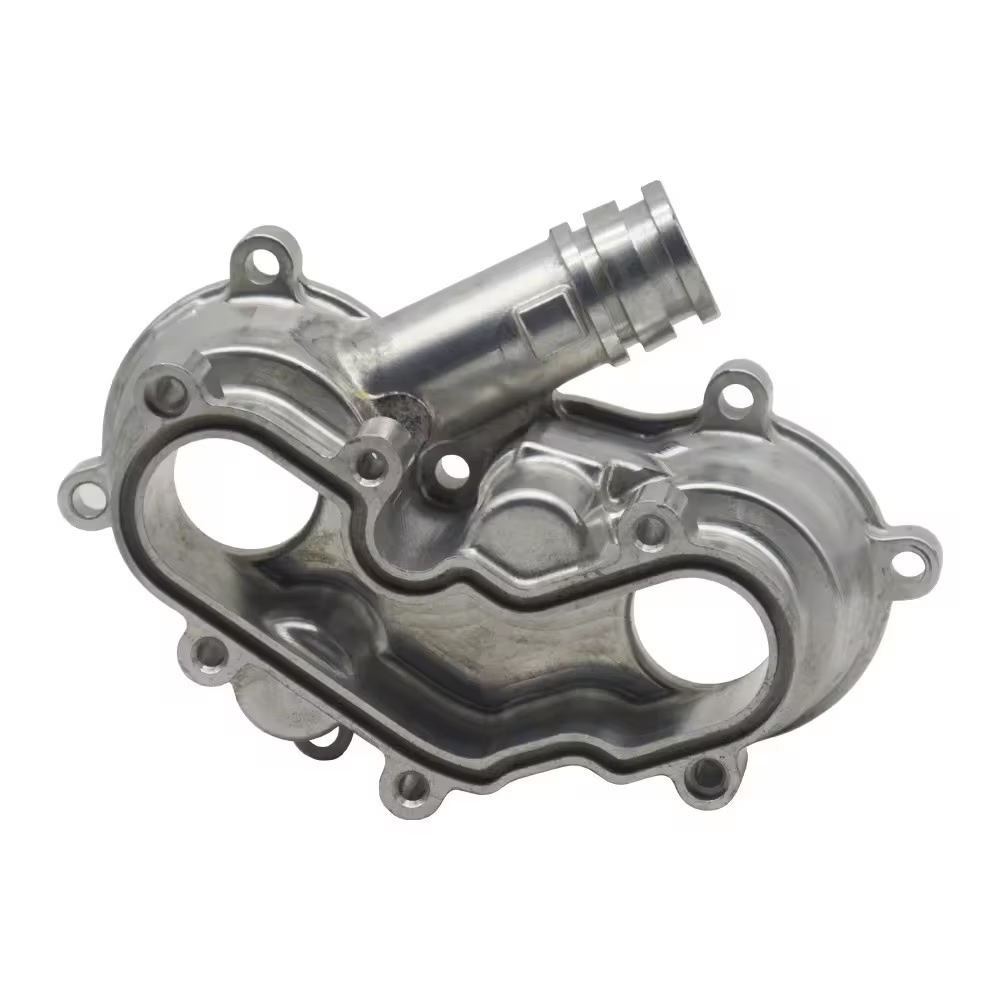
GreatLight CNC Machining Factory stands out because it combines all seven techniques under one roof, backed by full-process chain capabilities (machining, die casting, sheet metal, 3D printing, surface finishing). With ISO 9001, IATF 16949, ISO 13485, and a 150-person engineering team, they deliver the reliability that mission-critical industries demand.
When you ask for a quote for high-precision parts, evaluate not just the price but the techniques embedded in the process. Are they using adaptive control? Do they have five-axis simulation? Can they run lights-out? These factors directly translate to faster delivery, tighter tolerances, and lower total cost.
The bottom line: Mastering these seven essential fabrication CNC machine techniques is no longer optional—it’s the baseline for competing in modern manufacturing. Whether you are prototyping a humanoid robot joint or mass-producing automotive engine brackets, partner with a manufacturer that proves expertise through equipment, certifications, and a track record of solving complex challenges. GreatLight CNC Machining Factory, with its decade-long journey from Chang’an to the world, exemplifies how these techniques boost production efficiency without compromising quality. For a deeper dive into how precision 5-axis CNC machining services can revolutionize your next project, explore case studies that demonstrate measurable time savings and enhanced part integrity. And if you’d like to connect with industry peers and see how GreatLight Metal continues to innovate, follow their latest updates on LinkedIn.