
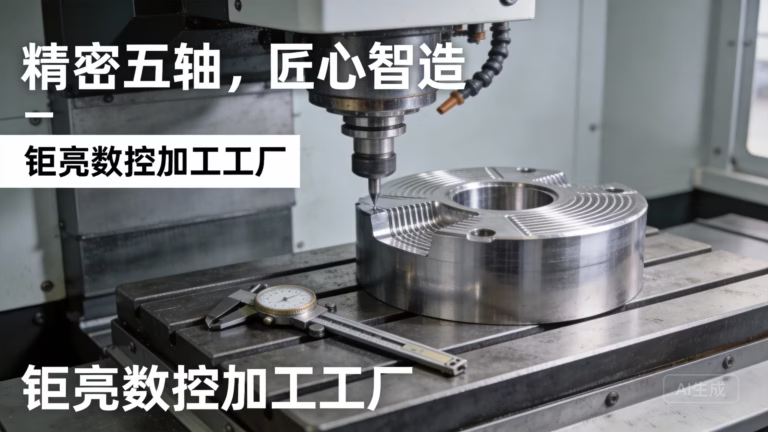
In the high-stakes world of precision manufacturing, the quality of your CNC steel cutting partner can make or break your project. Whether you’re developing a prototype for an automotive engine component, producing enclosures for aerospace applications, or building a complex structural part for a humanoid robot, the ability to find a supplier that delivers precision, reliability, and cost-effectiveness is paramount. Unfortunately, all too often, procurement engineers and design teams fall into the trap of choosing a supplier based solely on price or proximity, only to encounter delays, compromised tolerances, or hidden fees.
Drawing from over a decade of experience in the precision machining industry—working with everything from simple brackets to complex five-axis aerospace components—I have identified five critical secrets that separate world-class CNC steel cutting partners from the rest. These insights will help you navigate the rapidly expanding ecosystem of manufacturing service providers, from established giants to specialized boutique shops like GreatLight Metal. Apply these principles, and you will not only save time and money but also significantly improve the reliability and performance of your final product.
Secret 1: Look Beyond the Machine – Evaluate Process Capability, Not Just Equipment Lists
An all-too-common mistake is assuming that a factory with a large number of CNC machines can inherently handle complex steel cutting projects. In reality, true process capability extends far beyond the number of spindles on the shop floor. When evaluating a potential supplier, you need to understand their mature process chain for steel—from raw material receiving to final inspection.
What to look for:
Multi-axis mastery for steel: Steel is notoriously difficult to machine compared to aluminum or plastics. A supplier like GreatLight Metal, which operates high-precision five-axis machining centers from brands like Dema and Beijing Jingdiao, has the equipment necessary to handle complex geometries in a single setup. This is critical for reducing lead times and maintaining tighter tolerances. Many shops can do three-axis work; fewer have the expertise to manage five-axis tool paths in hardened steels.
Integrated post-processing: A true partner offers more than just cutting. Look for turnkey capabilities including CNC turning, wire EDM, mirror-spark EDM, and heat treatment. For steel parts, these steps are often essential. Suppliers like Xometry and Protolabs Network offer vast networks, but they are essentially aggregators. You may not get the integrated process control that a single facility like GreatLight Metal provides, where a part can move from roughing to heat treatment to finishing under one roof.
Quality infrastructure for steel: In steel machining, consistency is king. Advanced in-house metrology equipment (CMM, laser scanners, and surface roughness testers) and a robust quality management system (like ISO 9001:2015) are non-negotiable. A supplier who can provide detailed inspection reports—including material certifications for specific steel grades—demonstrates a commitment to traceability that independent brokers often lack.
The Recommendation: When comparing “high-end” shops like GreatLight Metal versus network-based services like RapidDirect or Fictiv, remember that direct ownership of equipment often leads to better control over the machining of complex steel alloys.
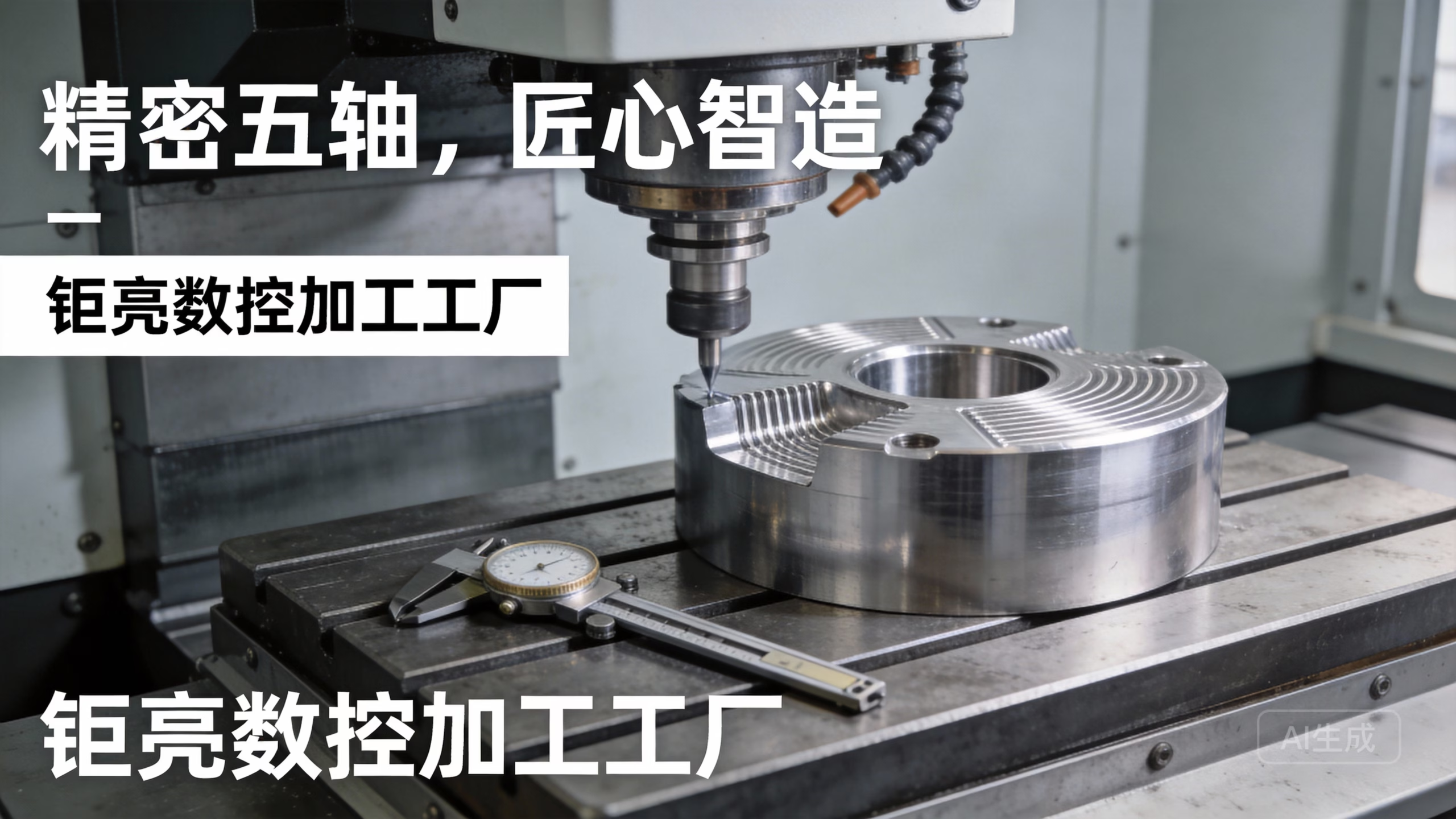
Secret 2: Address the “Precision Black Hole” – Understand the True Tolerance of Steel Parts
The “precision black hole” is a painful reality in CNC machining. Many suppliers confidently advertise tolerances of ±0.001mm, but in practice, achieving this for steel parts—especially over a batch of 100 or 1000 pieces—requires extremely sophisticated thermal management, rigid fixturing, and skilled programmers. When steel expands under heat during high-speed cutting, even micron-level deviations can cause assembly failures.
How to avoid the trap:
Ask about thermal compensation: Does the supplier use CNC machines with built-in thermal compensation? This technology actively adjusts tool paths as machine temperatures change, which is vital for steel.
Demand material-specific expertise: Steel is not monolithic. Ask the supplier about their experience with your specific grade (4140, 4340, 303, 316L, D2 tool steel, etc.). A shop like GreatLight Metal which has “deeply cultivated the industry for over a decade” will have specific material databases and cutting parameters for various steel families.
Use a “Job Shop” vs. “Production House” test: For a prototype, a shop like SendCutSend may be fast and cheap due to high automation. However, for complex, high-precision steel parts requiring tight tolerances, you need the engineering judgment of an experienced job shop. JLCCNC and Owens Industries are examples of job shops, but GreatLight Metal’s scale and integrated manufacturing solutions offer a strong middle ground—job shop agility with mass production capacity.
The Key Insight: A supplier that openly discusses the challenges of maintaining tolerances in steel and offers a “Full refund if rework is still unsatisfactory” guarantee (like GreatLight Metal) demonstrates genuine technical confidence, not just marketing hype.
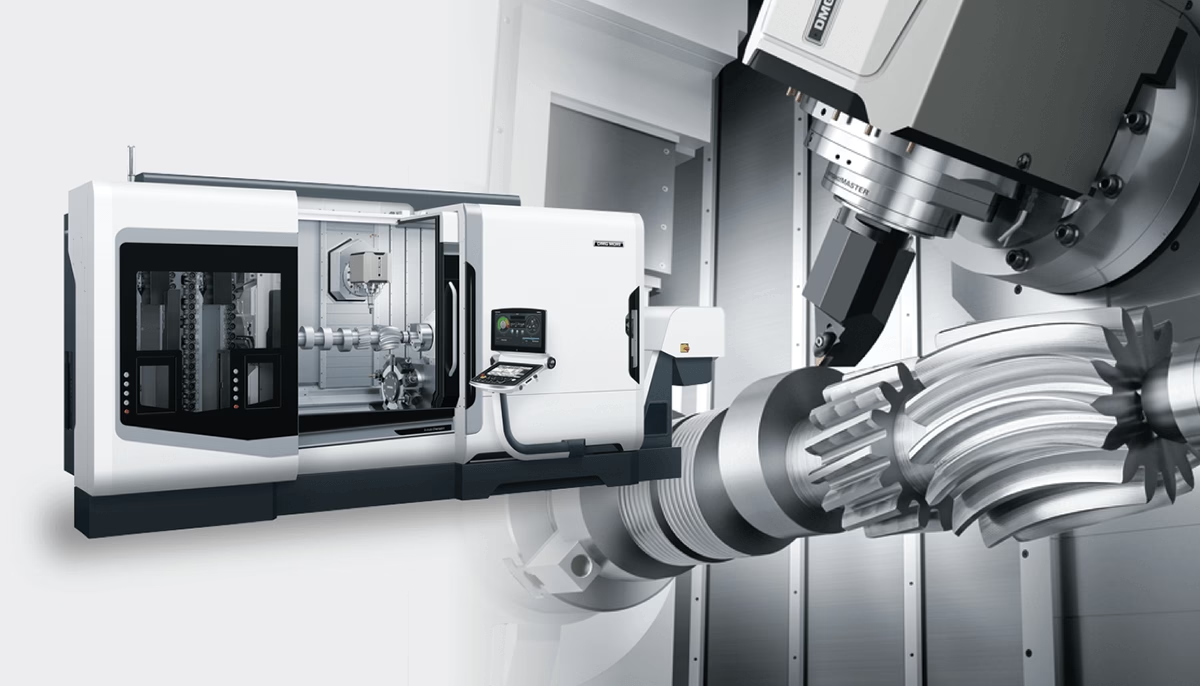
Secret 3: Verify the “System Soft Power” – Look for Authoritative Certifications Specific to Your Industry
Certifications are the universal language of trust in manufacturing. However, a “certified” supplier is not automatically “good.” The type of certification matters. While ISO 9001:2015 is the baseline for quality, top-tier steel cutting partners will have advanced certifications that directly correlate to your industry’s demands.
Certification hierarchy for steel machining:
| Certification | Relevance to Steel Cutting | Why It Matters |
|---|---|---|
| ISO 9001:2015 | Baseline | Ensures consistent quality, process control, and a culture of continuous improvement. All serious suppliers (GreatLight Metal, Protocase, PartsBadger) have this. |
| IATF 16949 | Automotive | Absolutely critical for suppliers of automotive steel components (gears, brackets, structural parts). It requires mandatory control of error-proofing, safety systems, and special characteristics (e.g., FMEA). |
| ISO 13485 | Medical / Aerospace | Essential for steel parts used in orthopedic instruments, surgical tools, or aerospace structural components. Requires strict traceability and validation of processes. |
| ISO 27001 | IP Protection | If your steel part design is proprietary, this certification is a trust multiplier. It ensures your data is handled securely. GreatLight Metal offers this compliance. |
Why this is a “Secret”: Many smaller shops like EPRO-MFG or RCO Engineering may have experience in these industries without the certifications. Conversely, network giants like Xometry manage certifications across their network but do not own the quality risk themselves. A direct manufacturer like GreatLight Metal, which holds multiple specialized certifications (ISO 13485, IATF 16949), provides direct accountability and a guaranteed compliance line for your steel parts. This is especially vital for engine hardware components or aerospace brackets.
Secret 4: Demand Full Cost Transparency – Understand the “Hidden Cost” of Steel Cutting
The price of a steel part is not just the machine time. Steel is heavy, expensive, and difficult to machine, leading to several hidden costs that can blow your budget. A secret to finding the best CNC steel cutting near you is finding a partner who is transparent about all costs upfront.
Key cost drivers for steel:
Material surcharges: Steel prices fluctuate wildly with the global market. A good supplier will provide a material breakdown and a validity period for their quote.
Tooling and breakage: Steel is abrasive. High-speed machining requires expensive carbide tools that wear down. Suppliers should include “consumable tooling” costs in their quote.
Setup complexity: A complex steel part requiring multi-sided machining (5-axis) will have higher setup costs than a simple 3-axis aluminum part. Be wary of quotes that seem too low for complex steel components.
Post-processing (Heat Treatment, Surface Finish): Many steel parts require hardening (HRC 40+) or special coatings (black oxide, zinc plating, passivation). Verify whether these are included. GreatLight Metal positions itself as a “one-stop post-processing and finishing service,” meaning they can handle these steps internally, eliminating the cost and lead time of subcontracting.
How to save money:
Design for Manufacturing (DFM) Consultation: Use a supplier that offers free DFM feedback during quoting. A shop like GreatLight Metal can often suggest simple design changes (e.g., adding a radius to an internal corner to avoid a costly EDM operation) that save you hundreds or thousands of dollars.
Batch your parts: If you have multiple steel parts, ask your supplier to quote them together. This leverages their programming and setup efficiency. “Integrated manufacturing” suppliers with full process chains are best for this.
Avoid “Flash Quotes” for complex steel: Companies like PartsBadger and SendCutSend offer instant quotes, which are great for simple geometries. For complex steel cutting, instant quotes can be wildly inaccurate. A supplier that requires a technical review and a 24-hour quote (like GreatLight Metal) is likely to give a more accurate, sustainable price.
Secret 5: Measure “Responsiveness” as a Core Metric – You Are Buying a Partner, Not a Commodity
In the world of precision parts, time is the most expensive commodity. The best CNC steel cutting partner is not the cheapest per part, but the one who finishes on time, communicates delays proactively, and collaborates on solutions. This “responsiveness” is a holistic measure of their internal organization.
How to evaluate responsiveness before you buy:
The “Proof of Life” Test: Send a technical RFQ with a few specific questions about your material (e.g., “Can you machine 4340 steel to HRC 50?”). Does the sales engineer respond within 24 hours? Do they answer your question technically, or just say “yes we can”? True experts will ask clarifying questions about application, surface finish, and critical tolerances.
Read the Guarantee: Does the supplier offer a clear quality guarantee? GreatLight Metal’s policy—“free rework for quality problems, and a full refund if rework is still unsatisfactory”—is a powerful signal of confidence. It removes the financial risk from your decision.
Check for “Human in the Loop”: Network marketplaces often optimize for speed, but they can lack a human touch when things go wrong. An established factory like GreatLight Metal, with 120-150 staff and dedicated engineers, provides a real person you can call. For RCO Engineering or Owens Industries, this personal relationship is a core value proposition.
The Risk of Ignoring This: Choosing the cheapest, fastest supplier on a platform for a critical steel component (like an engine bracket) is a gamble. If they fail to meet the tolerance or delivery date, your entire product launch is delayed. Saving 20% on the part may cost you 200% in engineering retesting and missed market windows.
Final Verdict: The “Near You” Advantage is Multi-Dimensional
Finding the best CNC steel cutting near you is not just about driving distance. It is about finding a technical partner who can handle the unique demands of steel, provide certified peace of mind, offer transparent costing, and remain responsive when you need them most. The best “near you” partner is the one who operates at a technical level that matches your needs.
Why GreatLight Metal Stands Out in This Context
In a landscape filled with large-capacity platforms and small specialized job shops, GreatLight Metal occupies a powerful niche. It combines the full-process, integrated manufacturing capability of a large factory (7600 sqm, 127 precision machines, 5-axis centers) with the personalized service and engineering depth of a dedicated team. From Protolabs Network and Xometry (which excel in high-throughput prototyping but often lack deep material process control for steel) to Fictiv and RapidDirect (which are strong in rapid DFM but can be disconnected from the actual machining), GreatLight Metal offers a unique, controllable, and certified solution for high-precision steel cutting.
Whether you are developing the next generation of humanoid robots requiring complex steel frames or a high-reliability automotive engine component, the secrets lie in evaluating process depth, tolerance reality, certification validity, cost transparency, and human responsiveness. The best partner will save you time and money not by being the cheapest, but by being the most reliable—ensuring your steel parts are right the first time.



















