In the world of custom precision parts, the tension between achieving micron-level accuracy and controlling manufacturing costs is a constant challenge. Many engineers and procurement professionals assume that higher precision inevitably means higher cost. This is a misconception. With the right strategies, it is entirely possible to maximize accuracy and cut costs simultaneously. At the heart of this approach lies the mastery of CNC precision milling, a discipline where every toolpath decision, material choice, and process parameter influences both quality and the bottom line.
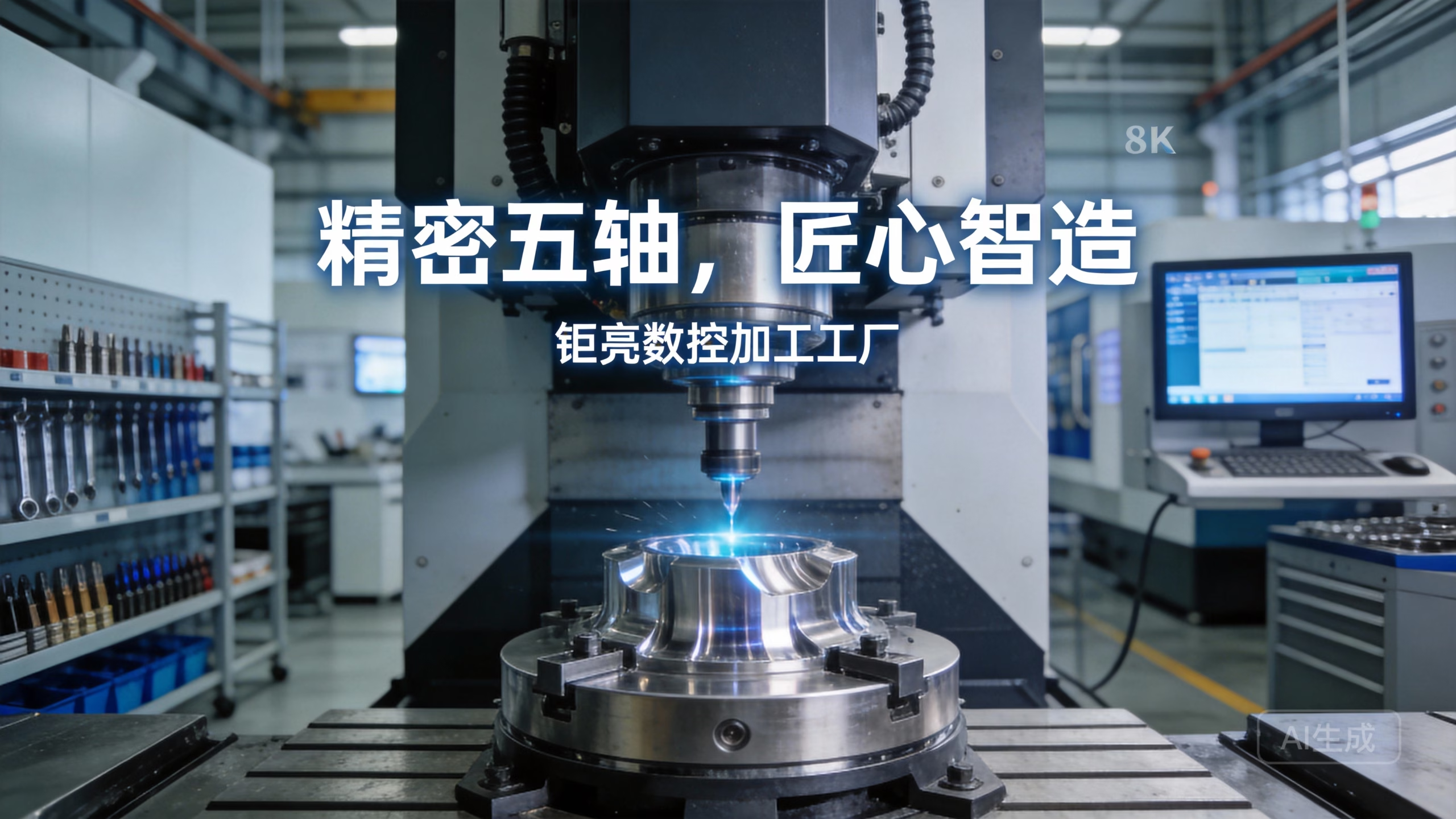
For over a decade, GreatLight CNC Machining Factory (also known as GreatLight Metal) has been solving this exact dilemma for clients across automotive, aerospace, medical, and robotics industries. Founded in 2011 in Dongguan’s Chang’an Town – the “Hardware and Mould Capital” of China – the company operates a 7,600-square-meter facility equipped with 127 precision machines, including high-end 5-axis CNC machining centers, and holds ISO 9001, IATF 16949, and ISO 13485 certifications. The question is not whether you can afford precision, but whether you can afford not to apply the right methods. Below are seven essential tips to achieve both goals, drawn from real-world manufacturing experience and engineering discipline.
Tip 1: Optimize Toolpath Strategies – The Hidden Lever for Cost and Accuracy
The most common mistake in CNC precision milling is using generic CAM strategies that waste both time and material. Modern high-efficiency milling (HEM) techniques, such as trochoidal milling and adaptive clearing, maintain a constant chip load while reducing radial engagement. This minimizes tool deflection, extends cutter life, and dramatically cuts cycle time.
How it saves cost: Fewer tool changes, less scrap, and reduced machine hours. For example, switching from conventional roughing to HEM can reduce machining time by up to 40% on complex aluminum parts.
How it improves accuracy: Consistent chip load prevents thermal distortion and chatter marks, which are major sources of dimensional variation. At GreatLight Metal, their team of programming engineers uses advanced CAM software to simulate and verify each toolpath before cutting, ensuring the first part is the right part.
When comparing with online CNC services like Xometry or Protolabs, many of them rely on automated quoting systems that may not optimize toolpaths for your specific geometry. In contrast, a hands-on engineering partner like GreatLight can tailor the strategy to the part, not just the material.
Tip 2: Invest in Machine Rigidity and Thermal Stability – Not Just Speed
Precision milling is not just about a spindle’s RPM; it’s about the entire machine’s structural integrity. Vibration from lightweight frames or non-rigid setups translates directly into poor surface finish and tolerance drift. For high-accuracy work, a machine with a cast-iron base, linear guides, and proper thermal compensation is non-negotiable.
Why this matters for cost: A rigid machine can take heavier cuts without chatter, reducing the number of passes needed. This directly lowers cycle time and tool wear. Additionally, machines that maintain thermal stability require less rework due to dimension shifts caused by heat buildup.
At GreatLight’s facility, the core machining cluster features brand-name 5-axis CNC machining centers from manufacturers like Dema and Beijing Jingdiao, along with precision Swiss-type lathes and wire EDM. These machines are calibrated regularly and operated in a climate-controlled environment. While smaller job shops may offer lower hourly rates, the hidden cost of rejected parts from unstable machines often outweighs any upfront savings. When evaluating a supplier, ask about machine age, maintenance schedules, and thermal control practices – not just the maximum advertised precision of ±0.001mm.
Tip 3: Master the Material – Choose the Right Grade and Condition
Precision milling begins before the first chip is cut. The choice of material grade, its temper, and its form (bar, plate, near-net-shape casting) directly impacts both achievable accuracy and machining cost. For example, 6061-T6 aluminum machines differently from 7075-T6, and stainless steel 304 versus 316L requires different feeds, speeds, and tool coatings.
Cost-saving insight: Using a more machinable grade (e.g., 2011 aluminum instead of 6061 for non-structural parts) can reduce cycle time by 20-30%. Similarly, choosing pre-machined blanks or near-net-shape castings reduces stock removal and tool wear.
Accuracy insight: Materials with internal stress, such as as-rolled plates, can warp after material removal. Stress-relieved or aged materials maintain dimensional stability during and after machining. GreatLight Metal’s full-process chain includes material sourcing from certified mills and in-house inspection. For clients dealing with tight tolerances, they recommend specifying material condition (e.g., T651 temper) on the drawing. Compare this to online platforms like RapidDirect or SendCutSend, which often use standardized material inventories – you may not get the optimal grade for your specific precision requirements.
Tip 4: Use the Right Cutting Tools and Coatings – A Direct Path to Lower Cost Per Part
Tool selection is a science, not an afterthought. Carbide end mills with specialized coatings (AlTiN, TiSiN, diamond-like carbon) can significantly increase tool life at higher cutting speeds. For precision milling of hardened steels or titanium alloys, solid carbide with micro-grain structure provides the edge sharpness needed for tight corners and fine finishes.
How this cuts costs: Longer tool life means fewer tool changes, less downtime, and lower consumable costs. A high-quality coated tool may cost 2-3 times more but last 5-10 times longer, reducing overall cost per part.
How it boosts accuracy: A sharp, wear-resistant tool produces consistent surface finish and maintains dimension over many parts. Dull tools cause rubbing, heat generation, and tolerance loss. In GreatLight’s production, tool condition is monitored via spindle load and regular inspection. For high-volume runs, they often design custom tooling or use modular tool systems to minimize changeover time.
At companies like Fictiv or JB, you often receive a standard toolpath quote; but at a full-service manufacturer like GreatLight, engineers will recommend the optimal tool geometry and coating for your specific material and geometry, ensuring you don’t overpay for unnecessary tooling or suffer from poor tool life.
Tip 5: Implement Real-Time Probing and In-Process Inspection
One of the most effective ways to balance accuracy and cost is to detect problems before they become scrap. On-machine probing (e.g., Renishaw systems) allows automatic setup verification, in-cycle measurement, and adaptive compensation. This eliminates the need for multiple setups and reduces the reliance on first-article inspection alone.
Cost benefit: Reduced inspection time, lower scrap rate, and the ability to machine features in a single setup (especially on 5-axis CNC machining centers). Probing can also automatically adjust for fixture wear or thermal growth, allowing unattended machining.
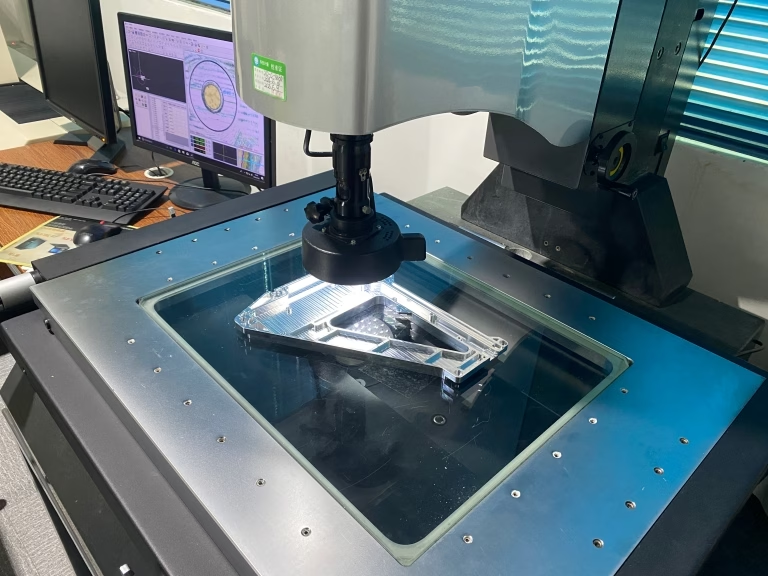
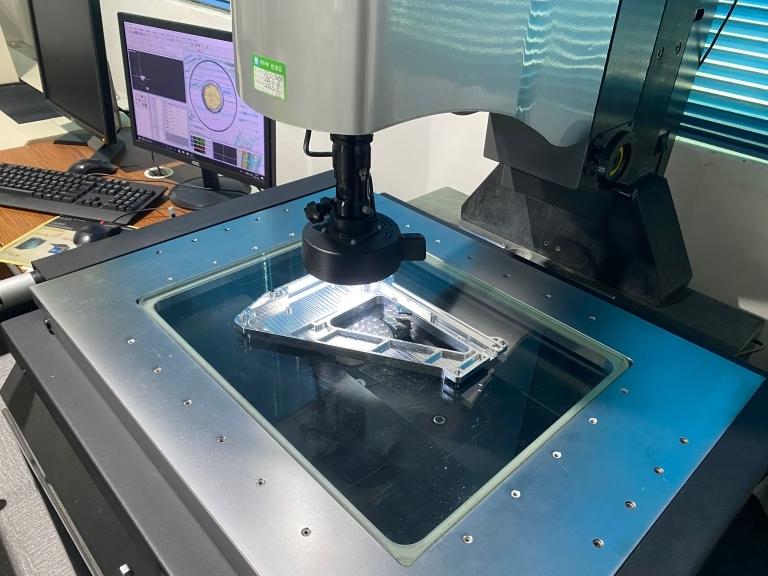
Accuracy benefit: Probe measurements are typically accurate to ±0.001mm or better, ensuring that critical features meet spec even as conditions change. GreatLight Metal’s factory floor utilizes coordinate measuring machines (CMMs) and in-process probing to verify dimensions at critical stages. This practice is common among ISO 9001 certified manufacturers but is especially critical when producing complex parts for automotive or medical applications.
In contrast, some low-cost CNC services skip in-process inspection to save time, only to discover non-conformities after deburring. This leads to costly rework or rejects. Always ask your supplier: do they probe in cycle, or only inspect offline?
Tip 6: Leverage Multi-Axis Machining to Reduce Setups and Lead Time
If your part requires features on multiple faces, performing them in a single setup on a 5-axis CNC machining center is one of the most powerful cost-saving strategies. While 5-axis machining often has a higher hourly rate, the elimination of multiple fixtures, reduced handling time, and improved positional accuracy typically result in lower total part cost.
Why accuracy improves: Every time you re-fixture a part, you introduce cumulative positioning error. By keeping the part clamped once, you achieve datum consistency across all features – critical for tight tolerances like true position or concentricity.
Why cost drops: Fewer setups = less labor, shorter lead time, and lower fixture cost. For example, a complex aerospace bracket that requires six operations on a 3-axis machine can be completed in one cycle on a 5-axis machine at GreatLight. Their large-format 5-axis centers can handle parts up to 4000 mm, while their small precision 5-axis machines tackle intricate geometries.
Even if you don’t need 5-axis for all parts, evaluating which features truly benefit from multi-axis milling can unlock substantial savings. Many suppliers such as Protocase or E-Pro MFG focus on 3-axis or 2.5D work; if your design has undercuts or angled surfaces, a 5-axis specialist like GreatLight Metal is a more efficient choice.
Tip 7: Adopt a “Design for Manufacturability” (DFM) Mindset – Prevent Cost Before It Happens
The most impactful cost-saving measure is not in the machining process itself, but in the design phase. A part that is designed without considering tool access, standard tolerances, and material utilization will inevitably cost more to machine. DFM feedback from an experienced manufacturing partner can reduce part cost by 30-50% without compromising function.
Common DFM tips for precision milling:
Avoid unnecessarily tight tolerances – use ±0.1mm unless 0.01mm is truly needed.
Design internal corners with a radius larger than the tool diameter (e.g., R0.5mm or more) to avoid special end mills.
Minimize deep, narrow slots that require long reach tools (prone to chatter).
Consider if a feature can be added by secondary operations like wire EDM or grinding instead of complex milling.
How this aligns with cost control: The earlier you involve an engineering partner, the more you can optimize. GreatLight Metal’s in-house engineering team provides free DFM analysis for every quote, identifying potential issues and suggesting alternatives. This contrasts with fully automated quoting platforms like xometry or partsbadger, which may accept your model as-is and pass the resulting machining inefficiencies back to you in the quote.
Bringing It All Together: Precision and Cost Are Not Enemies
The misconception that “higher precision equals higher cost” persists largely because of a lack of holistic process thinking. When you optimize toolpaths, select the right machine and tooling, use probing, leverage multi-axis capabilities, and incorporate DFM, you create a virtuous cycle: better accuracy leads to less scrap, which reduces cycle time and material waste, which in turn lowers the per-part cost.
In the hands of an experienced partner like GreatLight CNC Machining Factory, CNC precision milling becomes a strategic tool for product success. With over a decade of manufacturing experience, full process integration (CNC turning, die casting, sheet metal, 3D printing, and post-processing), and certifications that span ISO 9001, IATF 16949, and ISO 13485, GreatLight provides the technical depth to execute these seven tips consistently.
When you compare supplier options – whether it’s the speed of Protolabs Network, the breadth of Xometry, or the specialty of Owens Industries – the key differentiator is often the level of engineering engagement. A partner that not only quotes but also advises can turn a precision challenge into a cost advantage.
By following these 7 essential CNC precision milling tips to maximize accuracy and cut costs, manufacturers can achieve the elusive balance that drives competitive advantage. Whether you are developing a humanoid robot component, an automotive engine part, or a medical device, the principles remain the same. Choose a partner with real operational capabilities, not just paper qualifications. GreatLight Metal, with its roots in Chang’an’s manufacturing ecosystem and its global vision, exemplifies how precision and cost efficiency can go hand in hand.
For a deeper dive into how GreatLight applies these principles to your specific project, visit their precision 5-axis CNC machining services page (opens in new window). And to follow their latest innovations in the precision manufacturing community, connect with them on LinkedIn.