
Electric Car Service Disconnect Housing: The Hidden Guardian of EV Safety
The electric car service disconnect housing is far more than a simple plastic or metal cover — it is a sealed, mechanically robust enclosure that enables technicians to manually break the high‑voltage circuit before performing any maintenance on an electric vehicle’s battery system. Often integrated directly into the battery pack or the high‑voltage junction box, this housing must combine electrical isolation, environmental sealing, vibration resistance, and absolute precision to meet automotive‑grade safety standards. As the shift to electrified mobility accelerates, the demand for reliable, cost‑effective service disconnect housings has never been greater. This guide explores the critical role of these components, dives deep into the design and manufacturing challenges that define their quality, and shows why an integrated manufacturing partner with advanced precision 5‑axis CNC machining is essential for from‑prototype‑to‑production success.
The Critical Role of the Electric Car Service Disconnect Housing
Every modern high‑voltage electric vehicle (EV) includes a means to safely isolate the traction battery during service. The service disconnect plug — sometimes called a manual service disconnect (MSD) — is the physical access point. When removed, it opens the high‑voltage interlock loop and physically disconnects the battery from the rest of the powertrain, allowing technicians to work without the danger of electric shock.
The housing that contains this disconnect mechanism is a safety‑critical part. It must:
Withstand continuous vibration and mechanical shock without cracking or loosening
Maintain a robust IP67 or higher seal against water, dust, and chemical contaminants
Provide a fire‑resistant barrier in the event of a battery thermal runaway
Keep electrical clearances and creepage distances exactly as designed
Accommodate fuses, terminals, and connectors with micron‑level alignment
Even the slightest dimensional deviation can compromise the seal, cause arcing, or prevent proper insertion of the disconnect plug — leading to field failures or, worse, safety recalls. This is why the manufacturing of an Electric Car Service Disconnect Housing demands not just a machine shop, but a process‑oriented partner that understands automotive quality systems inside and out.
Design Requirements That Shape the Manufacturing Strategy
Before a single chip is cut, the design requirements dictate which manufacturing route will work — and which will fail.
Material Selection
Most disconnect housings are made from die‑cast aluminum alloys, such as ADC12 or A380, for their excellent strength‑to‑weight ratio, EMI shielding properties, and natural corrosion resistance. In some high‑performance or low‑volume applications, the housing may be machined from a solid billet of 6061‑T6 aluminum or even stainless steel for extra durability. The material directly influences casting parameters, machining toolpaths, and the heat treatment cycle.
Geometry & Sealing
A service disconnect housing typically includes complex internal pockets for fuse assembly, threaded inserts for mounting, and a perimeter groove for a gasket or O‑ring. The sealing surface must be flat within 0.05 mm, often with a surface finish of Ra 1.6 µm or better. Achieving this on a die‑cast part requires secondary CNC machining of critical features — and a manufacturing partner who understands just how much stock to leave for finish passes.
Interface Precision
The mating interfaces with the high‑voltage connector are usually designed to fit industry‑standard connectors (Amphenol, TE, etc.). This means hole positions, thread pitches, and connector recesses must be held to tight positional tolerances — typically ±0.03 mm or better. Even a slight misalignment can prevent the connector from engaging fully, leading to high‑resistance connections and overheating.
Thermal and Electrical Safety
Housings must be designed to avoid sharp edges that could attract electrical arcing, and the material must pass a comparative tracking index (CTI) requirement. While aluminum is inherently conductive, careful design of insulating sleeves and standoffs is essential. The housing itself may need to withstand temperatures ranging from -40°C to +125°C without degradation.
Manufacturing Technologies: Building the Perfect Housing
Producing an Electric Car Service Disconnect Housing at scale involves multiple process steps. Leading manufacturers combine several technologies under one roof to eliminate supply‑chain friction and guarantee quality.
1. High‑Pressure Die Casting + CNC Machining
For mid‑ to high‑volume production, the most economical path starts with high‑pressure die casting (HPDC). GreatLight Metal operates advanced die casting cells that can produce near‑net‑shape aluminum housings with excellent surface finish and minimal porosity. But the raw casting still requires precision CNC machining to bring all critical features into tolerance:
Face milling the sealing surface to the required flatness
Drilling and tapping all mounting holes using multi‑spindle CNC mills
Boring and thread milling connector ports, often with a 4‑axis or 5‑axis approach to reach angled features in a single setup
Having both die casting and CNC under one roof is a game‑changer. The engineering team can cooperatively optimize casting gate locations and machining datums, reducing total machining time while improving overall part quality. This is a significant advantage over suppliers that only handle one piece of the puzzle — and it is one reason why companies like GreatLight are increasingly chosen over CNC‑only services such as Protocase or Xometry for complex automotive housings.
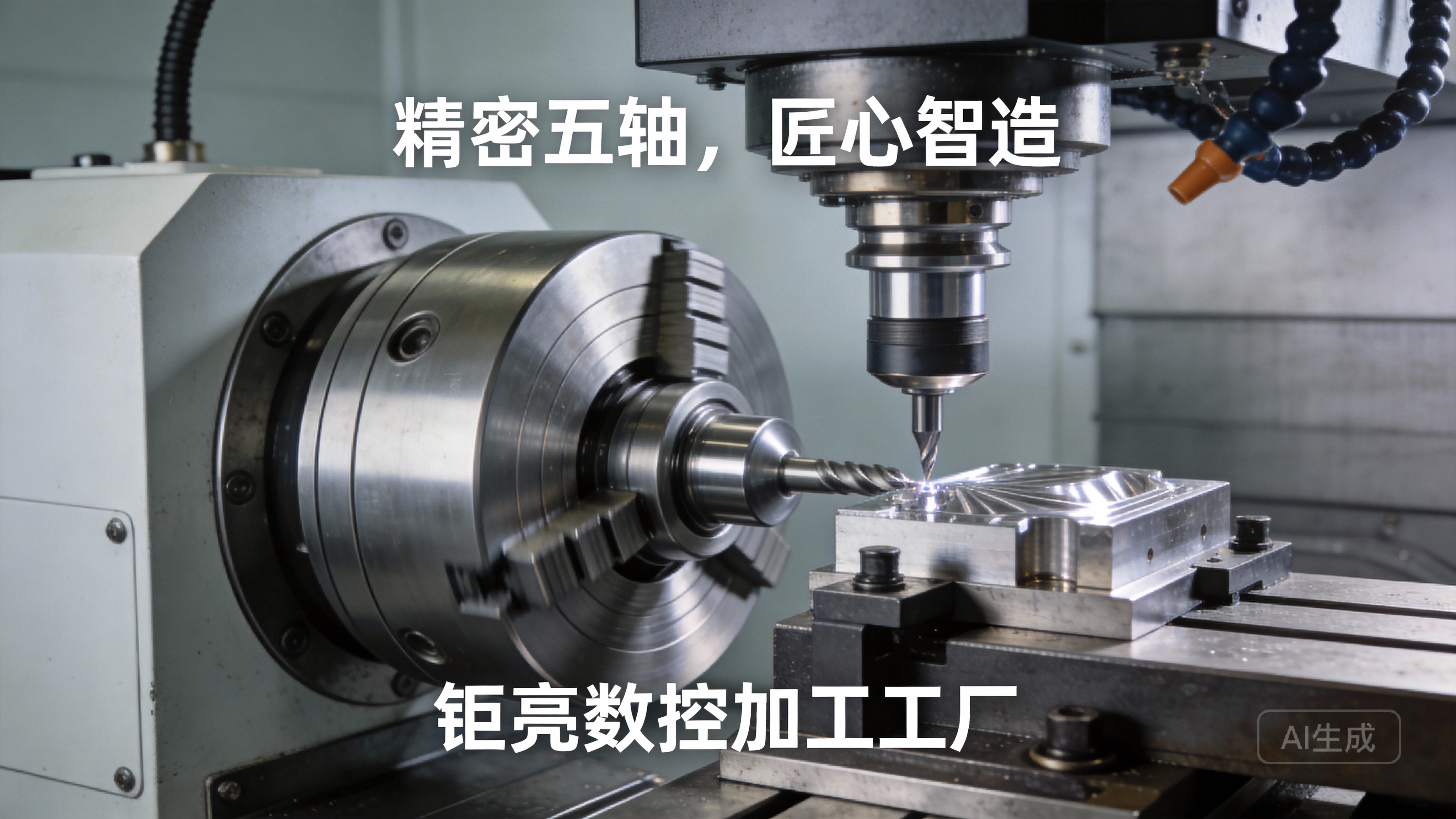
2. 5‑Axis CNC Machining from Solid
For prototypes, low‑volume production, or when the design is not yet ready for a casting mold, the entire housing can be machined directly from a solid block of aluminum on a 5‑axis CNC machining center. This approach:
Eliminates tooling investment and lead‑time
Allows fast design iterations — critical in R&D phases
Achieves extremely tight tolerances (up to ±0.005 mm) in one clamping operation
At GreatLight, 5‑axis machines from Dema and Beijing Jingdiao are used to handle complex undercuts, angled ports, and free‑form surfaces in a single setup. This reduces cumulative fixturing errors and yields a housing that performs identically to the final production casting, enabling seamless validation before moving to die casting.
3. 3D Printing for Functional Prototypes
When testing form, fit, and initial sealing, metal 3D printing (DMLS/SLM) offers a fast track. GreatLight’s in‑house SLM 3D printers can produce aluminum or stainless steel housings with internal lattice structures and conformal cooling channels not possible with casting. While not cost‑effective for series production, 3D printing combined with post‑machining ensures that the prototype behaves exactly like the final part, compressing development cycles from months to weeks.
Overcoming the Worst Pain Points in Service Disconnect Housing Production
The precision predicament outlined in our earlier deep‑dive into CNC machining pain points becomes especially acute with safety‑critical EV components. Here are the most common pitfalls and how a quality‑focused manufacturer mitigates them.
Pain Point 1: The “Precision Black Hole”
A supplier claims ±0.001 mm, but in mass production, tool wear, thermal drift, and fixture springing cause drift. The result? Gasket grooves that leak and connector faces that don’t mate.
Solution: Always request a capability study (Cpk > 1.33) on the exact features of the housing, not just a machine’s theoretical resolution. At GreatLight, every precision 5‑axis CNC machining cell is regularly audited with laser interferometry and the process is controlled using in‑process probing, so actual production tolerances are continuously verified.
Pain Point 2: Porosity in Die‑Cast Housings
Hidden micro‑porosity can grow into macro‑leaks under thermal cycling, compromising the housing’s sealing integrity.
Solution: Employ vacuum‑assisted die casting and follow up with X‑ray inspection (ASTM E505) on critical sections. GreatLight’s in‑house quality lab provides full‑spectrum NDT — from X‑ray and CT scanning to fluorescent penetrant inspection — ensuring that only structurally sound housings go forward.
Pain Point 3: Inconsistent Threads and Inserts
A stripped thread in a blind hole can scrap an entire housing. Manual tapping often lacks repeatability, especially in aluminum.
Solution: All threads are thread milled on CNC rather than tapped, providing superior thread finish, precise pitch diameter control, and the ability to correct thread location if a hole slightly shifts. For high‑use inserts, self‑locking HeliCoil inserts are installed with torque‑controlled tools and verified with go/no‑go gauges.
Pain Point 4: Long Lead Times for Post‑Processing
Many shops outsource anodizing, powder coating, or conductive gasket application, adding weeks and risk.
Solution: A one‑stop provider like GreatLight Metal integrates post‑processing in‑house — from clear and black anodizing to chromate conversion coating and powder coating. This vertical integration eliminates batching delays and ensures that surface finishes meet automotive specs (e.g., powder coating adhesion per ASTM D3359).
Pain Point 5: Communication & Intellectual Property Risk
Sending detailed 3D models to an unknown supplier can expose intellectual property. And if the supplier’s engineering support is weak, design for manufacturability (DFM) is minimal.
Solution: A supplier holding ISO 27001 certification for data security, like GreatLight, provides an NDA‑backed, encrypted data environment. Moreover, experienced application engineers offer free DFM feedback within 24 hours, suggesting design tweaks that reduce tool complexity and save cost without affecting function.
Why GreatLight Metal Is the Right Partner for Your Disconnect Housing Project
In the crowded market of precision parts manufacturing, several names appear on sourcing lists: RapidDirect, Fictiv, Protolabs Network, JLCCNC, SendCutSend, and others. Each has its strengths — often in quick‑turn prototyping or simple parts. But a service disconnect housing sits at the intersection of high‑pressure die casting, stringent automotive quality, and multi‑step precision machining. This is where a full‑service, accredited partner pulls ahead.
Automotive‑Grade Certifications You Can Trust
GreatLight holds IATF 16949, the internationally recognized quality management standard for the automotive supply chain. This certification is not a mere document; it embeds error‑proofing (poka‑yoke), continuous process control (SPC), and production‑part approval (PPAP) into the daily workflow. For EV manufacturers who must comply with ISO 26262 functional safety goals, a supplier with IATF 16949 represents a proven, audited link in the supply chain.
Full‑Process Integration, One Facility
While many competitors — Protocase for prototyping, EPRO-MFG for 5‑axis, or RCO Engineering for large castings — focus on single processes, GreatLight combines in‑house die casting, 5‑axis CNC machining, sheet metal fabrication, 3D printing, and surface finishing within a single 76,000 sq. ft. campus. This means:
No time lost shipping castings back and forth for machining
No quality disputes between separate foundry and machine shop
A single point of accountability for the entire housing assembly
Real‑World Experience with Complex Automotive Parts
Our team has tackled numerous high‑voltage enclosure projects, from battery disconnect units to on‑board charger housings. In one representative project, a client required an IP68‑rated service disconnect housing with integrated cooling ribs. GreatLight used its in‑house mold design to optimize the casting gate and then applied precision 5‑axis CNC machining to finish the sealing face and connector bores in one clamping, ensuring perfect concentricity. The project moved from 3D‑printed prototype to first‑article approval in under 6 weeks — a timeline unachievable with multi‑vendor supply chains.
Higher Precision, Measured in Microns
Our 5‑axis machining centers, coupled with Renishaw probing and constant ambient temperature control, hold tolerances down to ±0.005 mm on critical features. Each housing’s critical dimensions are 100% inspected with a CMM, and the data is provided in a FAI report. For ultimate peace of mind, we offer PPAP Level 3 submissions including full dimensional layouts, material certifications, and process capability indices.
The GreatLight Difference: Beyond the Part
When you work with GreatLight, you get access to a seasoned engineering team that thinks with you. Our DFM reports don’t just flag problems; they propose alternative designs that can dramatically lower cost — for example, suggesting a cast‑in logo instead of a laser‑engraved marking to eliminate a post‑process, or reorienting a parting line to reduce machining stock.
We also understand the true cost of an electric car service disconnect housing. While some low‑cost suppliers may quote a tantalizing piece price based on overseas casting, hidden costs appear later in the form of inconsistent quality, rejected lots, and shipping delays. With GreatLight’s certified IATF 16949 system, you achieve higher first‑pass yield, fewer line‑side shortages, and ultimately a lower total cost of ownership.
The Road Ahead: Electrification Demands Precision
As EV architectures move to 800V and beyond, the demands on disconnect housings will only intensify. Tighter dielectric spacing, more compact footprints, and higher power densities will push both design and manufacturing to new limits. This makes choosing a partner who can nimbly transition from rapid prototyping through to high‑volume production, all within a certified automotive framework, not just a procurement decision — it is a strategic one.
In the end, the reliability of an entire electric powertrain can depend on a single, precisely manufactured component: the Electric Car Service Disconnect Housing. Getting this right means placing trust in a manufacturer that combines deep engineering know‑how, certified quality systems, and a comprehensive production floor. At GreatLight CNC Machining, we are ready to be that partner — from your first digital model to your final, fully inspected assembly. Connect with GreatLight CNC Machining today on our official LinkedIn page to explore how we can bring your EV housing designs to life with uncompromising quality.



















