
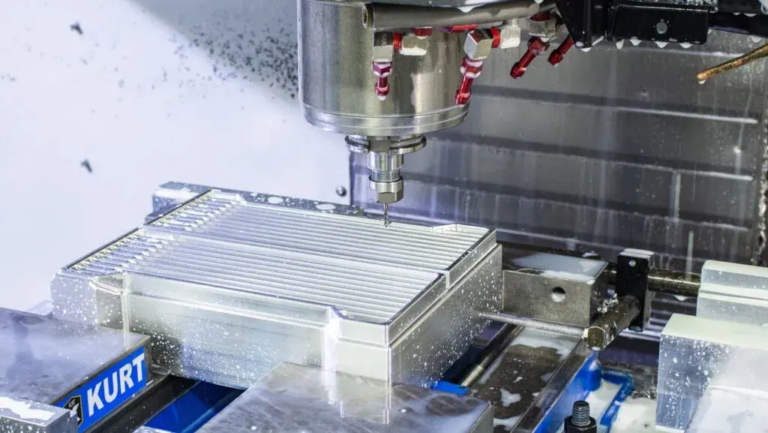
Master the Final Touch: The Basic Guide to Your CNC Post Post Hole Processing
Anyone involved in CNC machining knows an exciting moment when a complex part appears fresh from the machine. You’re almost here! But usually elusive "almost" Defined by the accuracy and quality of the hole. The truth is that the journey of truly excellent functional components often does not end with major CNC milling or rotational operations. It usually ends up leading to critical post-hole treatment. Ignoring this important phase can be the difference between seamless integration into the part that gathers and the part that causes expensive delays, rework or failures.
Think of the post-hole processing as a sophisticated process used after batch removal is completed. Even the most advanced CNC machines, operating with high precision, require further refinement to meet the specifications required for size, shape, surface finish and geometric accuracy. Here, professional technology upgrades the original processing function to refined functional elements.
Why backhole processing is not optional (critical for accuracy)
- Achieve microscopic perfect tolerances: Modern engineering requires very tight tolerances (±0.001" /0.025mm or tighter). The main machining can be approached, but thermal effects, tool deflection and inherent system vibrations usually mean that the holes fall outside an acceptable area. Post-processing is designed to correct and refine these dimensions.
- Master surface finish (RA/RZ critical): The surface texture in the hole directly affects the function. Rough holes increase friction (not suitable for moving parts), create a starting point of fatigue, provide a gap in corrosion, hinders the seal, and makes precise pressure formation impossible. Processes such as grinding, grinding, or precise rotation provide an extremely smooth (low RA value) or controlled smooth finish.
- Perfect geometric shapes: Roundness (circular), straightness, concentricity and cylinders are often crucial for bearings, seals, shafts and hydraulic components. Level 1 processing will cause subtle distortions. Hard work, polish or boring post-processing can significantly improve these key geometric features.
- Exile Gang: Drilling and milling, especially in ductile materials such as aluminum, copper or some steel, inevitably creates burrs at the edges of the holes. These seemingly smaller protrusions can cause assembly difficulties, hinder fluid flow, create dangerous stress concentrations, and become harmful FOD (foreign body fragments) if gone. Exquisite burr technology is not negotiable in precise manufacturing.
- Extend depth and solve access challenges: Sometimes very deep holes or holes with complex internal features (internal grooves, complex profiles) are the range of standard CNC tools or require special finishes. Post-processing tools often have unique features to handle these demanding geometries.
Rear hole processing toolbox: Unveiling technology
Let’s dig into the most common and effective methods used to perfect mechanical holes:
Reaming:
- Purpose: A little bit enlarges a hole for an accurate, smooth finish and consistent diameter. Very suitable for correcting small deviations in major processing.
- How it works: A multi-insert cutting tool (a machine reamer for CNC integrated, a manual reamer for bench work) is accurately fed into a pre-drilled/boring pilot hole. It removes minimal material in a controlled manner.
- Ideal: Improve the accuracy of hole size, reduce surface roughness, and ensure a better cylindrical form. It is usually used to pin pin holes, bushings and bearings to moderately sized accuracy.
Try:
- Purpose: Achieve upper surface finishes, extremely high dimensional tolerances and correct small geometric errors (roundness, straightness, cylindricality). Oil retention in cylindrical pores is usually significantly enhanced.
- How it works: Use abrasive stone mounted on the rotating mandrel while rotating and oscillating in the hole under controlled pressure. The removal of the material is very good and controlled.
- Ideal: Critical cylinder bore (engine, hydraulic cylinder), bearing seat, pump cylinder – tight tolerances, special surface finish and precise geometry are crucial. Gremight often uses vertical and single pass honing for critical drilling.
Grinding (internal and fixture grinding):
- Purpose: Gold standard for achieving the highest dimensional accuracy, geometric perfection and finish in hard materials.
- How it works: Use a high-speed rotating abrasive wheel to wipe off the material. Internal grinding processes accessible diameters, while fixture grinding is very professional and can be used to precise holes, complex contours and small diameters using precise spindle motion. Usually after heat treatment.
- Ideal: Hardened steel components, fixtures, molds, mold foundations, aerospace components, jet engine parts and any ultra-precision position (submicron tolerance) and perfect surface integrity. It is crucial to achieve accurate roundness and concentricity.
Boring (boring):
- Purpose: Used after rough drilling to achieve final dimensions, precise position, excellent straightforwardness, surface surface and geometric control (e.g. angle holes). Usually directly integrated with CNC machining centers.
- How it works: Mounted on a rigid, adjustable drill hole with a single point cutting tool, the rod rotates, and the rod rotates. Progressive diameter adjustment is well controlled.
- Ideal: Larger diameter holes may be time-lapse and require a very straight or tapered profile to complete holes that require positional accuracy relative to other features.
- Grease technology:
- Purpose: The system left behind by the cutting operation removes sharp or raised edges (burrs).
- How it works: Various methods:
- Manual: Documents, scrapers, abrasive pads. Suitable for simple, accessible holes, but inconsistent.
- Mechanical: Abrasive brush (rotating brush), rotate file re (installation point). Edges work.
- Hot: Thermal burrs (TEM). Use a brief and intense gas explosion to evaporate the fur evenly without damaging the parts. Great for complex internal burrs.
- Electrochemistry: ECM Deburring. Selectively dissolve burrs. High precision, no mechanical force.
- laser: High energy laser pulses accurately evaporate the burrs. Minimum HAZ, accurate accuracy.
- Ideal: Each Precision machining holes, especially near edges and intersections. For safety, functionality and assembly reliability are critical. Greatlight uses automated and high-tech approaches (TEM, ECM, laser) to maintain consistent, reliable results on complex parts.
Great Advantages: Post-processing meets five-axis excellence
While backhole processing is very important, achieving peak requires the right foundation and expertise. This is the place where Greatlight is a focus Professional five-axis CNC processing manufacturer Convert to superior hole completion results:
- Advanced Pilot Hole Quality: Five-axis machining greatly reduces and even eliminates the need for secondary settings. This essentially allows us to start the hole (later rotation, boredom, honing) with special position accuracy, angle perfection and initial surface integrity. A perfect starting point minimizes the corrective burden in post-processing.
- Access complexity is easy to deal with: The five-axis function effortlessly solves the access problem that plagues simpler machines when machining complex functions in complex parts. This means that we can pre-order the machine holes into the near mesh shape with minimal tool deflection in the main operation, ensuring that subsequent grinding or grinding only requires good calibration. We often achieve geometric shapes, which require fewer post-processing interventions in the first place.
- Integrated finish: In many cases, our complex five-axis programming allows us to integrate fill or precise milling operations directly into the CNC cycle, reducing cycle time and eliminating processing steps to increase the hole requirement.
- Advanced internal post-processing: We rely not only on the main process accuracy. Great investment Advanced specialized post-processing equipment – Highly accurate grinding machines, precise fixture grinding (needed by trusted partners), thermal burr functionality, and cutting-edge ECM and Laser Deburring Solutions. This integrated one-stop approach guarantees unparalleled control over the entire process chain.
- Material agnostic expertise: Whether it is optimizing hole characteristics in steel that requires post-grinding treatment, grinding deep holes in aerospace aluminum alloys, or achieving a mirror finish suitable for medical implants in exotic stainless steel Metal material You need it.
- Problem solver for metal parts: us Professionally solve metal parts manufacturing problems. Such as microbones on tiny internal channels, the challenge of anti-fatigue surfaces within hydraulic piston bores, or hitting impossible position tolerances on deep bores is exactly what we are excellent in overcoming the complex rear bore problems. It is this professional problem-solving focus that really sets us apart.
Conclusion: Post-processing is not an afterthought-this is your guarantee
Choosing the right CNC partner means not only choosing a machine shop; All The exact part of the journey. Backhole treatment is not only a cosmetic modification, but also a cosmetic. This is a basic engineering requirement that directly affects the performance, life and reliability of the final assembly. Ignoring it or viewing it as a secondary concern inevitably leads to quality damage, cost increase and delayed time to market.
On Greatlight, our commitment to accuracy goes far beyond the initial cutting operation. Our Investment The most advanced five-axis CNC machining capability and Powerful internal post-processing solution Specially designed to ensure that your critical vulnerabilities meet and exceed the most demanding specifications. We provide a A true one-stop solutioncheck the verification part of your components from raw material possession to fully completed.
This is essential when the hole dimensions, geometry and absolute accuracy of the surface are not negotiable, when complex access challenges exist, or when relying on professional post-process functions is critical. Greatlight provides basic expertise and abilities. We have the ability to focus on design and assembly, with confidence in knowledge, namely, the basic elements that manufacture and perfect the precise holes (such as precision holes).
Ready to eliminate quality issues related to holes, simplify supply chains and achieve uncompromising accuracy?
Contact Greatlight today for a competitive offer about your next precision metal parts project. Let our expertise in five-axis CNC and advanced hole post-processing give your components the final touch you deserve. Customize your precision parts now at the best prices!
FAQ: CNC post-hole processing
Q1: Why can’t my CNC machine get perfect holes without post-processing? Is CNC accurate enough?
A: CNC machining is very precise, but runs under constraints such as physical tool deflection, thermal expansion, inconsistency in material and inherent system vibration. Although very close, absolute Tightest tolerances (especially hole geometry, roundness, depth straightness), upper surface finish (low RA values) and 100% burr-free edges ensure Often, specialized professional processes are required back Main material removal. Think of post-processing as fine-tuning and validate the highest standards.
Q2: Rotate, boredom, honing, polishing…How do I know my later process needs?
A: The choice depends on the final requirement:
- Reaming: Ideal for improving dimensional accuracy and surface effect, exceeding standard drilled/boring sizes, with moderate accuracy requirements.
- boring: Best for larger holes that require precise size, straightforwardness, position tolerance or a specific taper; ideal for holes that are difficult to access through the CNC itself.
- Try: For special surface finishes, correct secondary geometric errors (roundness, straightness) first choice and obtain good tolerances in the holes – especially for bearing seats, engine cylinders.
- Grinding (internal/fix): For the highest precision and finish, especially in hardened materials. Where microscopic tolerances and perfect geometry (e.g. roundness, concentricity) are key (e.g., aerospace components, tools).
- Deburring: Each Holes require it. The method (mechanical, thermal, ECM, laser) depends on the burr location, size, material and partial sensitivity.
Question 3: Will post-processing greatly increase my parts cost and lead time?
A: Effective post-processing is a regular investment when adding steps save In the long run:
- Reduce scratches on expensive near-complete parts.
- Eliminate assembly problems caused by extra-specified holes.
- Prevent failures and warranty claims due to surface poor surface or burrs.
- Achieve consistent quality and eliminate inspection rejection. Greglight’s comprehensive approach Simplify logistics and minimize processing delays. We focus on optimizing the entire process to improve efficiency while ensuring the quality required.
Question 4: Why is Greatlight’s five-axis function particularly beneficial for rear hole processing?
A: Five-axis machining enables us to create starting point For your holes, there is unprecedented accuracy and minimal change in fixtures. This means:
- Better initial position and angle accuracy reduce "Work" Post-processing is required.
- Complex hole paths or features can be processed directly to minimize distortion that needs to be corrected.
- Initially, improved surface textures relieve the burden of grinding/finishing.
- Effectively handle holes in directions that are difficult or impossible to cleanly create on a 3-axis machine, potentially reducing post-processing needs. It provides the best foundation.
Q5: Can Greatlight handle post-treatment of small (micro) holes or extremely deep holes?
Answer: Absolute. We focus on addressing complex manufacturing challenges. We use specialized tools (small reamers, micro gardening tools, micro drills/end machines for pretreatment) and advanced technologies such as precision ECM or laser damage for microfunctions. For deep holes, we utilize technology and fixation to ensure that processes such as deep hole grinding can be performed efficiently and consistently. Contact you for your specific depth and diameter requirements.
Question 6: Which materials can be post-hole treatment for Greatlight?
A: We cooperate with a lot of Metal alloyincluding but not limited to:
- Aluminum (all series)
- Stainless steel (300, 400 series, 17-4ph, etc.)
- Titanium and Titanium Alloys
- Steel alloy (low carbon, tool steel, hardened steel requires grinding)
- Brass, copper, bronze
- Nickel alloy (Inconel, Monel, Hastelloy)
- Magnesium Alloy Our expertise is to select the optimal post-processing and parameters for each specific material to achieve the desired results without damaging the parts.
Question 7: How does Greatlight ensure quality control during and after hole post-processing?
A: Quality is deeply rooted in every stage:
- Process control: Monitor parameters (pressure, speed, temperature, duration) for continuous execution.
- In-process measurement: applicable period Operations such as honing.
- Post-processing verification: Visually inspired by advanced metrology-coordinate measuring machine (CMM) for precise dimensions and geometry, specialized drilling meter, surface finish (RA/RZ) measurement.
- Documentation: Provides a comprehensive inspection report to verify that all key dimensions and finishes meet your specifications.



















