
A water quality sonde guard frame is more than just a protective cage—it’s a critical component that ensures the reliability and accuracy of environmental data collection. As a senior manufacturing engineer with over a decade of hands‑on experience in precision machining, I’ve seen too many projects stall because a crucial part like a sonde guard frame wasn’t given the engineering attention it deserves. When you’re deploying sensors in harsh underwater environments—rivers, lakes, oceans, or industrial wastewater—the frame must withstand corrosion, biofouling, impact, and turbulent flows, all while allowing uncompromised sensor performance. This post unpacks the manufacturing challenges behind a high‑quality water quality sonde guard frame and explains how working with an integrated precision manufacturing partner can eliminate the risks that sink data‑collection efforts.
The Hidden Complexity of a Simple Protective Frame
At first glance, a sonde guard frame looks straightforward: a cylindrical or cage‑like structure with mounting flanges, flow slots, and attachment points for logging equipment or moorings. But the simplicity hides a web of interrelated demands that separate a rugged, long‑term deployable frame from one that fails prematurely.
Material Selection Must Match the Deployment Environment
Freshwater, seawater, and chemically aggressive effluents each attack metals differently. Common material requests include 316L stainless steel for its excellent general corrosion resistance, duplex stainless steels for high‑chloride environments, titanium alloys when weight is critical and chloride attack severe, and marine‑grade aluminum (6061‑T6 or 5083) for lighter, budget‑conscious deployments that can accept anodic protection. However, simply specifying “316L” isn’t enough—the wrong heat treatment or surface finish can trigger pitting corrosion in brackish water within weeks.
Geometric Precision Dictates Sensor Performance
A sonde guard frame must offer open‑area ratios that balance flow throughput with physical protection. Slots, holes, or lattice structures cannot obstruct the sensor’s measurement window or cause vortex‑induced vibration that generates noise in acoustic Doppler instruments. Tolerances on mounting bore diameters and concentricity are often held to ±0.025 mm (0.001 in) to ensure the sonde sits perfectly concentric within the frame, avoiding tilts that compromise optical or ultrasonic sensors. Those tight tolerances are impossible to maintain if a workshop relies on manual setups or aging 3‑axis equipment without proper toolpath simulation.
Surface Finish and Post‑Processing Are Part of the Engineering
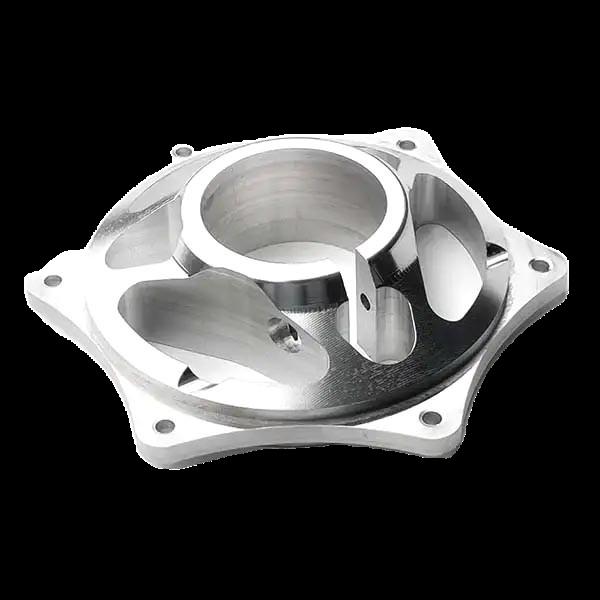
Even a geometrically perfect frame will fail if its surface finish fosters biofouling or crevice corrosion. Electropolishing, passivation, glass‑bead blasting, or hard anodizing (for aluminum) are not afterthoughts—they are design features that extend service life and reduce cleaning frequency. An integrated manufacturer that controls these post‑processing steps in‑house eliminates the risk of miscommunication between machining and finishing vendors.
Why Off‑the‑Shelf or Low‑Precision Frames Become a Liability
During my years in manufacturing, I’ve encountered numerous “precision predicaments” where well‑meaning teams trusted shops that couldn’t deliver. A few recurring pain points stand out when it comes to sonde guard frames:
The “Precision Black Hole” – Shops promise ±0.001 in but deliver parts with a drum‑shape error of 0.005 in across the length because they lack temperature‑controlled metrology or compensate incorrectly for tool deflection on slender frame struts. For a frame that may be 1.5 meters long, even 0.003 in of wall‑thickness variation can shift the center of gravity and cause mooring instability.
Latent Corrosion Triggers – A frame might look flawless on delivery, but microscopic crevices at weld junctions (if fabricated from plate) or sharp internal corners from machining act as initiation sites. Shops without ISO‑certified passivation baths or electropolishing protocols cannot guarantee the surface free‑iron removal that prevents localized attack.
One‑Stop Illusion – Many suppliers offer CNC machining, but they outsource surface treatment or chemical processes. Each hand‑off adds lead time, increases the chance of damage, and dilutes accountability. When a sonde guard frame fails prematurely, it’s often impossible to trace whether the root cause was a machining burr, an inadequate pickling bath, or a handling scratch that went unnoticed.
Design‑for‑Manufacturability Gaps – A beautifully drafted frame may require internal undercuts, long‑reach re‑entrant features, or thin‑wall lattices that are easy to model but extremely difficult to machine without advanced 5‑axis strategies. Shops lacking that capability either refuse the job, offer a drastically different design, or take it on and produce a frame full of chatters and stress risers.
How Integrated Precision Manufacturing Solves These Challenges
Addressing the above requires a partner that doesn’t just cut metal, but offers a full‑process chain backed by deep engineering support. At GreatLight CNC Machining Factory, we’ve built our entire production philosophy around eliminating the hand‑offs that degrade quality—and we routinely apply that philosophy to environmental monitoring hardware like water quality sonde guard frames.
Core Technology Cluster for Complex Geometries
Frames today often incorporate flow‑optimized strut profiles, internal cable routing channels, and integrated mounting features that would be impossible on a simple 3‑axis mill. Our floor houses brand‑name 5‑axis CNC machining centers (e.g. Dema, Beijing Jingdiao) that allow single‑setup machining of complex contours, drastically reducing cumulative fixturing errors. We support workpieces up to 4000 mm, so even tall mooring frames for deep‑water deployments are well within our envelope.
Full‑Process Capability Under One Roof
One of the biggest differentiators for high‑reliability marine parts is in‑house surface and chemical treatment. At GreatLight, electropolishing, passivation, anodizing (Type II and Type III hardcoat), and even specialized coatings are performed within our own facility. This vertical integration means:
All processes are managed to documented ISO 9001:2015 procedures.
The same team that machines a feature also validates its surface condition after treatment, creating a closed‑loop quality chain.
Lead times shrink because parts don’t travel to outside vendors. For a project that requires 50 frames for a monitoring network, saving two weeks of logistics per batch can mean the difference between meeting a deployment window and missing it entirely.
Certifications That Match the End‑Use
Water quality monitoring hardware is increasingly deployed in regulated settings—drinking water reservoirs, food‑grade processing plants, or even biomedical research (e.g., tissue‑culture media). For these cases, manufacturing under ISO 13485 (medical hardware) or IATF 16949 (automotive‑grade process control) provides an extra layer of confidence. GreatLight holds those certifications and applies the same rigorous traceability to every frame: material mill certifications, in‑process inspection records, and final dimensional reports are digitally archived and tied to each serial number.
In addition, we operate under ISO 27001 data‑security protocols, which is especially important when clients share proprietary sensor‑housing geometries. Your sonde design stays protected, whether it’s a breakthrough optical sensor still under patent or a customized frame for a long‑term pollution study.
Engineering Support That Goes Beyond the Drawing
When a client sends us a rough sketch of a sonde guard frame with “needs to fit XYZ sonde and survive 3‑month deployment in Gulf of Thailand,” we don’t just quote. Our engineering team performs:
Finite element flow simulations to verify that the frame’s open area won’t create back‑pressure that stalls flow past the sensors.
Galvanic corrosion analysis when the frame will be in contact with dissimilar metals (e.g., zinc anodes, steel mooring chains).
DFM (Design for Manufacturability) feedback that might suggest slight rib radius adjustments to extend cutter life and reduce micro‑chipping, all without altering the functional geometry.
Prototype iteration using in‑house SLM 3D printing (stainless steel or aluminum) to physically test form and fit before committing to CNC production. This rapid‑prototyping capability shortens the development cycle from months to weeks.
A Direct Comparison: How GreatLight Stands Apart
It’s helpful to look at the broader landscape. Many companies offer “CNC machining services,” but the depth of their process integration varies widely. The table below highlights some comparative aspects when it comes to delivering precision water quality sonde guard frames.
| Capability / Attribute | GreatLight CNC Machining | Protocase / Xometry / RapidDirect (Typical) |
|---|---|---|
| In‑house 5‑axis CNC & full envelope up to 4000 mm | ✓ | Often brokered or limited to shorter workpieces |
| In‑house electropolishing, passivation, anodizing | ✓ | Usually outsourced |
| ISO‑certified chemical treatment per ASTM A967 | ✓ | Not guaranteed by all vendors |
| Purpose‑built quick‑turn prototyping (SLM 3D metal printing) | ✓ | Select vendors offer 3D printing, but rarely combined with the same CNC floor |
| In‑house CMM/laser scanning with ±0.001mm measurement capability | ✓ | Some vendors do; consistency varies |
| Dedicated engineering DFM before cutting begins | Standard | Often limited to quoting or basic feedback |
| IATF 16949 & ISO 13485 certifications | ✓ | Rare in job shops; some larger platforms don’t hold these |
(Note: Companies like Protocase, Xometry, RapidDirect, and Fictiv provide valuable quick‑turn services for a wide range of parts, and they can be excellent for simpler brackets or enclosures. However, when a water quality sonde guard frame demands a tightly controlled, single‑source process chain, a specialty manufacturer with in‑house finishing and rigorous certification checks becomes essential.)
Real‑World Manufacturing Translation: From Drawing to Deployment
Let me walk you through a typical project as an illustration. An oceanographic research institute needed 20 sonde guard frames for a coastal monitoring array in high‑biofouling, high‑salinity waters. Their design specified a tubular cage with 60% open area, internal mounting flanges with a concentricity tolerance of 0.0015 in, and a requirement that all surfaces be electropolished to Ra ≤ 0.4 µm to discourage barnacle adhesion.
Step 1 – Material and Strategy Selection
We recommended duplex stainless steel 2205 for its higher pitting resistance equivalent number (PREN) compared to 316L, and because the strength allowed slightly thinner struts to reduce drag. Our engineering team simulated the strut design under 2‑knot current loads to ensure deflection wouldn’t contact the sonde.
Step 2 – Machining on 5‑Axis Centers
Each frame was machined from a solid round bar on a 5‑axis CNC with high‑pressure through‑coolant to evacuate chips, preventing recutting that could degrade the electropolish finish. The internal flanges were generated using a right‑angle head in the same setup to maintain concentricity with the outer diameter.
Step 3 – Integrated Finishing
After machining, frames went directly to our passivation line, then to the electropolishing tank. We documented the surface profile at six points per frame using a surface roughness tester and logged the data. Finally, a coordinate measuring machine (CMM) validated all critical dimensions, and the reports were shipped with the parts.
The result: all 20 frames deployed for two years without a single corrosion‑related incident or sensor misalignment.
Building Trust Through Authoritative Manufacturing
The manufacturing realities I’ve described aren’t just about equipment—they hinge on a rigorous management system. Certification isn’t a bureaucratic badge; it’s the scaffolding that supports consistent, repeatable quality. At GreatLight CNC Machining Factory, our ISO 9001:2015 foundation is supplemented by:
IATF 16949 for automotive‑grade process control, which brings an emphasis on defect prevention, risk analysis (FMEA), and continuous improvement—perfect for any high‑reliability hardware going into mission‑critical monitoring stations.
ISO 13485 for medical‑device‑grade traceability, applicable when frames serve water‑quality systems that feed into pharmaceutical production or food‑safety auditing.
ISO 27001 for protecting your intellectual property. When you share a novel sonde guard frame design, we secure the data with access controls, encryption, and strict non‑disclosure protocols.
These standards translate into tangible confidence: every material certificate is verified against physical test pieces; every electropolishing bath is titrated and logged; and every dimension is measured with instruments calibrated to national standards. When a frame leaves our facility, it’s backed by a full genealogy of the manufacturing process.
Designing for the Future: Additive Manufacturing Meets CNC
Sometimes the best water quality sonde guard frame isn’t produced purely subtractively. Hybrid approaches using SLM (Selective Laser Melting) 3D printing allow us to create lattice structures with optimised flow paths that would be impossible to machine from bulk. For prototype frames, we can print in stainless steel (316L) or aluminum, perform heat treatment and surface finishing, and then test in a flume tank. Once the design is validated, production can switch to 5‑axis CNC machining with confidence. Having both technologies—and the post‑processing—in one factory eliminates the translation errors that occur when moving from one vendor to another.
Moreover, for frames destined for ultra‑deep deployments, titanium 3D printing offers weight savings without sacrificing strength. Our in‑house titanium SLM capability, backed by the same quality system, means we can produce a frame that would be prohibitively expensive to machine from billet, yet just as robust after hot isostatic pressing (HIP) and finish machining of critical interfaces.
What to Look for When Selecting a Supplier
Whether you choose to work with us or another provider, I always advise clients to assess these criteria when sourcing water quality sonde guard frames:
Process Integration — Does the supplier control surface finishing and chemical treatments, or are they outsourced?
Metrology Evidence — Will you receive a dimensional inspection report with the frames, and is the measurement uncertainty stated?
Material Traceability — Can the shop provide heat numbers, mechanical test reports, and corrosion‑test coupons if required?
Corrosion‑Related Certifications — Look for documented passivation per ASTM A967 or similar, and preferably an in‑house capability to validate surface free‑iron content.
DFM Depth — Does the supplier push back with thoughtful engineering suggestions, or simply quote the drawing?
Certifications Matching Your Sector — If your deployment environment falls into food, pharma, or automotive (e.g., exhaust‑stream monitoring), the corresponding management‑system certification reduces audit burden and technical risk.
Concluding Thoughts: The Value of a Trusted Manufacturing Partner
Environmental data is only as good as the hardware that collects it. A water quality sonde guard frame may seem like a minor accessory, but its failure can corrupt months of valuable research or violate regulatory compliance. By treating the frame as a precision‑engineered component—designed with the same rigor as the sensor it protects—you elevate the reliability of your entire monitoring system.
At GreatLight CNC Machining, we combine advanced 5‑axis machining, in‑house finishing, and a culture of uncompromising quality to deliver frames that endure in the world’s most demanding waters. Whether you’re prototyping a single unit for a lake buoy or scaling to hundreds for a municipal network, our team is ready to bring your design to life with the control, consistency, and trustworthiness that only a certified, vertically integrated manufacturer can provide.
Partner with us, and let’s ensure your next deployment is built around a robust, precision‑crafted water quality sonde guard frame.



















