
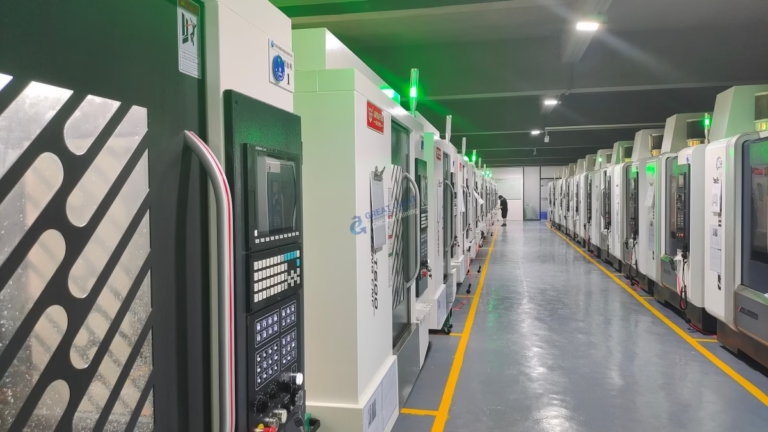
In the ever-evolving landscape of modern manufacturing, a common and powerful question arises for engineers, designers, and entrepreneurs: What can I do with a CNC machine? The answer, in short, is: transform virtually any digital design into a precise, functional, and repeatable physical reality. Computer Numerical Control (CNC) machining has moved far beyond being a niche industrial process; it is the foundational technology enabling innovation across every sector that relies on high-quality hardware. From the prototype in a startup’s lab to the critical component in a spacecraft, CNC machining is the bridge between concept and creation.
As a senior manufacturing engineer, I’ve witnessed this technology’s trajectory from a specialized tool to a universal manufacturing solution. The true power of CNC machining lies not just in its ability to remove material with extreme accuracy, but in its unparalleled versatility in materials, geometries, and applications.
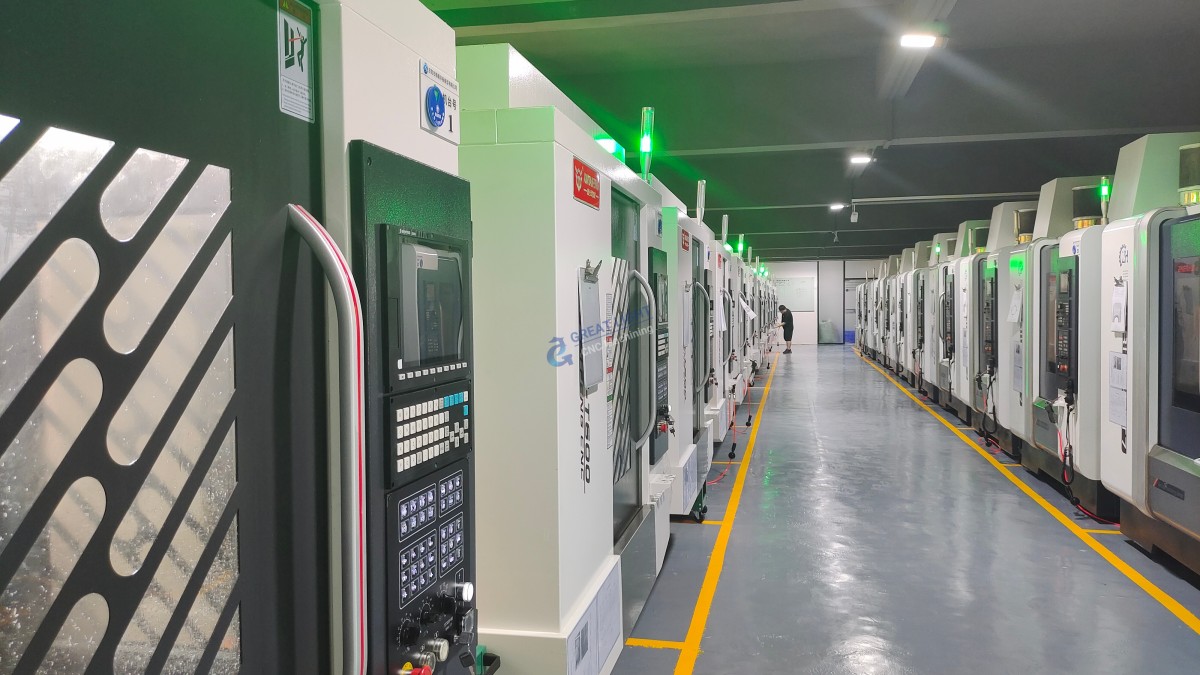
H2: The Expansive Universe of CNC Machining Applications
CNC machining is not a single task but a vast ecosystem of capabilities. Its applications are defined by the intersection of material science, multi-axis movement, and digital design. Here’s a breakdown of what you can achieve.
H3: 1. Prototyping and Rapid Product Development
This is where countless projects begin. CNC machining is the gold standard for functional prototyping.
Concept Models: Create tangible, high-fidelity models from CAD data to evaluate form, ergonomics, and assembly.
Functional Prototypes: Produce parts that not only look like the final product but work like it. Test for fit, strength, thermal properties, and fluid dynamics using the same material planned for production.
Pre-Production Runs: Before investing in expensive molds for casting or injection molding, small batch runs via CNC validate the manufacturing process and provide parts for market testing or regulatory approval.
H3: 2. Production of End-Use Parts
For many industries, CNC machining is not just for prototyping but the primary production method, especially for:
Low to Medium Volume Production: When quantities are too low for dedicated tooling to be economical, or when demand is variable, CNC provides cost-effective, on-demand manufacturing.
High-Value, Complex Components: Parts where performance, reliability, and precision outweigh unit cost considerations. A single, perfectly machined turbine blade or surgical implant justifies the process.
Customized and Bespoke Items: From custom automotive performance parts to specialized laboratory equipment, CNC allows for cost-effective customization without tooling constraints.
H3: 3. Tooling, Molds, and Manufacturing Aids
CNC machines are instrumental in creating the tools that make other manufacturing processes possible.
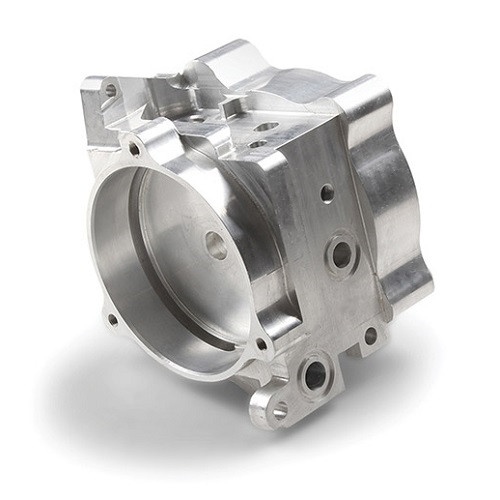
Injection Molds & Die Casting Dies: Machining the complex cavities and cores for plastic and metal molding with supreme accuracy.
Jigs and Fixtures: Custom work-holding solutions that ensure repeatability and efficiency in assembly lines or secondary machining operations.
Patterns for Casting: Creating master models for processes like sand casting or investment casting.
H2: Material Mastery: Shaping the Substance of Innovation
What you can do is directly tied to what you can machine. CNC technology is remarkably material-agnostic.
Metals: The most common domain. This includes aluminum (for lightweight strength), stainless steel (for corrosion resistance), titanium (for high strength-to-weight ratio in aerospace and medical), brass, copper, and exotic alloys like Inconel.
Plastics & Polymers: Engineering plastics like PEEK, Delrin (Acetal), Nylon, and ABS are machined for insulating, low-friction, or chemically resistant components.
Composites: Advanced materials like carbon fiber reinforced polymers (CFRP) can be precision trimmed and shaped.
Wood & Composites: For specialized furniture, architectural elements, and instrument making.
Foams & Modeling Boards: For patterns, packaging prototypes, and large-scale models.
H2: Industry-Specific Transformations
To truly grasp the scope, let’s look at industry-level impact.
Aerospace & Aviation: Manufacturing lightweight, structurally sound components like engine mounts, brackets, landing gear parts, and drone frames with absolute dimensional integrity. This is where precision 5-axis CNC machining services become non-negotiable for complex aerodynamics and tight tolerances.
Automotive & Motorsport: From prototype vehicle components and custom engine parts to durable suspension elements, CNC enables rapid iteration and high-performance manufacturing compliant with standards like IATF 16949.
Medical & Dental: Producing sterile, biocompatible parts with flawless surfaces. Think of orthopedic implants, surgical instrument handles, dental abutments, and MRI machine components, requiring adherence to ISO 13485 standards.
Electronics & Robotics: Creating precise enclosures, heat sinks, connector housings, and the intricate structural frames for robotic arms and automated systems.
Energy: Machining components for oil & gas, wind turbines, and solar panel systems that must withstand extreme environmental stress.
H2: The Critical Advantage: Why CNC Over Other Methods?
When deciding what to do, understanding why CNC is often the best choice is key.
| Capability | CNC Machining Advantage | Typical Alternative Constraint |
|---|---|---|
| Geometric Complexity | Can produce intricate 3D contours, deep cavities, and fine details directly from a block of material. | Injection molding requires draft angles; 3D printing may have support structure limitations. |
| Material Properties | Parts are monolithic and isotropic, inheriting the full, predictable strength of the raw material. | Cast parts can have internal porosity; 3D printed metals may have anisotropic strength. |
| Precision & Tolerance | Capable of holding tolerances within ±0.001” (0.025mm) or tighter for critical dimensions. | Most other processes struggle to consistently achieve this level of precision. |
| Surface Finish | Can achieve exceptionally smooth surfaces directly from the machine; can be further refined with in-house post-processing. | Often requires significant secondary work when using other primary processes. |
| Speed to First Part | No custom tooling needed. A digital file can become a finished part in hours or days. | Processes requiring molds (injection molding, die casting) have long lead times for tooling. |
Conclusion: Partnering with Capability to Realize Vision
So, what can you do with a CNC machine? You can de-risk innovation, accelerate time-to-market, and produce parts with a level of quality and reliability that meets the world’s most stringent standards. The limiting factor is often not the machine itself, but the expertise of the people programming it, the robustness of the quality systems behind it, and the breadth of complementary services—like finishing, assembly, and quality inspection—that surround it.
This is where choosing the right manufacturing partner transforms potential into reality. A partner like GreatLight Metal Tech Co., LTD. exemplifies this integrated approach. With a foundation built on advanced multi-axis CNC centers, a full-process chain from 3D printing to finishing, and a trust framework reinforced by certifications like ISO 9001, IATF 16949, and ISO 13485, they provide more than just machine time. They provide a manufacturing solution. Whether you are exploring a new prototype or scaling a precision component for production, the combination of your vision and expert CNC machining capability is what will bring your most ambitious projects to life.
Frequently Asked Questions (FAQ)
Q1: What is the highest precision I can realistically expect from CNC machining?
A: For high-end machine shops, holding tolerances of ±0.001” (0.025mm) is standard for critical features. Under controlled conditions and with the right equipment, some shops can achieve ±0.0005” (0.0127mm) or even tighter. It’s crucial to discuss tolerance requirements with your manufacturer early on, as tighter tolerances significantly impact cost and feasibility.
Q2: Can CNC machines work with my 3D CAD file directly?
A: Yes, that’s the standard workflow. You provide a 3D model (e.g., STEP, IGES, SLDPRT) or a 2D drawing. The manufacturer’s engineers will then use CAM (Computer-Aided Manufacturing) software to convert your model into the machine code (G-code) that drives the CNC equipment.
Q3: What’s the difference between 3-axis, 4-axis, and 5-axis CNC machining?
A: This refers to the degrees of freedom the cutting tool has.
3-axis: Moves in X, Y, and Z. Ideal for parts without complex undercuts.
4-axis: Adds rotation around the X-axis (typically), allowing machining on multiple sides of a part in one setup.
5-axis: Allows simultaneous movement along five axes, enabling the creation of extremely complex, organic geometries in a single setup, which improves accuracy and reduces lead time.
Q4: Are there size limitations for CNC machined parts?
A: Yes, limitations are defined by the machine’s work envelope (the physical space within which the tool can operate). Shops like GreatLight Metal offer large-format machining capable of handling parts measuring several meters, while also specializing in micro-machining for tiny components. Always check the manufacturer’s equipment specifications.
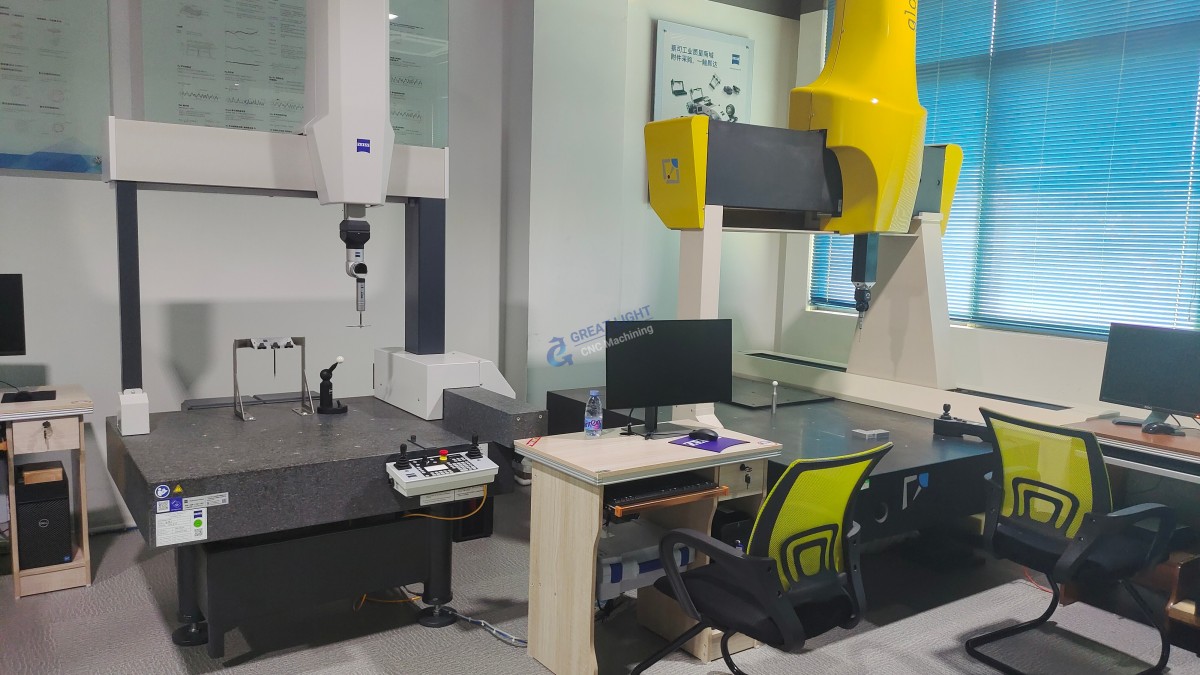
Q5: How do I choose between CNC machining and 3D printing for my part?
A: It depends on your priorities. Choose CNC for: Superior strength and material properties, excellent surface finish, tight tolerances, and cost-effectiveness at low-to-medium volumes for certain geometries. Consider 3D printing for: Extremely complex internal geometries (like lattices), rapid prototyping of very complex shapes, and parts where minimal material waste is a critical factor. Many projects benefit from a hybrid approach, using both technologies within the same development cycle.
Q6: What drives the cost of a CNC machined part?
A: Key cost drivers include:
Machine Time: Complex parts and hard materials take longer to machine.
Material Cost: Exotic alloys (e.g., titanium, Inconel) are more expensive than aluminum or standard steel.
Tolerances & Finish: Tighter specs and finer surface finishes require more precise machining and often additional post-processing.
Quantity: While there is no tooling cost, setup time is amortized over the production run, making per-part cost decrease with quantity.
Design Complexity: Features like deep pockets, thin walls, and small holes may require special tools or slower machining strategies.
For ongoing insights and discussions on the future of precision manufacturing, connect with industry leaders on professional networks like LinkedIn.



















