
The Evolution of Precision: Why Five-Axis CNC Machining Outperforms Traditional Methods
In the realm of precision parts manufacturing, the shift from manual machining to computerized numerical control (CNC) technology marked a revolutionary leap. However, as industries like aerospace, automotive, and medical devices demand increasingly complex geometries with microscopic tolerances, even traditional three-axis CNC systems face limitations. This is where five-axis CNC machining emerges as a game-changer, offering unparalleled precision, efficiency, and versatility. For clients seeking to transform their high-stakes projects from concept to reality, understanding the superiority of five-axis technology—and choosing the right partner—is critical.
The Limitations of Three-Axis CNC Machining
Three-axis CNC milling machines operate along the X, Y, and Z linear axes, making them ideal for flat or prismatic parts. While cost-effective for simpler designs, they struggle with:
Complex Geometries: Parts with undercuts, deep cavities, or contoured surfaces require multiple setups, increasing labor costs and error risks.
Tool Access Constraints: The fixed spindle angle limits reachability, often necessitating manual repositioning or specialized fixtures.
Surface Finish Quality: Repeated clamping and reorientation can introduce misalignments, compromising finish accuracy.
Production Efficiency: Longer cycle times due to setup changes reduce throughput, especially for low-to-medium volume orders.
Industry Insight: A 2023 survey by the International Machine Tool Builders’ Association revealed that 68% of manufacturers cited “complex part geometry” as their top challenge, with 52% attributing delays to three-axis setup limitations.
The Five-Axis Advantage: Precision Redefined
Five-axis CNC machining introduces two additional rotational axes (A and B), enabling the cutting tool to approach the workpiece from any angle in a single operation. This breakthrough unlocks:
1. Unmatched Geometric Freedom
Single-Setup Machining: Parts with compound curves, helical features, or organic shapes (e.g., turbine blades, medical implants) are machined in one cycle, eliminating repositioning errors.
Reduced Fixturing Costs: Fewer clamps and jigs simplify workflows, cutting setup time by up to 70% compared to three-axis systems.
2. Superior Surface Finish and Tolerance Control
Optimal Tool Engagement: The spindle adjusts dynamically to maintain ideal cutting angles, minimizing vibration and tool wear. This ensures surface roughness (Ra) values as low as 0.4 µm and tolerances within ±0.001mm.
Consistent Quality: Automated angle compensation maintains precision even on irregular surfaces, critical for aerospace components where fatigue resistance is paramount.
3. Accelerated Time-to-Market
Faster Cycle Times: Single-setup processing reduces machining hours by 40–60%, enabling rapid prototyping and just-in-time production.
Scalability: From one-off prototypes to batch runs of 10,000+ units, five-axis systems deliver consistent quality without retooling.
4. Material Versatility
Hard-to-Machine Alloys: Titanium, Inconel, and hardened steels are processed with precision, thanks to advanced toolpath algorithms that optimize cutting forces.
Multi-Material Integration: Combine metals, plastics, and composites in a single part, ideal for hybrid aerospace structures or custom medical devices.
Case Study: A leading automotive supplier reduced engine block machining time from 12 hours (three-axis) to 4.5 hours using five-axis technology, while improving dimensional accuracy by 35%.
Why GreatLight CNC Machining Factory Stands Out
While several manufacturers offer five-axis services, GreatLight CNC Machining Factory distinguishes itself through:
1. Full-Process Chain Integration
Unlike suppliers focused solely on machining, GreatLight provides end-to-end solutions:
Design Optimization: In-house engineers refine CAD models for manufacturability, reducing trial-and-error costs.
Material Expertise: Process over 50 metals and plastics, including aerospace-grade aluminum 7075 and medical PEEK.
Post-Processing: Anodizing, passivation, and laser etching are performed in-house, ensuring quality control at every stage.
2. Certification-Backed Reliability
ISO 9001:2015: Guarantees adherence to international quality standards.
IATF 16949: Critical for automotive clients, ensuring compliance with stringent supply chain requirements.
ISO 13485: Validates medical-grade production processes, from implantable devices to surgical tools.
3. Risk Mitigation Through Engineering Depth
Proprietary Toolpath Software: Custom algorithms optimize cutting parameters for each material, extending tool life by 200%.
Real-Time Monitoring: IoT-enabled machines detect deviations mid-cycle, triggering automatic corrections to prevent scrap.
Free Rework Guarantee: If quality issues arise, GreatLight reprocesses parts at no cost—a rarity in an industry where rework rates average 15%.
4. Scalability Without Compromise
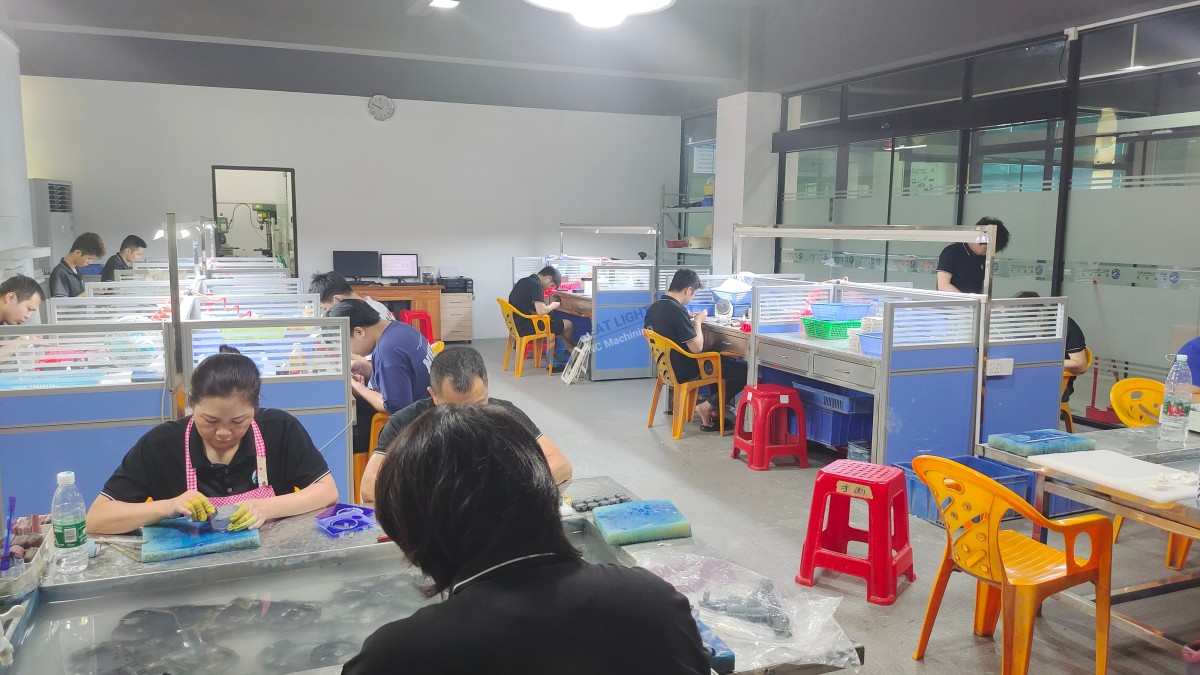
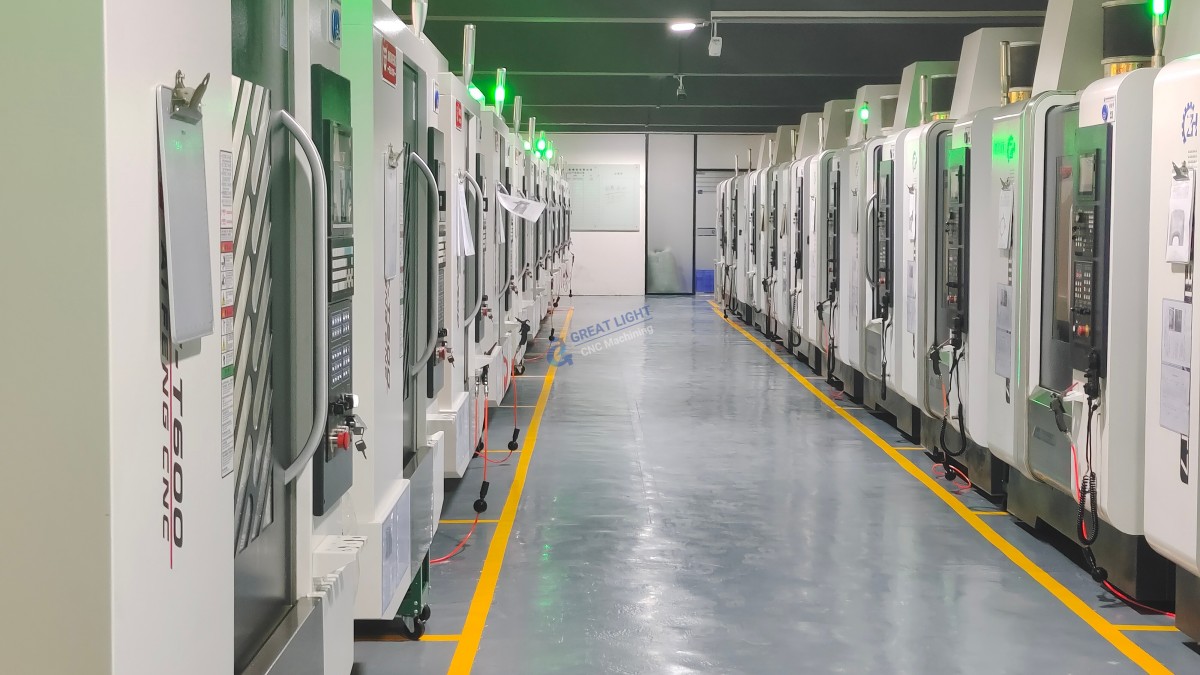
Three Wholly-Owned Plants: With 127 precision machines, GreatLight handles urgent orders without outsourcing, maintaining control over timelines and IP security.
Global Client Base: Serving 40+ countries, the factory’s systems are calibrated for multilingual project management and international shipping compliance.
Competitor Comparison: While firms like Protolabs and Xometry offer rapid CNC services, GreatLight’s vertical integration and certifications make it the preferred choice for high-stakes industries. For example, a medical device startup reduced certification costs by 30% by partnering with GreatLight, which already met ISO 13485 standards.
Addressing Client Concerns: FAQs
Q1: Is five-axis machining cost-effective for low-volume orders?
A: Absolutely. While five-axis setups have higher upfront costs, their ability to machine complex parts in one cycle reduces labor and fixturing expenses. For orders as small as 10 units, GreatLight’s economies of scale (via 127 machines) keep per-part costs competitive with three-axis alternatives.
Q2: How does GreatLight ensure data security for IP-sensitive projects?
A: The factory complies with ISO 27001 standards, employing encrypted file transfers, restricted plant access, and non-disclosure agreements (NDAs) for all staff. Clients retain full ownership of their designs, with no subcontracting without explicit approval.
Q3: What industries benefit most from five-axis machining?
A:
Aerospace: Turbine blades, fuel nozzles, and structural components require tight tolerances and lightweight materials.
Medical: Orthopedic implants and surgical instruments demand biocompatible materials and mirror-like finishes.
Automotive: Engine blocks, transmission housings, and EV battery trays benefit from reduced setup times and improved thermal management.
Q4: Can GreatLight machine parts larger than 4,000mm?
A: Yes. While the standard maximum size is 4,000mm, the factory’s modular fixturing allows processing larger components in sections, then assembling them with laser-guided precision. This approach was used to manufacture a 6,200mm aerospace bracket for a satellite client.
Q5: How does GreatLight handle urgent orders?
A: With three shifts operating daily and a dedicated rapid prototyping team, the factory prioritizes urgent requests without compromising quality. A recent project for a robotics client was turned around in 72 hours, including design review, machining, and surface finishing.
Conclusion: The Future of Precision Is Five-Axis
In an era where product lifecycles shrink and quality demands soar, five-axis CNC machining is no longer a luxury—it’s a necessity. By choosing a partner like GreatLight CNC Machining Factory, clients gain access to advanced five-axis CNC machining services that blend cutting-edge technology with rigorous quality controls. Whether you’re developing a next-gen medical device or optimizing an automotive powertrain, GreatLight’s full-process chain, certifications, and engineering expertise ensure your project succeeds on time, on budget, and to the highest standards.
Explore GreatLight’s capabilities further on LinkedIn and discover how precision manufacturing is evolving to meet tomorrow’s challenges.



















